
Choosing between Sei blockchain and the Solana blockchain isn’t just a vibe check—it’s a decision about performance, tooling, and where your users will actually show up. This guide pulls together credible measurements and primary docs to compare Sei vs Solana on the things that matter: speed and finality, fees, developer experience, interoperability, and ecosystem depth. We’ll also weave in common queries like what is Solana, what is Sei, where to exchange USDT to SOL and how people think about SEI price and Solana price in practice.
Why are these two always compared?
- Solana (SOL): Monolithic high-throughput L1 using Proof of History (PoH) to sequence time and accelerate PoS consensus; huge real-world throughput, tiny fees, mature SPL tokens/NFTs, and an expanding validator stack (e.g., Firedancer) built for serious scale.
- Sei (SEI): Cosmos-SDK L1 engineered for low-latency execution with Twin-Turbo consensus and parallelized EVM; native IBC interoperability, and a design ethos aimed at high-frequency apps (trading, payments) with sub-second finality.
Architecture & Consensus—How They Reach Speed
Solana’s PoH + PoS (SVM)
Source: Medium
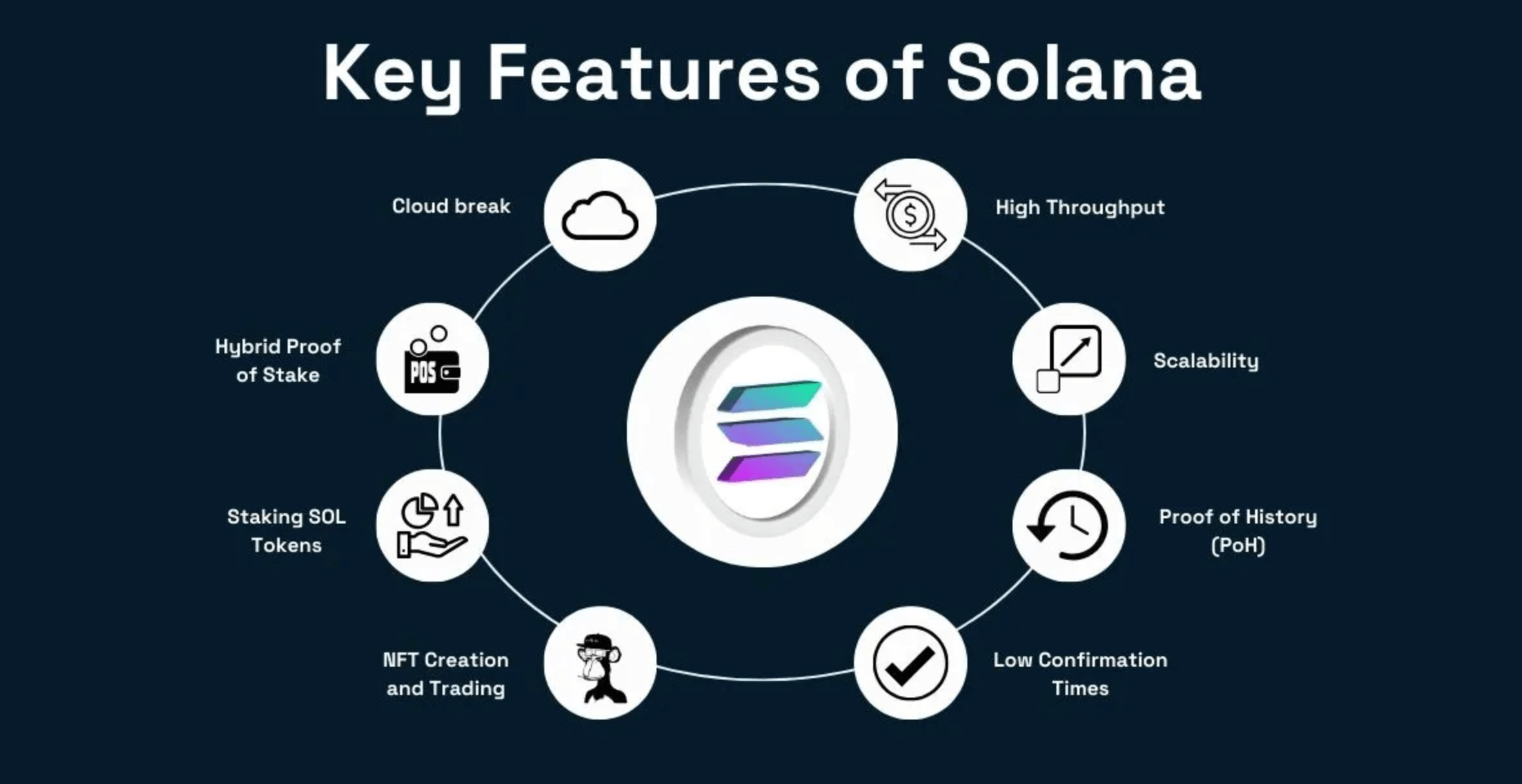
What is Solana? At its core, Solana timestamps events with Proof of History, reducing consensus chatter and letting validators process in parallel. Programs are compiled to the Solana Virtual Machine (SVM), commonly written in Rust using the Anchor framework. The net effect is high throughput and low latency, with PoH functioning as “pre-consensus” timekeeping.
Why it matters: Less overhead per block and a runtime tuned for parallel execution translates into serious real-world TPS. Performance will likely step up again as Firedancer, a new validator client, matures—tests have demonstrated networking layers capable of processing ~1M TPS of packet ingress/distribution.
Sei’s Twin-Turbo + Parallelized EVM
What is Sei? Sei crypto (SEI coin) powers a Cosmos-based L1 that re-tools classic Tendermint with Twin-Turbo consensus (smart propagation + optimized processing) and a parallelized EVM execution layer. The design targets sub-second finality and high throughput for orderbook-style and payments-grade workloads, while retaining Cosmos strengths like IBC.
Why it matters: Builders get EVM compatibility (Solidity) plus optional CosmWasm, and precompiles/pointer contracts let EVM and Cosmos contracts talk to each other—handy for cross-runtime composability.
Speed, Finality & TPS—Measured vs. Theoretical

Source: Tabtrader
You’ll see marketing claims, test-rig numbers, and on-chain measurements. Here’s how to read them:
- Observed throughput: Solana typically tops the chart; the Sei vs Solana head-to-head shows Solana with far higher observed max TPS over the last 100 blocks (≈5,289 vs. ≈256). Max theoretical is listed at 65,000 TPS for Solana vs. 12,500 for Sei on Chainspect.
- Finality/block time: Typical block cadence (recent data) around ~3.45s for Solana and ~0.51s for Sei, reflecting different tuning targets (block interval ≠ economic finality, but it’s a useful latency proxy). Sei and third-party research cite <400ms finality under optimal conditions; Solana often lands in low-single-digit seconds.
- Lab tests: Solana’s Firedancer testing has pushed 1M-TPS-class networking; impressive but not the same as mainnet reality. Value it as future headroom, not today’s steady state.
Solana leads today on sustained observed throughput, while Sei optimizes for very low latency and composability across EVM/Cosmos. Pick based on what your app feels more often—queue depth or time-to-settle.
Fees & User Costs—Who’s Cheaper?
- Solana fees are famously tiny. Official docs quote a base fee of 0.000005 SOL (with optional priority fees), translating to fractions of a cent at common Solana price ranges. Independent explainers show typical totals well under a penny for most transactions.
- Sei fees follow an EVM-style gas model in SEI coin; developers/users set gas price and limits. Official messaging highlights “process 10,000 transactions for as low as $0.05” and community support pages commonly cite <0.01 SEI per transaction under normal loads. (Actuals vary by contract complexity and network conditions.)
If you’re purely cost-sensitive at retail scale, Solana is hard to beat; if you need EVM semantics plus low-latency settlement, Sei stays cost-competitive for most flows.
Interoperability & Tokens—IBC vs SPL
- Sei: Native IBC means straightforward asset and message routing across 100+ Cosmos chains via relayers. For builders straddling EVM and Cosmos, Sei provides precompiles and pointer contracts so Solidity apps can call CosmWasm logic (and vice versa).
- Solana: Uses SPL tokens (Token Program/Token-2022) with mature tooling and massive adoption for stablecoins, memecoins, and NFTs. Cross-chain movement is typically via bridges; SPL itself isn’t IBC-native.
If cross-ecosystem composability (Cosmos zones) is critical, Sei has the edge. If you want the SPL universe (stablecoins + DeFi + NFTs at scale), Solana is the gravity well.
Developer Experience—Languages, Tooling & Migration
- Solana: Programs typically in Rust (or C/C++), with Anchor as the dominant framework and a rich TS client ecosystem. Great for high-performance apps that embrace the SVM model from day one.
- Sei: EVM (Solidity) + CosmWasm (Rust) on the same chain; strong focus on bridging EVM mental models into Cosmos land. Docs and infra partners (QuickNode, Infura, Tenderly, Alchemy) make it familiar for Ethereum-native teams.
Migration notes: If you’re already on EVM, Sei shortens time-to-mainnet; if you’re greenfield and chasing super-scale UX with tiny fees, Solana’s stack (+Firedancer roadmap) is compelling.
Ecosystem Depth & Liquidity
By usage and liquidity, Solana is the larger venue today—high daily active addresses, deep stablecoin float, and heavy DEX/perps volume. DeFiLlama dashboards consistently show Solana among the top chains by volume and activity. Sei is smaller but focused, with measurable DEX/perps traction relative to its size. Check live dashboards for current TVL/volume when launching.
The Head-to-Head Table (2025)
Metrics change; always verify fresh numbers before making commitments.
| Category | Sei (SEI) | Solana (SOL) |
| Core design | Cosmos-SDK L1 with Twin-Turbo consensus; parallelized EVM + optional CosmWasm | Monolithic L1 using PoH + PoS; programs on SVM |
| Interop | IBC-native (relayers) | SPL tokens; bridges for cross-chain |
| Dev stack | Solidity/EVM and CosmWasm (Rust); EVM↔Cosmos precompiles/pointer contracts | Rust/C/C++; Anchor framework + rich TS tooling |
| Latency / block cadence | ~0.5s recent block time; sub-second design; research cites <400 ms finality in optimal conditions | ~3–4s recent block time; low-single-digit seconds typical finality |
| Observed throughput (recent) | Max ~256 TPS (100-block window) on Chainspect; theoretical 12,500 TPS | Max ~5,289 TPS (100-block window) on Chainspect; theoretical 65,000 TPS |
| Fees (typical) | Low; EVM-style gas in SEI coin; marketing cites 10k tx ≈ $0.05 | Tiny; base fee 0.000005 SOL, priority fees optional, usually ≪$0.01 |
| Ecosystem scale | Smaller, trading-centric; growing DEX/perps | Large, consumer-scale DeFi/NFTs, deep liquidity |
| Roadmap highlights | Parallel EVM, EVM↔Wasm composability, IBC | Firedancer client, high-throughput networking |
| Who it fits | EVM teams wanting sub-second settlement + Cosmos reach | Apps chasing massive throughput + ultra-low fees |
Which One Should You Pick?
If you’re a trader-first or exchange-style app
Sei’s sub-second design and EVM semantics make it straightforward to port orderbooks, market-makers, and latency-sensitive flows. You also get IBC rails out-of-the-box to reach Cosmos liquidity. Sei crypto (SEI) covers gas with familiar EVM fee mechanics.
If you’re a consumer app targeting millions of users
Solana’s live throughput, minuscule fees, and SPL maturity are proven ingredients for high-engagement consumer experiences (payments, social, gaming, memecoins, NFTs). Firedancer adds future headroom, and the Anchor ecosystem is battle-tested.
If your team is deeply EVM-native
Sei minimizes rewrite cost and keeps Solidity as the center of gravity, while still letting you tap Cosmos via precompiles/pointer contracts—useful if “multi-runtime composability” is on your roadmap.
Pricing Notes—SEI Price & Solana Price
People often ask about SEI price and Solana price during platform evaluation, but prices swing with market cycles and don’t reflect developer fit. For current quotes, use reputable aggregators or crypto exchanges like Quickex; your technical choice should be driven by latency, throughput, fees, and liquidity where your users are—not short-term price action.
What the Industry Benchmarks Say
- Chainspect: Solana leads measured TPS most days; Sei emphasizes ultra-low block times and theoretical f12,500 TPS. Use this to calibrate expectations, not to crown permanent winners.
- Solana Docs: PoH is not a consensus algorithm but a timekeeping primitive that lets validators coordinate faster—this is the secret sauce behind its throughput.
- Sei Docs/Blog: Twin-Turbo and the parallel EVM are the core differentiators; composability across EVM and Cosmos is a unique draw for multi-chain apps.
Final Verdict—Sei vs Solana in One Paragraph
If your game is speed-to-market on EVM with sub-second settlement and Cosmos interoperability, Sei makes a strong case. If your priority is mass-scale UX with recorded high throughput, ultra-low fees, and a heavyweight SPLecosystem today, Solana is tough to beat. Many teams will ultimately be multi-chain; your sei vs solana decision should map to your app’s bottleneck—latency and EVM familiarity (Sei) or throughput at the lowest possible fee(Solana).
Disclaimer: The material in this article is not financial or investment advice. Everything stated here reflects the author's personal view and should not be treated as a recommendation to trade or invest. We make no warranties regarding the accuracy, reliability or completeness of the information presented. Cryptocurrency markets are highly volatile and can move unpredictably. Before committing any funds, every investor, trader or crypto user should study several independent sources and check the regulations that apply in their own jurisdiction.