
In 2024 alone, cryptocurrency totaling $40.9 billion ended up in the hands of scammers. To score that kind of haul, criminals used a variety of tools from their arsenal.
The Quickex editorial team has compiled, in one overview, all known types of crypto scams and explained how to protect yourself and your wallet from them.
Track the prices of your favorite cryptocurrencies on Quickex.
Main Types of Crypto Scams
Phishing
Principle: Fraudsters create clone websites of exchanges or wallets and lure victims there via links in emails or social networks.
Example: An email “from Binance” with a request to complete verification or receive a reward leads to a fake site. After you enter your credentials, the scammers gain access to your account.
How not to get caught: Check the site address, don’t follow links from emails, use bookmarks.
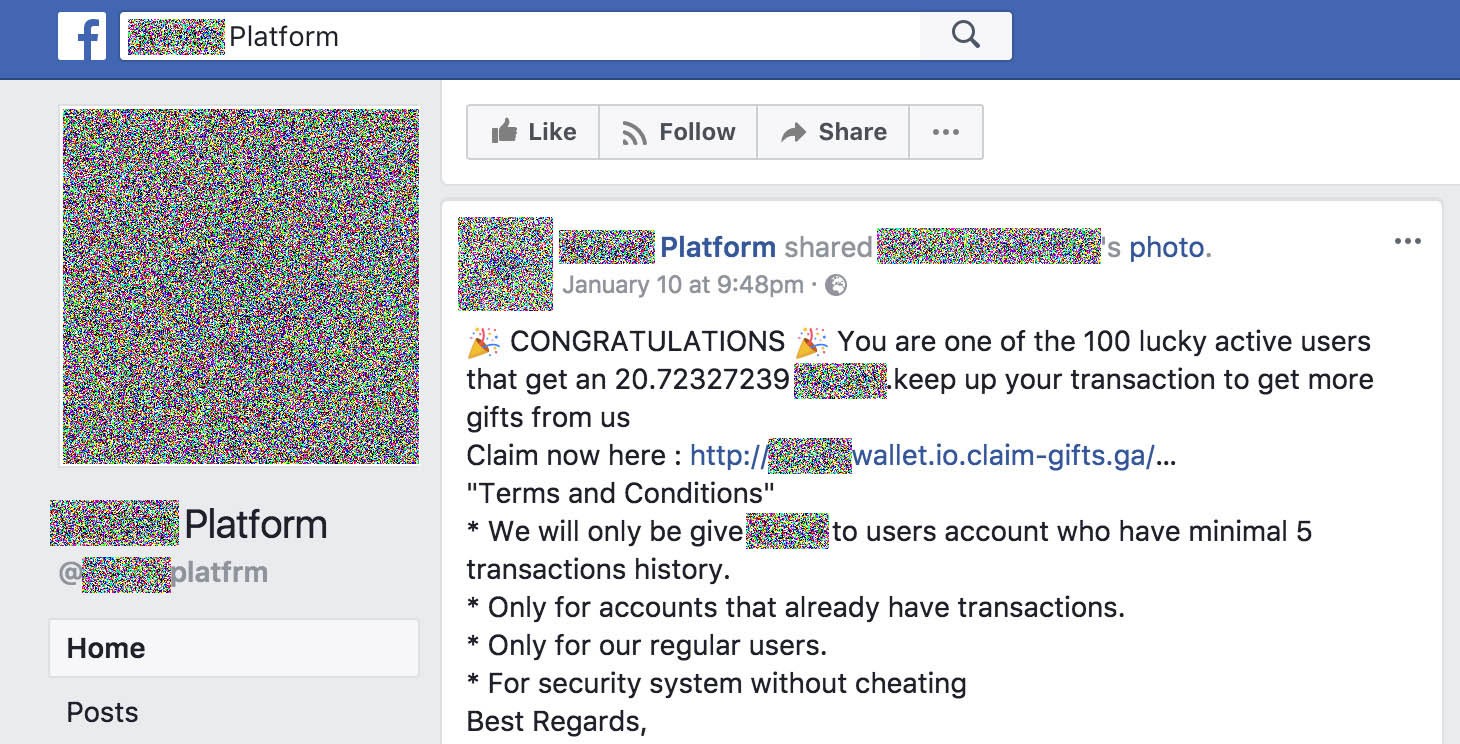
Crypto phishing example
Ponzi schemes
Principle: Payouts to earlier investors are funded by new deposits. As soon as the flow of new money dries up, the project collapses.
Example: A project promises huge returns, withdrawals work only at first, then the site disappears.
How not to get caught: Remember — guaranteed high returns in crypto don’t exist.
“Pig slaughter” (pig butchering)
Principle: A scammer slowly builds a trusting relationship — on social networks or dating sites — and then invites you to invest in a bogus platform.
Example: A “girl from the U.S.” chats for several months, then shows a “super-profitable app” and persuades you to put all your savings into it.
How not to get caught: If an online acquaintance asks you to invest, it’s almost certainly a scam.
Fake ICOs and new tokens
Principle: Alleged developers promise an innovative project, raise money, and disappear.
Example: The team launches a site, issues a token, attracts investors, and within a couple of months — or even days — shuts down the project and withdraws all funds.
How not to get caught: Vet the team, the documentation, and community activity.
Pump & dump
Principle: A group of scammers hypes up a little-known coin; the price spikes, organizers sell their holdings, and the price crashes.
Example: Social media fills with ads about a “can’t-miss” project; the coin gains dozens of times in a day, then drops to zero.
How not to get caught: Don’t buy tokens based on “signals” and rumors.
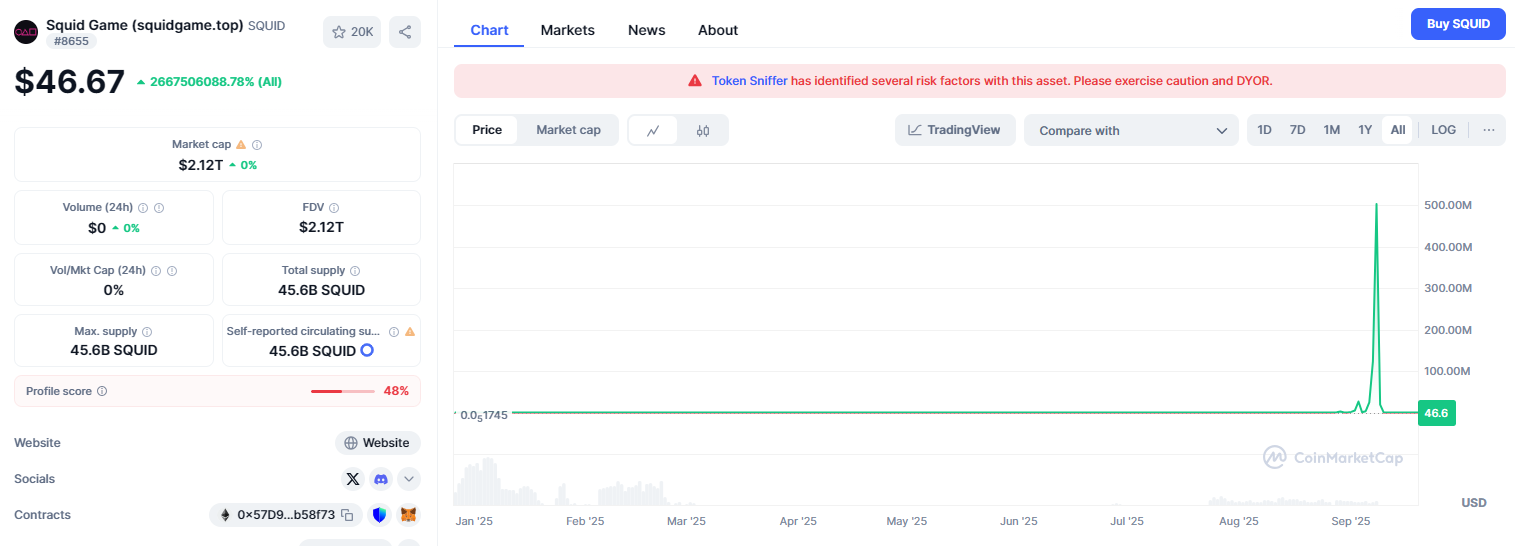
Squid Game fake token Pump & dump
Rug pull (ragpull)
Principle: Project creators block withdrawals or pull the liquidity and vanish.
Example: A decentralized exchange promises bonuses, then one day the token collapses in value and the team deletes all accounts.
How not to get caught: Trust only projects with audited code and a public team.
Extortion and blackmail
Principle: The victim is threatened with the release of compromising material and asked to pay crypto.
Example: An email claims “we hacked your computer and recorded video” and demands payment in bitcoin.
How not to get caught: Ignore such emails and report them to law enforcement.
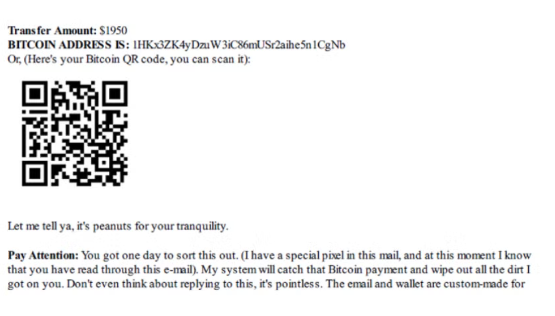
Extortion example
Romance scams
Principle: Scammers build trust on dating sites and then, “for our future together,” propose investing in crypto. Unlike pig butchering, this scheme focuses on cultivating a romantic relationship with the victim.
Example: A fiancé from Europe convinces you to invest in a joint business via a fake platform.
How not to get caught: Don’t send money to people you only know online.
Job scams
Principle: The victim is offered remote side work where you must deposit funds to complete tasks.
Example: The first tasks bring profits; then you’re told to deposit a large amount, after which your account is blocked.
How not to get caught: Legitimate jobs don’t require upfront payments — if they ask for a deposit, it’s a scam.
Fake websites and apps
Principle: Scammers make copies of popular services; victims enter their credentials and lose funds.
Example: The “app” you downloaded turns out to be a trojan.
How not to get caught: Install software only from official sites and app stores.
Malware
Principle: Malware steals private keys or replaces wallet addresses when you copy them.
Example: When sending funds, the recipient’s address is swapped for the scammer’s address.
How not to get caught: Use antivirus software and hardware wallets; manually verify addresses.
P2P Scams
“Triangle”
Principle: The scammer links a crypto seller and a victim so that one sends money to the other while the crypto goes to the scammer.
Example: The victim thinks they’re buying a product and transfers money to the crypto seller’s card, while the coins go to the scammer.
How not to get caught: Work only through platforms with escrow; verify deal details in person at the exchanger’s office.
Fake screenshots and SMS
Principle: The scammer shows a forged payment notification to rush the crypto transfer.
Example: You receive an SMS saying “funds credited,” but no money has arrived.
How not to get caught: Check the incoming payment in your banking app.
Attractive terms
Principle: The attacker lures the victim with an inflated exchange rate for crypto, then suddenly changes the price during the deal.
Example: An ad offers to buy bitcoin at $25,000 when the market is $23,000, but by the time of the deal the “rate” has dropped to $20,000.
How not to get caught: Confirm the terms at every step of the deal.
Money up front (with a low network fee)
Principle: After several honest transactions to build trust, the scammer proposes a large transfer with a low network fee that can be canceled.
Example: The crypto “hangs,” the victim sends fiat, and the scammer cancels the blockchain transfer.
How not to get caught: Wait for on-chain confirmations; verify transactions via blockchain explorers.
Fake support
Principle: Posing as P2P-platform staff, scammers extract codes, seed phrases, and passwords.
Example: A “support agent” asks you to send an SMS code “to verify the deal.”
How not to get caught: Contact support only through official channels.
Refund (“chargeback”)
Principle: The buyer transfers money, receives cryptocurrency, and later reverses the payment through the bank.
Example: The seller sends USDT, but a week later the bank returns the money to the buyer.
How not to get caught: Work only with users who have strong reputations and high ratings.
“Overpayment”
Principle: The scammer sends a larger amount and asks you to return the difference, then cancels the first transfer.
Example: Instead of 10,000 dollars, 20,000 arrive; the scammer asks you to return the “extra” 10,000 and then reverses the original payment.
How not to get caught: Don’t return “extra” money without confirmation from the bank.
Checklist: How Not to Fall for a Crypto Scam
- Use only trusted websites and official apps.
- Never share your seed phrase or verification codes.
- Don’t believe promises of guaranteed returns.
- Conduct deals only through platforms with escrow and solid reputations.
- Make sure the blockchain transaction has confirmations.
- Never agree to off-platform deals.
- Match the payer’s full name and payment details.
- Remember: haste and greed are scammers’ primary tools.
Conclusions
Scammers never stand still. Every day, in response to exposed threats, criminals come up with new ways to get at your crypto. The only real defense is knowledge. If you understand how the bad actors operate and which “strings” they might pull, you have a fighting chance to resist the threat.
The Quickex editorial team constantly monitors emerging threats. Follow our publications to stay safe.
You can safely buy or exchange cryptocurrency on the time-tested Quickex exchange service.
Disclaimer: The material in this article is not financial or investment advice. Everything stated here reflects the author's personal view and should not be treated as a recommendation to trade or invest. We make no warranties regarding the accuracy, reliability or completeness of the information presented. Cryptocurrency markets are highly volatile and can move unpredictably. Before committing any funds, every investor, trader or crypto user should study several independent sources and check the regulations that apply in their own jurisdiction.