

In the crypto world, the question of whether the 21 million Bitcoin issuance can be increased hasn’t died for over a decade. Community members want to know if there’s a way to mint more BTC than originally planned.
The Quickex editorial team dug into the issue. Here’s whether 21 million Bitcoins should be considered the issuance ceiling, or if there are ways to produce more BTC.
Track how the Bitcoin price changes on Quickex while the crypto community debates the possibility of increasing the cryptocurrency’s issuance.
Where Did The 21 Million Limit Come From
Satoshi Nakamoto, Bitcoin’s anonymous creator, didn’t pick this number at random. It’s neither “nice” nor symbolic — just mathematically calibrated. Bitcoin’s model is designed so that every four years miners receive half as many coins per mined block. This process is called halving.
Gradually, the issuance of new Bitcoins slows, and by around 2140 the last satoshi — the smallest unit of Bitcoin — will be mined. And that’s it; issuance will end.
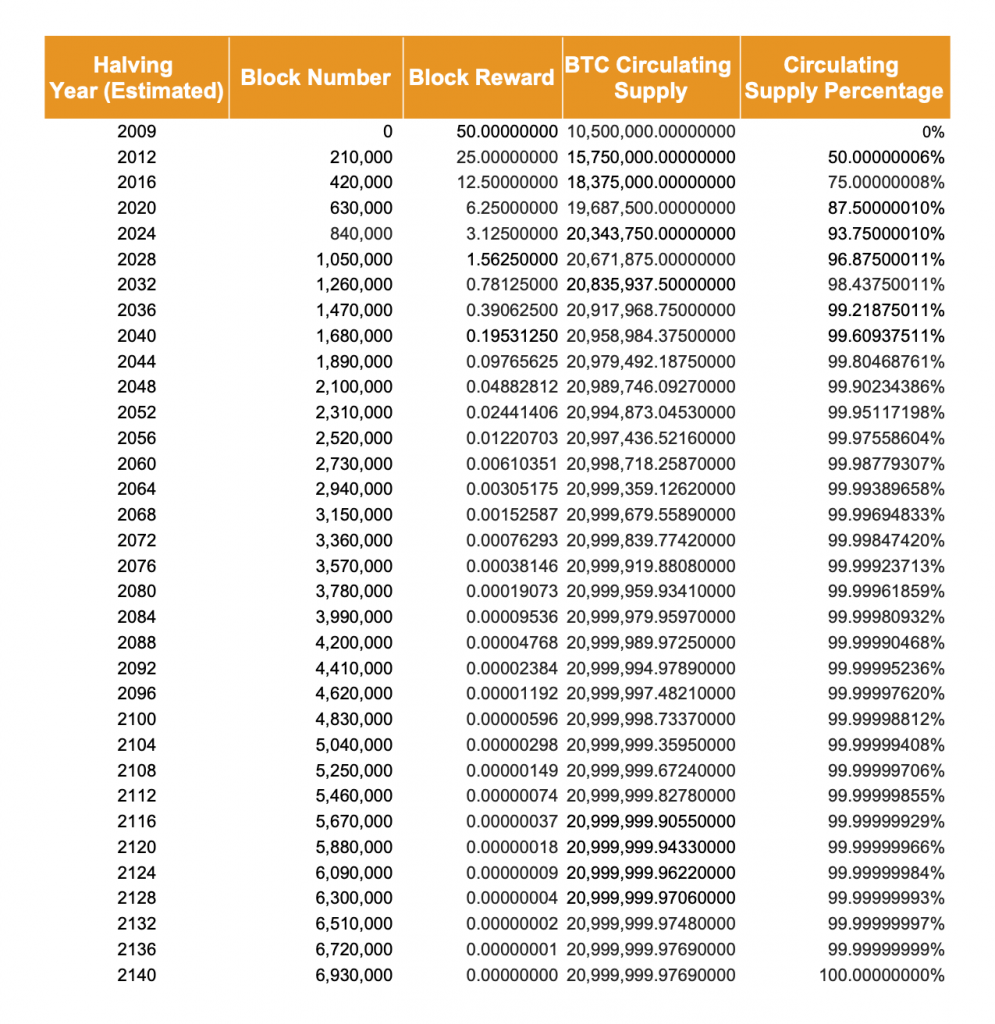
Projected schedule of Bitcoin halvings.
This very constraint made Bitcoin what it is: digital gold. In Satoshi’s vision, it can’t be “printed” like dollars or euros. It’s governed not by politicians, but by code.
BlackRock Sows Discord
In December 2024, representatives of BlackRock, the issuer of the market’s most popular Bitcoin ETF, questioned the cryptocurrency’s limited issuance.
“There’s no guarantee that the 21 million Bitcoin limit won’t be changed,” the organization maintains.
The phrase instantly spread across social media. Some thought a revolution was brewing; others smirked — just a typical slip. The truth, as usual, lies somewhere in between.
Read without context, the statement can be scary. But BlackRock was simply hedging. Financial giants don’t give 100% guarantees on anything, especially when it comes to a decentralized network without a central authority.
Bitcoin is open-source code. Anyone can propose a change. But proposing doesn’t mean everyone will agree. To change the limit, almost the entire world would have to say “yes”: developers, miners, node operators, and users.
So, Can BTC Issuance Be Changed
Yes, the code can be changed. But persuading all network participants to adopt a new version is science fiction. For that to happen, the interests of millions of people across different countries would have to align. It’s like all governments agreeing to introduce the same tax. Debates can drag on, but true unity is unlikely.
First, changing issuance is disadvantageous. It would reduce Bitcoin’s value. Many view BTC as “digital gold” precisely because the global supply is limited. That underpins the model of gradual appreciation. Agreeing to “print” new BTC would automatically dilute the coin’s value.
Second, adjusting issuance is technically difficult. Tweaking code isn’t the hardest part — activating it is. That would require all network participants to update within a narrow window to comply with new rules. Coordinating that in a fragmented market is unrealistic.
Why Have A Hard Cap At All
It’s simple: it creates trust. Bitcoin is valuable because its supply is limited. It’s protection against inflation.
Remove the cap, and the core idea — scarcity — disappears. Bitcoin would cease to be “digital gold” and turn into yet another form of electronic money that can be created at will. Markets won’t take that calmly.
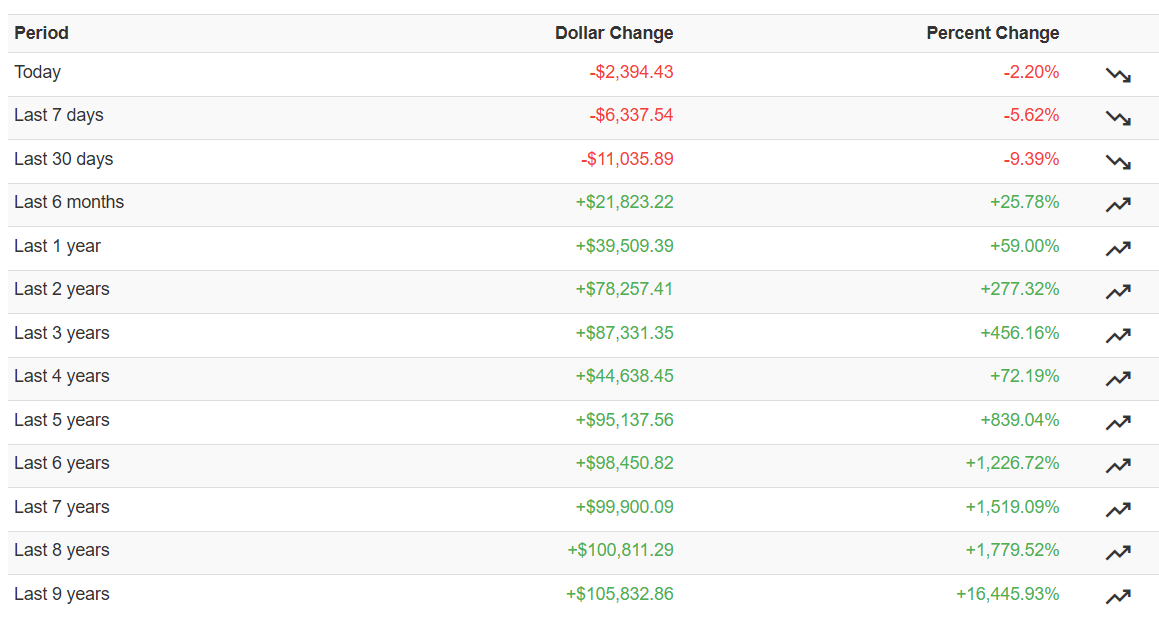
How Bitcoin’s price has changed over the last 9 years. Source: CoinDance
What Happens If the Cap Is Changed Anyway
Let’s imagine someone does decide to increase issuance. What then?
First, Bitcoin would lose trust. Its entire philosophy rests on the immutability of rules. Break them, and the magic evaporates.
Second, the price would crash. Investors buy BTC because they know there will never be more than 21 million coins. If that stops being true, a sell-off begins.
Third, the network would split. One part would keep the old cap; the other would switch to the new version. The Bitcoin Cash episode showed how that ends: the original stays dominant, while the fork loses interest and market cap.
Why The Community Won’t Allow Changes
It’s not in miners’ interest: the more Bitcoins in circulation, the lower their price and miners’ profits. Developers are against it too — for them, the 21 million cap is not just a rule but a symbol. Remove it, and Bitcoin stops being itself. Without a strict cap, BTC becomes a meaningless coin.
Thoughts On Additional Issuance
Yes, such ideas have surfaced. Even Hal Finney, one of the network’s earliest participants, mused that after all coins are mined, minimal inflation could be introduced to incentivize miners. But he himself admitted it was merely a theoretical thought experiment. In practice, the community is unlikely to agree to anything like that.
Bottom Line
You can rewrite code, but you can’t rewrite trust. You can create a fork, but you can’t force everyone to see it as real Bitcoin. Trying to change the 21 million cap is like trying to un-bake a pie. Nothing good is likely to come of it.
The cap isn’t just a line of code; it’s the foundation of the entire ecosystem. BlackRock was merely hedging with its wording, not hinting at changes.
Bitcoin exists because millions of people believe in a simple rule: 21 million coins — not one more. As long as that belief holds, nothing needs to change.
You can exchange Bitcoin for USDT at a good rate using the time-tested Quickex exchanger.
FAQ: Crypto Market Cap — Bitcoin, XRP, Shiba Inu & More
What is crypto market cap and how is it calculated?
Coin market cap (market capitalisation) is the most widely used metric to measure the relative size of a cryptocurrency. It tells you the total market value of all coins currently in circulation.
Formula: Market Cap = Current Price × Circulating Supply
- Example: If a coin trades at $10 and has 500 million coins in circulation → market cap = $5 billion.
- Circulating supply — coins actively trading on the market (excludes locked, burned, or unvested tokens).
- Fully diluted valuation (FDV) — uses total max supply instead of circulating supply; always higher than market cap for projects with ongoing token unlocks.
- Why it matters: Market cap ranks coins by size, measures dominance, and helps compare projects regardless of individual token price.
- Limitation: Market cap doesn’t reflect liquidity — a coin can have a high cap but low daily trading volume, making large trades difficult to execute.
What is the Bitcoin market cap?
Bitcoin’s market cap makes it the largest cryptocurrency by a significant margin — often exceeding the combined market cap of all other top-10 coins.
- Current BTC market cap: ~$1.9 – $2.1 trillion USD (based on a price range of ~$95,000–$105,000 and ~19.7M BTC in circulation as of mid-2026).
- Bitcoin dominance: ~54–58% of total global crypto market cap — the key indicator of whether capital is flowing into Bitcoin or altcoins.
- Fixed supply: Hard cap of 21 million BTC. ~94% already mined; the last Bitcoin won’t be mined until ~2140.
- All-time high market cap: ~$2.3 trillion (January 2025, when BTC price hit ~$109,000).
- Comparison: Bitcoin’s market cap exceeds that of most sovereign wealth funds and rivals the GDP of mid-sized economies.
How are cryptocurrencies ranked by market cap?
Cryptocurrencies ranked by market cap are typically grouped into three tiers — each carries a different risk/reward profile:
| Tier | Market Cap Range | Examples | Profile |
|---|---|---|---|
| Large cap | > $10B | BTC, ETH, XRP, SOL, BNB | High liquidity, lower volatility, institutional grade |
| Mid cap | $1B – $10B | LTC, AVAX, LINK, SUI | Higher upside potential, moderate risk |
| Small cap | < $1B | SEI, many altcoins | High volatility, high risk, high reward potential |
| Meme cap | Varies widely | SHIB, PEPE, DOGE | Sentiment-driven, extreme volatility |
- Live rankings are tracked by aggregators like CoinMarketCap and CoinGecko, updated in real-time.
- Dominance shift: When Bitcoin dominance drops, capital typically rotates into mid- and small-cap altcoins — a key signal traders watch.
- Total crypto market cap (all coins combined) sits at approximately $3.0–$3.5 trillion as of mid-2026.
What is the XRP market cap?
XRP consistently ranks among the top 5 cryptocurrencies by market cap, cementing its position as a large-cap digital asset focused on cross-border payments and financial institution settlement.
- Current XRP market cap: ~$120 – $145 billion USD (based on a price of ~$2.10–$2.50 and ~57.2 billion XRP in circulation as of mid-2026).
- Total supply: 100 billion XRP; Ripple Labs holds a significant portion in escrow, releasing up to 1 billion XRP per month — an ongoing supply dynamic to monitor.
- Rank: Typically #3–#5 by market cap globally, behind Bitcoin and Ethereum.
- Catalyst: The resolution of the SEC vs. Ripple lawsuit in 2024 and growing adoption of RippleNet by banks and payment providers continue to support XRP’s market cap.
What are the Shiba Inu and PEPE coin market caps?
Shiba Inu (SHIB) and PEPE are the two largest meme coins by market cap. Both are highly sentiment-driven and can experience extreme price swings based on social media trends rather than fundamental utility.
Shiba Inu (SHIB) market cap:
- Current SHIB market cap: ~$6 – $9 billion USD as of mid-2026.
- Circulating supply: ~589 trillion SHIB (large supply keeps the per-token price in fractions of a cent).
- Ecosystem: SHIB has expanded beyond meme status with Shibarium L2, ShibaSwap DEX, and SHIB: The Metaverse project.
- All-time high market cap: ~$41 billion (October 2021, during peak meme coin mania).
PEPE coin market cap:
- Current PEPE market cap: ~$3 – $5 billion USD as of mid-2026.
- Supply: 420.69 trillion PEPE — a fixed, fully circulating supply with no team allocation.
- Key distinction: PEPE has no utility or roadmap by design — its market cap is driven entirely by community sentiment and trading volume.
- All-time high: ~$0.00002803 per token (May 2024); ranked consistently in the top 20 by market cap.
What is the SEI market cap?
SEI is a Layer-1 blockchain purpose-built for trading applications, featuring a native on-chain order book and parallelised EVM execution. It sits in the small-to-mid cap range of the crypto market cap rankings.
- Current SEI market cap: ~$0.8 – $1.4 billion USD as of mid-2026 (price range ~$0.17 – $0.30, ~5.25 billion SEI in circulation).
- Total supply: 10 billion SEI; ongoing vesting unlocks create sell pressure — similar to SUI and other recent Layer-1 launches.
- Positioning: SEI targets DeFi traders and high-frequency on-chain applications with twin-turbo consensus and optimistic parallelisation — 28,300 TPS claimed throughput.
- All-time high market cap: ~$3.5 billion (February 2024, when SEI reached $0.70+).
- Risk factor: SEI’s market cap is heavily influenced by DeFi TVL growth on the Sei network and the broader altcoin market cycle.
Disclaimer: The material in this article is not financial or investment advice. Everything stated here reflects the author's personal view and should not be treated as a recommendation to trade or invest. We make no warranties regarding the accuracy, reliability or completeness of the information presented. Cryptocurrency markets are highly volatile and can move unpredictably. Before committing any funds, every investor, trader or crypto user should study several independent sources and check the regulations that apply in their own jurisdiction.