

In the U.S., nearly every legitimate way to buy USDT (Tether) from a business requires identity checks. That’s because platforms that exchange dollars for crypto are treated as money services businesses (MSBs) and must run KYC/AML under federal rules. Trying to “go around KYC” with workarounds or offshore sites can put your money and legal standing at risk. This guide explains what’s actually legal, what the “no-KYC” claims really mean, and safer alternatives if your goal is to buy crypto privately without cutting corners.
Is It Legal to Buy USDT Without KYC in the United States?
Buying crypto is legal in the U.S., but the businesses that sell it to you (exchanges, brokerages, kiosks) generally must verify customers. FinCEN’s 2019 guidance classifies most crypto exchangers as MSBs under the Bank Secrecy Act, which brings KYC, AML programs, and reporting obligations. In plain English: if a company sells you USDT for dollars, it almost always needs to identify you.
A few important implications:
- Reputable U.S. platforms will ask for ID. Coinbase and Kraken are straightforward examples—both document identity checks as part of onboarding. If a site claims you can buy USDT no verification in the USA or do a USDT exchange in the USA without a passport, be extremely cautious.
- Compliance isn’t optional. OFAC expects virtual-asset firms (and users) to avoid sanctioned activity; the agency’s guidance and past enforcement underscore that crypto is traceable and subject to U.S. sanctions laws.
- Kiosks/ATMs aren’t a loophole. U.S. regulators are tightening oversight of crypto kiosks because scammers use them; new notices and state actions are increasing limits and checks. Don’t assume “cash = anonymous.”
Bottom line: If your goal is to buy USDT in the USA without ID from a business, true anonymity is not realistic without bumping into compliance walls. What you can do is pursue privacy-preserving—but legal—paths, or consider alternatives that reduce how much personal data you share.
Platforms That Allow Anonymous USDT Purchases
Based on searches for no KYC USDT exchanges USA 2025, several platforms emerge, but none are fully risk-free or US-licensed for anonymity. These often require no ID for small transactions but may flag larger ones. Prioritize wallets with strong security (e.g., two-factor authentication) and test with small amounts.
- Houdini Swap: A platform allowing USDT swaps without KYC for crypto-to-crypto trades. Users report it supports USDT via integrations with chains like Tron or Ethereum. However, it’s not US-regulated.
- ChangeNOW: A non-custodial exchange for instant USDT purchases without registration or KYC for limits under 1 BTC equivalent. It accepts credit cards or crypto, but US users may face IP restrictions—VPNs are common workarounds.
- FixedFloat: Similar to ChangeNOW, it enables anonymous USDT buys via floating or fixed rates, no account needed. Limits apply for unverified users, and it’s popular for its speed.
- SimpleSwap: Offers no-KYC swaps for USDT, supporting over 500 coins. User feedback on Trustpilot notes reliability for small trades, but larger ones may prompt verification.
A key point: If linked to a US bank account, transactions could still be reported under FATCA (Foreign Account Tax Compliance Act).
P2P Exchanges
Source: Paxfull
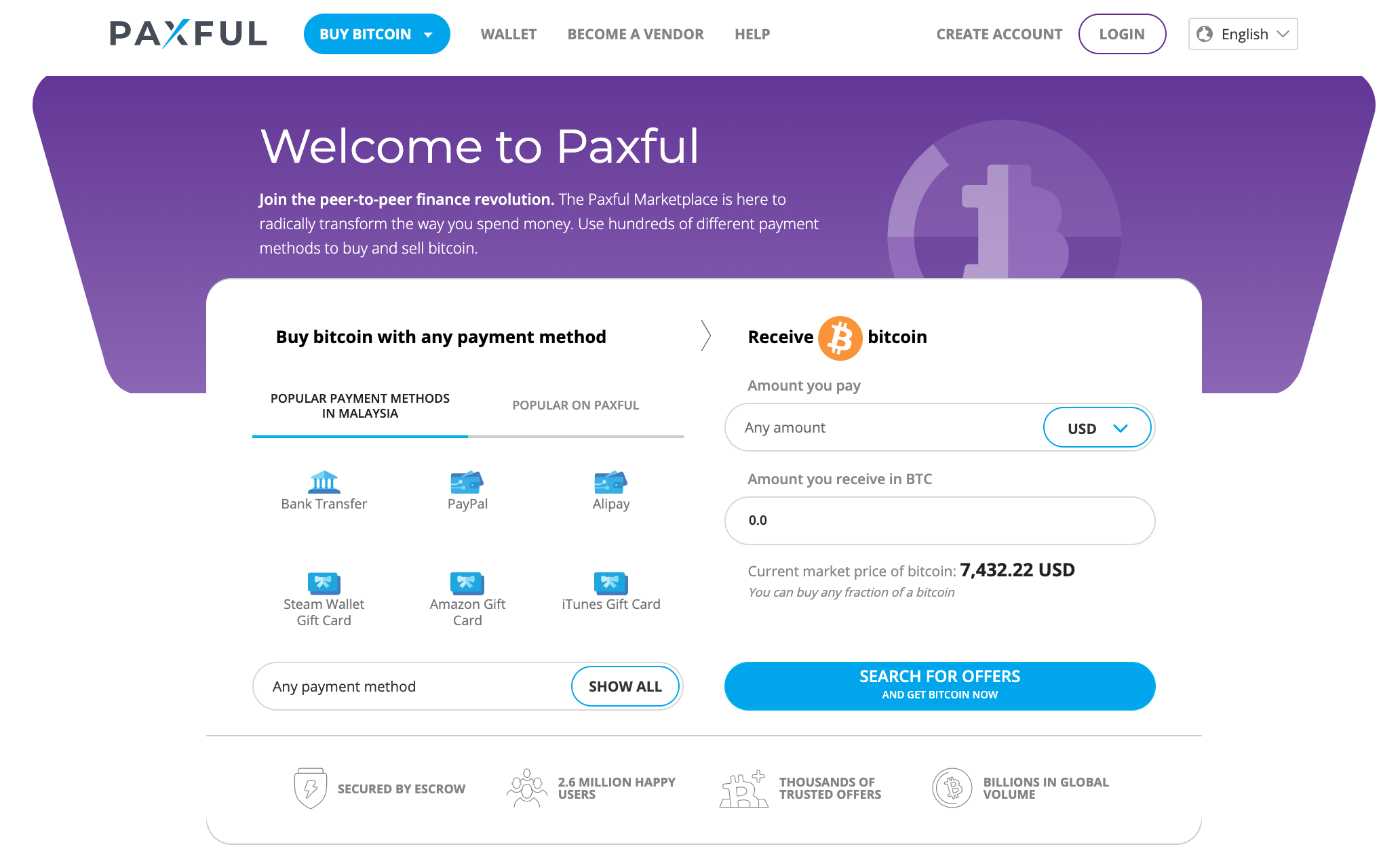
Peer-to-peer USDT in the USA often means marketplaces that match buyers and sellers directly. Reputable venues operating in or serving U.S. users increasingly require platform KYC and may screen listings, because unregistered P2P exchangers themselves can fall under MSB rules. If a P2P site promises that you can buy USDT in the USA no KYC, understand the legal risk; FinCEN has specifically warned about illicit activity in P2P channels. Common options include:
- Paxful: A leading P2P marketplace for USDT via gift cards, bank transfers, or cash. It allows no-KYC for buyers in some cases, but sellers often request ID. US users report partial anonymity for small trades (<$1,000), though platform-wide KYC is rolling out per 2025 updates.
- LocalCoinSwap: Supports anonymous P2P USDT trades with escrow. No mandatory KYC, but users advise using VPNs for US access. Popular for cash-by-mail or in-person meets.
- Bisq: A decentralized P2P network for USDT buys without KYC. It uses Tor for privacy and supports fiat-to-USDT via bank wires or alt payments. Community-driven, with strong anti-scam measures via arbitration.
- Hodl Hodl: Non-custodial P2P exchange for USDT, no KYC required. Uses multisig escrow; users praise it for privacy but note slower trade times.
- Reality check: Systematic P2P brokering without registration can be seen as operating an unlicensed MSB. X discussions from 2025 highlight users facing account freezes on platforms like Paxful due to US IP detection. For truly private exchanges, consider OTC (Over-the-Counter) with known parties, but avoid marketplaces if anonymity is paramount for you.
Crypto Vouchers & Gift Cards
Source: Bitrefill
Some countries sell crypto vouchers at retail. In the U.S., availability is spotty and vendors often require some verification to redeem or spend, due to AML expectations and card network rules. Treat blanket promises like “buy stablecoins anonymously” with skepticism. Here are some indirect methods:
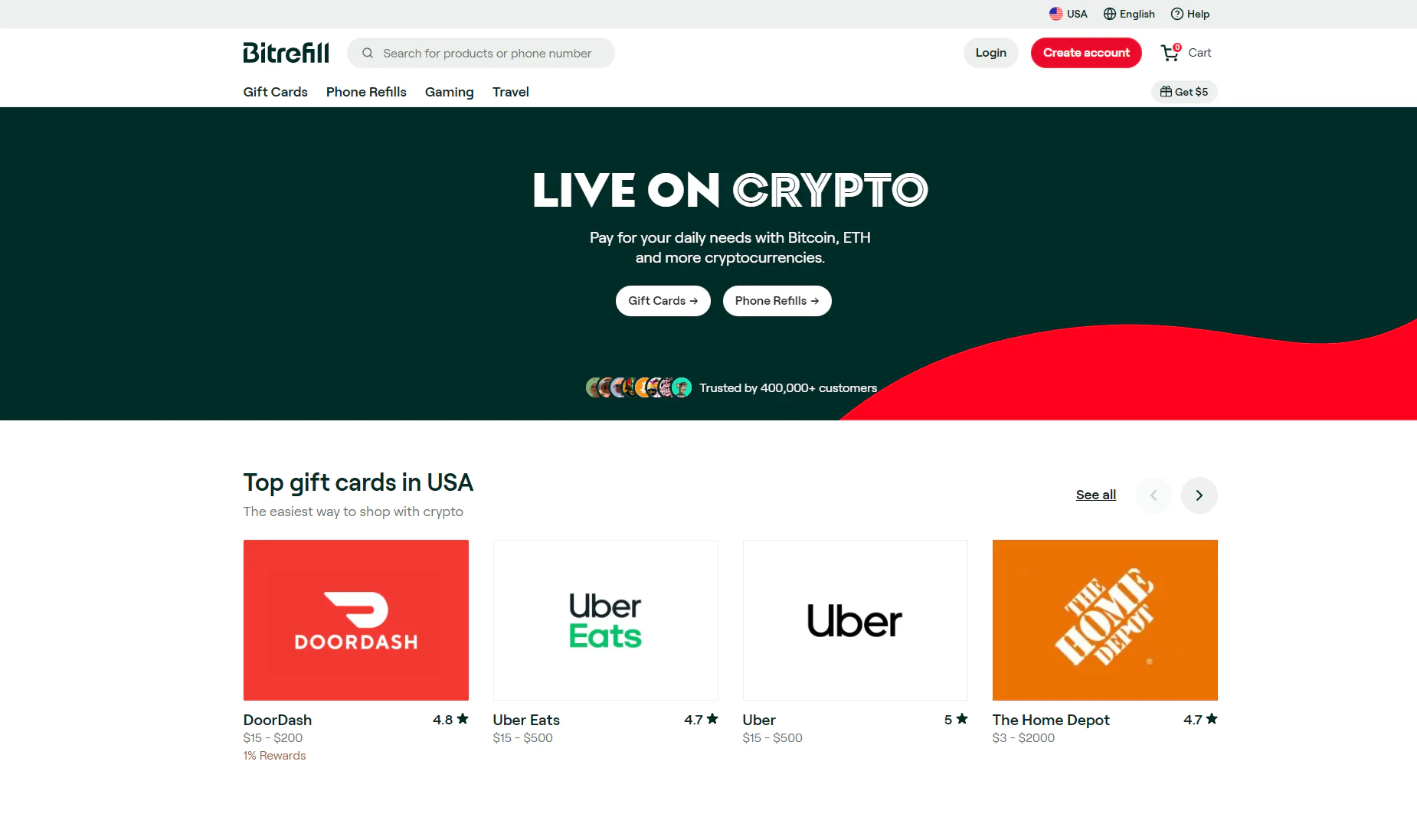
- Bitrefill: Allows purchasing gift cards (e.g., Amazon, Google Play) with crypto, then exchanging for USDT on P2P websites. No KYC for buys under thresholds; users convert vouchers to USDT via integrated services.
- Coinsbee: Sells e-gift cards and vouchers payable in USDT without full verification. Supports brands like Walmart or Steam; redeem anonymously, but some cards require phone verification.
- GiftCardToCrypto (or similar services like eGifter with crypto plugins): Platforms where US users buy vouchers with fiat or crypto, then trade for USDT on P2P.
- Paxful/Binance P2P (gift card sections): Dedicated gift card trading for USDT. Sellers accept cards like iTunes or prepaid Visa without buyer KYC, though platform policies vary.
Step-by-Step: Buy USDT with Privacy in Mind
If you want non-custodial purchase of USDT and better privacy without skating around the law, this flow balances both:
- Pick a regulated on-ramp you’re comfortable identifying with.
Look for clear disclosures, up-to-date attestations and security controls (SOC 2, hardware security keys, etc.). Expect ID checks—everyone reputable performs them (examples: Coinbase, Kraken). - Verify once; minimize future data trails.
Use strong 2FA (security keys), limit linked services, and opt out of marketing data sharing where possible. Many platforms publish their KYC details—read what they collect and why. - Buy a small amount of USDT.
Stick to supported rails and avoid third-party “payment hacks.” This keeps you within the platform’s compliance perimeter. - Withdraw to a self-custody wallet you control.
The privacy win comes from self-custody, not from sketchy on-ramps. Generate a new address in your wallet for the withdrawal and avoid reusing addresses. (You’re still responsible for taxes and lawful use.) - Segment your wallets.
Keep a “public” wallet for exchange flows and a separate wallet for everyday spending or DeFi. Don’t mix them unless needed; this reduces clustering on block explorers. - Pay attention to sanctions and counterparties.
OFAC expects firms and, increasingly, users to avoid sanctioned addresses. When in doubt, don’t touch it.
This path won’t satisfy the intention of how to buy USDT in the USA no KYC literally—but it gets you to no-custodial control with less ongoing data sharing, which is usually the real aim.
Tips for Staying Safe While Buying Anonymously
- Be skeptical of no-KYC marketing to U.S. residents. It often signals an unlicensed MSB, which can disappear with your funds—or land you in the middle of an enforcement mess. FinCEN’s guidance is explicit about who counts as an exchanger and what they owe regulators.
- Avoid cash-to-crypto kiosks as a privacy trick. Many now impose verification and limits; states are tightening rules due to fraud. Scammers love kiosks precisely because victims can’t reverse transactions.
- Never send ID or selfies over chat to strangers. That’s not “lighter KYC”; it’s identity theft bait.
- Keep receipts and wallet records. Even if you buy crypto privately, U.S. tax rules still apply.
- Don’t try to obfuscate flows to evade law enforcement or sanctions. OFAC and U.S. courts have made clear that crypto is traceable and subject to the same laws as dollars.
Alternatives to No-KYC Platforms
If your aim is buy USDT with less friction, consider these legal alternatives:
- Use a platform you trust, then move off quickly. Do a one-time KYC, fund, buy USDT, and withdraw to self-custody as standard practice. This is the most robust option in the U.S.
- Explore bank-grade on-ramps with transparent policies. Some firms put privacy commitments and security audits front-and-center, which may feel better than using an unknown offshore site.
- If you truly need to minimize personal footprint, reconsider whether USDT is the right tool. In the U.S., any dollar-backed stablecoin sold by a business will sit under KYC. For private transfers among people you know, peer-to-peer USDT in the USA is possible—but marketplace intermediation typically triggers KYC anyway.
Where “no-ID crypto” claims go wrong
- “Buy USDT with cash in the USA at any ATM—no ID.”
Regulation and operator policies have tightened; many kiosks require at least phone/ID checks and impose limits. States are adding rules to fight fraud. - “This offshore site doesn’t ask questions.”
If you’re a U.S. person, using it can violate the site’s own terms and expose you to OFAC or fraud risks. OFAC’s virtual-currency guidance is explicit; sanctions apply to crypto, too. - “P2P means no rules.”
FinCEN’s framework covers people “in the business” of exchanging crypto; chronic P2P brokering can be MSB activity requiring registration and KYC.
Summary
- In the U.S., “no verification” USDT in the USA is mostly a myth for reputable businesses. FinCEN treats most dollar-to-crypto sellers as MSBs that must perform KYC.
- Your best bet for a buy USDT in the USA without ID vibe—without legal headaches—is to verify once on a trusted platform, withdraw to self-custody, and practice smart privacy hygiene (fresh addresses, wallet segmentation, minimal data sharing).
- Be wary of any site promising anonymous USDT purchase USA, USDT exchange USA without passport, or best way to swap slogans repurposed for USDT; those pitches often come from unlicensed or offshore services. OFAC, FinCEN, and state authorities are active here.
- If you truly need more privacy, consider non-custodial purchase via a regulated on-ramp + immediate withdrawal, or conduct small, lawful transactions with people you already know—while respecting tax and sanctions rules.
Privacy and compliance don’t have to be enemies. Aim for legal, low-friction, and self-custodial—not “secret.” That’s how you keep both your coins and your peace of mind.
FAQ
How do I purchase USDT? (Step-by-step)
There are three main ways to buy USDT in the United States in 2026:
1. Centralized Exchange (CEX) — most common
- Create an account on a U.S.-licensed exchange — Coinbase, Kraken, Gemini, or Binance.US.
- Complete KYC (ID verification — usually 5–15 minutes).
- Deposit USD via bank transfer (ACH — free or minimal fee), wire transfer, or debit card (2–4% fee).
- Buy USDT on the USDT/USD pair — market order (instant) or limit order (set your price).
- Withdraw to your personal wallet (ERC-20, TRC-20, or Solana network) for self-custody.
2. P2P Marketplace
Platforms like Paxful, Binance P2P, and Bisq let you buy USDT directly from verified sellers using bank transfer, Zelle, Venmo, Cash App, or PayPal. The platform holds USDT in escrow until both parties confirm, providing security against counterparty fraud. P2P often offers competitive rates but requires extra caution: trade only with high-rated sellers and never release payment outside the platform’s official flow.
3. No-KYC Crypto Swap
If you already hold any cryptocurrency (BTC, ETH, SOL, XMR, etc.), the fastest route is to swap it for USDT on Quickex:
- Go to quickex.io — no account or registration needed.
- Select your source coin (e.g., BTC) and destination (USDT).
- Choose the USDT network (ERC-20 for Ethereum, TRC-20 for Tron, SOL for Solana) and enter your USDT wallet address.
- Send your source crypto to the provided address.
- USDT arrives in your wallet within minutes — no KYC, no ID, no account.
Quickex is non-custodial — it never holds your funds. The swap executes and coins go directly to your wallet address. Nothing remains on the platform after the transaction.
Can USDT be converted to cash?
Yes — but a conversion step to fiat is always required first. USDT is a digital token, not legal tender — banks don’t accept it directly. Here are the main cash-out methods in 2026:
| Method | Speed | Fees | Best For |
|---|---|---|---|
| CEX withdrawal | 1–3 business days (ACH); same day (wire) | 0.1–0.5% trading + withdrawal fee | Most users — sell USDT/USD on Coinbase, Kraken, or Gemini, then withdraw fiat to bank |
| P2P sale | Minutes to hours | 0–2% (spread-based) | Flexibility — receive via Zelle, Venmo, Cash App, PayPal, or bank transfer |
| Crypto debit card | Instant (card spend or ATM) | 1–3% + ATM fees | Spending directly or ATM cash — BitPay, Coinbase Card, Bybit Card |
| Crypto ATM | Minutes | 3–8% (high) | Cash in hand — no bank account needed; highest fees |
| Direct Tether redemption | 1–3 business days | ~0.1% + $1,000 minimum | Large holders only — redeem USDT directly with Tether Limited for USD via tether.to (requires verified account, $100K+ minimums for most users) |
Recommended path for most U.S. users: deposit USDT into Coinbase or Kraken → sell for USD → withdraw via ACH to your bank account (free on most platforms, settles in 1–3 days).
Before cashing out: if you want to swap USDT for another crypto first (e.g., BTC, ETH, SOL), you can do it instantly on Quickex — no registration, no KYC, live rate.
What is the best platform to buy USDT in the U.S.?
For U.S. residents, the best platform depends on your priorities:
| Platform | Fees (USD → USDT) | KYC Required | Best For |
|---|---|---|---|
| Coinbase | 0.00–0.60% (Advanced); ~1.5% (Simple) | ✅ Yes | Beginners; S&P 500 trust; ACH free deposit |
| Kraken | 0.00–0.40% | ✅ Yes | Lower fees; security-first; advanced traders |
| Gemini | 0.20–0.40% | ✅ Yes | NYDFS-regulated; institutional-grade custody |
| Binance.US | 0.00–0.60% | ✅ Yes | Deepest USDT liquidity (when available in your state) |
| Quickex | Spread-based (competitive) | ❌ No | Crypto-to-USDT swap; no registration; instant; non-custodial |
Note: some U.S. exchanges are pivoting toward USDC (Circle’s stablecoin) due to regulatory preferences — check whether your chosen platform supports USDT directly or requires swapping from USDC first.
How do I swap USDT on Quickex? (Step-by-step)
Whether you want to get USDT (swap any crypto → USDT) or spend USDT (swap USDT → any other coin), the process on Quickex is the same:
- Visit quickex.io — no registration, no account creation.
- Select your pair: choose what you’re sending (e.g., BTC) and what you want to receive (e.g., USDT). Or reverse: send USDT, receive BTC, ETH, SOL, XRP, or any of 100+ supported assets.
- Choose the USDT network: ERC-20 (Ethereum), TRC-20 (Tron — cheapest fees), or SOL (Solana — fastest). Make sure your receiving wallet supports the network you choose.
- Enter your destination wallet address — this is where your swapped coins will be sent directly.
- Send your source crypto to the address Quickex provides.
- Done — your USDT (or target coin) arrives in your wallet within minutes.
Why Quickex is safe:
- Non-custodial: Quickex never holds your funds in a hosted wallet. Coins go directly from the liquidity provider to your address.
- No account / no KYC: nothing to hack, freeze, or subpoena — no user account exists on the platform.
- No stored funds: after the swap completes, zero residual balance remains anywhere on Quickex.
- Live rate: the exchange rate is locked at the moment you initiate the swap — transparent, no hidden markups.
Disclaimer: The material in this article is not financial or investment advice. Everything stated here reflects the author's personal view and should not be treated as a recommendation to trade or invest. We make no warranties regarding the accuracy, reliability or completeness of the information presented. Cryptocurrency markets are highly volatile and can move unpredictably. Before committing any funds, every investor, trader or crypto user should study several independent sources and check the regulations that apply in their own jurisdiction.