

If your goal is a quick crypto-to-crypto swap without opening an exchange account, you can use an instant, non-custodial service. For example, exchange BTC to XMR to move from a public coin to a privacy-focused one in a single flow — helpful when you want to keep registration steps to a minimum and stay self-custodial.
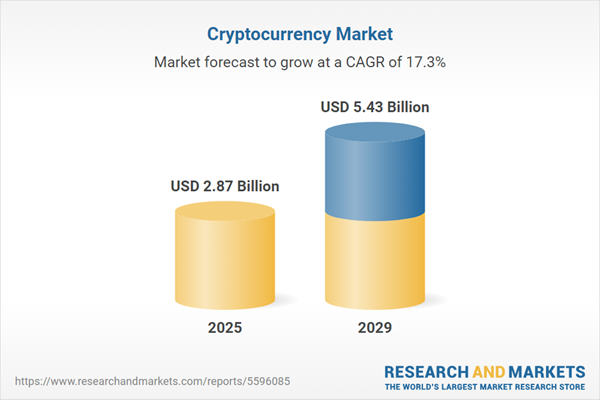
Source: Research and Markets
Bar chart of cryptocurrency market forecast: growth from USD 2.87 Billion in 2025 to USD 5.43 Billion in 2029 at a CAGR of 17.3%.
This guide is informational. Always follow Kenyan laws and any tax or reporting rules that apply to you. Non-KYC options usually come with strict limits and extra personal responsibility.
What “without KYC” really means
“No KYC” typically refers to crypto-to-crypto swaps where you connect a wallet and exchange assets without submitting an ID. You still leave a public on-chain trail for most coins. Privacy coins and good wallet hygiene can reduce exposure, but they don’t grant immunity from regulation or law enforcement. For cryptocurrency trading in Kenya, think of non-KYC as “low-friction, self-custodial swaps,” not a way to dodge rules.
- Pros: speed, fewer forms, no exchange account, you keep keys.
- Cons: lower limits, no fiat on-ramp, fewer recourse options, you must double-check addresses, fees and slippage.
The main routes
Each route solves a different job. Decide what you need today (crypto-to-crypto rotation, buying with KES, or advanced DeFi routing) and pick the simplest tool that fits. Below are the three paths most Kenya-based users choose for bitcoin trading in Kenya and broader cryptocurrency trading in Kenya.
1) Instant non-custodial swap (crypto-to-crypto)
Best when you already hold crypto and want to rotate assets quickly. You send coin A from your wallet, receive coin B to your wallet — no order books or accounts. That’s handy for how to buy bitcoin in Kenya (indirectly: receive BTC after swapping from another coin) or just switching exposure (e.g., BTC to XMR, ETH to BTC) without a full exchange signup.
Typical flow:
- Pick the pair (e.g., BTC to XMR).
- Paste the destination address you control.
- Send the input coin from your wallet.
- Receive the output coin after network confirmations.
2) P2P marketplace (crypto–fiat)
If you need Kenyan shillings (KES) or want to fund with mobile money, a peer marketplace can work, but many P2P venues now require light KYC for higher limits and safety. Keep trades small, verify seller ratings, and use escrow. This path is often used for how to buy cryptocurrency, buy bitcoin, and sell bitcoin in Kenya via bank transfer or mobile-wallet payments.
To better understand off-ramps and safety, see the article: “How to Cash Out Crypto and Bitcoin: Secure Methods & Tips” — useful when planning clean exits to KES.
3) DEX + bridge (advanced)
Using a decentralized exchange with a wallet connection gives you pseudonymous swaps on supported chains. If the token you want isn’t on your chain, add a bridge step. This is flexible for cryptocurrency investment in Kenya, but you must manage gas, RPC hiccups, slippage, and smart-contract risks.
Step-by-step: a simple non-custodial swap
Use this if you already hold crypto and want to exchange without creating an account.

Source: Medium
Crypto exchange interface screenshot: Send 0.01 BTC, Receive 14,863,066,050.5 XMR, rate 1 BTC ≈ 148,630,660,505 XMR, with Exchange button.
- Decide the pair. Example: BTC to XMR to increase transaction privacy after the swap.
- Check the live quote and limits. Quotes move with the market; send promptly after you lock the rate window.
- Enter your receiving address (double-check it; paste errors are costly).
- Send the input coin from your own wallet. Wait for the required confirmations.
- Receive your output coin to your wallet. Verify the amount on-chain.
Tip: Keep a tab open with live market data while you plan entries for how to invest in cryptocurrency in Kenya, e.g., Bitcoin price today for quick checks during swaps.
Buying and selling with KES: realistic expectations
If your goal is how to buy bitcoin in Kenya directly with KES (or to cash out), understand the trade-off: most fiat on-ramps follow KYC/AML rules. Non-KYC is mainly for crypto-to-crypto. For buy bitcoin in Kenya without account creation, many users:
- Acquire a small amount of crypto from friends or local communities, then use a non-custodial swap to rotate into BTC/ETH.
- Or start with a low-tier P2P buy (where light verification is acceptable to you), then move funds on-chain and continue swapping without accounts.
To sell bitcoin in Kenya, the mirror approach applies: swap BTC to a stablecoin if needed, then use a P2P outlet for KES. Keep trade sizes modest until you’re comfortable with the counter-party flow.
Cost control: fees, slippage, and confirmations
Costs add up quietly. Before you press “send,” scan the four levers you can actually control — network fees, spreads, slippage limits, and confirmation counts. A 0.5–1% improvement on execution, repeated over time, compounds into real money for Kenya crypto traders.
- Network fees: vary by chain congestion. BTC can be spiky; L2s and alt-L1s are often cheaper.
- Service spread: instant swaps include a spread — compare the effective rate, not just the headline quote.
- Slippage: set a limit where available; volatile pairs move fast.
- Confirmations: privacy-oriented coins may require more confirmations; budget time accordingly.
Prefer video? Watch this short explainer to visualize the wallet-to-wallet swap flow: ”Crypto exchange with registration”.
Risk and compliance checklist
Non-KYC doesn’t mean “no rules.” Treat every swap like a financial transaction you may need to explain later. Keep clean records, respect limits, and avoid mixing personal and trading wallets to maintain clarity for cryptocurrency investment in Kenya tracking.
- Stay within limits. Non-KYC services enforce caps; splitting a big transfer into many parts can trigger flags or worse execution.
- Use your own wallets. Don’t send from exchange deposit addresses you don’t control.
- Keep receipts. Export transaction hashes; they’re essential for reconciling holdings and taxes.
- Mind local rules. If you’re considering how to invest in cryptocurrency in Kenya, check tax guidance and reporting thresholds.
- Counter-party vigilance. For P2P, verify ratings, insist on escrow, and never finalize off-platform.
Kenya-focused tips for beginners
If you’re just starting with cryptocurrency investment in Kenya, keep it simple:
- Start small and practice with test amounts before going bigger.
- Stick to major pairs (BTC, ETH, stablecoins) until you understand volatility.
- For bitcoin trading in Kenya, define your timeframe (scalp, swing, long-term) and journal entries/exits.
- Separate your trading wallet from your saving wallet.
- Back up seed phrases offline — no screenshots, no cloud drives.
Final thoughts
Getting from A to B without uploading documents is realistic for wallet-to-wallet swaps. Keep trades within posted limits, document your transactions, and prioritize self-custody hygiene. If you need a quick starting point for rotating assets, try a direct pair like BTC & XMR. For live checks during cryptocurrency trading in Kenya.