

Many people ask, is swapping crypto taxable? You are not alone. As we navigate the 2026 tax landscape. The rules around finance, liquid staking tokens and on-chain swaps have evolved.
If you have ever traded one asset for another on a centralized exchange, or swapped tokens within your wallet app. You might think you have avoided the tax man by keeping your money out of fiat currency. The Internal Revenue Service and global tax agencies see things differently.
Lets break down what you owe. How to report it. The legal strategies you can use to minimize your liability.
There is a misconception. Many newcomers to assets think that as long as they do not cash out their crypto into a traditional bank account. They have not triggered an event. This is false.
The 2026 Regulatory Landscape
Swapping crypto is taxable. Yes, swapping one cryptocurrency for another is taxable. You must calculate the capital gain or loss based on the Fair Market Value of the asset at the time of the swap.
In real estate. There is a concept called a “1031 Like-Kind Exchange”. This allows investors to defer taxes if they swap one investment property for another. Some accountants used to argue this applied to crypto.. That loophole is now closed.
The IRS says swapping crypto is taxable. Swapping LINK to TRX is treated the same, as selling Ether for cash. Then using that cash to buy Chainlink.
The days of flying under the radar on decentralized exchanges (DEXs) are ending. In 2026, the IRS is deploying advanced blockchain forensics to track on-chain movements. Furthermore, the rollout of the new 1099-DA forms (Digital Assets) means that brokers, and increasingly centralized points of contact, are reporting your transaction volume directly to the government.
Defining a Taxable Event: Realization vs. Appreciation
To understand how do crypto taxes work, you must understand “realization.” If you hold a token and its price goes up 1000%, you owe zero taxes. That is merely “appreciation.” However, the moment you dispose of that token by selling it for fiat, buying a coffee with it, or swapping it for another token, you have “realized” that gain. That realization is what triggers the tax bill.
The Core Rule: How Crypto Swaps Are Taxed
Let’s look at the mechanics of crypto taxes during a routine swap.
The Anatomy of a Swap: Selling One Asset to Buy Another
When you use an aggregator like 1inch or a wallet feature to swap Token A for Token B, the IRS views this as two distinct simultaneous actions:
- You are selling Token A at its current market price.
- You are using the proceeds to immediately purchase Token B.
Therefore, the capital gain or loss is generated entirely by Token A.
Calculating Your Capital Gain or Loss: The Cost Basis Formula
Your “Cost Basis” is what you originally paid for the asset, plus any trading fees.
The formula for your tax liability is:
Capital Gain/Loss = Fair Market Value (at time of swap) – Cost Basis
For example: If you bought 1 ETH for $2,000 (Cost Basis) and later swap it for Solana when that 1 ETH is worth $3,500, you have realized a $1,500 capital gain.
Fair Market Value (FMV): Determining Price at the Moment of the Swap
Because you aren’t receiving US Dollars in a crypto-to-crypto trade, you must determine the Fair Market Value (FMV) of the asset you traded away in USD at the exact moment of the transaction. If you ask, is converting BTC to USDC a taxable event, the answer is yes. Even though USDC is pegged to the dollar, you are disposing of Bitcoin. You must calculate the USD value of that Bitcoin at the second the swap executed.
Swapping for a Loss: Turning a Deficit Into a Tax Benefit
Not all swaps result in a tax bill. If the market dips, your swaps can actually save you money.
Tax Loss Harvesting: Using Swap Losses to Offset Gains
If you buy an altcoin at $100 and swap it for Ethereum when it is only worth $20, you have realized an $80 capital loss. This is known as Tax Loss Harvesting. You can strategically swap underwater assets to realize these losses, which can then be used to cancel out the capital gains you made on successful trades elsewhere in your portfolio, reducing your overall crypto tax burden.
The $3,000 Capital Loss Deduction Limit for Individuals
If your total realized losses exceed your total realized gains for the year, you can use those net losses to offset up to $3,000 of your ordinary income (like your salary from your day job). Any remaining losses beyond that $3,000 can be carried forward into future tax years indefinitely.
The “Wash Sale” Rule Update: Does it Apply to Crypto in 2026?
In the stock market, the “Wash Sale” rule prevents you from selling a stock at a loss for a tax break and immediately buying it right back. Historically, because the IRS classifies digital assets as property, the wash sale rule did not apply to crypto. While legislators have fiercely debated applying the wash sale rule to crypto throughout 2025 and 2026, it remains a highly fluid area. You must consult a 2026-updated tax professional before aggressively wash-trading digital assets.
Specific Scenarios: Is Every Swap Taxable?
Let’s look at the nuances of the market. Here is a quick Taxability Matrix to guide you:
| Transaction Type | Is it Taxable? | Explanation |
| Crypto for Crypto | Taxable | Treated as a disposal of property. |
| Crypto for Fiat | Taxable | Standard capital gains realization. |
| Wallet to Wallet | Non-Taxable | You are just moving your own property; ownership hasn’t changed. |
| Wrapping (BTC to wBTC) | Debatable | Gray area; aggressive vs. conservative tax stances apply. |
| Staking (Locking) | Non-Taxable | Depositing into a smart contract is not a disposal. |
Wrapping Tokens: Is it a Taxable Event?
When you wrap an asset to use it on another blockchain, you deposit BTC and receive an ERC-20 token, Wrapped Bitcoin (wBTC), in return. Is converting one crypto to another a taxable event in this case?
Tax professionals are split into two schools of thought.
- The Conservative View: Wrapping is a crypto-to-crypto trade. You are relinquishing control of your native BTC to a custodian/smart contract and receiving a completely new, technically different token. Therefore, it is taxable.
- The Aggressive View: Wrapping is akin to depositing money into an arcade machine to get tokens; it acts as a digital receipt of your original asset. Because the economic substance hasn’t changed (1 wBTC = 1 BTC), it shouldn’t trigger a tax event.
Liquid Staking Swaps: The Current Tax Controversy
Liquid Staking Tokens (LSTs) like Lido’s stETH represent staked Ethereum. Similar to wrapping, trading ETH for stETH is a massive grey area. Many software calculators default to treating this as a taxable crypto-to-crypto trade because stETH has a different smart contract address and slightly different market properties. If you accumulated massive gains on your ETH, swapping it for stETH to earn yield could accidentally trigger a massive tax bill. Always review how your specific software handles LSTs.
Stablecoin-to-Stablecoin Swaps
If you swap USDT for USDC, you might think there are no tax implications because $1 = $1. However, stablecoins frequently fluctuate by fractions of a cent (e.g., $0.9998). Thus, a swap of 10,000 USDT for USDC might result in a capital gain or loss of a few dollars. While the tax amount is negligible, the swap itself remains a reportable taxable event.
Migration Swaps: When a Project Rebrands
When a blockchain undergoes an upgrade and forces users to swap old tokens for new ones (like the MATIC to POL migration), the IRS typically views this as a non-taxable event, provided the new token serves the exact same economic function and proportionate ownership as the old one.
Decentralized Finance (DeFi) and DEX Swaps
If you are wondering do you pay taxes when you swap crypto on decentralized platforms, the mechanics get incredibly complicated.
Uniswap and PancakeSwap: How to Extract Data for Your Tax Return
Unlike Coinbase or Kraken, decentralized exchanges like Uniswap will not send you a nice tax summary at the end of the year. To calculate your taxes, you must export your public wallet address’s transaction history via block explorers (like Etherscan) and import it into dedicated crypto tax software to piece together the cost basis of every swap.
Liquidity Pool (LP) Tokens: Is Depositing Into a Pool a Swap?
When you provide liquidity to a DEX, you deposit two assets (e.g., ETH and USDC) and receive a Liquidity Provider (LP) token in return. The IRS has not issued explicit guidance here. Some tax professionals argue that receiving an LP token is a taxable crypto-to-crypto swap. Others argue it is merely a non-taxable “receipt” for a deposit.
Slippage and MEV Bots: How Lost Value Impacts Your Cost Basis
Generic tax guides miss this critical DeFi reality: slippage and MEV (Maximal Extractable Value). When you swap tokens on a DEX, you might set a 1% slippage tolerance, or you might get “sandwich attacked” by an MEV bot, resulting in receiving fewer tokens than anticipated. The lost value isn’t a “scam” you can write off; instead, it is simply factored into your transaction. Your capital gain is calculated based strictly on the FMV of what you actually received, effectively lowering your proceeds and reducing your tax burden proportionately.
Inventory Accounting Methods: FIFO, LIFO, and HIFO
When you buy Bitcoin at multiple different prices over several years and then swap a portion of it, how is Bitcoin taxed? Which specific Bitcoin did you just sell? This is where your accounting method dictates your final bill.
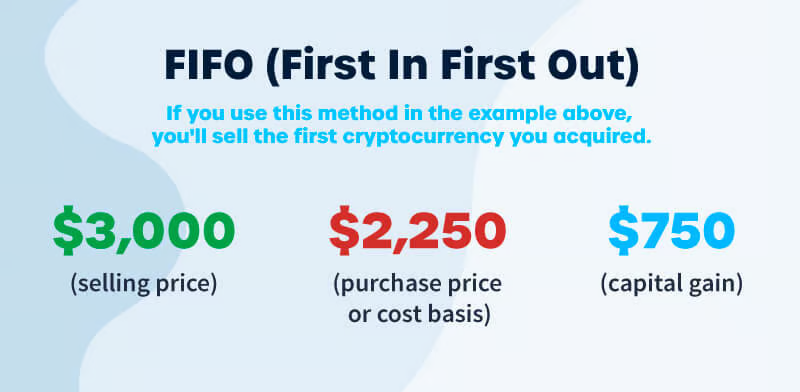
First-In, First-Out (FIFO): The Default IRS Method
Source: Coinledger
FIFO assumes that the first coins you bought are the first ones you swap. If you bought BTC at $10,000 in 2020 and $60,000 in 2024, and then you swap 1 BTC today for ETH, FIFO dictates that you are swapping the $10,000 BTC. This usually results in the highest capital gains tax because early crypto purchases typically have the lowest cost basis.
Highest-In, First-Out (HIFO): Strategies for Minimizing Tax Liability
HIFO is a strategy where you specifically elect to sell the coins with the highest purchase price first. Using the example above, under HIFO, you would declare you are swapping the BTC you bought at $60,000. If the current price is $65,000, your capital gain is only $5,000, instead of $55,000. HIFO is perfectly legal and can slash your tax bill by thousands of dollars, provided you have meticulous records.
Why 2026 Software Makes This the Best Choice
To use HIFO, you must be able to prove to the IRS exactly which units you are selling. You need the date, time, and purchase price of the specific coin. In 2026, modern taxes on crypto gains software automatically utilizes “Specific Identification” algorithms to optimize your portfolio for HIFO, ensuring you pay the absolute legal minimum in taxes on every swap.
International Tax Rules
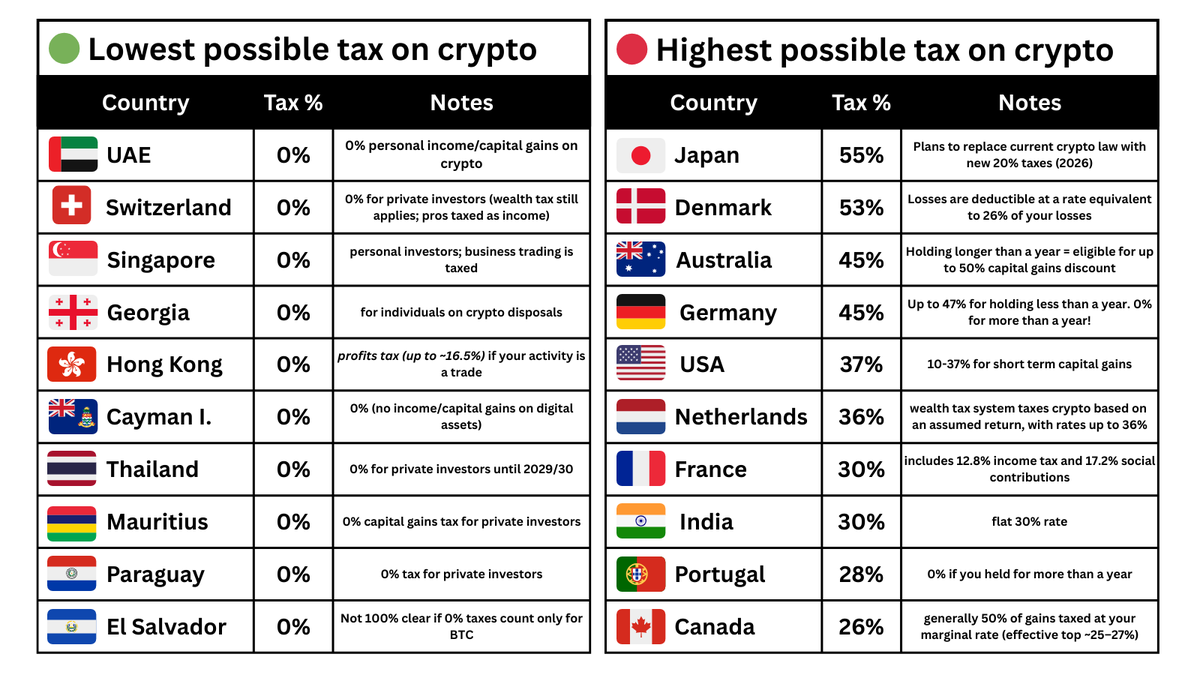
Tax laws are not global. Let’s look at how other jurisdictions treat these swaps.
The IRS (USA) Approach: Section 1031
As discussed, the US IRS firmly classifies digital assets as property, and all swaps are taxable events subject to short-term (held less than a year) or long-term (held over a year) capital gains rates. Read more in our Guide to US taxation.
HMRC (UK) Guidelines: Share Pooling and Bed-and-Breakfasting Rules
In the UK, HMRC treats crypto swaps as taxable disposals. However, the UK uses complex “Share Pooling” rules. You cannot just use HIFO. Instead, you create a “pool” with an average cost basis for all your holdings of a specific token. Additionally, the “Bed and Breakfasting” 30-day rule prevents users from selling a token for a loss and buying it back within 30 days to game the system.
ATO (Australia) and CRA (Canada): Nuances in Trading
Both the Australian Taxation Office (ATO) and the Canada Revenue Agency (CRA) treat crypto-to-crypto swaps as taxable barter transactions. You must calculate the market value in AUD or CAD at the time of the swap and report the capital gains accordingly.
Common Pitfalls and Compliance Risks
The blockchain never forgets, and hiding from tax obligations is riskier than ever.
The “Ghost Transaction” Trap
If you buy ETH on Coinbase, transfer it to MetaMask, and swap it for a meme coin on Uniswap, Coinbase doesn’t know the swap happened. If you just hand your Coinbase statement to your accountant, you are missing taxable events. The IRS views this omission as tax evasion, even if it was an honest mistake.
Wallet-to-Wallet Transfers vs. Swaps
Moving your Bitcoin from your Ledger hardware wallet to your Binance account is a transfer, not a swap. It is not taxable. However, if you hit a button in your Ledger Live app to convert that Bitcoin into Tezos before sending it, you have just executed a taxable swap.
1099-DA Forms: What Your Broker is Sending to the IRS
The massive shift for the 2025 and 2026 tax years is the introduction of the 1099-DA form. Brokers, exchanges, and potentially some decentralized front-ends are now required to report your gross proceeds directly to the IRS. If you fail to report a swap that your exchange reported on a 1099-DA, the IRS matching system will automatically flag your return for an audit.
Tax Software and Documentation
Attempting to do this with a pen and paper is a recipe for an audit.
Why Manual Tracking is Impossible for High-Frequency Swappers
If you use trading bots, participate in yield farming, or execute dozens of DEX swaps a month, calculating the FMV in USD for every single transaction is humanly impossible. Is Bitcoin taxed fairly when you have 500 micro-transactions? Yes, but only software can handle the math.
Integrating API Keys and Public Addresses for Automatic Calculations
You must use tools like CoinTracker, Koinly, or TokenTax. You plug in your exchange API keys (read-only) and paste your public wallet addresses (like your 0x Ethereum address). The software scans the blockchain, matches your transfers, flags your swaps, and automatically calculates your cost basis using HIFO or FIFO.
The Importance of Keeping Records for 7 Years
The IRS can audit you years after the fact. Even if you use software, keep CSV backups of all your exchange histories, DEX swap receipts, and software-generated tax reports for at least seven years.
Advanced Strategies: Reducing Your Tax Bill
If you are heavily active in the market, is exchanging crypto a taxable event you just have to suffer through? No. You can strategize.
Long-Term vs. Short-Term Capital Gains: The 365-Day Rule
If you swap a token that you have held for less than 365 days, your profits are taxed at your ordinary income tax rate (which can be as high as 37% in the US). If you hold the token for 366 days or more before swapping, you unlock Long-Term Capital Gains rates, which top out at 20%. Patience literally pays off.
Charitable Donations and Gifting: Avoiding the Swap Tax Entirely
If you have a token with massive gains, don’t swap it for fiat to donate the cash. Donate the crypto directly to a registered 501(c)(3) charity. This bypasses the capital gains tax entirely, and you get to deduct the full Fair Market Value of the crypto from your income taxes.
Crypto IRAs and 401(k)s: Trading in a Tax-Advantaged Environment
If you want to swap tokens daily without triggering a tax event every single time, consider trading inside a Crypto IRA (Individual Retirement Account). Because IRAs are tax-advantaged wrappers, any crypto-to-crypto swaps executed inside the retirement account are completely tax-free until you withdraw the funds decades later.
Conclusion: Staying Ahead of the Tax Man in 2026
So, is swapping crypto taxable? The answer is an undeniable yes. The blockchain space has outgrown the “wild west” era of unregulated, untracked trading.
As you prepare for tax season, remember to sync all your self-custody wallets, gather your 1099-DA forms from centralized exchanges, run your numbers through dedicated software, and leverage HIFO accounting to legally minimize your exposure.
The nuances of DeFi, liquidity pooling, and liquid staking tokens are still heavily debated among accountants. If you are dealing with a six-figure portfolio or highly complex smart contract interactions, generic software is not enough. You need a certified CPA who specializes in digital assets to help you navigate the grey areas of Web3 and ensure your wealth remains intact.
FAQ
Is swapping crypto taxed? Do I pay tax if I swap crypto?
Yes — in most jurisdictions, swapping one cryptocurrency for another is a taxable event. Tax authorities treat a crypto-to-crypto swap the same as selling the first coin and buying the second. You are taxed on any profit (capital gain) between your cost basis and the fair market value at the time of the swap.
- United States: the IRS treats crypto as property. Short-term gains (held <1 year) are taxed at your income rate (10–37%); long-term gains (held >1 year) at 0%, 15%, or 20%. Every swap (BTC → ETH, ETH → USDT, etc.) triggers a capital gains calculation.
- United Kingdom: crypto-to-crypto swaps are taxable in the UK. Swapping Bitcoin for Ethereum is treated as selling Bitcoin at its GBP value on the day. For the 2026/27 tax year, the tax-free allowance is £3,000. CGT rates: 10% (basic rate) or 20% (higher rate) on gains above the allowance.
- EU: varies by country — Germany exempts crypto held >1 year; France applies a flat 30% on gains; Italy applies 26% CGT.
What is NOT taxed: buying crypto with fiat, transferring crypto between your own wallets, and simply holding (HODLing) — none of these trigger a taxable event in most countries.
This is general information, not tax advice. Consult a qualified tax professional for your specific situation.
Do I have to pay tax on Bitcoin profit in the UK?
Yes — any profit from selling, swapping, spending, or gifting Bitcoin is subject to Capital Gains Tax (CGT) in the UK.
- Crypto is not taxed when you buy or hold it in the UK. Tax usually starts when you sell, swap, spend, or earn crypto.
- Tax-free allowance (2026/27): £3,000 — gains below this threshold owe zero CGT.
- CGT rates: 10% (basic-rate taxpayers) or 20% (higher-rate taxpayers) on gains above the allowance.
- Crypto income (mining, staking rewards, salary paid in crypto) is subject to Income Tax at your marginal rate (20%–45%).
- Crypto-to-crypto trades are taxable. Example: Buy BTC for £1,000 → Swap BTC for ETH when BTC is worth £1,500 → You just made a £500 taxable gain. Even though you never touched GBP.
CARF reporting — major 2026 change
CARF came into force on 1 January 2026, which means UK exchanges now automatically send user transaction data to HMRC. The days of crypto operating in an information blind spot are over.
- From January 2026, people who own crypto must give personal details to every crypto service provider they use to make sure they are paying the right tax.
- Any service provider that fails to report this information could be charged a penalty of up to £300 per user by HMRC.
- Filing deadline: for gains made between 6 April 2025 and 5 April 2026, you report them by 31 January 2027.
Bottom line: HMRC now has automatic data access from exchanges. Accurate record-keeping and timely filing are more important than ever.
What is the best app to calculate crypto tax?
For the vast majority of users, Koinly offers the best balance of features and price. Here are the top crypto tax calculators in 2026:
| App | Starting Price | Best For | Key Feature |
|---|---|---|---|
| Koinly | Free (preview) / $49+ (reports) | Most users; multi-country | Computes capital gains, profits, losses, and income. Generates reports compliant with IRS, HMRC, and others. Supports 20+ countries, DeFi, NFTs, staking |
| CoinLedger | Free (preview) / $49+ (reports) | U.S. TurboTax users | If you are a US user strictly using TurboTax, CoinLedger is the seamless choice. Direct TurboTax, TaxAct, H&R Block integration |
| Summ (formerly Crypto Tax Calculator) | $49+ per year | DeFi power users | For the DeFi users, CryptoTaxCalculator is essential. Deep on-chain tx parsing |
| CoinTracking | Free (200 txs) / $109+ (unlimited) | High-volume traders | A crypto portfolio tracker and tax calculator that facilitates the management of digital assets. Bulk imports, NFT integrations |
| BlockPit | €49+ per year | EU / Austrian users | Strong EU tax rule support; ensures full compliance by applying all three cost basis methods required by HMRC. |
| ZenLedger | $49 (100 txs) / $399+ (15K txs) | All-in-one filers (US) | Partnership with april, an IRS e-file provider, offers an all-in-one tax return preparation and e-filing experience for only $30. |
They utilize read-only API keys, i.e., they can access your history of transactions but cannot transfer or withdraw your money. All major tools import into TurboTax, TaxAct, and H&R Block.
Tip: tax-loss harvesting involves selling assets at a loss to offset gains, reducing your overall tax owed. Most of these apps identify unrealized losses automatically — a powerful way to legally reduce your crypto tax bill.
How much do network fees cost when swapping crypto? (TON as an example)
Every crypto swap incurs a network fee (gas fee) — the cost the blockchain charges to process your transaction. Fees vary dramatically by chain:
| Network | Avg. Fee per Tx (June 2026) | Fee Model |
|---|---|---|
| TON (Toncoin) | ~$0.0005 (0.00039 TON) | Fixed — fee does not change with congestion |
| Solana | ~$0.00025 | Dynamic (but extremely low) |
| Tron (TRC-20) | ~$0.01 | Energy/bandwidth system |
| Ethereum (ERC-20) | $0.10–$3.00+ | Dynamic (varies with congestion) |
| Bitcoin | $0.50–$5.00+ | Dynamic (block space auction) |
The Open Network (TON) officially announced a major update, confirming that transaction fees across the network will be reduced by a factor of six. This brings the cost of a standard transaction down to a fixed rate of approximately 0.00039 TON, or roughly $0.0005. Unlike many competing blockchain architectures that utilize dynamic fee markets, TON’s new fee structure will remain strictly fixed regardless of network load.
Following the initial reduction, the protocol plans to transition the majority of its transactions to a fully feeless, zero-commission model.
Tax note: in many jurisdictions (US, UK, EU), network fees paid during a swap can be deducted from your capital gain as part of the transaction cost — reducing your taxable profit. Keep records of every fee paid.
How do I swap crypto and manage taxes efficiently?
Here’s a practical workflow for tax-aware crypto swapping in 2026:
- Before swapping: check your unrealized gains/losses in a tax calculator (Koinly, CoinLedger). If you’re sitting on losses, consider harvesting them to offset gains from other trades.
- Choose a low-fee network: when possible, swap on chains with minimal fees (TON, Solana, Tron) rather than Ethereum mainnet — lower fees mean lower transaction costs to deduct, but also less money wasted.
- Swap on Quickex: no KYC, no registration, non-custodial. Your transaction history is simpler (wallet-to-wallet) and easier to import into tax software. Quickex supports 100+ assets including TON, ETH, BTC, USDT, XMR, and more.
- Record immediately: note the date, coins swapped, amounts, fair market value in your local currency, and network fee paid. Export or screenshot for your records.
- Import into your tax tool: sync your wallet address with Koinly or CoinLedger — they automatically detect swap transactions, calculate gains/losses, and generate the correct tax forms.
Tax obligations apply regardless of which platform you use to swap. Using a no-KYC service does not exempt you from reporting — it simply means you are responsible for maintaining your own records.
Disclaimer: The material in this article is not financial or investment advice. Everything stated here reflects the author's personal view and should not be treated as a recommendation to trade or invest. We make no warranties regarding the accuracy, reliability or completeness of the information presented. Cryptocurrency markets are highly volatile and can move unpredictably. Before committing any funds, every investor, trader or crypto user should study several independent sources and check the regulations that apply in their own jurisdiction.