
Leverage trading in crypto attracts attention for a simple reason: even small price movements start to matter. A market that feels calm in spot trading can suddenly become intense. Exchanges allow traders to open positions larger than their actual balance, but borrowed money speeds everything up, including losses.
Rules around leverage have become stricter, warnings appear earlier, and liquidation systems react faster. The core principle remains unchanged. Leverage increases exposure. Outcomes depend on how that exposure is managed.
Profits made through trading can be exchanged conveniently using Quickex. The exchanger is known for competitive rates and fast transaction processing.
What leverage trading means in crypto
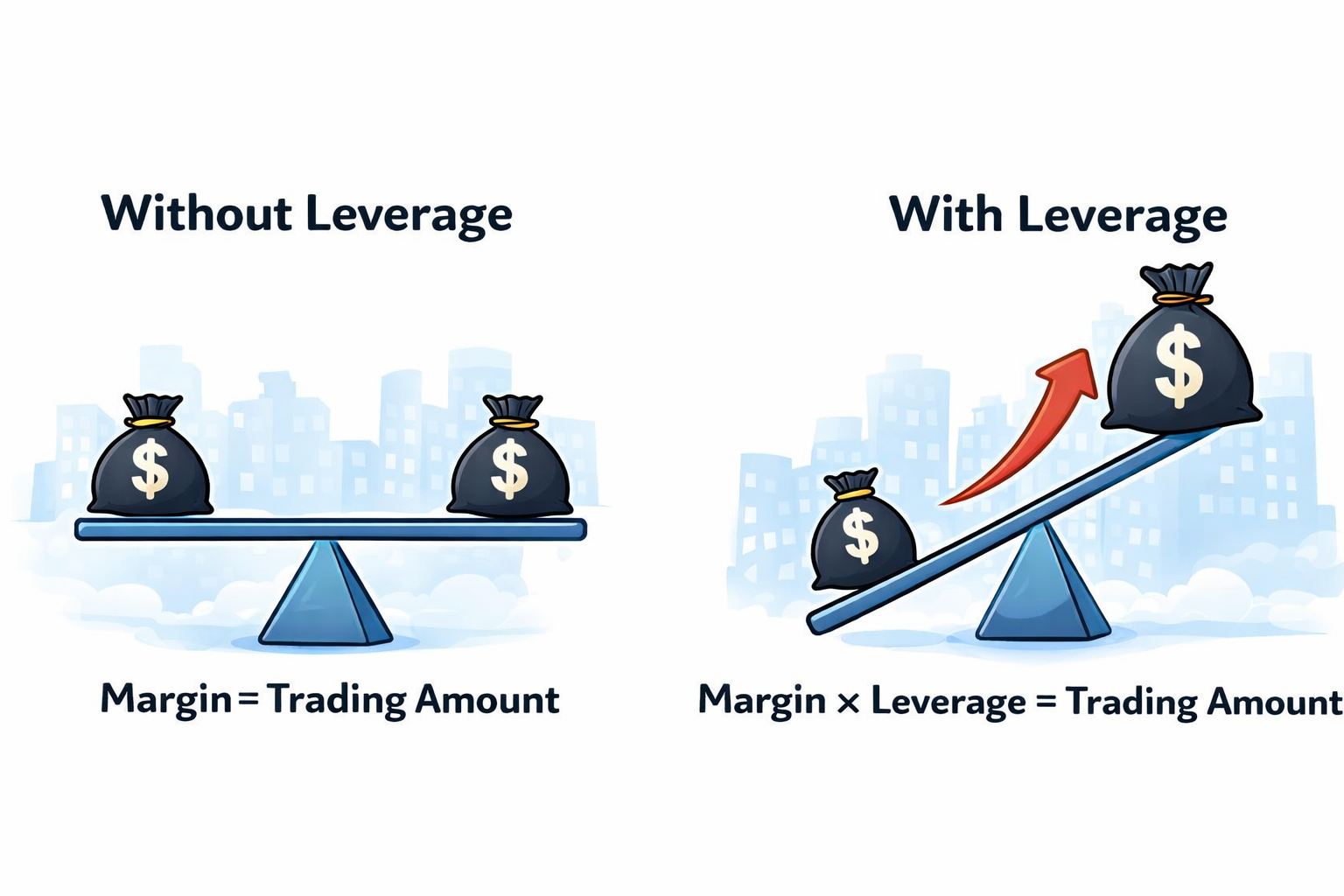
Leverage trading in crypto means opening a trade that exceeds the amount of money available on the account. The exchange temporarily lends additional funds, while personal capital acts as collateral.
Leverage is shown as a multiplier, for example 2x, 5x, or 10x.
A clear example helps.
A trader has $1 000 and selects 5x leverage. The position size becomes $5 000. A price move of 2% upward results in roughly 10% profit on the initial capital. A 2% move downward leads to a 10% loss.
Nothing extra happens behind the scenes. Market movement simply has a stronger effect.
Leverage trading is most often used in:
- crypto futures
- perpetual contracts
- margin trading markets
How leverage trading works in real conditions
Trading platforms may look crowded at first. Sliders, alerts, numbers, warnings. Underneath the interface, the mechanics are straightforward.
A typical leveraged trade follows this order:
- margin is added to define the maximum possible loss
- leverage is selected to adjust position size
- a position is opened, long for rising prices or short for falling prices
- borrowed funds are provided automatically by the exchange
- the trade remains open until manual closure, stop-loss execution, or liquidation
The process is mechanical. Results depend on decisions made before and during the trade.
Margin and liquidation without technical overload
Margin is personal capital locked into a leveraged trade. Most exchanges offer two margin modes.
Isolated margin limits risk to a single position.
Cross margin allows the entire account balance to support open trades.
Liquidation occurs when losses reach the level where margin can no longer support the position. The exchange closes the trade automatically.
Higher leverage reduces the distance to liquidation. Sometimes a brief price spike is enough to trigger it.
Liquidation is not a rare event. It is a built-in safety mechanism of leverage trading.
Funding rates and the cost of holding positions
Most leveraged crypto trades rely on perpetual futures. Since these contracts do not expire, exchanges use funding rates to keep prices aligned with the spot market.
Funding works through regular payments between traders:
- when long positions dominate, longs pay shorts
- when short positions dominate, shorts pay longs
Funding may feel insignificant at first. Over time, it becomes noticeable. Holding a leveraged position for several days can slowly reduce profit even when price movement is minimal.
Many traders notice funding only after checking their balance.
A convenient way to track favorite trading assets is available on Quickex.
Why traders use leverage
Leverage is not only about aggressive speculation. It often serves practical purposes.
Common reasons include:
- improving capital efficiency
- opening short positions during falling markets
- hedging spot holdings in unstable conditions
- making small price movements meaningful for short-term strategies
Traders who remain active long term usually avoid extreme leverage. Moderate exposure provides flexibility and breathing room.
How leverage changes risk perception
The table below shows how leverage affects position size and how little price movement can trigger liquidation when starting with $1 000.
| Leverage | Position size | Approximate price move to liquidation |
|---|---|---|
| 2x | $2 000 | Around 50% |
| 5x | $5 000 | Around 20% |
| 10x | $10 000 | Around 10% |
| 20x | $20 000 | Around 5% |
Values are approximate and depend on exchange rules, fees, and maintenance margin. Real market conditions often feel less forgiving than numbers suggest.
Risks that often appear too late
Leverage compresses time. Decisions become urgent. Emotional pressure increases.
Common risks include:
- fast liquidation during volatility
- emotional reactions under stress
- funding and fees reducing returns
- small price fluctuations turning into large losses
Many losing trades started with reasonable ideas. Position size changed the outcome.
Risk management basics that actually help
Leverage becomes manageable when clear boundaries exist.
Practical rules include:
- using low leverage
- placing stop-loss orders before entry
- defining invalidation levels in advance
- risking only a small portion of total capital per trade
- avoiding exposure during major news-driven volatility
Accounts usually fail for one reason. Position size grows faster than discipline.
How leverage trading feels today
Leverage trading now comes with tighter controls and clearer signals.
Retail traders often face leverage caps depending on the asset and region. Liquidation prices are displayed clearly. Risk indicators update in real time. Margin warnings appear early and repeatedly.
None of these tools replace self-control. They simply make mistakes easier to spot.
FAQ
What leverage trading means in crypto?
Leverage trading allows borrowing funds from an exchange to open larger positions, increasing both potential profit and potential loss.
Whether leverage trading suits beginners?
Leverage trading carries high risk for beginners. Lower leverage reduces damage but does not remove risk.
How much leverage beginners usually use?
Most beginners stay within 2x–5x leverage to avoid fast liquidation.
What liquidation means?
Liquidation is the automatic closure of a trade when losses reach the maximum allowed by margin.
Whether losses can exceed the deposit?
Most major exchanges limit losses to margin. Extreme volatility can still cause additional losses in rare cases.
Difference between margin trading and futures trading?
Margin trading involves borrowing funds to trade spot assets. Futures trading uses contracts that track price movements without owning the asset.
Whether leverage trading is legal?
Leverage trading is legal in many countries, but leverage limits and conditions depend on local regulations and the exchange.
Where is the best place to exchange crypto earned from trading?
The best option is Quickex, as the exchanger offers competitive rates and fast execution for converting trading profits.
Disclaimer: The material in this article is not financial or investment advice. Everything stated here reflects the author's personal view and should not be treated as a recommendation to trade or invest. We make no warranties regarding the accuracy, reliability or completeness of the information presented. Cryptocurrency markets are highly volatile and can move unpredictably. Before committing any funds, every investor, trader or crypto user should study several independent sources and check the regulations that apply in their own jurisdiction.