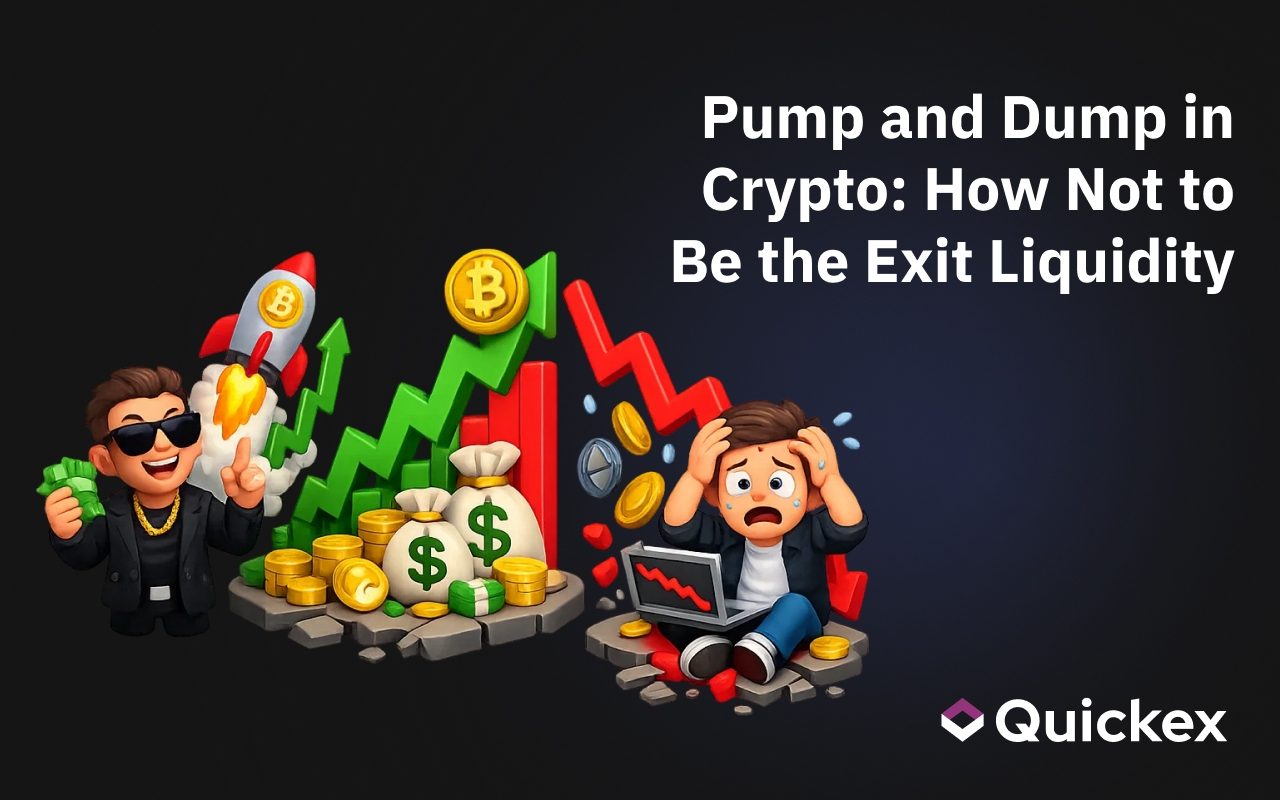

Suppose you spend any time online in the hundreds of crypto chats that exist; you’re probably already seeing photos being reeled in talking about a coin that is “about to moon”. In most cases, the message will contain a graphic of an astonishingly large percentage gain within a matter of a few hours.
Also clambering in their strength will be Telegram countdowns generating anticipation to a breaking point, while the most hysterical voices in the thread cry out “Buy now before it’s too late,” thus kicking off the final wave of FOMO. And as sure as the sun will rise, prices plummet, and many would-be traders are ushered into the world of the bloodiest, reddest charts they have ever had to face.
This pattern is seldom the result of an unforeseen market tectonic shift; they almost always tend to be one and the same: pump-and-dump exchanges. Known for this rule, given a seller’s desire to pump up a currency’s price and later to dump it on the market.
What Exactly Is Pump and Dump?
Let’s start with the basics: what is pump in this context? Pumping is the stage where price manipulators do everything in their power to make an asset shoot up in price in the markets. Misinformation being spread or conspiracy thereof, coupled with mass buying, or through influencers along with private groups hyping the asset, with FOMO (“Fear of Missing Out”) being created.
Then pump, what does it mean? Obviously the price making higher and higher movement is not pumping. Any market goes up and down all the time; pumping implies making the price go higher than what it should be.
So what is the dump? That is the mean part over here. What happens is the whole nasty stage where, having had the price all the way to a position, the insiders or manipulators behind the pump are discreetly shedding their holdings during the buying frenzy.
How a Typical Pump-and-Dump Scheme Unfolds

Their narratives are pretty standard in popular culture. Whether you come under the category of penny stocks or altcoins the process can look quite familiar. One investigation into pump-and-dump systems in the cryptocurrency space and the theory for virtual currency fraud outlines what it typically looks like:
1. Purchase: Staying Stealthy
Starts with making the choice of target; it is almost always an obscure, illiquid cryptocurrency with a low market cap, usually listed on a smaller exchange with inadequate oversight, and elsewise could be an entirely new token without any previous, solid price action.
They gradually buy a large amount of stocks with very little public interest and while consequently the price of that stock is considerably low. At this early stage, the more silent the coin is, the more attention they will eventually gain to push up the price.
2. The Hype Engine Gets Going
Now we see what is pumping in action at street level. Organizers flood social media (Telegram, Discord, Twitter/X) with bullish sentiments, sharing news clips of early “gains” often artificially generated by themselves, and spreading far-fetched gossip regarding partnerships, listings, or new-age technology. The FCA and other regulators have specifically warned about scammers paying social media influencers to promote speculative coins, some of which might not even exist or may be created as pump-and-dumps.
This is all called the “pump” phase, where sheer unnatural power helps to keep visibility, volume and mood hype up. In these communities, anyone who asks about what a pump is will usually be told that “it is just a coordinated effort to make money together,” with the ugly parts usually unspoken.
3. The Spike
If the hype teams succeed, demand goes straight through the roof:
- Price candles turn vertical;
- Trading volume multiplies in a short window;
- People who previously ignored the coin rush in “before it’s too late”.
Fresh-faced people see price movements moving at an unprecedented pace and mistake that for a great collective opportunity instead of market manipulation. Often they don’t do their research, just hang out with other people’s sweet smell of confidence and fear of missing the once-in-a-lifetime opportunity.
At that point, someone interested in what a pump means will probably look at a chart pattern action and think of its momentum or adoption. However, in reality, it is nothing more than a solicited demand. Little to no actual interest drives this demand in the long run.
4. The Dump
The organizers start the dump when they are satisfied with the price. The dump in more vivid terms operates as follows:
- The insiders sell their large holdings into the buying pressure;
- The constant sell orders absorb the remaining demand;
- When hype dies down or news fails to appear, panic sets in;
- A cascade of selling follows, and the price collapses.
Since many such schemes centre around illiquid assets, exiting at all near the pumped price may be virtually impossible for common investors. Warnings from financial regulators and CFTC in the US note that a buy-and-sell cycle can sometimes run its course in a few minutes.
Why Crypto Is So Vulnerable to Pump and Dump

Pump-and-dump schemes have existed for decades in micro-cap stocks, but crypto gives them a perfect new playground. Several factors make the ecosystem particularly vulnerable:
Lack of Really Diverse Liquidity
Many cryptocurrencies have:
- Tiny market capitalisations;
- Very low daily trading volume;
- Only a handful of active traders.
There is no need for much funding to swing asset prices way up or down, making these fairly useful things to allocate. Some academic work has shown that while pumping and dumping, organizers generally direct their attention towards lesser-liquidity coins where even slightly coordinated buys could spike the price.
Anonymous or Pseudonymous Participants
In conventional stock markets, the promoters, brokers, and company directors are generally able to be identified and licensed and monitored. In the crypto sphere:
- Members of the team can be fully anonymous or pseudonymous.
- Signal groups on the Telegram or Discord can crop up overnight and disappear by morning.
- Tracking who did what is much harder for authorities.
Enforcement does not vanish, but regulators are learning to hunt down such tricks; however, an added anonymity edge gives scammers their unconditional freedom.
Hype Culture and FOMO
Popular crypto channels are boosted by:
- Memes and hype;
- “To the moon” narratives;
- Overnight millionaires’ tales.
Witness the latest craze, coin names being spammed everywhere. You think you might have found the next big thing. That emotional cocktail of greed and FOMO is exactly what manipulators exploit when they decide what is pumping going to be their next target.
Regulation still Emerging
Crypto is still lagging in the jurisdictions’ regulatory frameworks for traditional securities. A few watchdogs e.g., the FCA are attempting to enforce more stringent rules for the promotion of cryptos, demanding all promotions are “clear, fair and not misleading” backed by a few glaring risk warnings.
However, exchanges not leading this have been running and will continue operating with hardly any rules. This is where pump-and-dump groups thrive with very little fear of any consequence.
Red Flags: How to Recognise a Pump-and-Dump
You do not have to keep up with a legal fight, but you would surely not love to be singled out as the last one left stranded with the bag of tokens. So how can you spot what is pump before it turns into your personal what is dump moment?
Here are some common warning signs to deter investors as highlighted by organizations involved in educating investors and regulatory bodies.
1. Aggressive, Time-Sensitive Marketing
One of the major red flags is aggressive, time-sensitive marketing talk. You hear that there are “only 10 minutes left before we launch the pump,” and that it is “your last chance.”
In such actions, the signal is that if you consider, you’d be caught wanting, which is always complete balderdash. No genuine investment item depends on acting on instructions being barked down over one medium by some stranger within seconds. Neither do they depend on buying at the perfect time in a coordinated fashion in order to win.
2. Lack of Fundamentals
Another red flag is the complete absence of fundamentals. If you have to ask whether the project does anything of real use, can you find a legitimate white paper, are there individuals with a palpable dissent and follow-through, a sound investment may be the one worded thus: “by no other means but the price going up.”
3. Cryptic Coin Volume Volatility
While a once-dead asset with no prior history spikes in volume and price without any credible news, you might wonder whether you are witnessing a pump orchestrated by a group as opposed to naturally generated interest.
4. Closed “Signal” or “VIP” Groups
Any group promising returns on a silver platter through coordinated buying and selling would likely get the police called on them. Most of the time, if joining the said Telegram channel is purported as the secret key to unlocking unimaginable riches, it is a way of saying “if you cannot figure who the finkhead is, then you are it”.
5. Increased Overuse of Influencers
Celebrities have been cautioned by the regulators for promoting tokens alongside influencer adverts that have proved to be risky, suspicious, or Ponzi in nature.
Is Pump and Dump Illegal in Crypto?

Pump and dump schemes are illegal in numerous jurisdictions in the traditional financial market and are classified and treated as securities or market fraud.
In the cryptocurrency world, the case becomes more complex:
- Whether the token is classified as a security or another regulated asset;
- How the marketing was done (e.g., misleading or fraudulent claims);
- The jurisdiction of the exchange, promoters and victims.
However, regulators worldwide increasingly treat manipulative schemes very seriously, with enforcement actions and fines for those orchestrating them – especially when they involve listed securities, misleading adverts or market abuse.
Ways to Overcome Pump and Dump Schemes
Now that we’ve covered what is pump, and what is dump in theory and practice, how do you avoid becoming collateral damage?
1. Slow Down
If you are being rushed to buy in the next 60 seconds, in that case, you are being made vulnerable due to ignorance. Stop and sit back when you come across a message in such a format. Think for some time. Real opportunities will not disappear by waiting for your homework to be done and anything that only works if you do it right away is more likely to be a deathtrap rather than a blessing.
2. Do Basic Due Diligence
Before you buy any coin, you should:
- Go through with reading the project’s documentation;
- Verify as needed who is behind the project and whether they can be found;
- Analyze the market cap, circulating supply, and liquidity;
- Ask yourself whether there is a real-world use case or it’s just a meme (memes can be fun, but you should treat them as gambling, not investment).
If you can’t clearly explain to yourself what the project does beyond “the chart looks good”, you don’t actually know what you’re buying.
3. Check Several Reputable Sources
It’s unwise to rely solely on influencer videos, confident Telegram admins, or loud hype threads in social media when deciding to buy a coin that may be caught up in the rear of everyone else’s pump. Broaden the spectrum of your information sources.
Best would be consulting more community forums, such as solid news websites, on-chain analytic platforms, signals from regulators, and others. These should then be weighed off for their varying views without any serious criticism against the coin being tolerated and deleted.
4. Private “Pump Groups”
If a private group is openly discussing coordinating buys at a specific time in order to “pump” a coin, you already know exactly what is pumping there: a classic set-up where insiders exploit the enthusiasm of outsiders.
You may be inclined to think that you came in early and you will make money, but please remember that you have no idea that the holdings of the organizers only are overblown, nor as to when it should start dumping down.
5. Managing Risk
Outside of pump and dump mechanics, crypto is volatile. Your exposure needs sensible management at that time:
- Only investing what you can afford to lose;
- Diversifying rather than going all-in on a single speculative token;
- Using stop-losses if appropriate;
- Avoiding leverage if you don’t fully understand the risks.
Successful execution will make sure that in case you accidentally enter the dump zone on one coin, it doesn’t wipe out your entire portfolio.
6. Watch Your Own Psychology
Testimonies show that pump and dumps are based on order books and the psychology element. Greed, FOMO, and social proof are some of the components pump-and-dumpers leverage to their advantage.
Being aware of such a mind mechanism in yourself is your best protection between tyranny and compassion. If you find yourself desperately wanting to hit the buy button just because anonymous voices on the internet are recommending a project, that is your cue to step off that impulsive behavior, breathe, and reconsider it briefly.
Final Thoughts: Playing the Long Game

So, to recap:
- What is pump? It’s the phase where scammers artificially inflate the price of a token through hype, misleading claims and coordinated buying;
- What is pumping? It’s the ongoing act of driving that manipulation – the shills, the fake news, the countdowns, the signal groups;
- What is dump? It’s when insiders unload their bags onto latecomers at inflated prices, causing the price to collapse and leaving others with heavy losses.
Pump and dump schemes are not clever little “community strategies” or innocent little games. They are a means of using the inside for milking money from outsiders. In traditional markets they are, of course, being openly classified as market manipulations and fraud, with any undeserved funds immediately evaluated upon them as per instructions from regulators while crypto finds itself in the same tradition.
On the brighter side, you need not fall prey. By mastering how these fake games run, learning to identify warning signs, and keeping your emotions under control, you can get yourself out of the role that benefits off exit liquidity and start treading in more sensible, long-term investment approaches – or merely gamble and have fun with the speculative side of crypto with eyes wide open.
FAQ
What is pump and dump in simple terms?
Pump and dump is market manipulation where insiders artificially push up a coin’s price through hype and coordinated buying – that’s what is pump or what is pumping, then sell their holdings at the inflated level, leaving late buyers with the losses.
How can I tell the difference between healthy growth and what is pumping?
Healthy growth is usually backed by real fundamentals such as development, transparent communication and partnerships, while what is pumping is all about price, urgency and slogans, with aggressive hype, vague promises and almost no clear explanation of what the project does.
What should I do if I realise I have joined a pump group by mistake?
If you find yourself in a group openly planning what is pumping for a coin, the safest move is to leave, review your position calmly, and, if needed, reduce your exposure rather than waiting for the organisers to decide when what is dump will begin.