

Over more than a decade, cryptocurrencies have gone from a marginal idea for a small group of enthusiasts to an asset discussed in Congress and regulated by federal agencies. Today, it is no longer just a curious technology but a multibillion-dollar industry. The key issue remains their legal status: securities, commodities, or an independent asset class.
The Quickex editorial team delved into the nuances of defining cryptocurrency status. We explain how the regulators’ perception of digital assets has changed over time.
Follow the reaction of the Bitcoin price to news about crypto regulation with Quickex.
When Bitcoin was little
In the early 2010s, Bitcoin seemed more like an exotic curiosity. It was discussed on forums and in small communities, focusing on anonymous payments and “digital gold.” For financial regulators, the topic remained secondary.
The situation changed in the middle of the decade. The emergence of ICOs brought tokens into the spotlight. Startups began raising millions, sometimes even billions of dollars from retail investors. That was when the SEC had to define its stance.
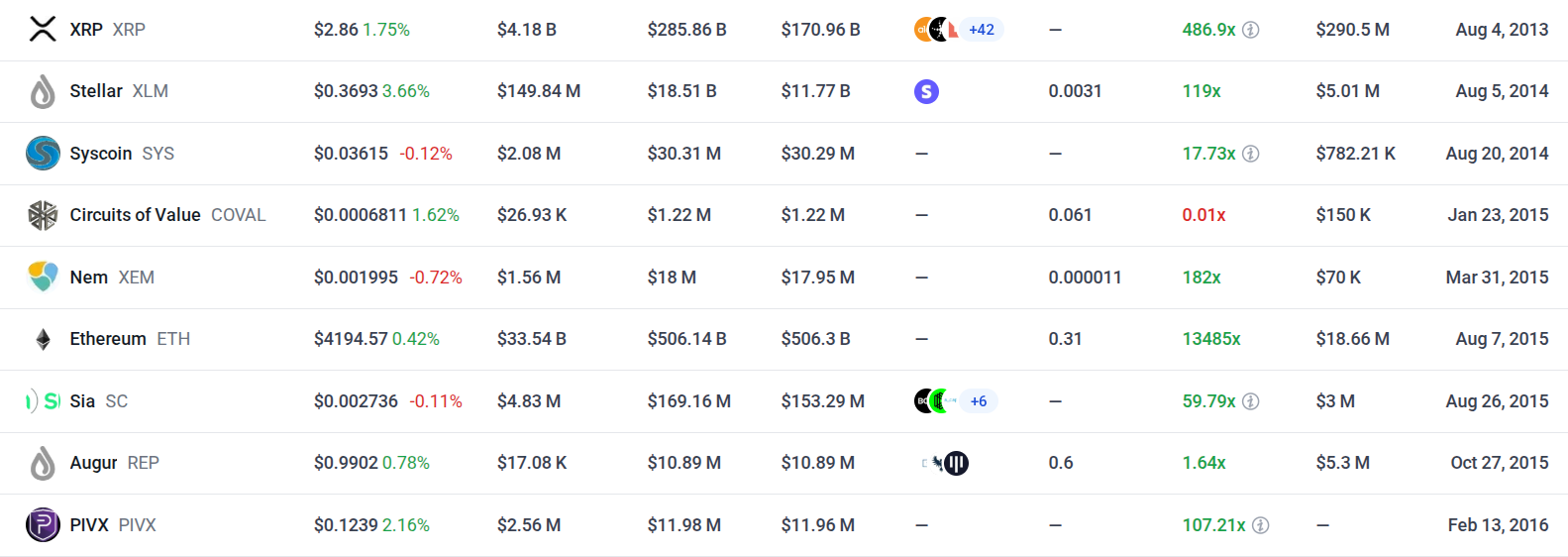
Statistics on the top early major ICOs. Source: icodrops
How the Howey test moved into crypto
The regulator had no special law for digital assets. Instead, it relied on an old tool — the Howey test, which the U.S. Supreme Court had used back in 1946 to determine the characteristics of an investment contract.
The essence of the test is simple:
- investment of money;
- participation in a common enterprise;
- expectation of profit;
- profit depends on the efforts of others.
These four criteria became the yardstick for evaluating tokens. If a project met them, the SEC treated the tokens as securities.
How the SEC’s rhetoric changed
The approach to cryptocurrencies depended on who headed the Commission. Here’s a summary of recent years:
Mary Schapiro (2009–2012)
For the regulator, the main challenge was still the 2008 crisis; cryptocurrencies were not a priority.
Mary Jo White (2013–2017)
The ICO boom forced the SEC to talk for the first time about risks and the potential qualification of tokens as securities.
Jay Clayton (2017–2020)
His tenure was marked by the start of high-profile disputes with crypto projects. For example, during this period, the SEC shut down the Telegram crypto project. It was also then that the Commission filed a lawsuit against Ripple. We’ll cover it in more detail below.
Gary Gensler (2021–2025)
The former CFTC chairman and MIT professor unexpectedly took a hard line. He claimed that most tokens were securities and initiated cases against Coinbase, Binance, Kraken, and other companies, and he began keeping a list of cryptocurrencies violating securities law.
Gensler turned “regulation through enforcement” into a working tool. Companies learned the regulator’s position only after they became defendants in court.
The industry was frustrated not only by the harshness but also by the lack of clarity. At Congressional hearings, Gensler dodged direct answers. For example, he failed to say whether the second-largest cryptocurrency, Ethereum, was a security:
Also, Gensler failed to explain how reselling concert tickets differs from trading securities.
The result was an atmosphere of uncertainty and an exodus of projects to jurisdictions with clearer rules.
Paul Atkins (since 2025)
The new SEC chairman bet on predictable rules. During his tenure, “Project Crypto” was launched to adapt old regulations to digital assets.
The Ripple case: a turning point
The Ripple lawsuit became a litmus test for the entire industry. In December 2020, the SEC filed a lawsuit, claiming that the company had illegally sold unregistered securities worth $1.3 billion.
Ripple challenged the allegations. In 2023, the court delivered a partial ruling: sales to institutional investors were deemed violations, while retail trading on exchanges remained outside securities law.
In 2025, the parties settled: Ripple paid a $50 million fine, and the SEC dropped part of its claims.
This outcome became symbolic: the status of the same token can vary depending on who it is sold to and how. At the same time, the end of Ripple’s battle with the SEC became a “green light,” marking the end of the crypto industry’s “witch hunt.” The regulator failed to prove that the XRP token was 100% a security. Therefore, similar charges were dropped against many other cryptocurrencies.
The turning point in 2025
With Donald Trump’s return to the White House, the course changed. The administration announced support for blockchain and tokenization. The new approach implied easing pressure on the market and developing predictable criteria for tokens.
2025 became a starting point for clarifying the status of cryptocurrencies.
- The GENIUS Act established requirements for stablecoins: collateral, mandatory audits, and oversight at both federal and regional levels;
- “Project Crypto” aimed to adapt securities rules to digital assets and tokenization;
- Executive orders of the administration secured the policy of supporting the crypto market and rejecting a digital dollar;
- The presidential working group on digital assets coordinates the actions of various agencies.
Public statements also played an important role. Trump repeatedly voiced open support for the crypto community and criticized regulators for excessive pressure on the industry. Through support for the digital asset market, he aims to make the U.S. the world’s largest crypto hub.
Conclusion
The U.S. has gone from complete indifference to cryptocurrencies in the early 2010s, to harsh crackdowns in the Gensler era, to attempts to restore order in 2025. The Ripple lawsuit set an important precedent, while “Project Crypto” opened the way to creating predictable rules.
Today, the American market stands at a crossroads: old laws still shape practice, but new initiatives offer a chance for a clearer and fairer game for companies and investors.
You can quickly exchange cryptocurrency at an attractive rate on Quickex.