
Switzerland blends innovation with guardrails. If you’re exploring crypto trading in Switzerland—whether you want the best crypto exchangers in Switzerland, a cheap crypto exchange, or quick options for fiat to crypto exchange—this guide walks you through Swiss law, safety, and practical platforms.
Why Choose Local Exchanges?
Benefits of Domestic Services
Swiss platforms and banks speak CHF, literally and figuratively. You’ll get familiar rails (SEPA/SIC transfers), documentation in DE/FR/IT/EN, and consumer protections for fiat balances held at banks (e.g., deposit insurance up to CHF 100,000 per client, per bank). Note: this insurance covers bank deposits, not crypto.
Regulatory Compliance
Switzerland’s supervisor FINMA set clear token classifications (payment/utility/asset tokens) and issued the influential ICO Guidelines in 2018. In 2019 it published Guidance 02/2019: Payments on the blockchain, applying AML standards to VASPs and tightening rules for transfers to external (self-hosted) wallets—VASPs must verify the wallet owner before sending or receiving.
The country also enacted the DLT Act (fully in force since Aug 1, 2021) to enable ledger-based securities and new DLT trading facilities. In March 2025, FINMA licensed the first Swiss DLT trading facility (BX Digital).
On AML, Switzerland enforces the Travel Rule (generally from CHF/US$1,000)—and goes further by requiring verified ownership for self-hosted wallets interacting with VASPs. Many crypto intermediaries operate under a FINMA-recognised SRO such as VQF to meet AML duties.
Using Swiss-regulated venues can make it easier to exchange crypto safely in Switzerland while staying aligned with local rules.
Top Crypto Exchanges in Switzerland
Below is a crypto platform comparison Switzerland of notable options many residents actually use. (Not investment advice.)
Quickex Overview
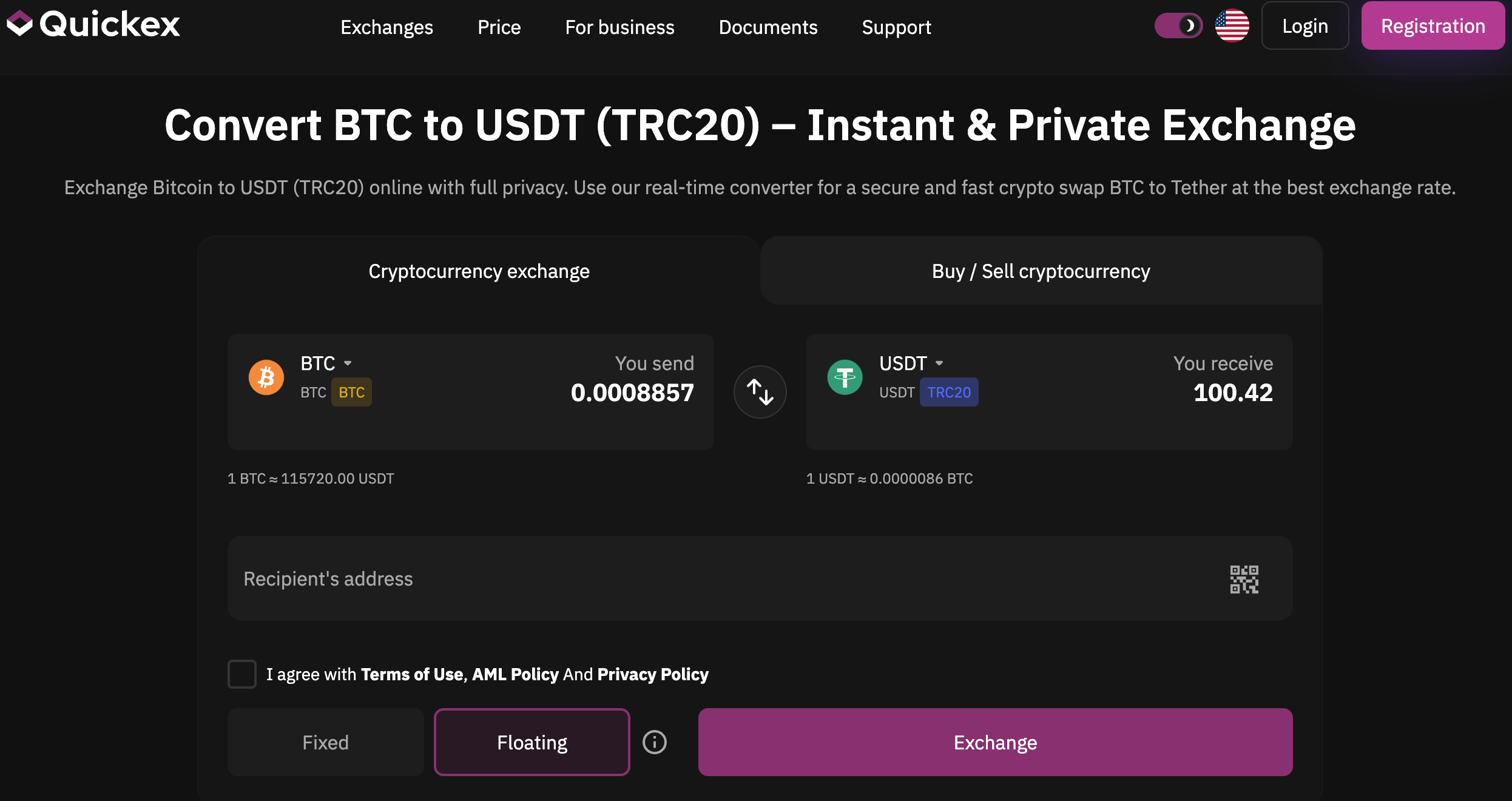
What it is: A centralized swap service (CEX) launched in 2018. Good for swapping crypto Switzerland quickly if you prefer not to park funds on an exchange.
How it works & features: Direct coin-to-coin swaps, “KYC-light”, more than 100 coins support; you control your wallet.
Swissquote Overview
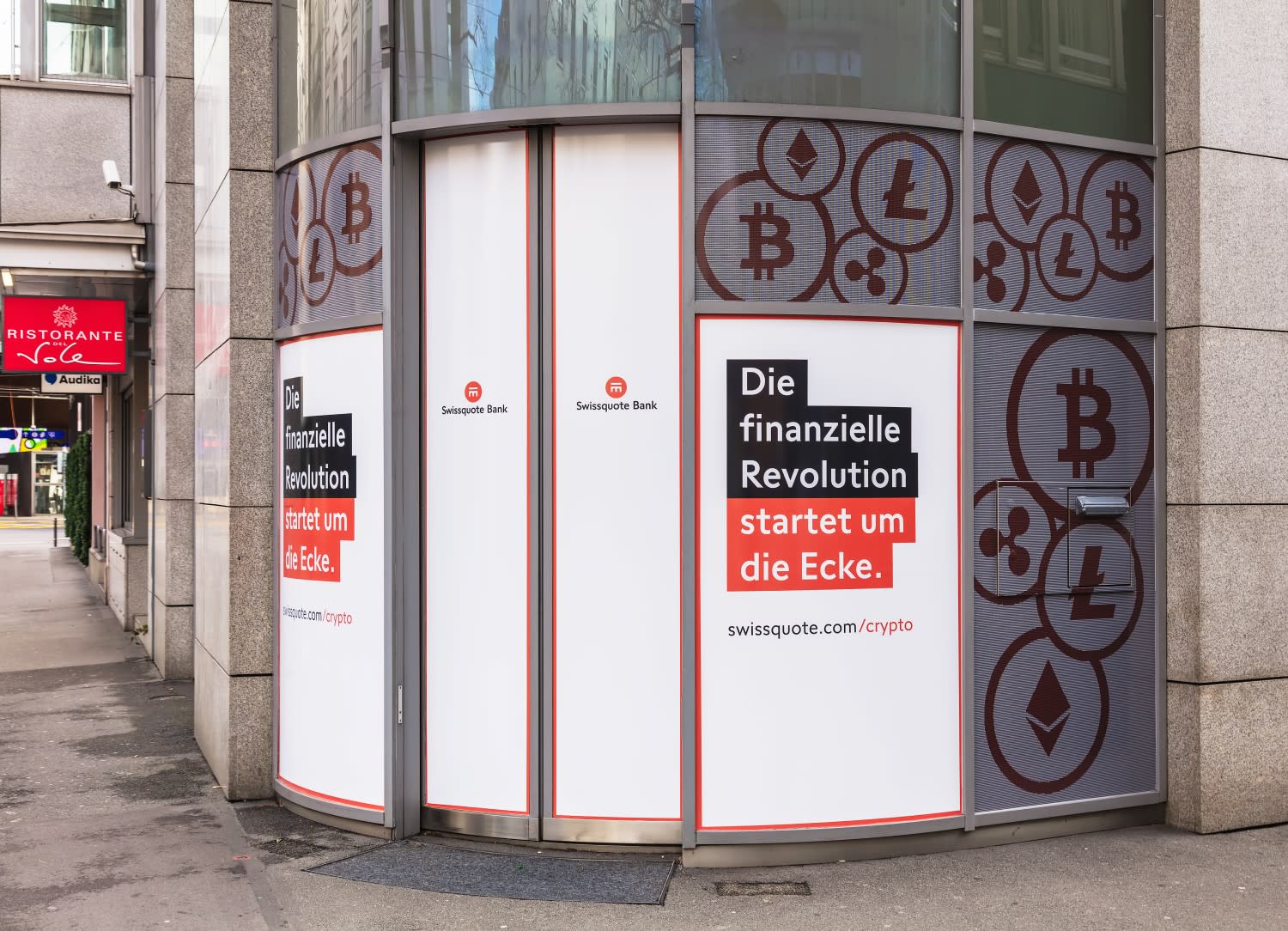
What it is: A Swiss bank offering crypto trading and custody alongside brokerage and e-banking—popular for fiat to crypto exchange Switzerland with CHF/EUR bank rails. Fees are degressive (from 1.00% down to 0.50% by size).
Good to know: Crypto pairs may be quoted vs EUR/USD rather than CHF in some interfaces; check funding fees if you deposit by card. Fiat deposits at Swissquote are covered by Swiss deposit insurance (up to CHF 100k), but crypto assets are not.
SMART VALOR Overview
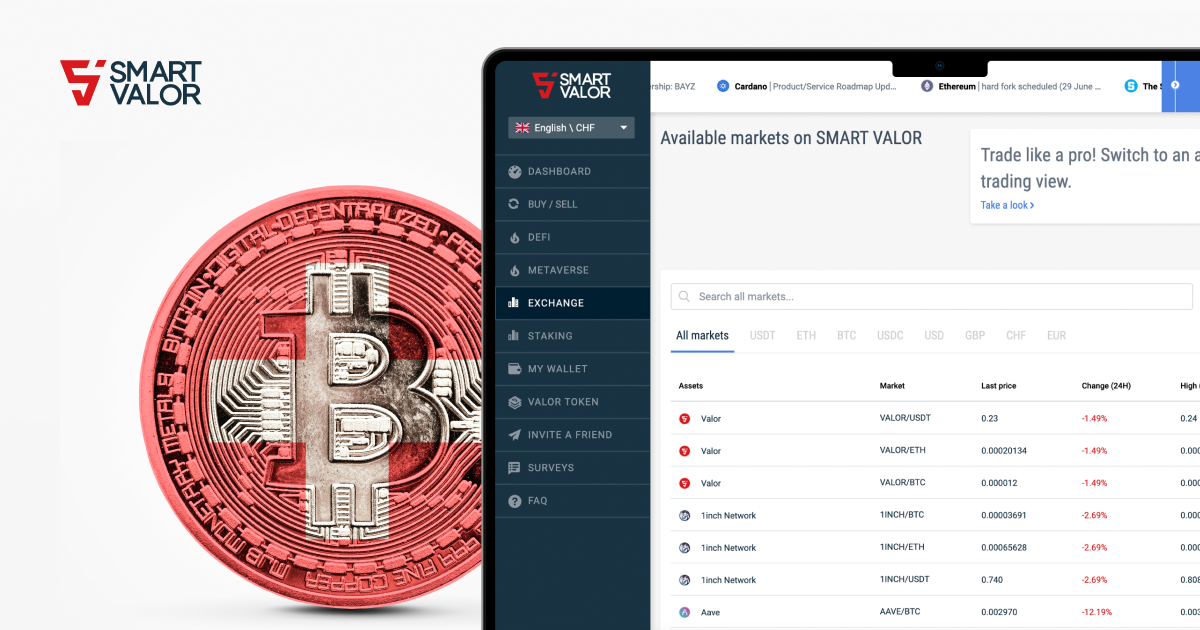
What it is: A Switzerland-based, fully regulated investment platform with a crypto exchange for retail and banks. Trading fees currently listed around 0.29% maker/taker (plus payment provider fees for card purchases). Useful for secure crypto trading Switzerland with classic order book.
Also note: PostFinance (major Swiss retail bank) launched a crypto offering for 2.5M customers via regulated digital-asset bank Sygnum—a friendly on-ramp for newcomers who want a bank interface.
Step-by-Step Guide to Exchanging Crypto in Switzerland
- Pick a venue based on your need: fast swap (Quickex), bank-style on-ramp (Swissquote/PostFinance via Sygnum), or exchange (SMART VALOR).
- Verify identity where applicable. Under Swiss AML/Travel Rule, expect KYC and, for withdrawals to a self-hosted wallet, potential address-ownership verification.
- Fund your account (bank transfer is usually cheaper than cards). Check provider funding fees.
- Place your trade (market vs limit). For non-custodial swap services, double-check rate, minimums, timeout, and destination address before sending.
- Secure storage: Bank/exchange custody is convenient; self-custody removes counterparty risk. If self-custody, back up your seed and test a small withdrawal first.
Supported Payment Methods
- Bank transfer (CHF/EUR): Usually lowest fee via local rails; many Swiss brokers/exchanges support it.
- Card/Apple Pay/Google Pay: Faster, often pricier; check card deposit fees.
Using Wallets and P2P Platforms
If you prefer P2P crypto Switzerland, non-custodial platforms like Bisq (desktop, Tor, multisig escrow) or HodlHodl (2-of-3 multisig) let you trade directly with peers. They’re global, not Swiss-regulated venues; read their docs, understand dispute mechanisms, and comply with Swiss law if moving funds through VASPs.
Security and Legal Considerations
- Travel Rule & wallet checks: Swiss VASPs must collect sender/beneficiary data for qualifying transfers and verify ownership of self-hosted wallets; expect extra steps when withdrawing to your own address.
- SRO membership: Many Swiss crypto intermediaries join an SRO like VQF for AML supervision (if not directly supervised by FINMA). When in doubt, ask a platform for its SRO/FINMA status.
- Deposit protection: Only fiat balances at Swiss banks are insured up to CHF 100,000 (e.g., Swissquote). Crypto itself is not covered.
- DLT venues: Switzerland now licenses DLT trading facilities under the DLT Act (e.g., BX Digital, 2025), mainly relevant to tokenised securities/institutional users.
- ATM threshold: For anonymous means (e.g., some ATMs), FINMA clarified a CHF 1,000 threshold within 30 days and expects technical measures to prevent circumvention.
Tip for secure crypto trading: move slowly with new platforms, start with small test transactions, and keep a clean audit trail for tax and compliance.
Alternative Methods for Crypto Exchange
- Bank crypto via partners: PostFinance × Sygnum offers bank-app access to a curated list of assets—simple for beginners who want classic banking UX.
- Non-custodial on/off-ramp: Mt Pelerin (Bridge Wallet) advertises bank-transfer buys with zero service fee up to a threshold (then tiered). Handy if you want to stay in your own wallet.
- P2P (Bisq/HodlHodl): Greater privacy; more DIY. Understand escrow, trade limits, and dispute paths before committing.
Tips to Save on Fees and Time
- Use bank transfers instead of cards where possible; card funding often adds 0.5–2.9%+ on top.
- Pick the right tool for the job: bank/exchange for fiat to crypto exchange Switzerland; non-custodial swap for quick crypto-to-crypto; P2P for specific payment methods.
- Watch fee tiers: Swissquote’s degressive fees (down to 0.5%) or SMART VALOR’s ~0.29% maker/taker can be much cheaper at higher sizes.
- Mind compliance frictions: Expect wallet-ownership checks when withdrawing to self-custody from Swiss VASPs; prepare proofs (signed message, screenshot, micro-transfer) to avoid delays.
- Avoid round-trips: Each conversion (CHF→EUR→USDT→ALT) adds spread and fees. Minimise hops.
Conclusion
Switzerland offers one of the clearest legal frameworks in the world for digital assets—strong for builders and reassuring for users. For everyday investors asking where to exchange crypto Switzerland, the menu is broad:
- Bank-style on-ramps (Swissquote, PostFinance via Sygnum) for simple, regulated fiat to crypto moves, deposit-insured fiat balances, and clear pricing.
- Local exchanges (e.g., SMART VALOR) for an order book and competitive maker/taker fees.
- Non-custodial swappers (Quickex, Mt Pelerin) for quick, wallet-to-wallet how to swap crypto Switzerland workflows—just remember jurisdiction and licensing differences.
- P2P routes (Bisq/HodlHodl) for advanced users who value privacy and control.
If your goal is the best way to exchange crypto in Switzerland, think in terms of custody mix (bank custody + self-custody), payment rails, and compliance experience. Above all, align with FINMA’s rules, keep records, and secure your keys. That’s how you navigate crypto exchange Switzerland with confidence.