
Welcome to the 2026 crypto market. The days of blindly buying a token based on an inflated airdrop hype cycle and ignoring its fundamental tokenomics are officially behind us. If you want to survive and thrive in today’s digital asset landscape, you need to understand the mechanics of supply. And the biggest driver of that supply? Vesting schedules.
Let’s break down the giant elephant in the room: understanding how a token unlock can either wreck your portfolio or give you the perfect setup for a generational trade.
What is a Token Unlock? Decoding the Language of Tokenomics
If you are new to the mechanics of crypto supply, let’s start with a precise definition.
A token unlock is the scheduled release of previously frozen assets into the circulating supply. This event increases market liquidity by allowing early investors and founders to trade their assets, fundamentally shifting the supply and demand dynamics of a project.
Defining the Unlock: Cliff vs. Linear Vesting
When tokens are held back from the market, they are “vested.” Think of vesting like a digital vault with a time lock.
There are two main ways this vault opens. A “cliff” is a hard date where a massive chunk of tokens suddenly becomes available all at once. Imagine a dam breaking. Linear vesting, on the other hand, is a slow, block-by-block trickle. A project might have a one-year cliff, followed by two years of linear vesting, meaning the floodgates open on day 365, and then a steady stream of tokens drips into the market daily after that.
The “Locked” Supply vs. The “Circulating” Supply
CoinMarketCap and CoinGecko show two very different numbers for almost every project. The circulating supply is the tokens currently trading on exchanges. The locked supply includes everything else—held by the team, the foundation, and seed investors. The gap between these two numbers is your dilution risk. If a coin has 10 million circulating but 90 million locked, you are staring down the barrel of massive future sell pressure.
Why Projects Lock Tokens?
Why not just release them all at once? If founders and venture capitalists (VCs) could dump all their tokens on day one of trading, retail investors would get obliterated immediately. Locking tokens aligns incentives. It forces the developers to actually build a working product over three to four years because they can’t cash out until they deliver. It’s a mechanism for trust in a trustless ecosystem.
The Core Components of a Vesting Schedule
To read a token unlock schedule, you need to speak the language. Here are the moving parts you’ll see in every whitepaper.
TGE (Token Generation Event): The Genesis of the Unlock Cycle
The TGE is day zero. This is the exact moment the token goes live on a blockchain. At TGE, usually only a small percentage of the total supply is unlocked—typically for public sale participants, liquidity pools, and a small community airdrop.
The Cliff Period: The “Waiting Room” for Early Investors
Following the TGE, the cliff period begins. During this time, early buyers (like seed round VCs) get absolutely nothing. Their tokens remain visible on-chain but are entirely illiquid. In 2026, standard cliff periods span anywhere from 6 to 12 months.
Linear Vesting: Smoothing Out the Supply Pressure
Once the cliff drops, linear vesting takes over. Instead of dumping the remaining 80% of tokens on the market at once, smart contracts distribute them incrementally. This could happen daily, weekly, or monthly. It’s designed to soften the blow to the order books.
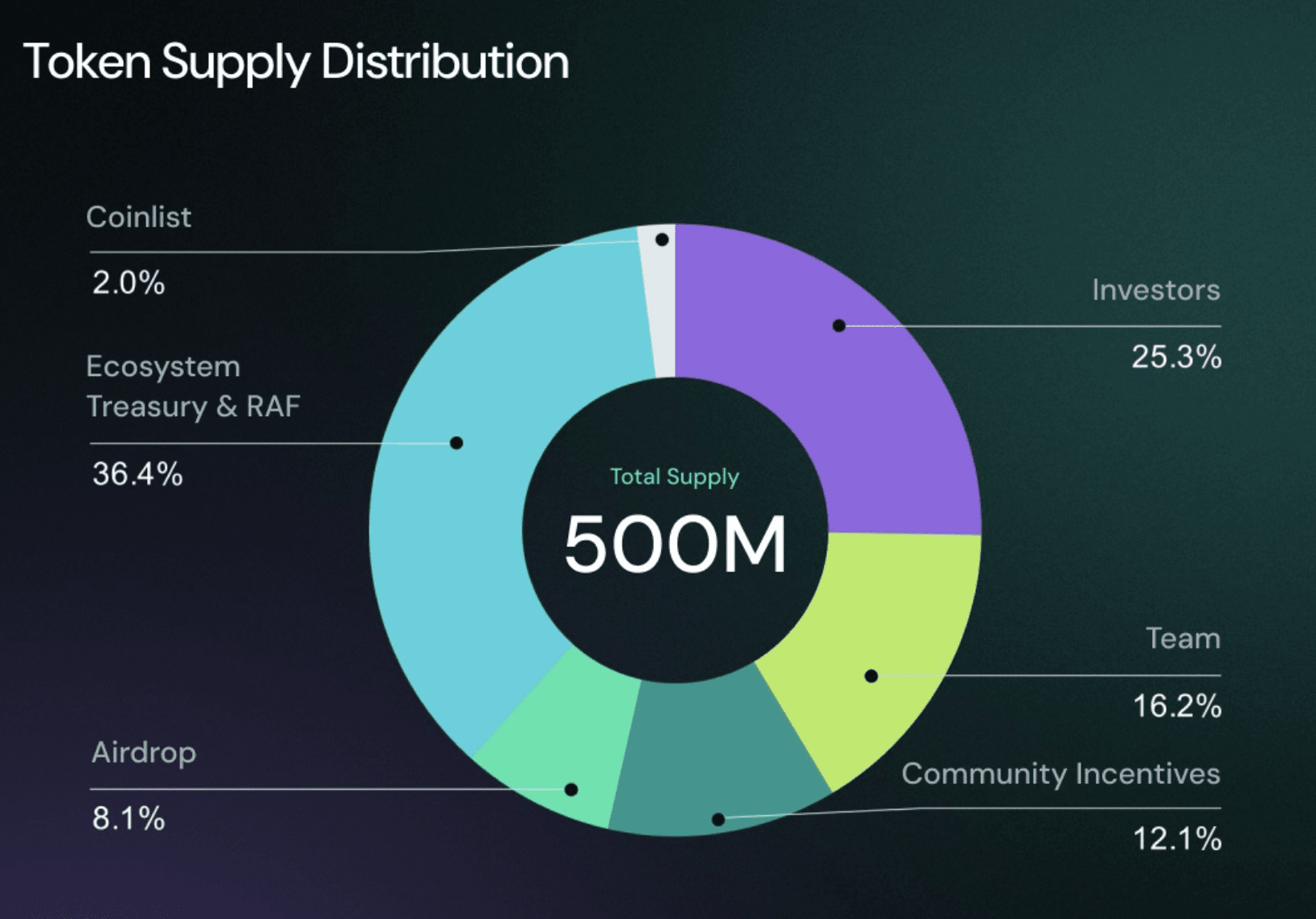
Allocation Categories: Team, Investors, Ecosystem, and Community
Source: Binance
Not all unlocks are created equal. When viewing token unlocks, look at who is getting the coins.
- Team/Advisors: Usually heavily restricted, often waiting 1-2 years before selling.
- Investors/VCs: Seed buyers who bought at a 99% discount. High flight risk.
- Ecosystem/Treasury: Managed by a DAO or foundation to fund grants. Usually sold slower.
- Community: Airdrops or liquidity mining rewards. Retail almost always dumps these instantly.
Why Token Unlocks Move the Market in 2026
You might think an unlock is already “priced in” because the dates are public. In reality, crypto markets are highly inefficient.
The Law of Supply and Demand
At its core, a token unlock introduces new supply. If buyer demand doesn’t magically increase to absorb that new supply, the price must drop. It’s simple gravity. However, there’s a heavy psychological component too. Retail traders often panic-sell days before the event, fearing a dump, which creates a self-fulfilling prophecy.
Market Depth and Liquidity: Why Some Unlocks Go Unnoticed
Why do some coins tank 20% on unlock day while others pump? It all comes down to market depth. If a project unlocks $5 million worth of tokens, but the Binance order book for that coin processes $500 million in daily volume, the market absorbs the new tokens without a flinch. Conversely, unlocking $5 million on a low-cap altcoin with thin liquidity will create the chart.
The “Front-Running” Phenomenon
Traders know when a massive crypto token unlock schedule is approaching. Professional traders will open short positions weeks in advance. Because everyone is trying to “front-run” the actual unlock, the price often bleeds out heavily leading up to the date, sometimes causing the actual unlock day to be a non-event (or even a slight pump due to shorts taking profit).
Advanced Unlock Strategies
Retail reacts. Pros anticipate. Here’s how sophisticated players handle crypto token unlocks.
The “Sell the Rumor, Buy the News” Play
Because of the heavy shorting leading up to a major release, the actual unlock date often marks a local bottom. When VCs don’t instantly market-sell their newly unlocked bags, the shorts get squeezed. Savvy traders often buy the asset exactly on the day of the unlock to ride the relief bounce.
Hedging with Perps: Using Futures to Protect Your Portfolio
If you love a project long-term but know a nasty token release schedule is looming, you don’t necessarily have to sell your spot bags. Instead, you can open a 1x short position on perpetual futures to hedge your downside. You stay exposed to the project fundamentally but protect your fiat value during the turbulence.
Monitoring “Smart Money” Wallets
Don’t trust what VCs say on Twitter; trust what they do on-chain. When token unlocks crypto events happen, the smartest traders are glued to Etherscan. They track the specific smart contracts where team tokens sit. If those tokens unlock and immediately get transferred to a centralized exchange deposit address, a dump is coming. If they get sent to a staking contract, the team is holding.
Beyond the Basics: Modern Unlock Variables in 2026
The tokenomics game has evolved wildly over the last few years. The simple “cliff and dump” models are being replaced by complex financial engineering.
Liquid Staking & Re-staking
With the rise of EigenLayer and advanced DeFi primitives in 2026, some projects allow locked tokens to be staked or re-staked. This means founders are earning yield on tokens they can’t even legally sell yet. It adds a hidden layer of inflation to the ecosystem that isn’t always reflected in basic tokenomics dashboards.
How Institutions Avoid Slippage
Here is where the real institutional game is played. Most retail investors wrongly assume that when a massive VC allocation unlocks, those funds simply go onto Binance and hit the “market sell” button. That almost never happens. If a fund tries to dump $50 million of an illiquid altcoin on a public order book, they will suffer catastrophic slippage, crashing the price and ruining their own profit margins.
Instead, they use Over-The-Counter (OTC) desks and private secondary markets. The OTC market is the shadow financial system of crypto. When a major fund approaches a crypto token unlock schedule, they will typically call an OTC broker weeks in advance. The broker’s job is to quietly match that massive sell order with a wealthy buyer—perhaps an institutional family office or another hedge fund looking to build a long-term position.
These transactions happen entirely off-exchange. A flat price is agreed upon (usually at a slight discount to the current spot price), and the tokens change hands via direct blockchain transfers or through escrow smart contracts. This is why you will sometimes look at a massive unlock event, see zero price impact on the chart, and wonder what happened. The tokens did change hands, but the liquidity never touched the public order books.
Furthermore, the secondary market for SAFTs (Simple Agreements for Future Tokens) is booming in 2026. In these private markets, VCs don’t even wait for the unlock token date. They sell the legal rights to their locked tokens to other investors at a steep discount to secure early liquidity. If you aren’t paying attention to the chatter on institutional OTC platforms, you are trading blind. The spot market only shows you half the picture; the real supply shock is absorbed in the dark pools.
Airdrop Vesting: The Rise of Gradual Claims
The 2021 model of handing users 100% of an airdrop on day one is dead. To prevent mercenary farmers from nuking the chart, 2026 projects now enforce airdrop vesting. You might get 20% at TGE, and you have to actively use the protocol over the next six months to claim the rest.
Best Platforms to Track Token Unlocks
You can’t trade this data manually. You need the right dashboards to keep track of a token unlock schedule.
Tokenomist: The Industry Standard for Data Visualization
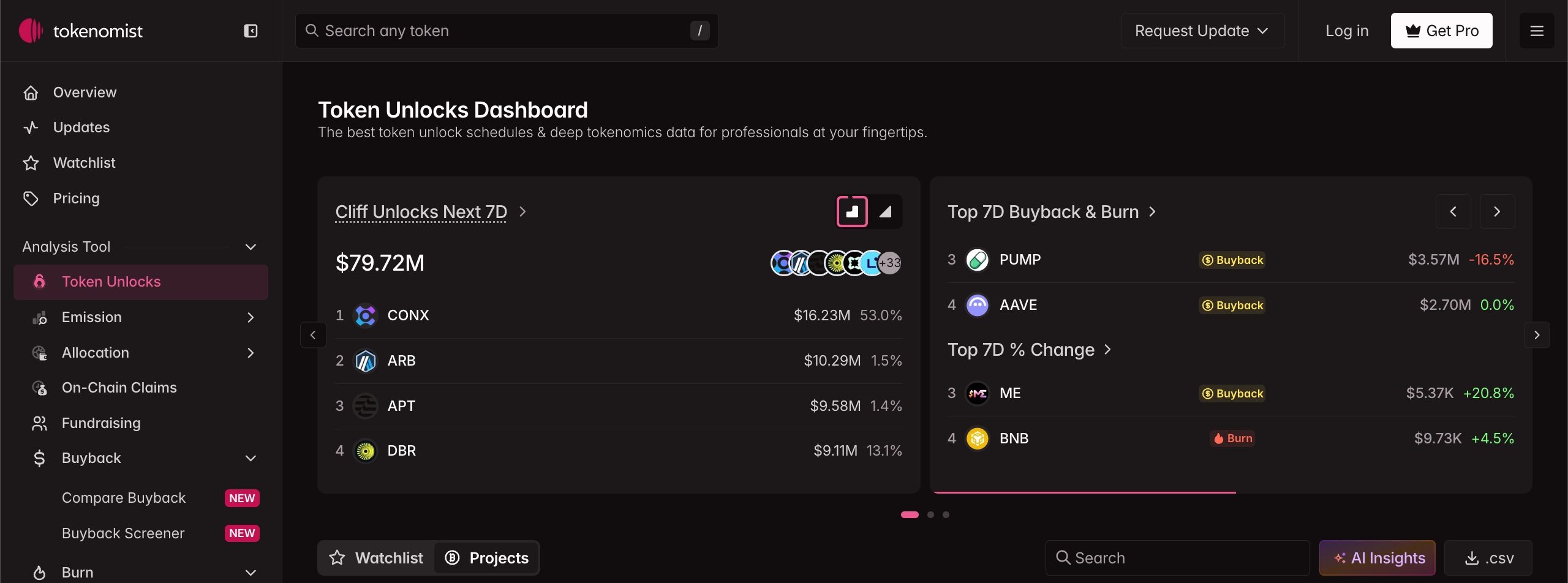
Formerly known simply as TokenUnlocks, Tokenomist remains the gold standard. It provides clean visual representations of cliffs, linear emissions, and pie charts showing exactly who gets what. If you want to know when the next big unlock crypto event is, this is your homepage.
Streamflow & Sablier: Real-Time On-Chain Vesting Solutions
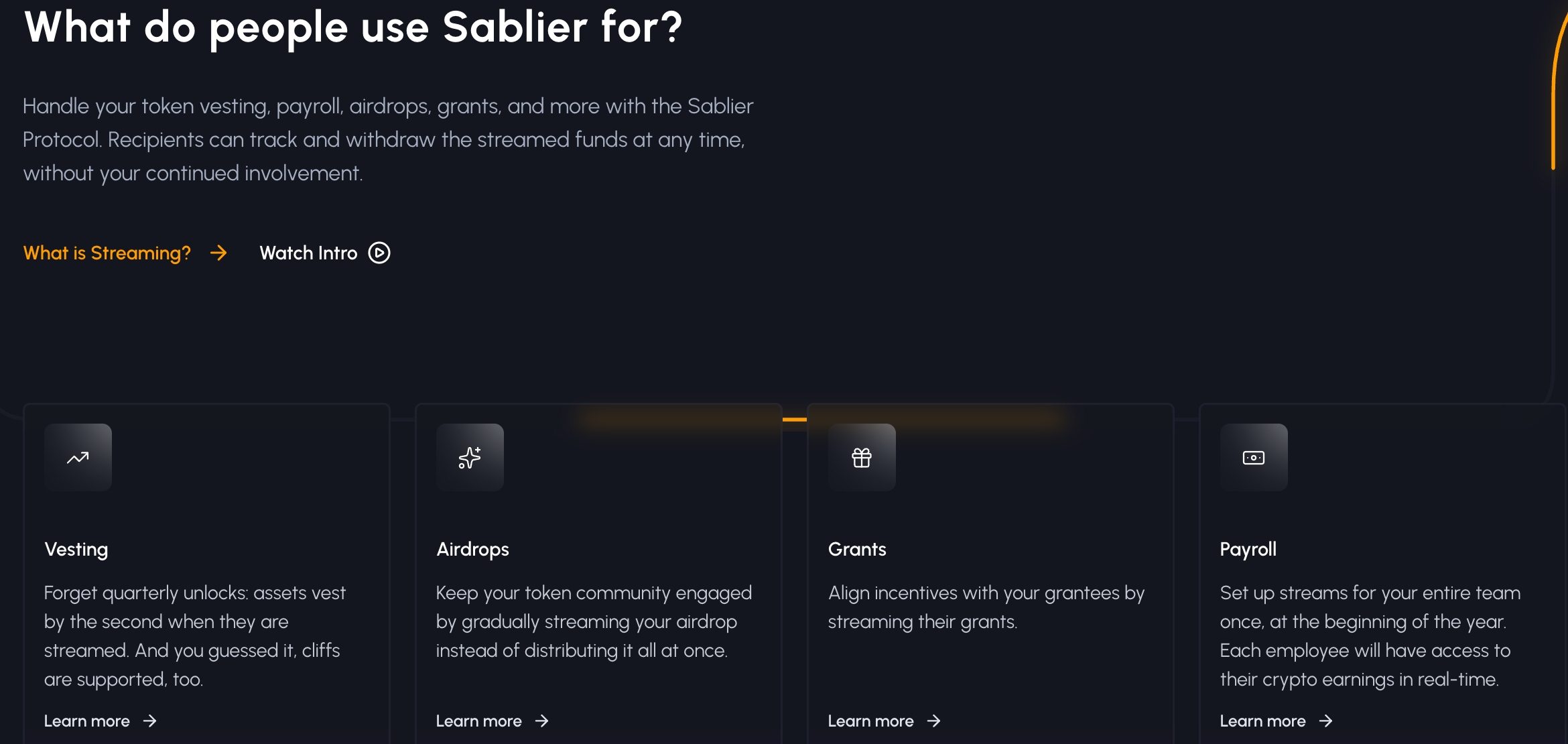
These are the actual protocols teams use to lock their tokens. By looking at public Sablier streams, you can see the literal block-by-block trickle of tokens hitting wallets. It takes the guesswork out of off-chain whitepaper promises.
Dune Analytics: Building Custom Dashboards for Niche Assets
For obscure or brand new tokens that mainstream trackers miss, Dune Analytics is essential. You can write simple SQL queries to track the project’s treasury multi-sig and set alerts for the exact moment funds start moving ahead of coin unlocks.
Case Studies: Famous Unlocks and Their Market Impact
History leaves clues. Let’s look at how the market digested massive supply shocks in recent years.
The Arbitrum (ARB) March Milestone
In March 2024, Arbitrum unlocked over $2 billion worth of ARB for the team and investors in a single day. The lead-up was terrifying, with intense shorting. However, looking at the multi-year chart in 2026, we see how ARB absorbed this blow. The initial hit was brutal, but the resulting flush of VC bags actually allowed retail to build a stronger floor, setting up the L2 ecosystem for a more natural price discovery phase.
Solana (SOL): How Massive Unlocks Fueled Ecosystem Growth
In its early days, Solana faced terrifyingly steep unlock cliffs. However, because the SOL token was heavily utilized for gas, staking, and NFT minting, the immense ecosystem demand far outpaced the inflationary sell pressure. It proved that great utility can out-muscle bad tokenomics.
Analyzing “Zombie Tokens”
Look at the metaverse and gaming tokens launched in the previous cycle. Projects launched with 2% circulating supply and a multi-billion dollar FDV. As the linear vesting dragged on, the price bled out continuously for three years. Today, many of these are “zombie tokens”—their market cap is low, but their FDV remains high, making them mathematically impossible to resurrect.
How to Evaluate an Unlock Schedule Before You Invest
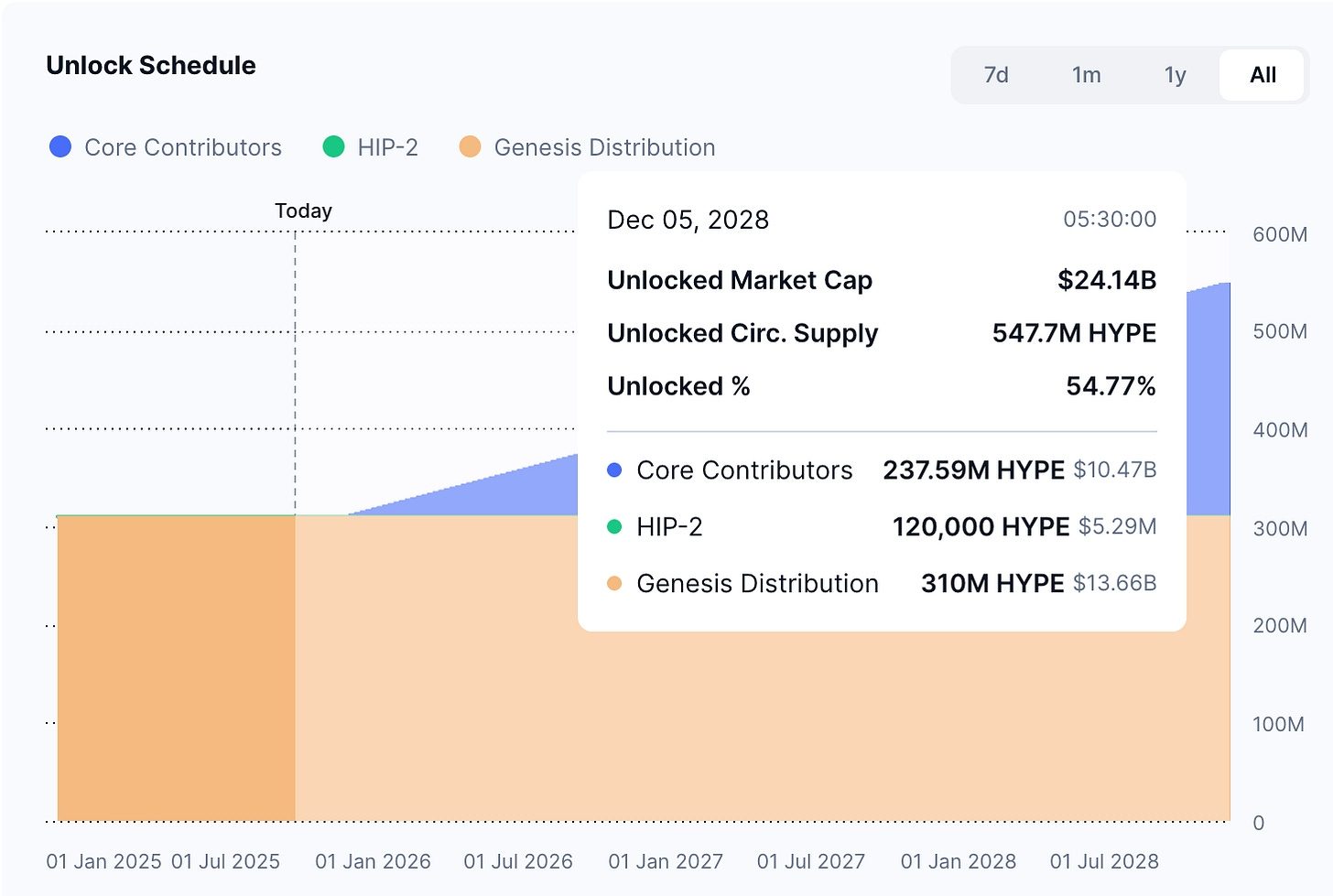
Source: Bitget
Don’t buy the narrative; buy the math. Here is how you evaluate tokenomics.
Calculating Fully Diluted Valuation (FDV) vs. Market Cap
This is the most critical math in crypto.
Market Cap = Circulating Supply x Current Price.
FDV = Total Supply (including all locked tokens) x Current Price.
The ratio between these two tells you everything. Let’s do the math: If a token trades at $1 with a 10 million circulating supply, the Market Cap is $10M. But if the total supply is 1 billion tokens, the FDV is $1 Billion. The float is only 1%.
For this project to maintain a price of $1 by the time all tokens unlock, it needs $990 million of new fiat money to enter the ecosystem to absorb the dilution. If that demand isn’t there, the math dictates the price must collapse toward pennies to reach market equilibrium. As a rule of thumb for 2026, avoid projects where the Market Cap is less than 15% of the FDV.
The Inflation Rate: How Much Value is Being Extracted Monthly?
Stop looking at static charts and start calculating monthly inflation. If you use tokenunlocks data to find that a project is emitting 5% of its total supply every month to investors, that is massive value extraction. You are fighting a steep uphill battle against the algorithm.
Assessing Team Transparency: Red Flags in the Whitepaper
If a whitepaper mentions a tokenunlock but uses vague terms like “vesting subject to team discretion” or doesn’t provide hard on-chain wallet addresses, run away. Transparent teams use immutable smart contracts (like Streamflow) and link directly to them in their docs. Read more on What is TRC20 Wallet Address.
Conclusion: Making Unlocks a Tool, Not a Threat
Token unlocks are not inherently evil. They are simply the mechanical heartbeat of an asset’s supply.
- Before you check the roadmap or the partner list, check the tokenomics. Build a habit of running the FDV math and cross-referencing the token release schedule. If the inflation is too high, it goes into the “trade only, do not hold” pile.
- The market has matured. The players are smarter. If you rely solely on hype without understanding the underlying math of a token unlock, you will become exit liquidity for the very people who wrote the whitepaper. Arm yourself with data, track the smart contracts, and trade the supply shocks.
Questions About Token Unlocks
Does a token unlock always mean the price will crash?
No. While it introduces potential sell pressure, heavy shorting leading up to the event often causes a “sell the rumor, buy the news” scenario where the price actually rallies on the day of the unlock as shorts are forced to cover.
What is the “FDV/Market Cap” ratio and why is it dangerous?
The ratio shows how many tokens are locked versus currently tradable. A massive gap (e.g., $10M Market Cap vs $2B FDV) means extreme future inflation. The market has to absorb massive amounts of new tokens, which almost mathematically guarantees a slow bleed in price over time.
Where can I find the official vesting schedule for a new project?
Always start with the project’s official whitepaper or Gitbook documentation under the “Tokenomics” section. Verify those claims using third-party tracking tools like Tokenomist, or trace the actual smart contracts on-chain.
Are team tokens always sold immediately after they are unlocked?
Not always. Strong teams with long-term vision will often hold their tokens, stake them to earn yield, or engage in OTC deals rather than dumping on the open market. Watching the specific team wallet addresses on block explorers will reveal their true intentions.
Disclaimer: The material in this article is not financial or investment advice. Everything stated here reflects the author's personal view and should not be treated as a recommendation to trade or invest. We make no warranties regarding the accuracy, reliability or completeness of the information presented. Cryptocurrency markets are highly volatile and can move unpredictably. Before committing any funds, every investor, trader or crypto user should study several independent sources and check the regulations that apply in their own jurisdiction.