

Not long ago, talk about Bitcoin sounded like something from the world of geeks and programmers. Back then it seemed you practically had to be a hacker to figure out how to buy coins and where to store them. But times change. Today, Bitcoin has become part of the financial mainstream—and investing in it is as simple as buying Apple stock or gold. Crypto ETFs helped make that happen—funds that make getting into digital assets clear and safe.
Here’s how cryptocurrency ETFs work, why they exist, and how people make money with them.
Track the Bitcoin price on Quickex.
What Exactly Is an ETF
An ETF is an exchange-traded fund. Imagine you want to put money not into a single company but into the whole market—for example, the 500 largest U.S. corporations. Instead of buying hundreds of individual stocks, you take a share in a fund that already holds them all. That’s an ETF—an easy way to invest in many assets with a single trade.
ETFs trade on exchanges; you can buy or sell them anytime—just like ordinary shares. Over the past decades ETFs have become so popular that they now manage trillions of dollars.
How Crypto ETFs Grew Out of This
When cryptocurrencies came on the scene, many investors wanted exposure to this market without all the technical hassle. Not everyone wants to mess with cold wallets, seed phrases, and the risk of losing access to their funds.
That’s how crypto ETFs appeared. A management company buys, say, Bitcoin or Ethereum, keeps it with a custodian, and issues fund shares on an exchange. An investor simply buys those shares and effectively bets on the cryptocurrency’s rise without owning it directly.
Put simply, a crypto ETF is a way to be “in crypto” without diving into the world of crypto exchanges and blockchains.
What Kinds of Crypto ETFs Exist
Spot Funds
These funds track a cryptocurrency’s price directly. The management company actually buys coins and holds them in reserve. When Bitcoin goes up, the fund’s value rises too.
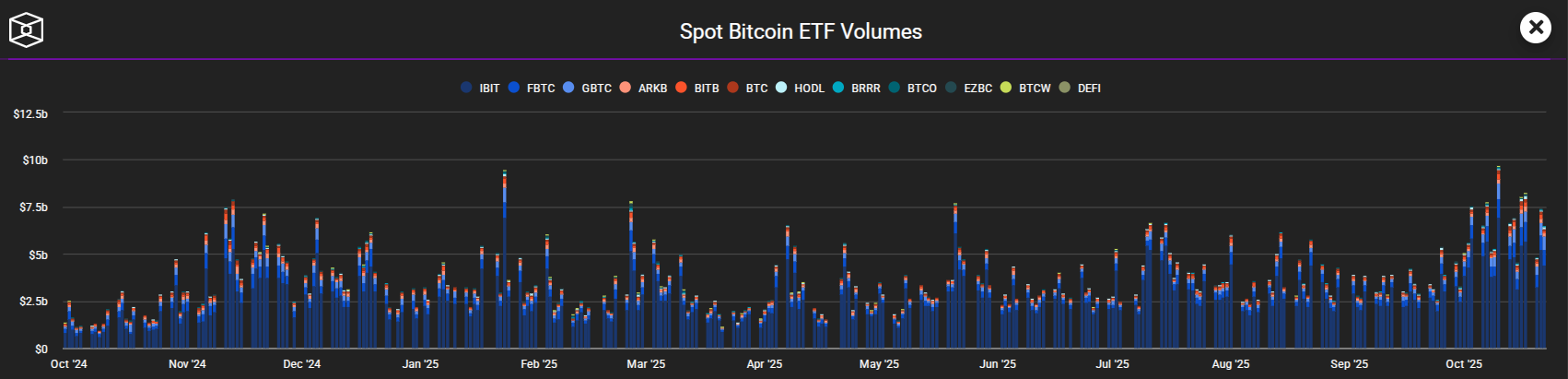
Trading volume in the spot Bitcoin ETF market. Source: The Block
Futures Funds
Here things work a bit differently: the fund doesn’t hold the cryptocurrency but uses futures—contracts on the future price. This tool lets you profit from expected rises or drops, but the link to the real asset is indirect.
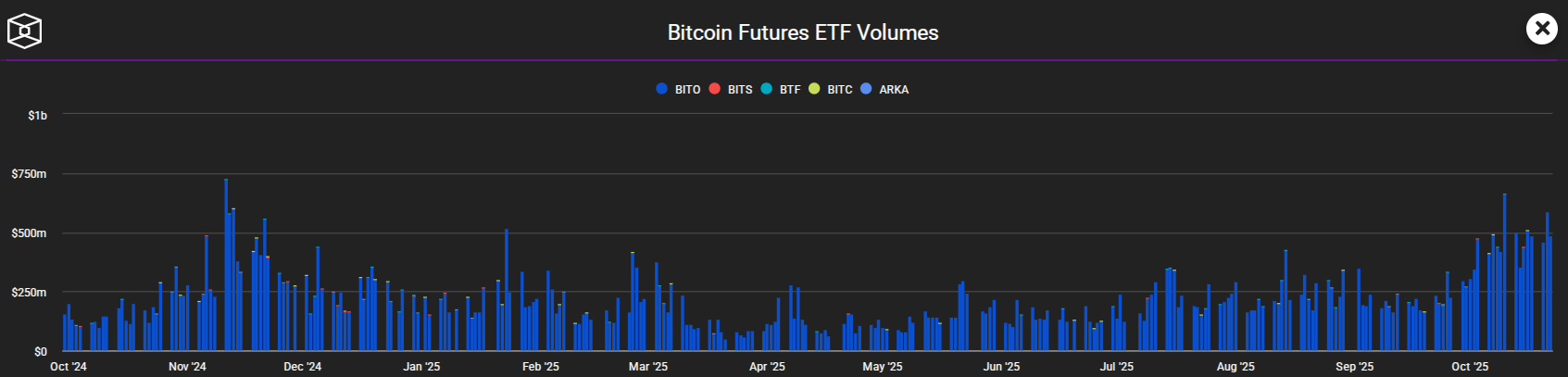
Trading volume in the Bitcoin futures ETF market. Source: The Block
Why Everyone’s Talking About Crypto ETFs
Just a few years ago, the U.S. Securities and Exchange Commission (SEC) categorically refused to approve crypto ETFs. The market seemed too risky. But in 2024 the situation changed: the regulator gave the green light to 11 spot Bitcoin funds at once. Among them were products from BlackRock, Fidelity, ARK, and Grayscale.
This was a turning point. For the first time, cryptocurrencies officially entered the realm of regulated finance. Big players came to the market, and interest in crypto investments surged.
Crypto ETFs aren’t just about convenience. They symbolize the industry’s maturity.
First, they made entry easier for millions. Now, to invest in Bitcoin, you don’t need to download apps with strange addresses and passwords. You can do everything in a couple of clicks through an ordinary broker.
Second, ETFs increase trust in cryptocurrencies. When funds from BlackRock and Fidelity trade on the New York Stock Exchange, even the most cautious investors start to view digital assets differently.
Advantages of Crypto ETFs
— You don’t need to store coins—the fund does that for you.
— Everything is legal and regulated, with no gray schemes.
— Fees are clear and transparent.
— You can start with a small amount.
— Some funds include not only crypto but also shares of blockchain companies—adding stability.
There Are Drawbacks Too
The most obvious one: you don’t own real Bitcoins. You have no access to a wallet and you can’t manage coins directly. In practice, you’re trusting the fund.
In addition:
— funds charge an annual management fee;
— the share price can differ slightly from the crypto’s rate;
— trading follows the stock exchange schedule, not 24/7 like in the crypto world.
Crypto ETFs vs. Real Crypto: Two Philosophies
| Parameter | Crypto ETFs | Direct Cryptocurrency Purchase |
|---|---|---|
| Ownership | Through a fund | Directly |
| Storage | With a custodian | In a personal wallet |
| Trading | On a stock exchange | On a crypto exchange |
| Availability | During exchange hours | 24/7 |
| Fees | Annual | One-time |
| Regulation | Under regulators’ control | Depends on the platform |
| Control | With the fund | With the owner |
Freedom vs. Convenience
Crypto ETFs simplify life but move you away from the very essence of crypto—independence. Bitcoin was conceived as money without intermediaries, without permissions, without banks. An ETF brings intermediaries back in.
Should You Invest in Crypto ETFs
Crypto ETFs are a good option for those who want exposure to the crypto market without diving into technical depths. It’s a convenient and safe way to be part of the new economy.
If you want full ownership and control over your assets, there’s only one path: buy cryptocurrency directly and store it in your own wallet.
Whichever you choose, crypto ETFs have already changed the market. They’ve shown that digital assets aren’t a fad but a new chapter in global financial history.
Profitable cryptocurrency exchange — with the time-tested exchanger Quickex.