
Decentralised applications from the era that functioned as janky experiments, only understood by the hardcore of the crypto community, now come fully equipped with regulated systems that facilitate buying, trading, investing, playing, making, and money in fact these top dApps of today are no longer just for the niche.
Right in 2026, most popular dApps intend to be some more profitable for everyone. Be it staking tokens while you sleep, flipping NFTs, or DeFi-ing through the night, these dApps are only on a different level than they’ve ever been when it comes to coins. Truly revolutionary is someone who would actually earn elsewhere, beyond what he would earn in a more traditional financial setup, and dApps allow all of this, not with any banks, intermediaries, or hidden rules whatsoever.
What Makes a dApp Profitable in 2026?
Before going into details of particular platforms, it is interesting to understand why only a few most popular dApps bear the fruit while many do not pull through.
In 2026, profitable dApps are distinguished by just a few traits. First and foremost, they must solve a real problem; they attract continuous users; bring along sustainable token economics; and operate in fast, low-fee blockchains. Importantly, they incentivize their users by offering rewards for liquidity, playing games, network validation and content contribution.
The days of “earn 1,000% APY forever” are, by and large, gone. Today’s top dApps aim for continuous income, perpetual engagement and real utility.
How dApps Actually Work
An understanding of what is beneath the surface renders the very best dApps to start bringing in cash during 2026 stronger. At a fundamental level, dApps are merely blockchain-based and are designed using networks like Ethereum and another smart contract platform. In a 100% decentralised space where authority is divided among the network, the popular dApps indeed monopolize the place that a traditional organization or server might hold.
On a P2P (peer-to-peer) server, unlike traditional applications, are decentralized apps. In effect, each app participant within the network maintains their own copy of the application’s business logic, so because there’s no single entity that has the ability to manipulate, shut down or censor the platform – all things any flip-off to Web2.0.
The cornerstone of any dApp in crypto stands for smart contracts. These contracts, coded in a self-executing nature and stored directly on the blockchain, determine the behaviour of decentralised applications, how the transactions get processed and how agreements between the individual users are executed.
Decentralised applications also benefit from underlying technology from the blockchain itself. Since data and operations run on many independent nodes, this essentially saves them from being dependent on any single point of failure. Even if part of the network does crash, the system still works.
In summary, to enable transparency, resilience, and user ownership, popular dApps stitch blockchain networks, smart contracts, and decentralized infrastructure. This explains why most of the begging dApps in our list thrive in today’s money-making dApps of the crypto market.
Best dApps: Top 10 Picks
In this section, we’re going to discuss some of the most popular types of dApps in crypto which include decentralized exchanges, lending platforms, NFT marketplaces, and virtual reality worlds.
1. Uniswap

Uniswap is still one of the best ways to earn money on crypto; this has been the case for years. This decentralized exchange makes it possible for users to swap tokens directly from their wallets, avoiding central authority.
One earns money in their pools by working as liquidity providers. By depositing token pairs into liquidity pools, users earn a portion of the trading fee. In 2026, versions of Uniswap would have streamlined this process to become even more efficient and facilitative considering its upgraded versions and cross-chain support.
Though impermanent loss is still something to look out for, experienced users are able to generate good returns, especially on high volume pairs. It is not glamorous, but it works-this is why Uniswap is held dear to so many DeFi veterans.
2. Aave
For those who like the idea of earning without always managing trades, Aave minimizes the scope for comparison. As a decentralized lending protocol, it provides users the option to lend crypto assets and earn interest or borrow against cryptocurrencies when liquidity is required.
Ever since 2026, the risk management set-up for Aave has improved, expanding its reach to multiple chains, thus opening its doors to a bigger crowd. Financing is reliant on the dual yield produced by lenders who hinge on the principle of supply and demand and borrowers who are willing to settle for a particularly highlighted aspect of cheap interest rates and absence of any loans on their credit score.
For many users, Aave has also functioned as a “crypto savings account,” though not in the usual sense but as a place where one’s idle assets grow quietly in terms of income in the background.
3. Lido

One of the best ways to earn with cryptocurrency is to stake it, and Lido happens to sit smack in the center of this trend. When you carry out staking with Lido, you get full exposure to the asset, although it is locked in for some reason.
Instead of locking up funds for staking purposes, Lido mints liquid staking tokens that can be introduced into other DeFi protocols and yet are staking rewards bearing. The agility lent by all of this does mean that Lido is especially attractive vis-a-vis dynamic market conditions in 2026.
It may not be the highest-risk, highest-reward option; however, it has been a consistent player for those just after an easy ride.
4. Blur

All the same, NFTs might have left the headlines; however, the serious traders never left. Offering advanced tools, real-time data and deep liquidity, Blur is among the most popular dApp every working NFT trader must-have.
Blurring the line between buy-and-hold casual collectors and the market lovers trading it for profits-by analyzing and keeping track of floor prices, then going for fast trades. Blur offers many opportunities for action if that is what you like about its type.
5. OpenSea

Even amid the changing scene of active NFT traders that have increasingly turned to faster platforms like Blur, OpenSea retains its dignity as the everyman’s hub. It is the creator economy’s platform of choice for the artists, designers, musicians and developers who would like to monetize digital creativity.
OpenSea has significantly expanded its multi-chain support by 2026, thereby enabling creators to reach audiences across Ethereum, Polygon, and other networks. The asset that holds an expansive trust is its renewed royalty infrastructure that helps creators earn ongoing income from secondary market sales and not from the one-time income from the drop.
On OpenSea, it is not success born out of short-term hype; instead, it comes from community building. Creators who take their audience interactions seriously, experiment with various formats, and drop content far and wide may convert OpenSea into a reliable income source.
6. Axie Infinity

Axie Infinity was one of the first play-to-earn games to reach so much audience, and though the pace of its early growth has slowed down a bit, the project didn’t blow away into thin air post that. Instead, it went into a period of calibration and was thrice reinvented into the realm of 2026 as a more sustainable and balanced ecosystem.
The game has shifted towards an experience predominantly directed toward gameplay quality and the future of economic sustainability. Players still have the opportunity to earn money through battle, Axie breeding, and different in-game assets, but the model has been modified to avoid the runaway inflation that these play-to-earn models otherwise face.
Gone are the days when Axie Infinity emblemized a shortcut to instant wealth. Today, the game can equally be enjoyed by dedicated players who love to play in a hardcore competitive environment and understand the in-game economy.
7. The Sandbox

The Sandbox meets the intersection of gaming, NFTs, and the metaverse; it offers users a chance for owning and monetising digital earth. Here, users could buy plots of land, develop interactive experiences, and generate revenues doing games, events, and asset sales.
In the year 2026, The Sandbox saw rebranding of major brands, artists, and online communities, helping to fuel demand both on land and content. There are plenty of opportunities as well when it comes to earnings: some users make ends by flipping virtual land while others earn some by staging concerts, exhibitions, or experiences sponsored by various companies.
Getting something back from The Sandbox will most likely require one’s efforts, so it only benefits users with creative ability, competency in tech, and their hands in some community engagement: it is more fun for them to make money than it is for them to use The Sandbox in the way of immersive environment cognition and experimentation for Web3 ecosystem.
8. Gala Games

Unlike single-title blockchain games, Gala Games exists as a decentralized gaming ecosystem that hosts many play-to-earn projects.
Earnings are achieved through gameplay reward combinations, NFT ownership, and asset trading. Many in-game items have true value, can be sold or reinvested in Gala interchange, etc. On the other hand, along with playing games, users would earn from operating Gala nodes, providing network staking and obtaining rewards in return.
By 2026, Gala Arcade’s events can really be notable for gamers, who like variety and flexibility-there ain’t much chance of such sort of fun to stick with a single title, so players can distribute their time and revenue streams among smaller, expanding category games in this manner and alleviate the risk associated to the economy of a single game.
9. Steemit
Steemit clearly demonstrates the fact that not all popular dApps revolve around finance or gaming; as it supposedly is a social blockchain platform that sees to it users can earn crypto rewards just by creating and curating content.
Realizing target earning usually comes by way of creating posts, taking part in discussions and upvoting good contents. The rewards system depends on the general choices of the audience and not on ad revenues, something that ensures that the creator and the reader’s interests remain very closely inline. There is a vast range in terms of earnings but it can be observed that the ones who stick around and put forth streams of consistent posts might even have a good shot at developing a nice steady return stream through the passage of time.
10. Audius
Audius offers musicians a decentralized platform for music distribution, beneficiary interaction with their fans, and income generation without depending on traditional music labels and intermediaries. Artists are free to upload their tracks, own them, and engage with fans in transparent ways.
At Audius, revenues come from token rewards, user engagements, and selective content availability. Known artists receive the maximum amount of incentives, while the emerging artists are allowed to flourish as a non-compromising community. While listeners get early releases and governance rights.
Are dApps Worth It?
Answer: Yes, absolutely, provided it seems rational.
In reality, dApps are not get-rich-quick schemes. They require in tip-top shape knowledge of the subject, experimentation, and, many times, a sense of timing. But in comparison to traditional platforms, top dApps provide users with something unique: actual ownership of the platform in addition to clear and direct governance processes.
In 2026, instead of merely grabbing hype like a vapor wave, the best opportunities would come to an individual who grasps the principals of these platforms and then chooses the right ones that match their skills and risk appetite.
Benefits of dApps
Decentralized applications (dApps) present several benefits owing to the nature of their architecture with the use of a blockchain. It is appealing in fields due to the increased level of privacy, more freedom in development, and censorship immunity.
- One of the greatest benefits offered by dApps in crypto is greater privacy. The fact that a decentralized nature of the network makes it much more difficult for hackers to reach user data of relevance. In its operations, it implies that sensitive data remains within the network with no single central authority, which significantly reduces the risk of data breaches on a systematic level.
- Another substantial advantage is the flexibility for development. An early-night builder before their great leap anticipates this becoming feasible to build and launch the applications without needing to obtain the go-ahead of such a center controlling authority. This liberty is what allows dApps to be seen as intelligent, transparent and user-centered when comparing them to conventional applications constrained by corporations or regulations.
- Yet one of their primary characterizing features is that they can act as an antidote to censorship. This is mainly because most popular dApps are placed far away from reach of any controlling power that is steeped in authoritarian canons, such as governments or corporations. Therefore individuals can access them with a good measure of freedom that is unabridged and genuine for as much as the fear of them being shut down without any notice every time is dispelled.
Not surprisingly, such admirable qualities have already made solid gains for the technology in sectors such as finance, e-commerce, and gaming. Using dApps, finance can count on some of the most transparent and prompt transactions in the industry, while e-commerce takes a new dimension in payment securities and trust.
Industries That Use Decentralized Apps
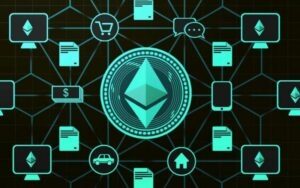
Utilized in the field of finance, popular dApps permit transactions to be securely conducted without any intermediaries. Smart contracts automate payments and agreements, reducing costs and processing time. DeFi platforms built on top dApps allow users to earn returns through mechanisms such as liquidity provision and yield farming.
Voting systems can also benefit from dApps by making use of the immutability of blockchain to shield against fraud and provide transparency. Votes should be able to be analyzed by smart contracts, allowing users to partake in the electoral process while ensuring that no fraudulent behavior is taking place.
In addition, social media is also an area that is beginning to attract interest with the advent of dApps. Blockchain-based platforms give people more control over their data and enable them to earn tokens for developing content and engaging with others. Thus, incentive-driven ecosystems are created.
Gaming has been one of the fastest-growing communities in the penetration of dApps. Blockchain games create a platform for game assets that are owned by the players themselves, able to be traded or sold outside the platform. This makes for real economies where they earn tokens and recover from the value given during the gameplay. This minimizes possibilities for deception on both parties- the developers and the players.
What Are the Best dApps for Making Money?
We have already seen that you can employ a wide range of dApps to be a breadwinner, including play-to-earn games, NFT marketplaces, lending platforms and reward-based applications.
Among the larger scions for people wishing to earn without toiling to repetitively complete tasks is Aave. It allows users to lend or borrow cryptocurrencies across a decentralized system, with one earning interest on the assets deposited. Aave is recognized for its launch of flash loans, which allows for complex financial operations to be performed without any front money; users can pursue different ways to generate yields all within the platform, assisted by a huge list of supported assets and a clean inclusion.
Final Thoughts
Decentralised application transformed interactions with digital systems in the most fundamental way. The objective of the most popular dApps is to render more private, more secure, and less costly transactionally when compared with traditional platforms.
Be that as it may, users should always be cautious when using top dApps. Before such releases commit funds or personal data, the identification of trusted platforms is essential through the so-called reputation and expert reviews. These basics amplify the safety and rewards of using the decentralised application.
FAQ
Are dApps safe to use in 2026?
Most popular dApps are significantly safer in 2026 than in the early days of Web3, thanks to audits, bug bounties, and more mature codebases. However, safety still depends on the specific platform. The most popular dApps tend to be more secure due to larger user bases and constant scrutiny, but users should always research smart contract audits and avoid investing more than they can afford to lose.
Which dApps are best for beginners to make money?
For beginners, the top dApps are usually those with simple mechanics and lower risk. Platforms like Uniswap, Aave, and Lido are often considered among the best dApps to make money for newcomers. They don’t require constant management and offer relatively predictable returns compared to more speculative strategies.
Can dApps replace traditional financial platforms?
While dApps are unlikely to fully replace traditional finance overnight, they already outperform it in certain areas such as transparency, accessibility, and global reach. Many dapp crypto platforms allow users to earn, lend, and trade without banks or intermediaries – something traditional systems still struggle to offer efficiently.
Disclaimer: The material in this article is not financial or investment advice. Everything stated here reflects the author's personal view and should not be treated as a recommendation to trade or invest. We make no warranties regarding the accuracy, reliability or completeness of the information presented. Cryptocurrency markets are highly volatile and can move unpredictably. Before committing any funds, every investor, trader or crypto user should study several independent sources and check the regulations that apply in their own jurisdiction.