
On September 9, Apple once again found itself in the spotlight. The company held another keynote where it showcased updates to its hardware and services. As usual, the discussion went far beyond new gadgets.
The Quickex editorial team decided to seize the moment and look back at how Apple’s relationship with the crypto industry has been unfolding. Spoiler: it’s not all rosy.
Track how cryptocurrency rates react to Apple news with Quickex.
Apple and Crypto
The first statements from company representatives were made in 2019. At the time, Jennifer Bailey said that Apple was closely following the development of the crypto industry and saw long-term potential in it. Her words were the first signal that the corporation views digital assets as part of the future financial system.
In 2024, Tim Cook admitted he personally owns bitcoin and considers it an element of a diversified portfolio. At the same time, he emphasized this is his personal investment and that Apple does not plan to turn cryptocurrency into a corporate instrument. Thus, the company’s stance remained cautious: there is interest, but no direct action.
Ironically, Bitcoin entered the world’s top 10 most valuable assets by market capitalization, where the company’s stock ranks fourth. It’s not out of the question that BTC could soon catch up with the tech giant in the rankings.
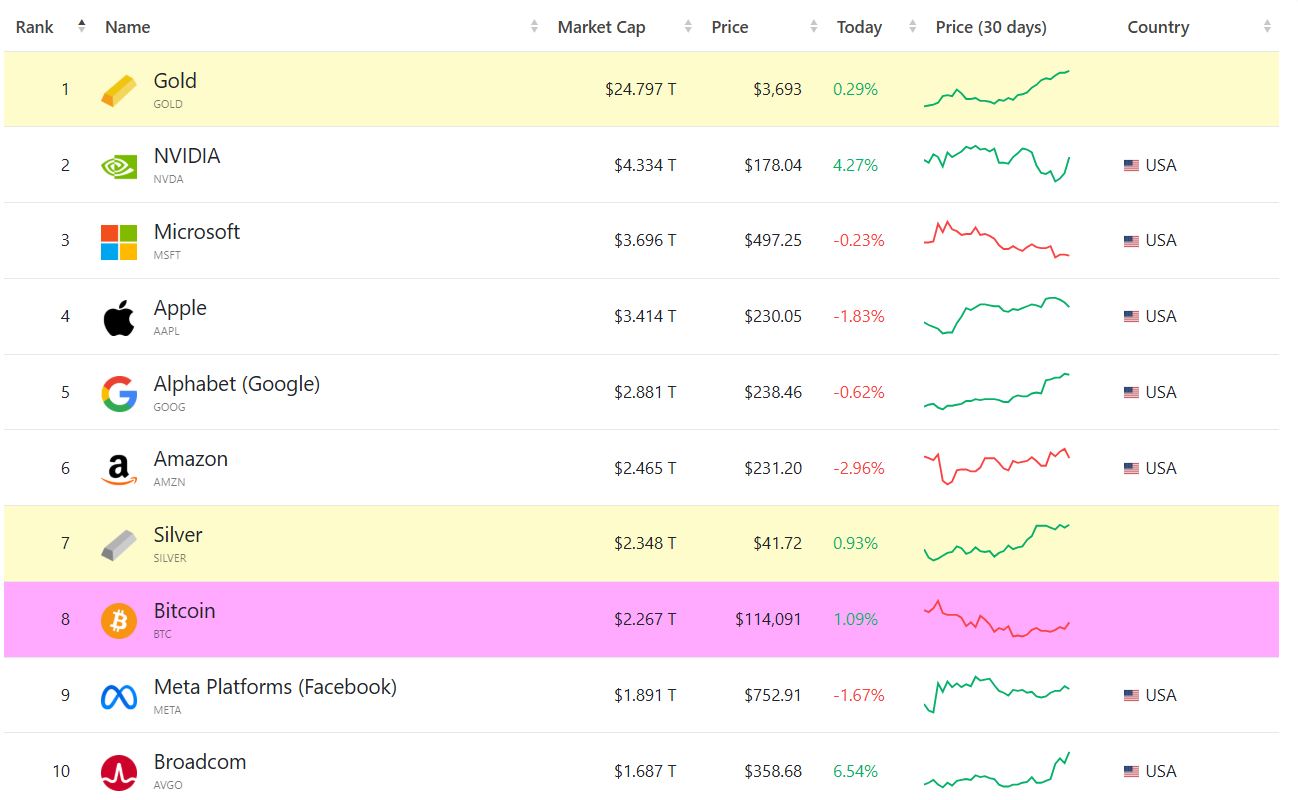
Apple and Bitcoin are in the top 10 most capitalized assets. Source: companiesmarketcap
How Crypto Reached Apple
Despite the lack of official support, access to cryptocurrency gradually seeped into Apple’s ecosystem through third-party channels. On PancakeSwap, tokenized stocks appeared—users gained the ability to trade futures on Apple, Amazon, and Tesla shares with up to 25× leverage, entirely on-chain and without traditional brokers.
There are also services that allow you to buy Apple hardware directly with cryptocurrency—Bitcoin, Ethereum, XRP, and others.
Strict Fees and Their Gradual Easing
For many years, the company’s policy regarding crypto and NFT apps was strict. Any purchases of digital content had to go through the App Store with a 30% commission.
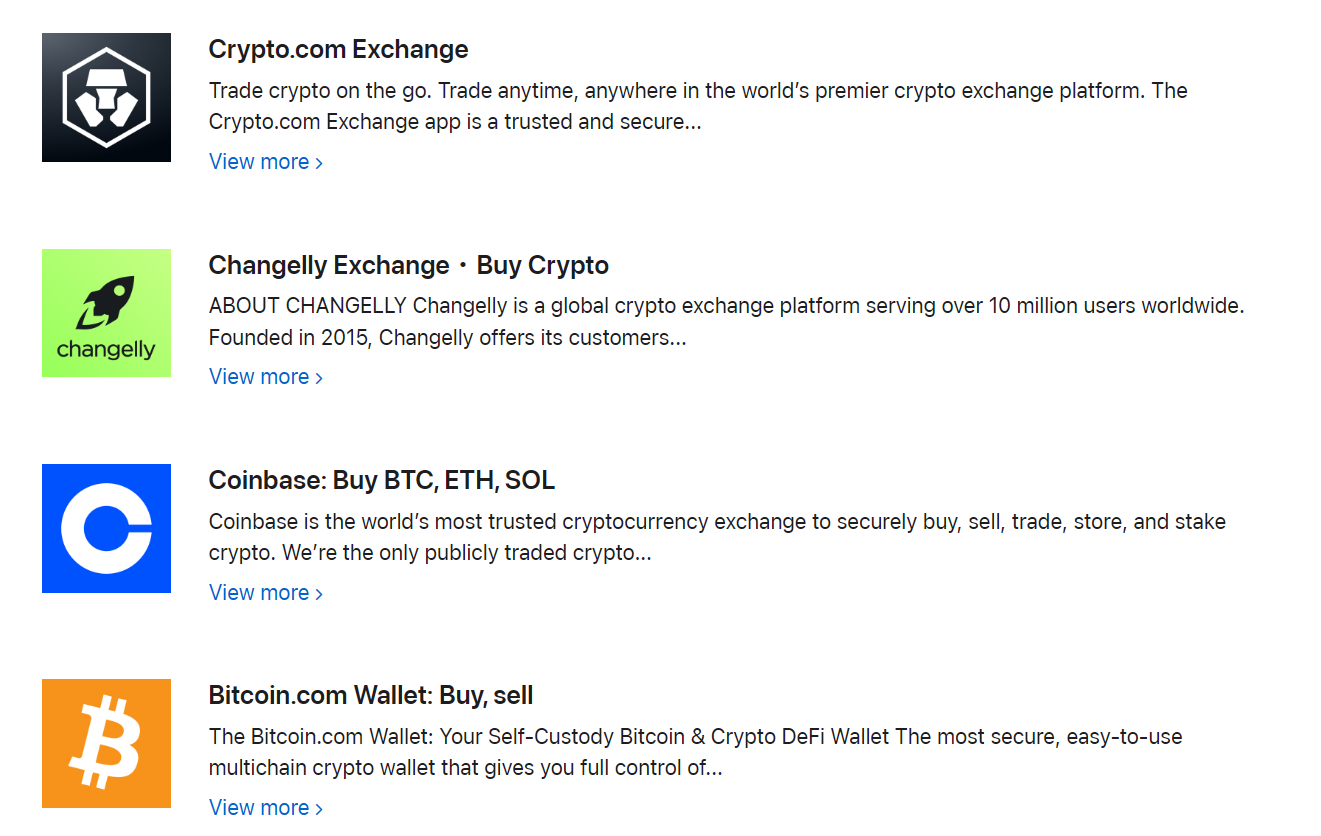
The most popular crypto apps in the App Store.
In 2023, the company relaxed its rules, allowing in-app purchases of cryptocurrency and NFTs. But the real turning point came in 2025, when Apple was required to let developers use external links to third-party payment systems. Developers can now direct users to alternative payment methods without Apple’s mandatory commission.
In the European Union, the company went even further. Under the Digital Markets Act, a new model appeared: 5% for the basic package, 13% for the extended one, and an additional 5% Core Technology Commission on external purchases starting in 2026.
Signals from Apple Presentations
Apple keynotes regularly spark debate in the crypto community. For example, in 2024, during the Vision Pro demo, users noticed the Render token logo, which triggered a wave of interpretations.
Attention also gravitated to the Tap to Cash feature—money transfers by tapping one device to another. Many believed it could become a basis for crypto payments. However, experts reminded everyone: support for a large number of apps does not imply hidden plans to integrate cryptocurrencies.
Apple’s Impact on AI Tokens
New Apple products and services can influence not only the stock market but also the crypto industry. A vivid example was recorded in 2024: after the Apple Intelligence platform announcement, the market cap of AI tokens increased by 8%, and some projects jumped as much as 30% in just a day. Analysts explained this by heightened interest in artificial intelligence technologies, while stressing that Apple still has no direct connection to cryptocurrency.
Crypto Projects in Apple’s Ecosystem
Third-party crypto wallets are actively integrating into the company’s ecosystem. Trust Wallet supports hundreds of blockchain networks, decentralized apps, and NFTs, with private keys stored on the user’s device. The wallet provides access to staking, DeFi, and RWA tokens. In 2024, it was recognized as the best non-custodial crypto wallet and received international security certifications.
iOS users can buy cryptocurrency via Apple Pay inside Trust Wallet, turning Apple devices into a convenient entry point into the crypto world—despite the lack of direct support from Apple itself.
Threats
The industry has repeatedly faced risks associated with Apple and its ecosystem. In the summer of 2025, the largest data leak in history occurred. Around 16 billion logins and passwords were exposed, including Apple user accounts. This sparked concern in the crypto community: the stolen data could be used to hack wallets and exchanges, as well as for phishing.
In addition, a former Coinbase CTO warned that corporations such as Apple, Microsoft, and Google could pose a threat to crypto users. According to him, under certain conditions these companies might confiscate assets at the request of authorities—casting doubt on the real independence of cryptocurrencies that live within big-tech ecosystems.
Rumors of Launching Its Own Cryptocurrency
In the fall of 2025, people actively began to discuss the notion that Apple was preparing to integrate XRP payments. The news drove increased interest in the token, but no official confirmation followed.
Conclusion
The history of Apple and cryptocurrency is a chain of cautious steps and legal wrangling. The company is in no hurry to issue its own token and remains guarded in its statements. But its decisions still indirectly affect the crypto market.
Apple’s keynotes can provoke short-term spikes of interest in crypto assets, while the ecosystem of third-party wallets makes the company’s devices full-fledged access points to the world of digital assets.
At the same time, threats such as data leaks and potential asset confiscation suggest that members of the crypto community should treat Apple with caution for now.
You can exchange cryptocurrency at a good rate on Quickex.
Disclaimer: The material in this article is not financial or investment advice. Everything stated here reflects the author's personal view and should not be treated as a recommendation to trade or invest. We make no warranties regarding the accuracy, reliability or completeness of the information presented. Cryptocurrency markets are highly volatile and can move unpredictably. Before committing any funds, every investor, trader or crypto user should study several independent sources and check the regulations that apply in their own jurisdiction.