

Bitcoin started the new workweek with an unpleasant dip below $112,000. The decline began after a rise on the back of positive signals from the Fed about rates. Members of the crypto community suspect that large crypto exchanges are behind the market crash.
We explain why Bitcoin is falling despite the Fed’s positive signals, how trading platforms may manipulate the market, and whether it’s worth expecting an altseason in such conditions.
Track cryptocurrency prices in real time on Quickex
What’s Happening with Bitcoin and Ethereum
Let’s start with a reminder of what took place at the Jackson Hole Symposium. On August 22, 2025, Fed Chair Jerome Powell delivered a speech at the event that contained signals of an imminent cut to the key interest rate. For the crypto market, such a statement is clearly positive.
Historically, during periods of key rate cuts, high-risk assets such as cryptocurrency tend to rise. This happens because the dollar and dollar-denominated products lose yield, forcing investors to look for alternative instruments. Bitcoin and altcoins handle that role well.
Bitcoin reacted to the news with an expected rise. Within a few hours, the cryptocurrency gained 4.54%, but then fell by more than 5.5%. At the time of writing, the coin is trading at $111,077.
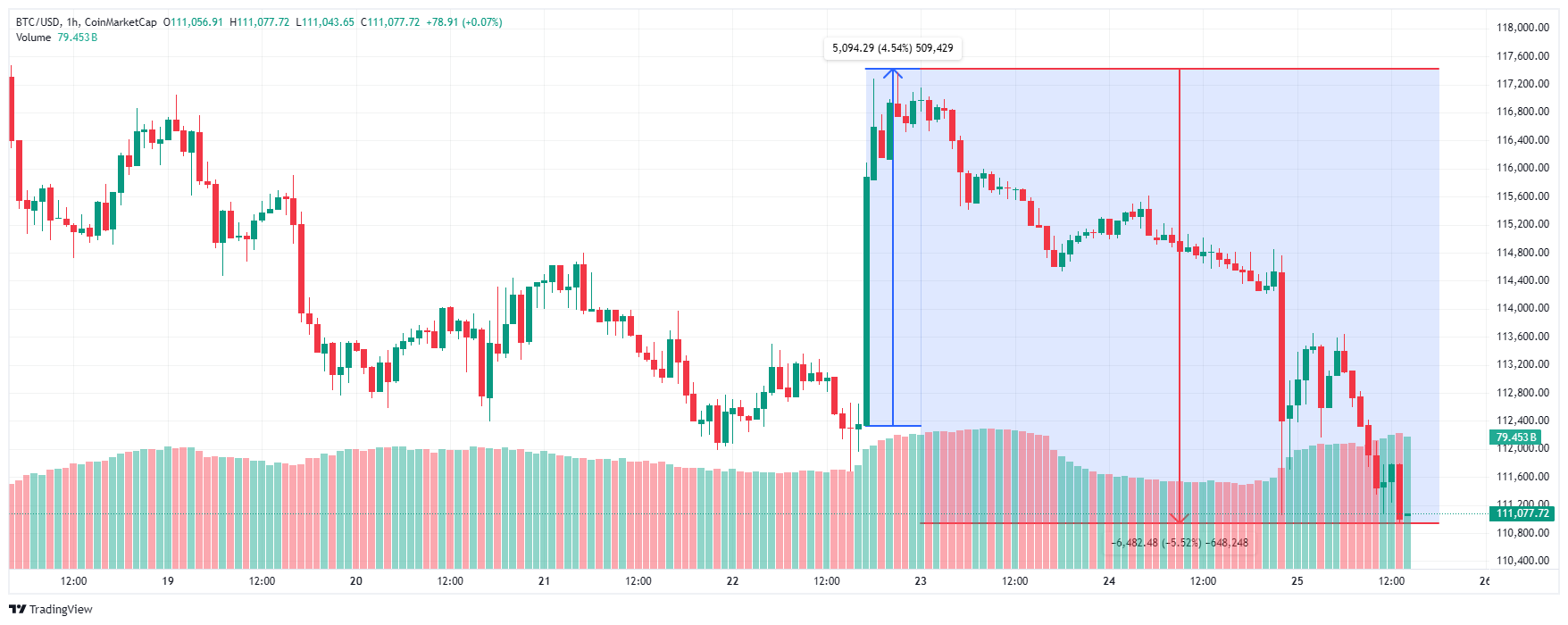
Bitcoin chart. Source: TradingView
Ethereum reacted more strongly than Bitcoin to the Fed’s positive signals, adding nearly 17%. On the evening of August 24, the cryptocurrency set a new all-time high that had been out of reach since November 2021. The coin’s ATH was recorded at $4,953. It did not manage to reach the psychologically important $5,000 mark. After that, like Bitcoin, ETH moved into a correction. At the time of writing, the coin has fallen by more than 8%.
It’s important to note that Ethereum rose faster than Bitcoin and its positive move lasted longer. Such behavior is characteristic of an altseason—but more on that later.
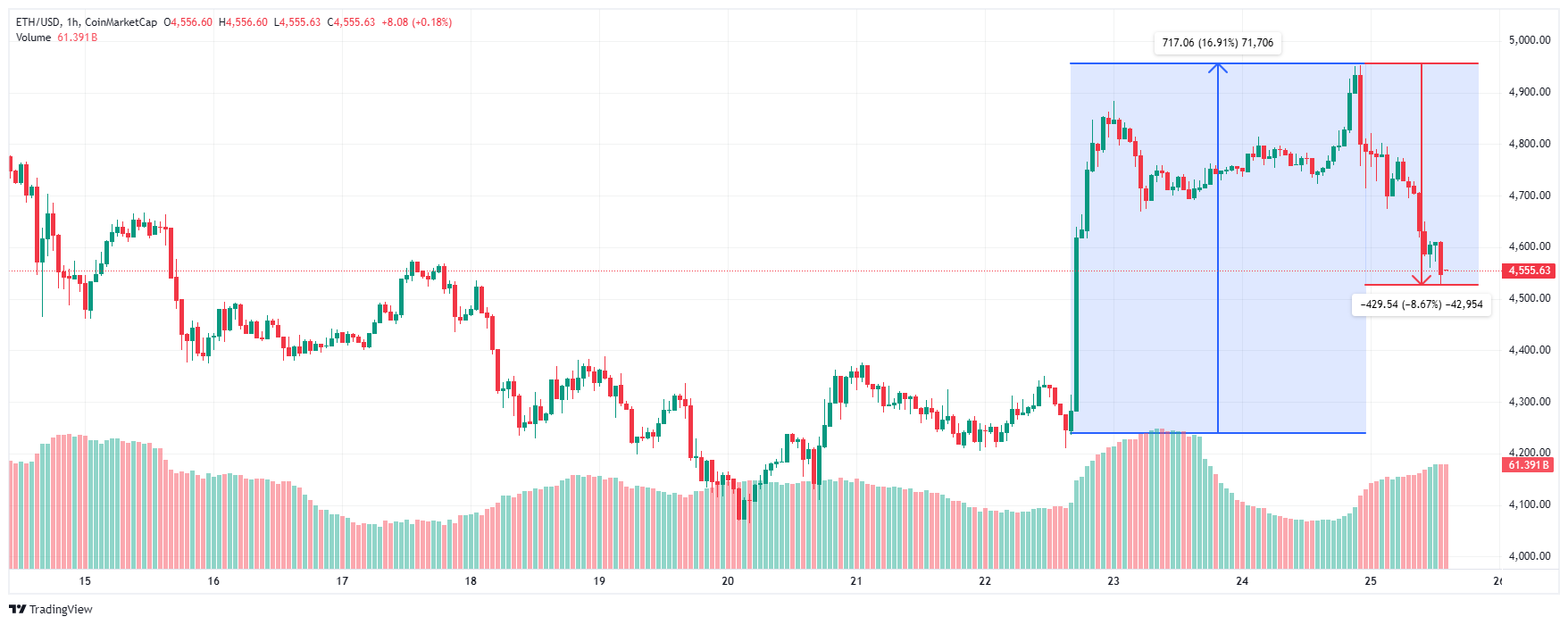
Ethereum chart. Source: TradingView
How Crypto Exchanges Manipulate the Market
Members of the crypto community are convinced that, despite the Fed’s positive signals, large exchanges are behind the market’s decline. Accusations are being leveled at Binance, Coinbase, Bybit, and other major trading platforms. Here’s how, in investors’ view, crypto exchanges operate:
- Trading platforms intentionally sell large lots of cryptocurrency to flush out long positions (bets on continued price growth). Traders with such positions hit their stop-losses and are washed out of the market.
- The price decline triggers panic in the market, which increases pressure on cryptocurrency quotes and leads to further drawdowns.
In such conditions, crypto exchanges get two opportunities to profit:
- Open a short position (a bet on a decline). In this way, trading platforms can capitalize on the panic they helped create and profit from falling prices.
- Buy cryptocurrency at low prices. Since the market pressure is artificial, ceasing manipulations can resume growth. In that case, exchanges can sell the crypto purchased at bargain prices at more attractive rates.
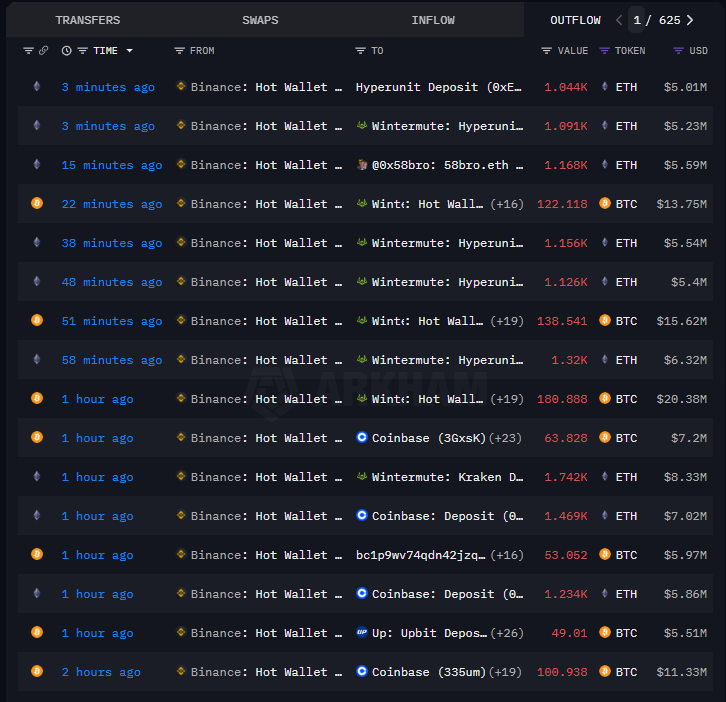
An example of manipulative operations by Binance that the trader Rekt Fencer cites as an example.
There are other manipulations as well. For example, the analyst MartyParty drew attention to a scheme supporting Binance’s native token BNB. According to his observations, the exchange deliberately pressures Solana’s price through sell-offs so that it cannot overtake their cryptocurrency in the market-cap rankings.
MartyParty believes that Binance staged a SOL sell-off through the market maker Wintermute. He also notes that the exchange’s team may be using clients’ cryptocurrency in their operations. He reached this conclusion because the report on the trading platform’s reserves does not show enough Solana to exert pressure of this magnitude.
Should We Expect an Altseason?
Despite these manipulations, many members of the crypto community are confident that an altseason lies ahead. This is indicated by Ethereum’s faster growth compared with Bitcoin, as well as a decline in BTC dominance. Such changes are traditionally observed on the eve of altseason.
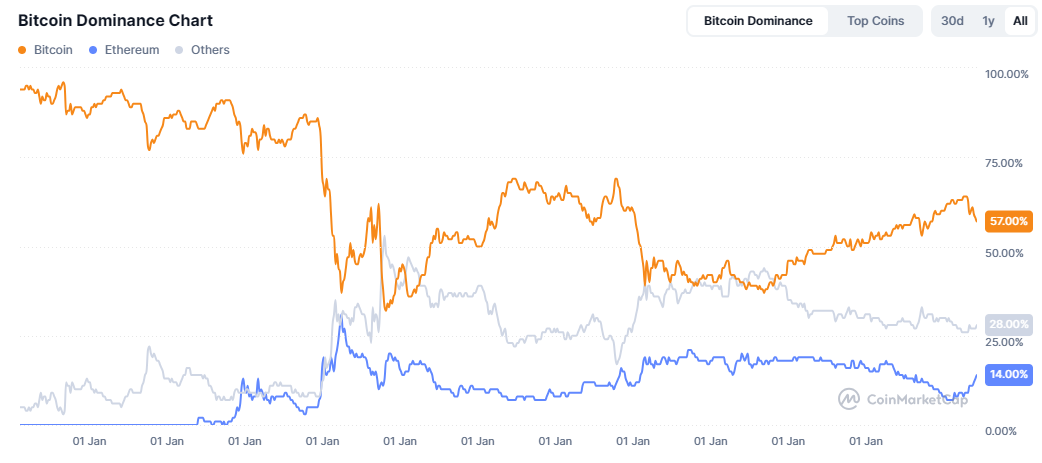
Bitcoin, Ethereum, and other coins’ dominance levels. Source: CoinMarketCap
Altseason indices also point to growing interest in alternative coins. At the time of writing, the metric stands at 59 out of 100. For confirmation of altseason, it needs to exceed 75.
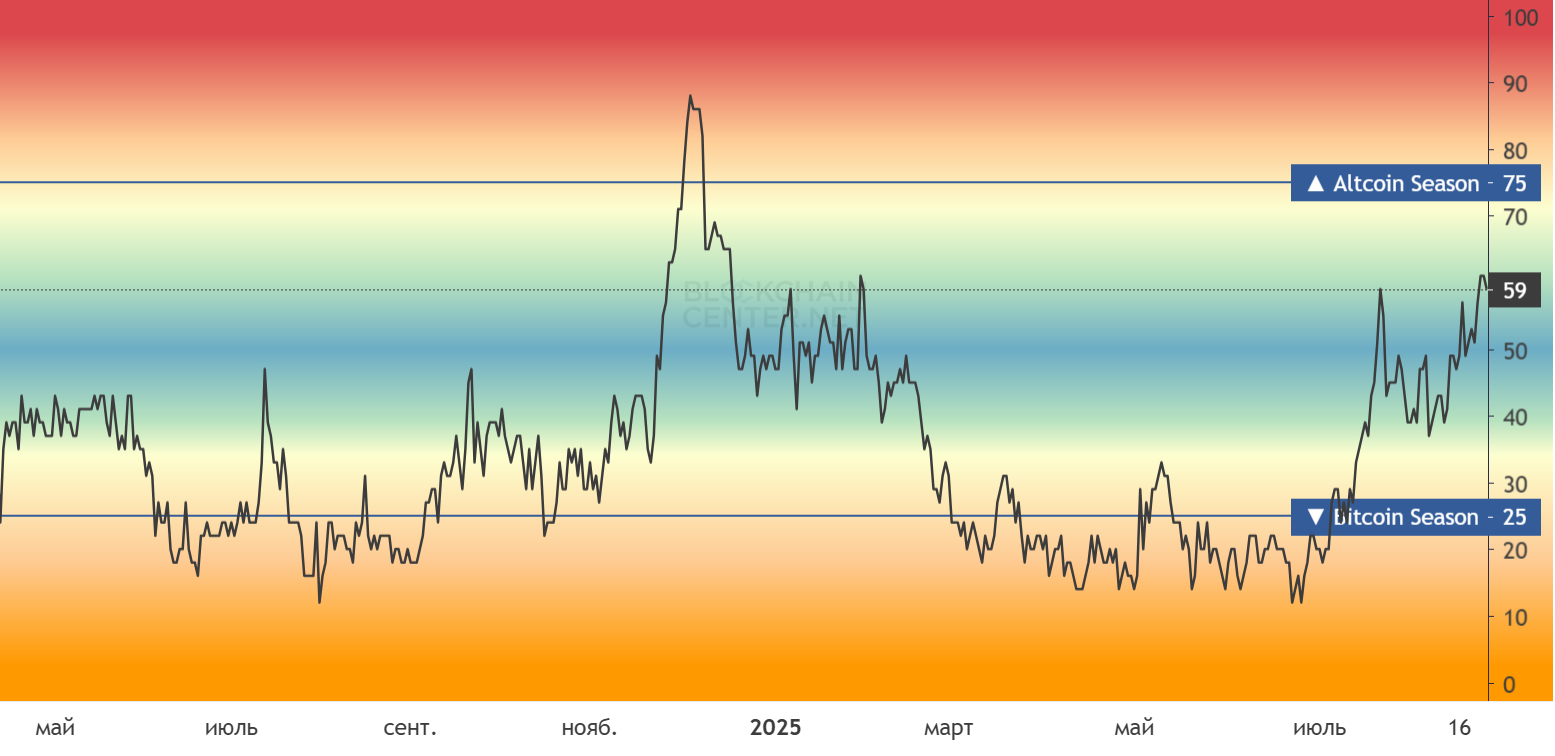
Altseason Index. Source: blockchaincenter
Conclusions
Despite optimistic signals from the Fed about an imminent key rate cut, the crypto market could not continue rising and moved into a correction. This behavior suggests that the classic mechanisms of monetary policy do not fully apply. Market participants link the sell-off to possible manipulations by the largest exchanges, which benefit both from falling quotes and the subsequent recovery.
Ethereum showed a stronger reaction to the news and remained in an upward move longer—traditionally considered a sign of an approaching altseason. Additional arguments in favor of this scenario include declining Bitcoin dominance and rising interest in alternative coins.
Thus, the market remains under strong pressure from trading platforms, but if this factor weakens, investors may see a continuation of growth and the onset of a full-fledged altseason.
You can exchange Ethereum for USDT quickly at the best rate—or anonymously swap another coin—on Quickex.