
The popular exchange Quickex has launched cross-chain stablecoin swaps. The update removes the need to use bridges or switch between services. Stablecoins can now be transferred between networks directly inside the exchange.
You can test cross-chain stablecoin swaps on Quickex right now.
Why cross-chain stablecoin swaps are needed
Users regularly move stablecoins between networks. The reasons vary: fees, transaction speed, or support for specific applications and protocols. The ability to quickly transfer stablecoins from one network to another helps save both time and money.
Quickex has offered this option to its users. The service handles routing, checks network conditions, and processes the transaction without requiring interaction with bridges or workaround solutions.
Quickex works with many popular stablecoins, including USDT, USDC, and DAI. This makes the new feature useful for a wide range of cross-chain stablecoin scenarios. For example, USDT is available on multiple networks, including TRC-20, TON, Solana, Avalanche, Optimism, Kava, and Near.
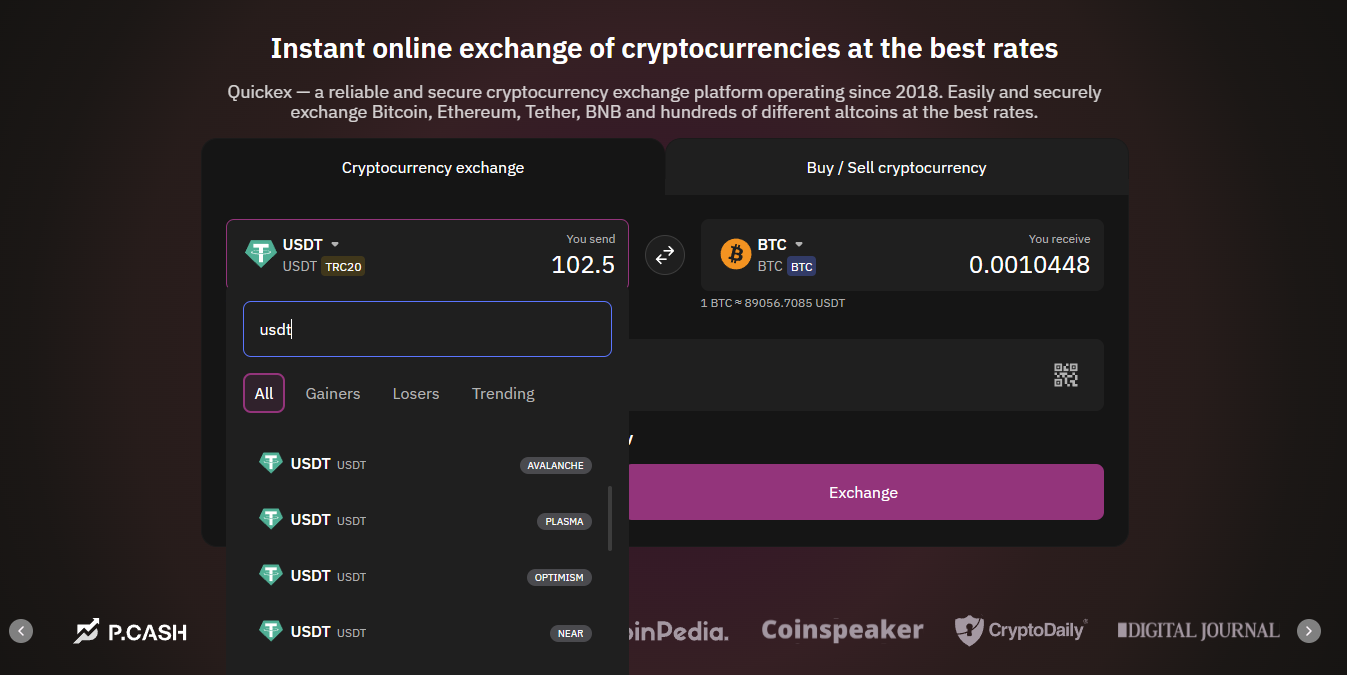
Quickex users can transfer their assets from one blockchain to another at any time with minimal fees.
How to swap one stablecoin for another
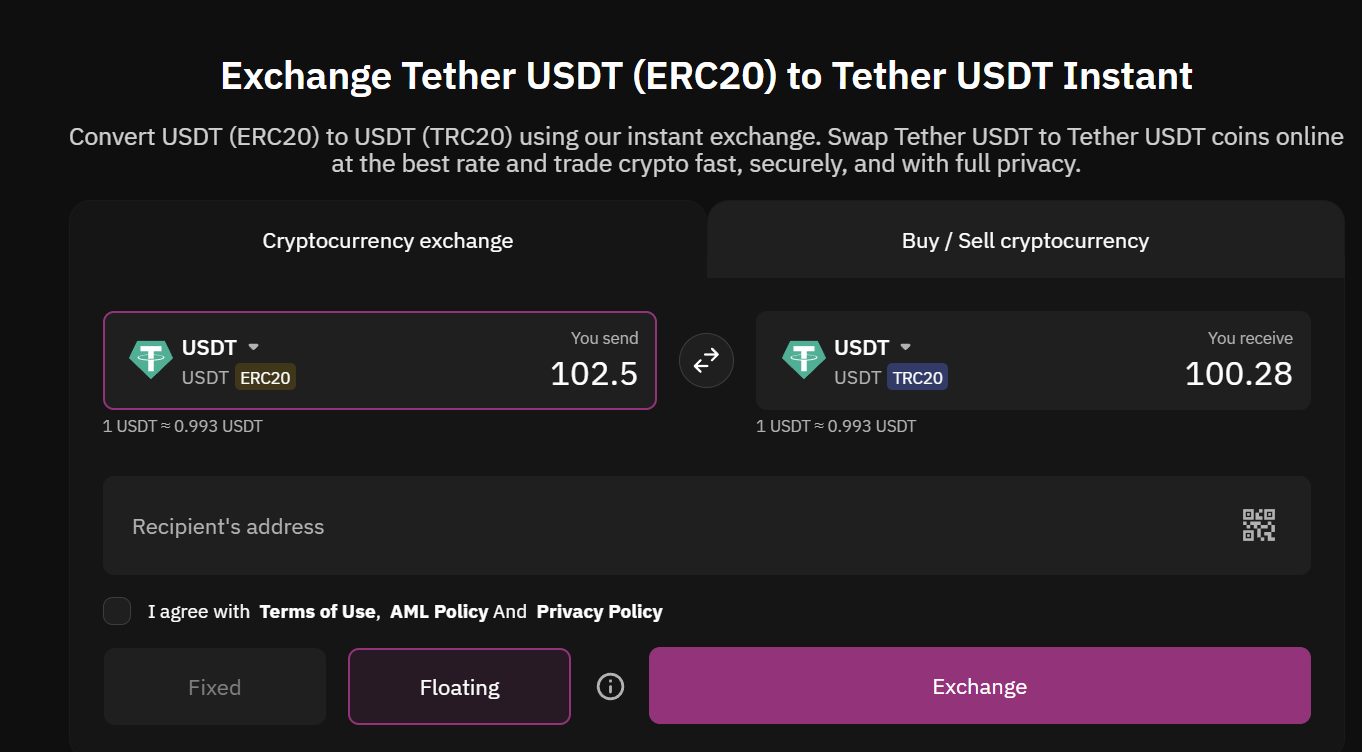
The swap is launched through the familiar Quickex interface. The user selects a stablecoin, the sending network, and the receiving network, enters the address, and confirms the transaction. The interface shows an example of an exchange of USDT from the most popular Ethereum ERC-20 standard to USDT on the TRON network, which often offers more attractive fees.
Next, you need to:
- enter the wallet address
- agree to the terms (it is recommended to read the user agreement beforehand)
- click the swap button
After that, the swap execution page opens. First, you need to wait for the swap confirmation. The page displays the transaction ID and other details. At this stage, you can either proceed with the swap or request a refund if the amount differs from the expected one.
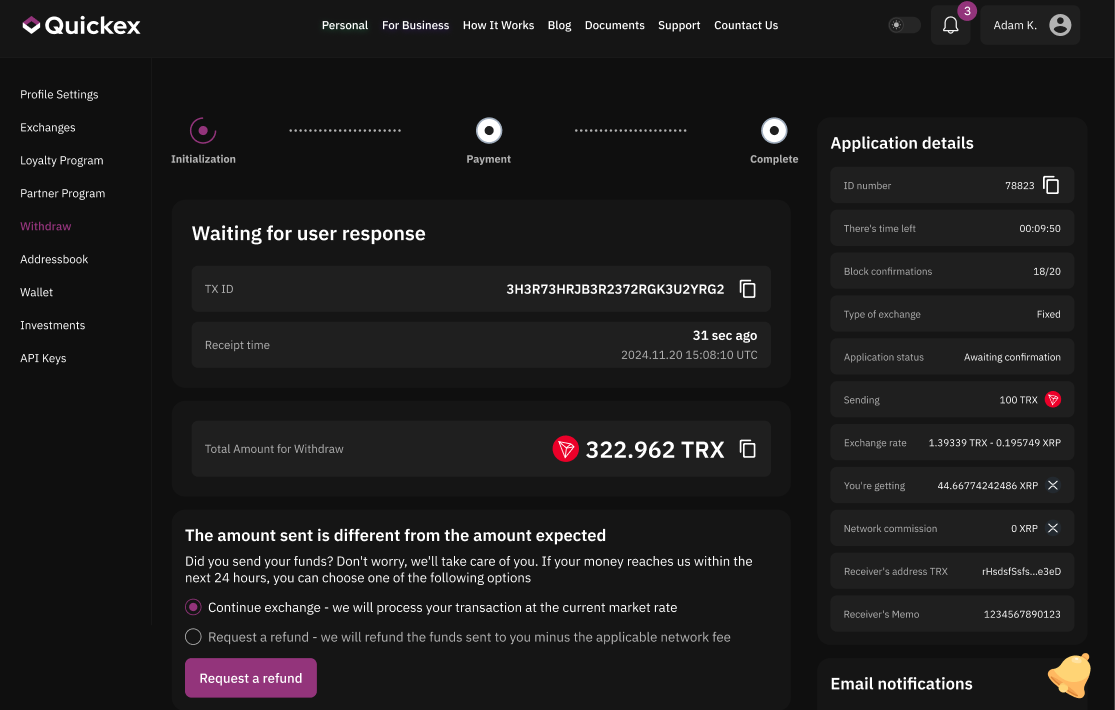
The next stage is the swap execution. This window also shows all transaction details required for processing. You then need to wait for the operation to complete and for the stablecoins to be credited.
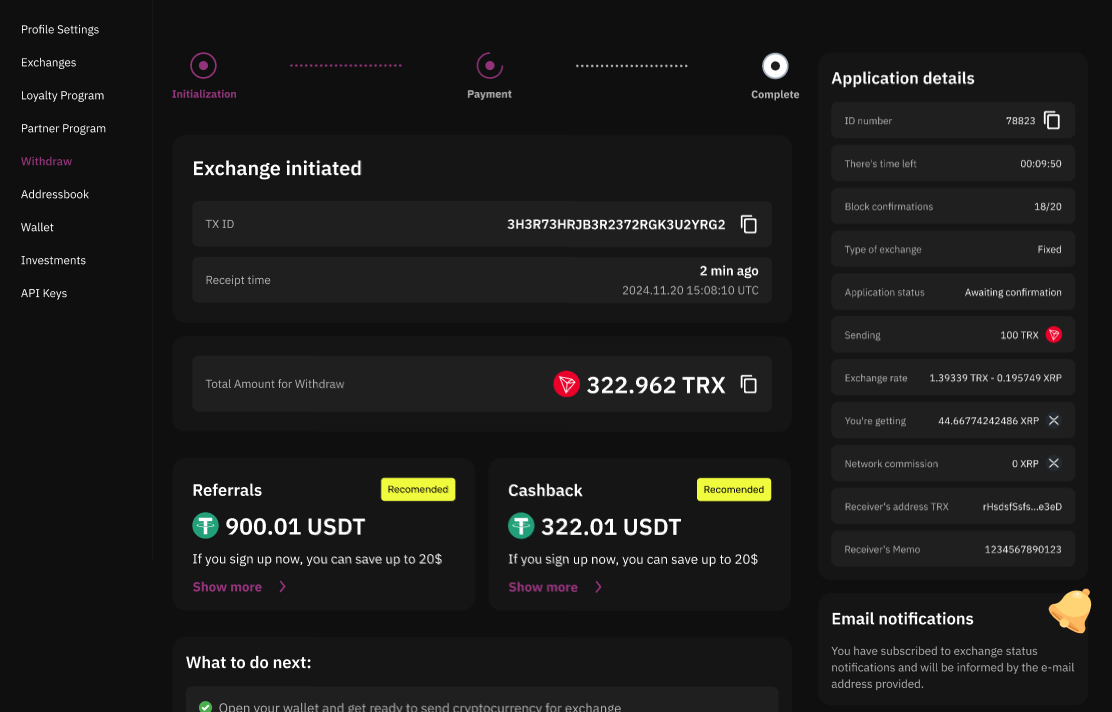
The system notifies you once the operation is successfully completed.
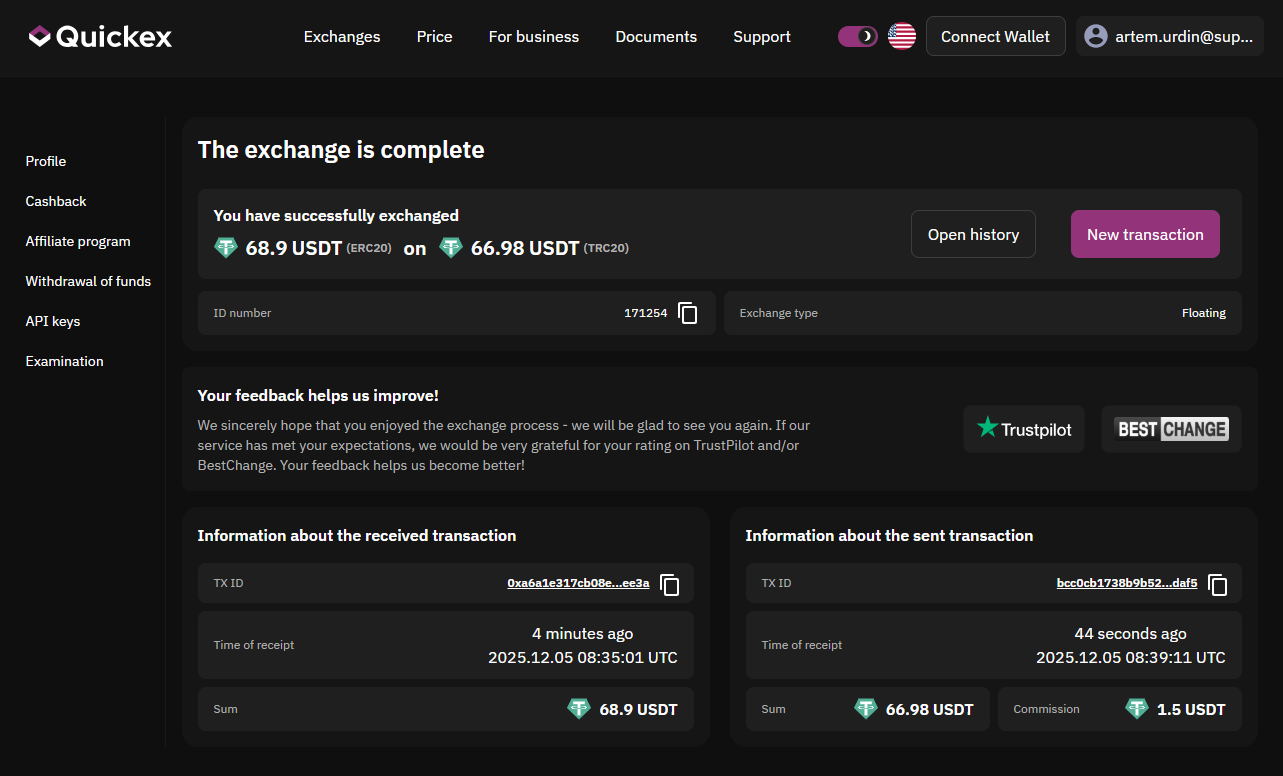
Execution time depends on confirmation speed in the selected networks. In most cases, the swap takes just a few minutes.
What the update brings to users
Cross-chain swaps inside the service remove the need to use third-party bridges and manually monitor network conditions. The risk of choosing the wrong blockchain is reduced, while transaction speed increases.
Stablecoins are widely used for payments and transfers. The ability to move them to another network through a single interface helps users react more quickly to market changes.
The update simplifies the process: fewer steps, fewer technical details, and greater resilience to network congestion.
You can test cross-chain stablecoin swaps on Quickex right now.
FAQ about cross-chain stablecoin swaps on Quickex
Which stablecoins are supported for cross-chain swaps
Quickex works with key stablecoins such as USDT, USDC, and DAI. Each token is available on multiple networks. For example, USDT can be transferred between TRON, Ethereum, TON, Solana, Avalanche, Optimism, Kava, Near, and other networks.
What is the difference between cross-chain swaps and using bridges
Bridges require manual network switching, multiple fee payments, and constant transaction monitoring. Cross-chain swaps on Quickex are handled within a single interface. The service automatically selects the route and completes the transaction without external bridges or additional services.
How long does a cross-chain swap take
Usually just a few minutes. The exact time depends on the load of the sending and receiving networks. Any delays are related only to the blockchains themselves.
How can I check that the transaction was successful
After confirmation, the Quickex interface displays the transaction status along with transaction hashes for both networks. These can be checked using blockchain explorers.
Can I receive stablecoins on a network without native gas tokens
Yes. Quickex sends the stablecoin directly to the selected network. However, native tokens may be required for future transactions on that network, such as TRX on TRON or TON on TON.
Are there limits on cross-chain swap amounts
Limits depend on the selected networks and the specific stablecoin. Current limits are displayed before the transaction is confirmed.
What should I do if the wrong network was selected
Once a transaction is sent, the network cannot be changed due to blockchain limitations. The Quickex interface reduces the risk of errors by clearly showing both the sending and receiving networks before confirmation.
How secure are cross-chain swaps on Quickex
Quickex does not use external bridges and performs transfers directly between networks. This reduces risks associated with manual routing, user errors, and unreliable third-party services.
What makes this update useful for users
The update saves time, reduces the number of steps, lowers the risk of errors, and helps users respond faster to market changes. Everything is handled within a single service without technical complexity.
Can I try the new feature now
Yes. Cross-chain swaps are already available in the Quickex interface and operate in standard mode.
Ready to swap USDT for USDC or another stablecoin. Welcome to Quickex.
Disclaimer: The material in this article is not financial or investment advice. Everything stated here reflects the author's personal view and should not be treated as a recommendation to trade or invest. We make no warranties regarding the accuracy, reliability or completeness of the information presented. Cryptocurrency markets are highly volatile and can move unpredictably. Before committing any funds, every investor, trader or crypto user should study several independent sources and check the regulations that apply in their own jurisdiction.