
On September 7, 2025, it was four years since the law came into force that made the most capitalized digital coin, bitcoin, an official currency in El Salvador alongside the U.S. dollar. The step was historic: the country was the first in the world to grant a cryptocurrency the status of legal tender.
The Quickex editorial team looked into how El Salvador has changed over these years. Here’s whether a bitcoin miracle happened—or whether all efforts were in vain.
Track prices of your favorite cryptocurrencies on Quickex.
Timeline of Events
In spring 2021, President Nayib Bukele announced plans to recognize bitcoin as a national currency. In June, parliament approved the law. The document provided for mandatory acceptance of bitcoin as payment and the launch of the state crypto wallet, Chivo.
On September 7, 2021, the law took effect. On the same day, the authorities bought the first 400 bitcoins. Chivo was launched simultaneously. All residents of the country gained access to the wallet.
To stimulate interest, the government issued every new wallet user a $30 bonus in bitcoin. This allowed millions of citizens to try the digital currency for the first time, but many immediately exchanged the crypto for dollars.
In 2022, the government continued buying bitcoins. At the same time, the authorities presented a project to build a “bitcoin city” at the foot of the Conchagua volcano. The city was envisioned as a financial and technology hub with no income or property taxes, but with VAT to finance infrastructure.
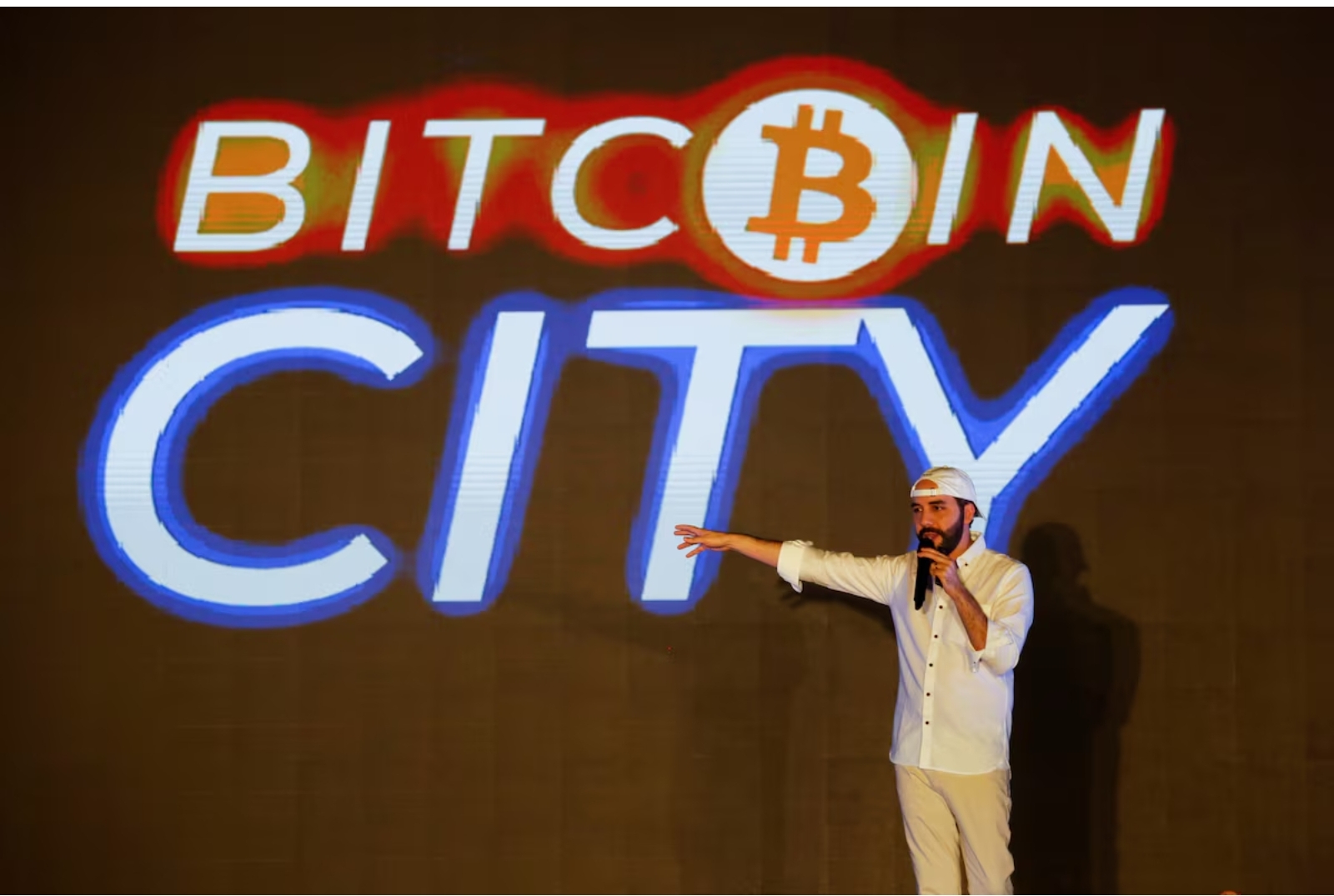
President of El Salvador Nayib Bukele presents the crypto-city project at the Bitcoin Week conference
2023 showed that mass use of bitcoin did not occur. Most residents continued to use dollars, and interest in Chivo dropped sharply. Despite the difficulties, the authorities maintained their course of supporting the cryptocurrency.
2024 was marked by growing pressure from international organizations. The IMF demanded that the authorities of El Salvador amend their crypto legislation. Representatives of the regulator concluded that the existing rules of crypto circulation in the country threatened its financial stability. There were also reproaches that the spread of cryptocurrency could increase money-laundering risks.
In January 2025, parliament adoptedparliament adopted the amendments demanded by the IMF. Starting in April, mandatory acceptance of bitcoin by businesses became optional. At the same time, El Salvador retained BTC’s status as legal tender.
Why El Salvador Needed Bitcoin
El Salvador had several reasons for adopting bitcoin at the national level:
- The authorities wanted to reduce the economy’s dependence on the dollar and attract investment to the country.
- Another goal was to make money transfers from migrants in the U.S.—a significant part of household income—cheaper.
President Bukele also wanted to turn El Salvador into a center of financial innovation and make the country stand out among other states in the region.
And the bitcoin experiment was also supposed to demonstrate openness to new technologies and strengthen the country’s prestige on the international stage.
Mining on Volcano Energy
In September 2021, Bukele announced that El Salvador would start mining bitcoins using geothermal energy from volcanoes. In 2022, the first mining station began operating. Its capacity was enough to mine only dozens of bitcoins per year. By global standards, this is quite modest. However, the symbolism of the project turned out to be more important than the numbers.
El Salvador declared itself a country that mines cryptocurrency exclusively on “green energy.” The initiative was a response to numerous complaints against the crypto industry from environmentalists. Pressure on crypto supporters, for example, led Tesla founder Elon Musk at one point to stop accepting crypto payments for cars.
Bukele’s supporters saw an image breakthrough in volcano mining. Critics considered the revenues too small compared to the investments. Despite the criticism, bitcoin mining on volcanoes in El Salvador continues.
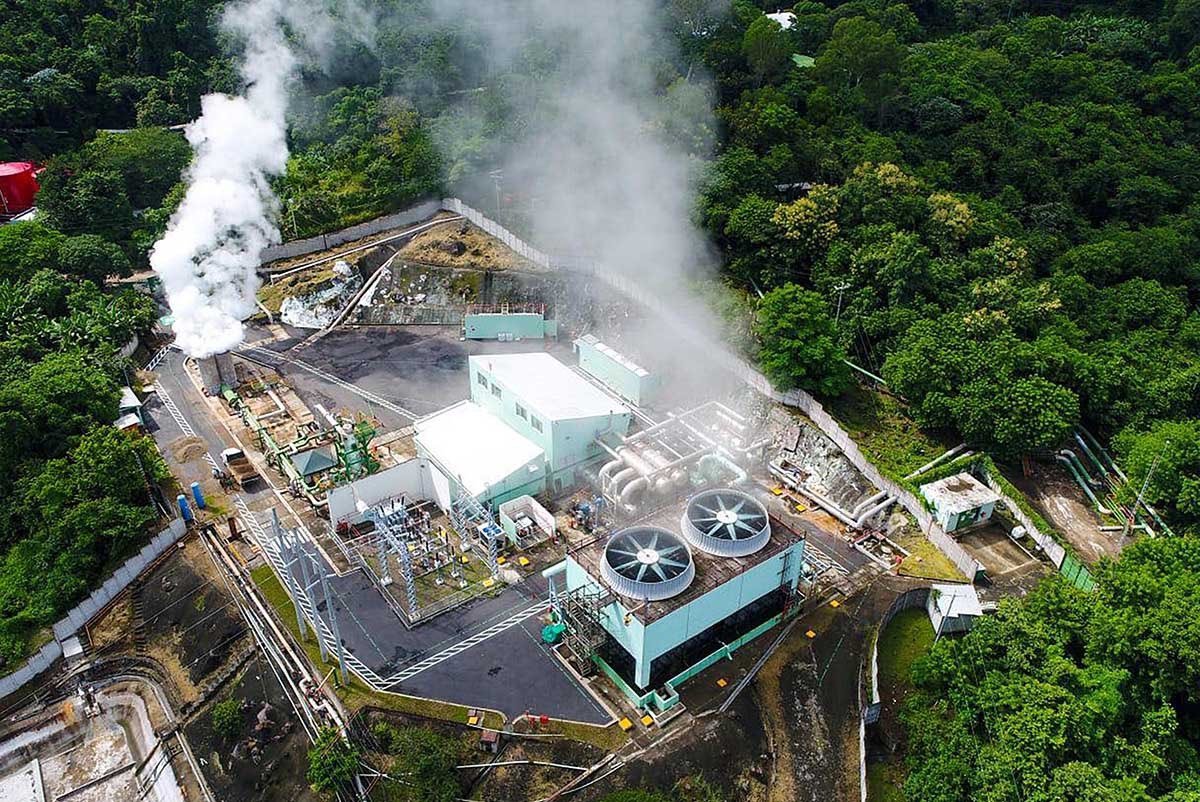
Crypto mining center in El Salvador powered by volcano energy. Source: the president’s Twitter
Bitcoin Purchases
Since 2021, the government has regularly acquired bitcoins. As of September 8, 2025, the state reserve amounted to 6,313 BTC worth about $701–702 million. The latest purchase was recorded on September 7. In honor of the anniversary, Bukele reported buying 21 bitcoins.
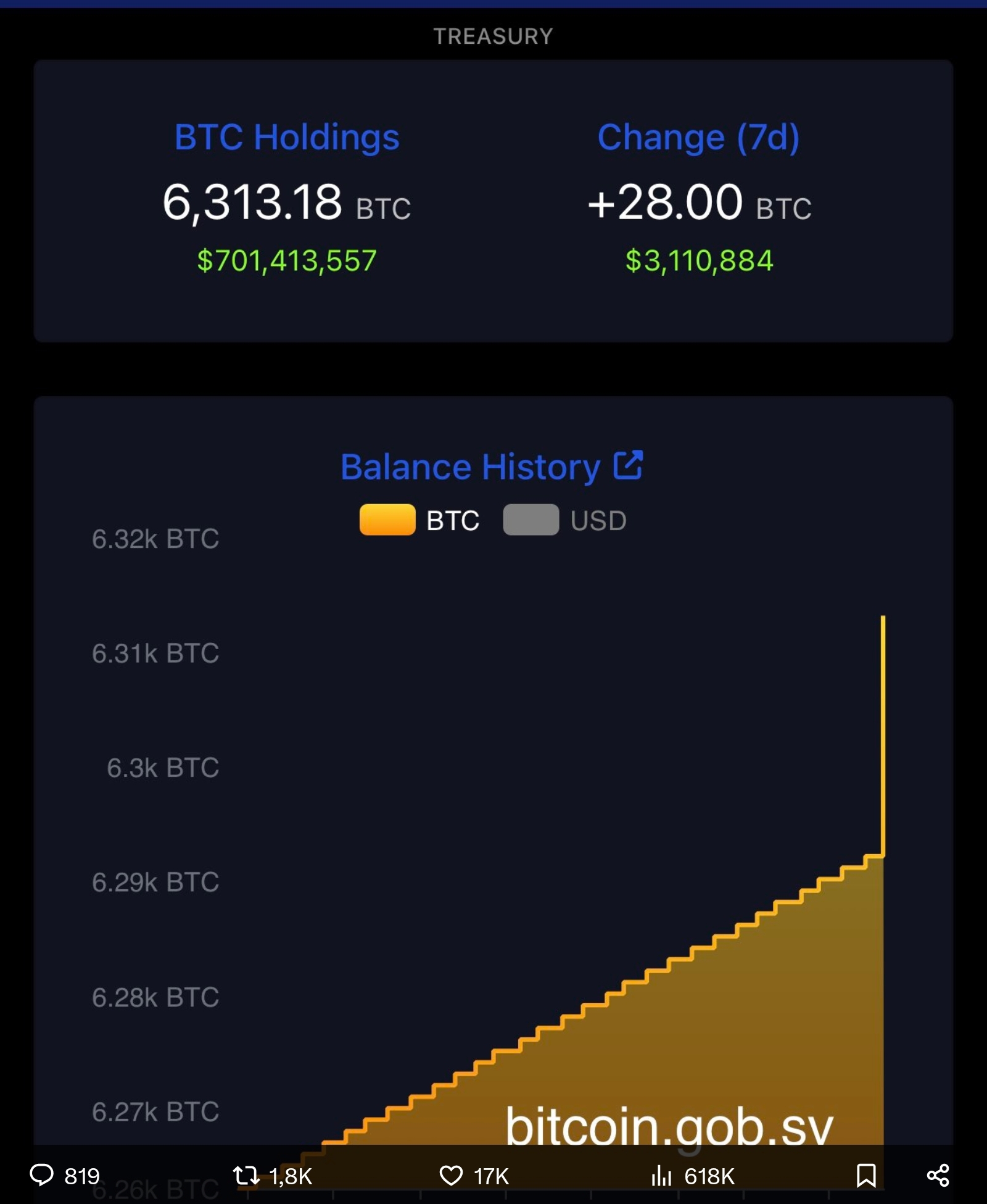
How El Salvador’s bitcoin balance changed. Source: Bukele’s Twitter
In 2022, the country purchased 500 bitcoins during a price dip. Since the end of 2023, the authorities have been buying one bitcoin daily.
In August 2025, the authorities distributed their reserves across 14 addresses to improve security and transparency. Each address holds no more than 500 BTC.
The International Monetary Fund is skeptical of these transactions. The Fund doubts the reality of all the reported purchases due to a lack of transparent reporting. Its representatives believe that in fact, replenishments of the state wallet are occurring by transferring funds from other addresses rather than direct coin purchases.
How Bitcoin Changed El Salvador
The decision by El Salvador’s authorities to bet on bitcoin as a national currency has its pros and cons. Let’s take a look.
Positive results:
- the country attracted global attention and became a symbol of crypto reforms;
- crypto enthusiasts and digital nomads began coming to the country;
- new IT projects appeared, and the treasury received investment from crypto companies;
- the “bitcoin city” project increased interest in the country, even though it remains only on paper so far.
Negative consequences:
- mass usage among the population never emerged; most people continue to use dollars;
- the state wallet Chivo failed to meet expectations, with the number of active users decreasing after the first wave of interest;
- bitcoin price drops repeatedly led to budget losses;
- part of the population perceived the reform as a top-down decision.
Regulatory Pressure
Immediately after the adoption of the law legalizing bitcoin, the IMF warned El Salvador of risks to the financial system. The Fund demanded the abolition of mandatory bitcoin usage and greater transparency in government bitcoin purchases.
The confrontation escalated in 2024, when El Salvador requested a $1.4 billion loan from the Fund. The condition for the deal was the abolition of mandatory cryptocurrency use. In January 2025, parliament adopted the relevant amendments. Thus, El Salvador abolished the law requiring businesses to accept cryptocurrency.
Did the Authorities Manage to Legalize Bitcoin?
Formally, the cryptocurrency remains legal tender. But in practice, only a small portion of citizens use it. According to recent data, only about 8% of the population in the country use crypto.
The main users are enthusiasts, the tourism sector, and young people. Large companies and the public sector continue to operate mainly in dollars.
The Role of El Salvador’s Decision for the Crypto Industry
Even without the brightest results, El Salvador’s initiative influenced the entire industry. Adoption of cryptocurrency at the national level signaled that a state can recognize digital assets as an official means of payment.
Crypto enthusiasts and investors traveled to the country. El Salvador was talked about as a pioneer in crypto legalization. News soon followed from other countries about the formation of crypto reserves. The U.S. also joined the initiative.
Conclusions
Four years later, bitcoin in El Salvador has not become a full-fledged national currency. For most citizens, it remains an exotic add-on to the dollar.
Nevertheless, the country has secured an image as a pioneer. The bitcoin experiment cemented El Salvador’s place in crypto history and showed that even a small state can launch a large-scale financial experiment capable of attracting the world’s attention.
You can quickly exchange bitcoin for USDT or another cryptocurrency at the best rate on Quickex.