
On October 29, 2025, the U.S. Federal Reserve cut the key rate by 0.25 percentage points—to a range of 3.75–4.00%. At the same time, the regulator announced that it will stop shrinking its balance sheet starting December 1.
Investors expected the Fed to be more dovish, but that didn’t happen. Jerome Powell made it clear: a December cut is “far from a foregone conclusion.” With a single phrase, he cooled the markets—and the crypto sector was first to take the hit.
Track how the Bitcoin price reacts to economic news with Quickex.
What the Fed actually did
Formally, the rate went down, but in essence the regulator simply hit pause. The economy is cooling, the labor market is losing steam, and inflation is still above target. The Fed found itself between two fires—and chose the middle ground: signal readiness to ease, but promise nothing in advance.
On top of that, due to the partial U.S. government shutdown, statistics are being released with disruptions. The Fed is now operating almost blind, which raises nervousness across all markets.
Ending the balance-sheet reduction program (QT) can be seen as a nod toward dovishness, but the statement overall sounded cautious. As a result, investors saw not a support signal but a hint to be careful.
Why Bitcoin went down
The crypto market is waiting for any excuse to rally. A rate cut should have been exactly that, but the Fed pulled the rug out. After Powell’s remarks, the dollar strengthened, bond yields rose—and money flowed out of risk assets.
Then the classic chain reaction kicked in:
- traders started taking profits;
- high-leverage positions began to close;
- liquidations amplified the move down.
Within a few hours, Bitcoin fell to the $110–113k range, even though most analysts were expecting a rise that morning. It reminded the market of a simple truth: in an era of heightened uncertainty, crypto lives by macro rules.
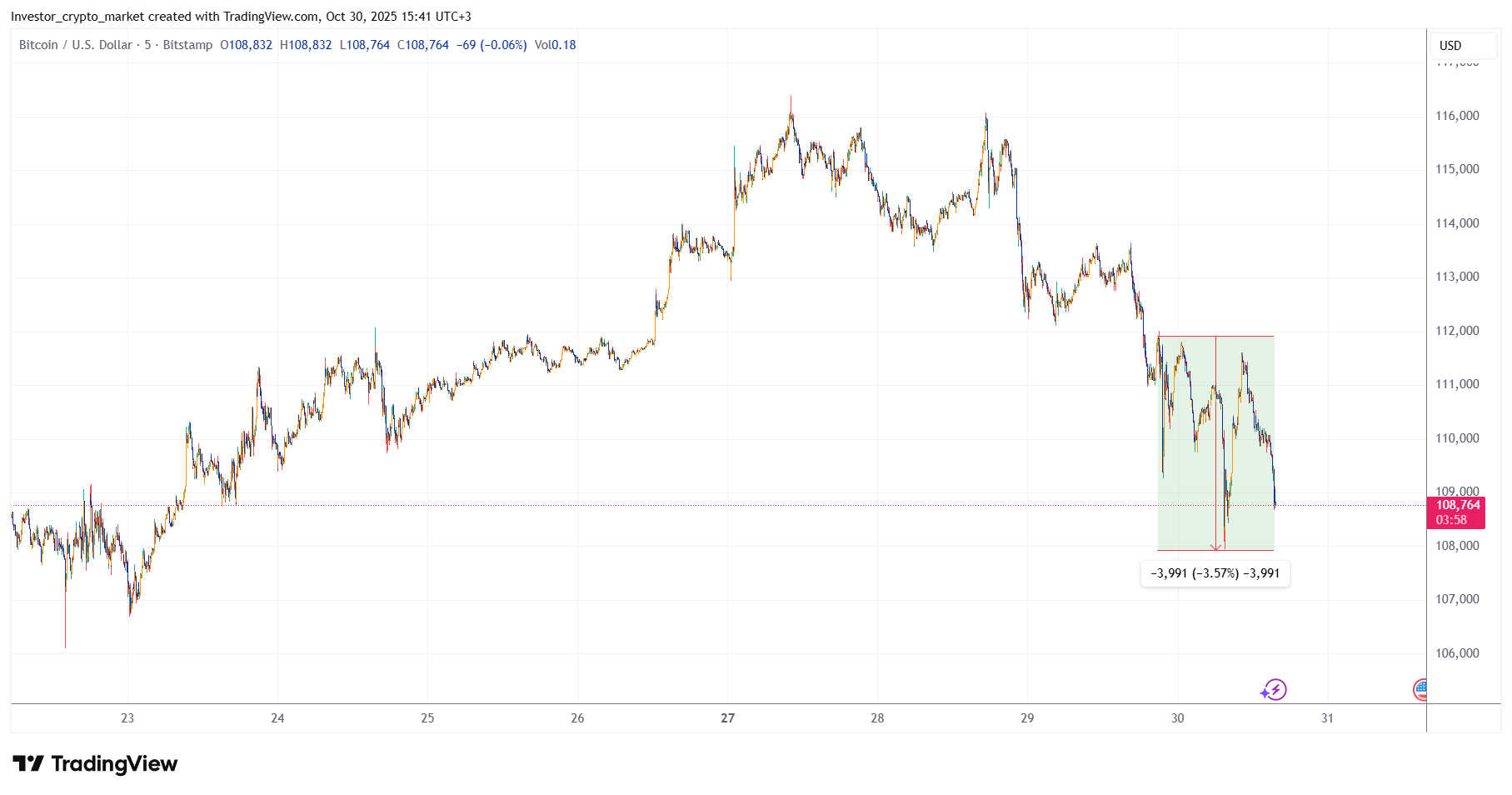
Bitcoin’s reaction to the latest Fed rate decision. Source: TradingView
What crypto investors should do now
- Don’t panic, but be prepared
Until it’s clear what the Fed will do in December, the market will swing between hope and fear. Any new report on inflation or employment can change everything in a day. - Watch the key data
If the economy keeps weakening, the Fed will have no choice but to cut further. That could revive interest in crypto assets. But strong inflation or a resilient labor market, on the contrary, will support the dollar and weaken Bitcoin. - Don’t overuse leverage
Crypto is back to whiplash reversals. Even small swings can wipe out heavily leveraged positions. It’s better to trim risk and keep a liquidity buffer. - Consider three scenarios
Base case: the economy slows, the Fed eases policy—Bitcoin recovers.
Negative: inflation accelerates, the Fed pauses—the dollar rises, crypto sags.
Optimistic: weak data and dovish commentary from the regulator—an impulse for a new leg up. - Keep balance
Hold part of your capital in stablecoins, lock in profits on rallies, and use hedging. Right now, it’s more important not to nail every move, but to preserve flexibility and calm.
Bottom line
The Fed cut rates but made it clear it’s not in a hurry to start a new easing cycle. Bitcoin fell not because of the number in the decision, but because confidence in tomorrow faded.
The crypto market is once again driven by emotions—and that won’t change in the coming weeks. Volatility will remain high, and the main price driver now is not news from the blockchain, but words from Washington.
For those who can keep a cool head, this period can offer not only a lesson but also good opportunities.
Great deals on cryptocurrency exchange — at the time-tested Quickex.