
Google Cloud, a division of Google that provides cloud services for businesses and developers, is preparing to launch its own blockchain called Google Cloud Universal Ledger (GCUL). It will serve as infrastructure for payments, asset tokenization, and financial services. The project is currently in a closed testing phase, and a full launch is scheduled for 2026. We’ve gathered everything you need to know about Google’s blockchain in one piece.
Track cryptocurrency rates on Quickex.
How the project started
The history of GCUL began in March 2025. Google Cloud, together with the Chicago Mercantile Exchange (CME Group), announced the launch of a pilot project. The platform’s goal is to provide a universal ledger for settlements and working with tokenized assets.
Since Google is one of the largest technology companies, the project immediately attracted attention.
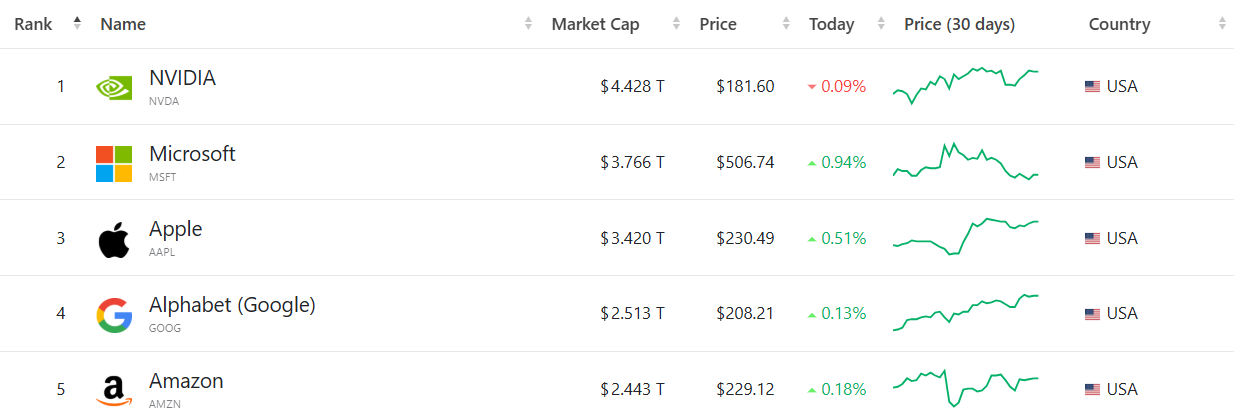
Google is among the top-5 largest companies by market capitalization. Source: companiesmarketcap
A few months later, in June, CME confirmed the successful completion of the first stage of integration tests. In August, Rich Widmann, Head of Web3 Strategy at Google Cloud, reported that the network was already running in a closed test environment. This means access is available only to a limited circle of partners. The company promised to reveal more technical details soon.
Thus, it took only a few months from the announcement to the first practical results. The project is being developed according to a pre-set timeline.
What makes GCUL special
Google can boast several key characteristics that define the project’s position in the market.
First of all, the project is positioned as credibly neutral—meaning the network will not belong to any single major player and will not depend on the interests of one company. Therefore, financial institutions will be able to use the platform without fear of strengthening a competitor’s position. For example, Tether would not use Circle’s blockchain, and Adyen is unlikely to turn to Stripe. GCUL, however, is designed as a platform accessible to any financial organization.
Another feature is support for smart contracts in Python. This language is widely used in finance and analytics, so its integration will make the platform more accessible to developers and engineers.
Google also emphasizes scalability. GCUL is intended to function as infrastructure on a planetary scale. The tech giant wants billions of users to be able to use the platform. Connections will be made through a unified API, simplifying integration.
It is also important to note the closed nature of the system. Unlike open networks such as Bitcoin and Ethereum, where anyone can participate, GCUL is built as a permissioned blockchain—a network with access “by permission.” This means only verified participants who have received prior approval from the operator will gain access. This approach reduces the degree of decentralization but ensures a higher level of control. It also guarantees compliance with regulatory requirements.
The main challenge for Google is to meet the requirements of financial regulators. Banks and institutional investors will not connect to the system without confidence in its transparency and legal compliance. That is why GCUL will emphasize participant verification.
Competitors
The launch of GCUL coincided with a surge of interest in institutional blockchains. In 2025, several major companies began developing their own blockchain solutions. Here are a couple of examples:
- Circle develops the Arc network, centered around the USDC stablecoin.
- Stripe is working on the Tempo project, which will be closely linked to its payments ecosystem.
- The Plasma project is developing a blockchain for USDT settlements. The project has already attracted $24 million in investment.
- Robinhood launched tokenized stocks and ETFs in Europe based on Arbitrum and its own blockchain network.
Against this backdrop of initiatives, Google stands out for its neutrality. The company is not promoting its own token and is not limiting the use of the network to existing services, instead betting on universality.
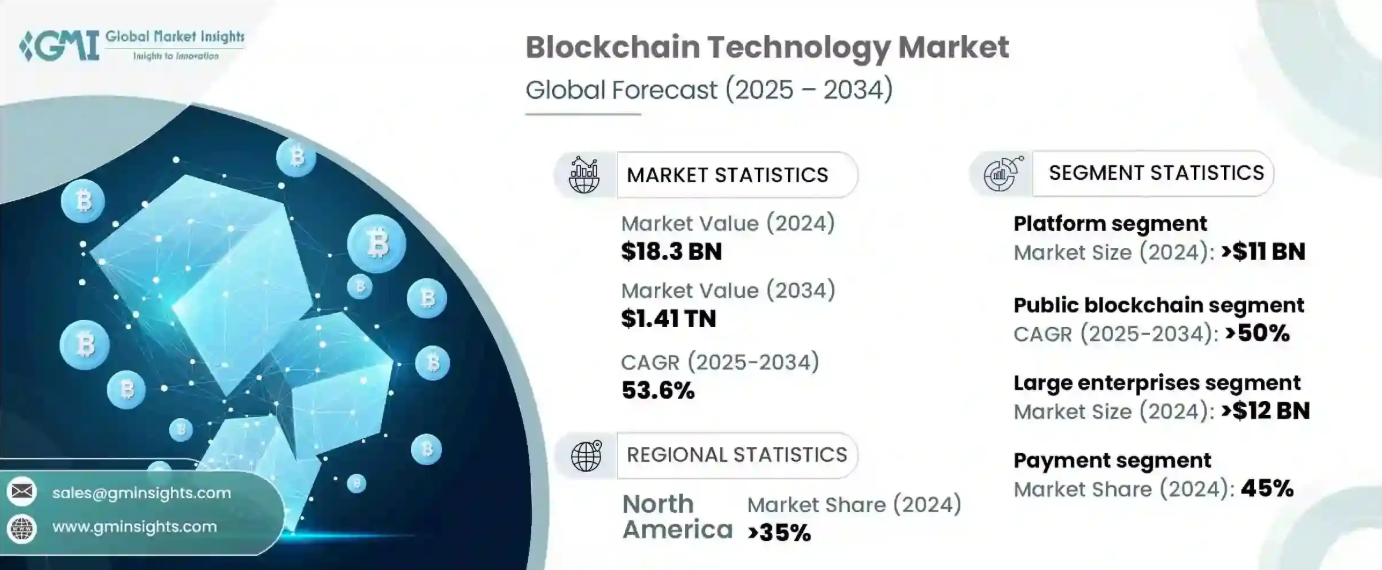
Blockchain technology market growth forecast through 2034. Source: gminsights
Why the market needs Google’s blockchain
Interest in GCUL becomes clear when considering CME Group’s role in the project. The exchange manages key infrastructure in global finance and sees the new platform as an opportunity to reduce costs and speed up settlements.
GCUL could simplify collateral management, make clearing faster, lower fees, and enable round-the-clock operations with digital assets.
In other words, this is not just another blockchain, but a technology that could become part of the global financial system.
The development of GCUL fits into Google’s broader blockchain strategy:
- 2018 — Google Cloud adds support for Bitcoin and Ethereum data in BigQuery.
- 2022 — the company creates a dedicated Web3 division and forms partnerships with Coinbase, Polygon, and Solana.
- March 2025 — GCUL is announced along with a pilot with CME.
- June 2025 — first stage of testing completed.
- August 2025 — GCUL operating in a closed test phase, with a promise to reveal architectural details.
- Late 2025 — start of trials with a limited circle of market participants.
- 2026 — full-scale tests and service launch.
Google has not yet disclosed technical details. For example, it is still unknown what the consensus mechanism will be and how exactly smart contract support will be implemented. But CME’s participation and the project’s clear roadmap suggest serious ambitions.
If successful, GCUL could become a universal tool for the global financial system and claim the role of a new settlement standard.
Summary
Google Cloud Universal Ledger is not just a corporate blockchain, but an attempt by a tech giant to create infrastructure that unites banks, payment systems, and investment firms. Unlike other projects, Google emphasizes neutrality and accessibility for all market participants.
The most attractive cryptocurrency exchange rate is on Quickex.
Disclaimer: The material in this article is not financial or investment advice. Everything stated here reflects the author's personal view and should not be treated as a recommendation to trade or invest. We make no warranties regarding the accuracy, reliability or completeness of the information presented. Cryptocurrency markets are highly volatile and can move unpredictably. Before committing any funds, every investor, trader or crypto user should study several independent sources and check the regulations that apply in their own jurisdiction.