
Sub-Saharan Africa has surged into the top three regions by the pace of cryptocurrency adoption. This is the conclusion reached by Chainalysis analysts. Surprisingly, the latest figures largely echo Twitter founder Jack Dorsey’s prediction from 2019.
The Quickex editorial team set out to learn why adoption is rising in this region, which problems people solve with digital assets, and what the Twitter founder has to do with it.
Track how the Bitcoin price changes on Quickex.
Why Sub-Saharan Africa needs cryptocurrency
First, a bit of geography. Sub-Saharan Africa is the term for all countries located south of the Sahara—that is, most of the continent, excluding North Africa (Egypt, Libya, Algeria, Tunisia, Morocco).
According to Chainalysis, the region has created a favorable environment for the rapid spread of Web3 solutions. Still, there isn’t much optimism in that: people are turning to crypto because they see no other way out.
Here are the main problems that are pushing citizens of the region toward the crypto industry:
- Depreciation of national currencies. Devaluation causes people to lose their savings as the local currency falls. The crypto industry offers several ways to address this. For example, savings can be kept in dollar-pegged stablecoins. Those with a higher risk tolerance can use highly volatile coins such as Bitcoin. Statistics show that long-term BTC holdings can be much more profitable than, say, investing in stocks.
- Lack of traditional financial infrastructure. Unfortunately, in some parts of Africa, banking services are a luxury. People lack access to the usual tools of credit institutions, yet the need for them doesn’t disappear. The crypto industry offers alternatives.
- Scarcity of foreign currency. Locals might want to protect their savings with a strong foreign currency, but they don’t have access to it. This is where stablecoins step in.
Add unemployment and low wages, and you get the perfect “cocktail” for Web3 development in the region.
Sub-Saharan Africa and crypto in numbers
Chainalysis found that from July 2024 to June 2025, countries in the region received $205 billion in cryptocurrency transfers. For comparison, Qatar’s GDP is $213 billion.
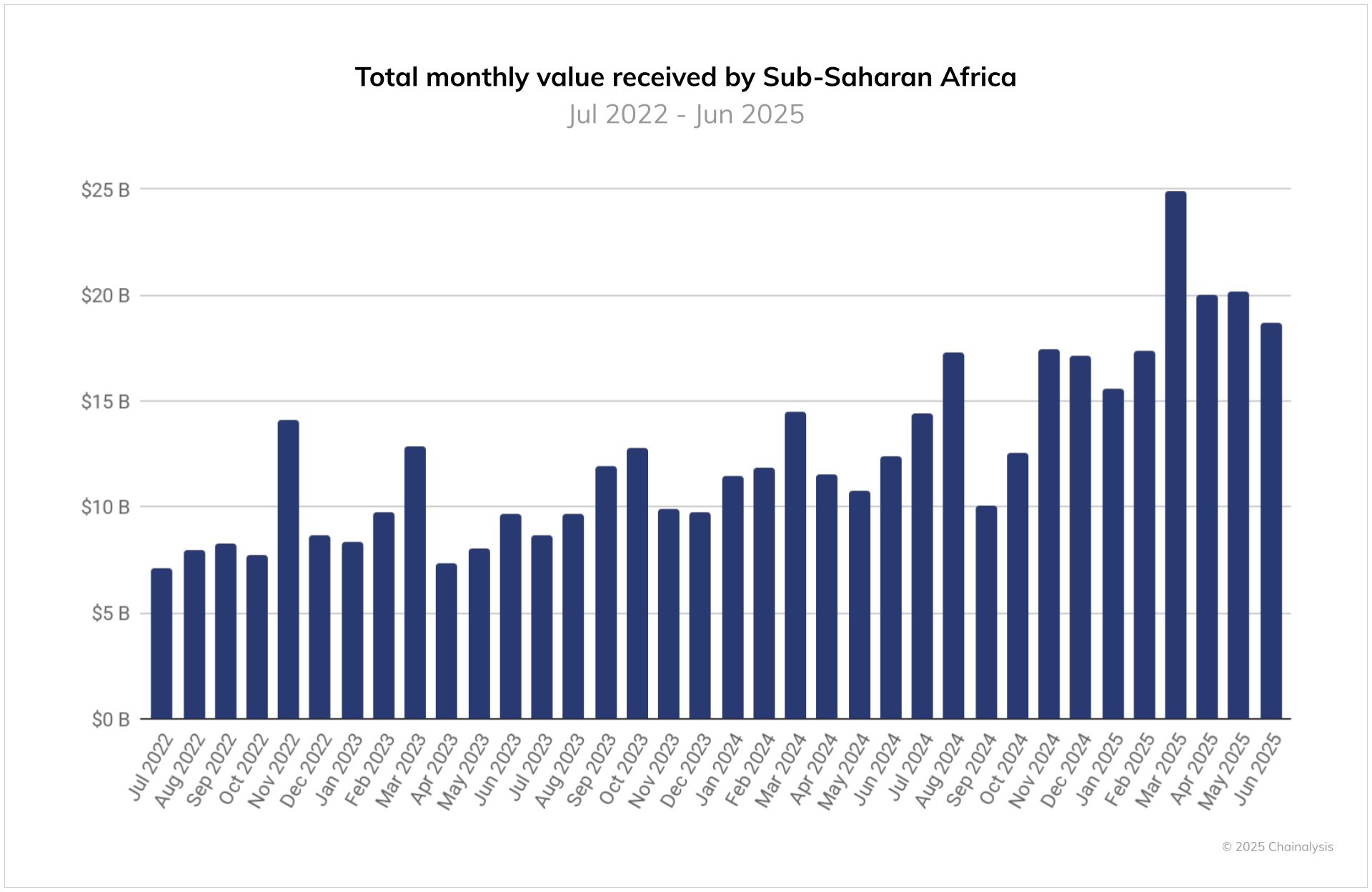
Crypto transfer statistics for Sub-Saharan Africa. Source: Chainalysis report
The volume of cryptocurrency transfers cited by the analysts was 52% higher than in the previous reporting period.
Nigeria led the way: over 12 months, $92.1 billion in crypto was sent to the country. Analysts explain the result by a tech-savvy youth population, persistent inflation, and limited access to foreign currency.
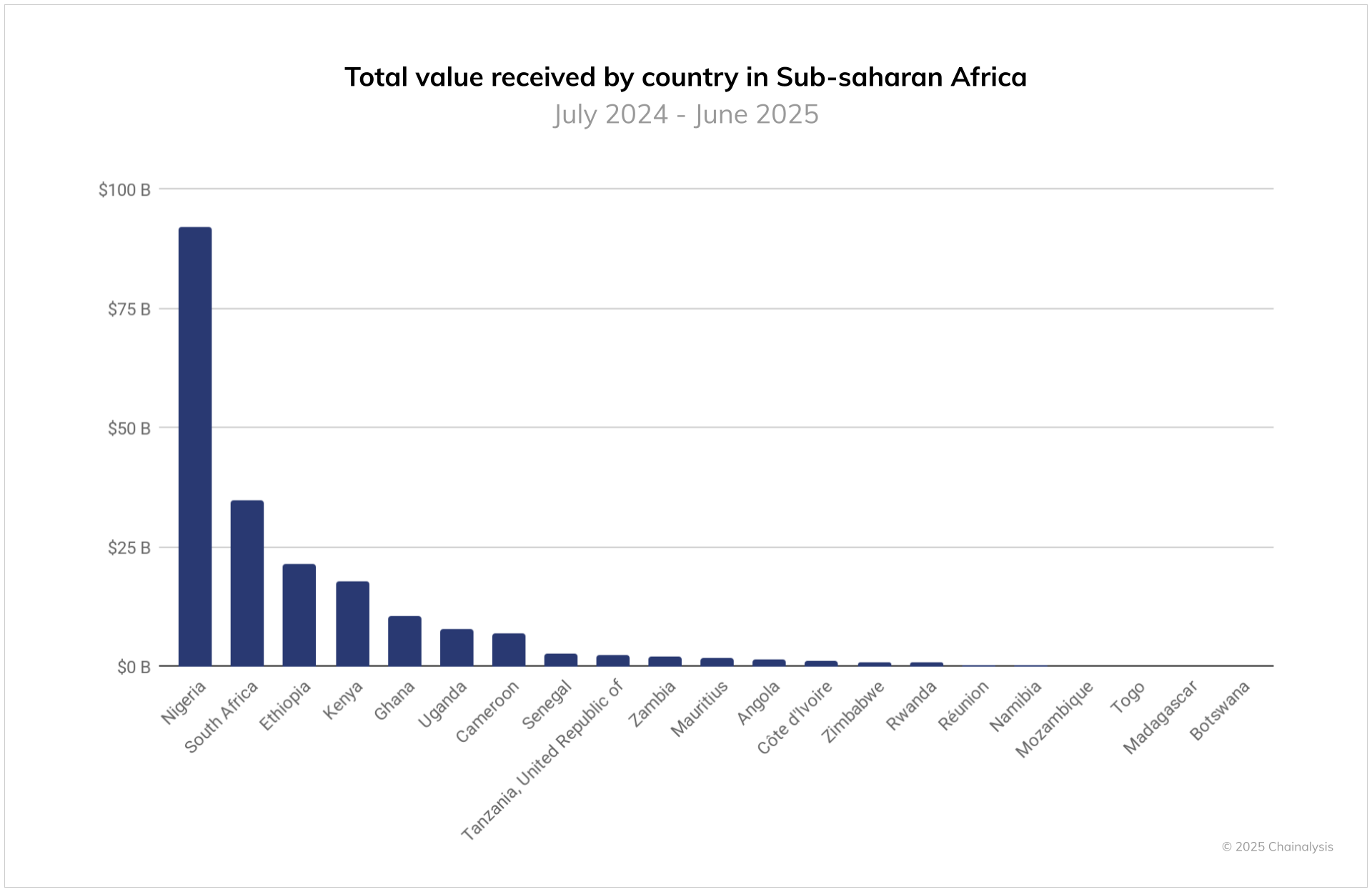
Comparison of the amounts of cryptocurrency received by countries in the region. Source: Chainalysis report
As a result, Sub-Saharan Africa ranked third in terms of cryptocurrency adoption growth—trailing only the Asia-Pacific region and Latin America. For comparison, in 2022 the Middle East and North Africa were at the top.
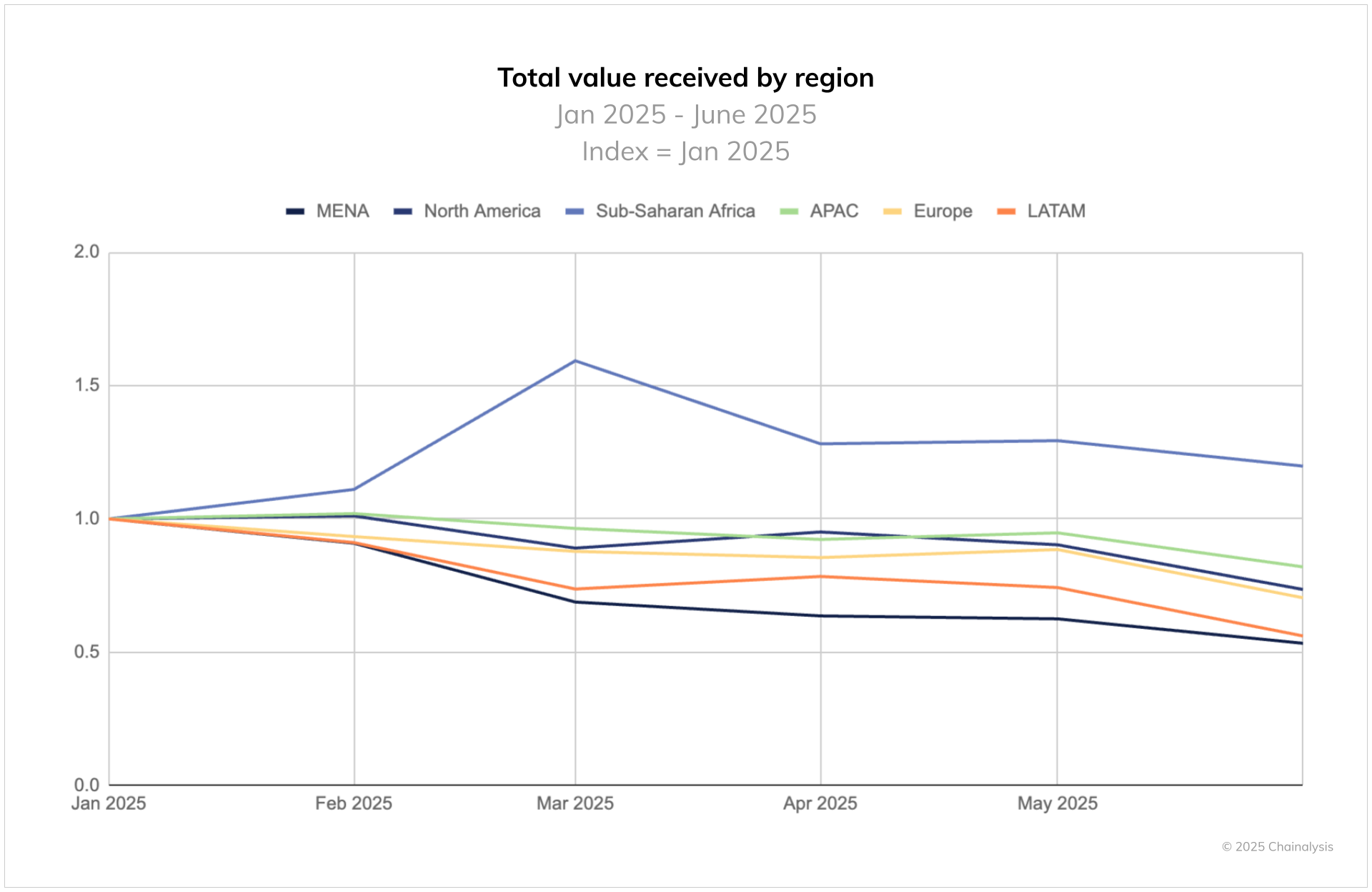
Comparison of the amount of cryptocurrency received by citizens across regions. Source: Chainalysis report
The report’s authors also note that retail use of cryptocurrencies in Sub-Saharan Africa outpaced other regions. During the period under review, more than 6% of all crypto transfers in the region were for amounts up to $10,000. Elsewhere in the world, only 5% of transactions fell into that bracket.
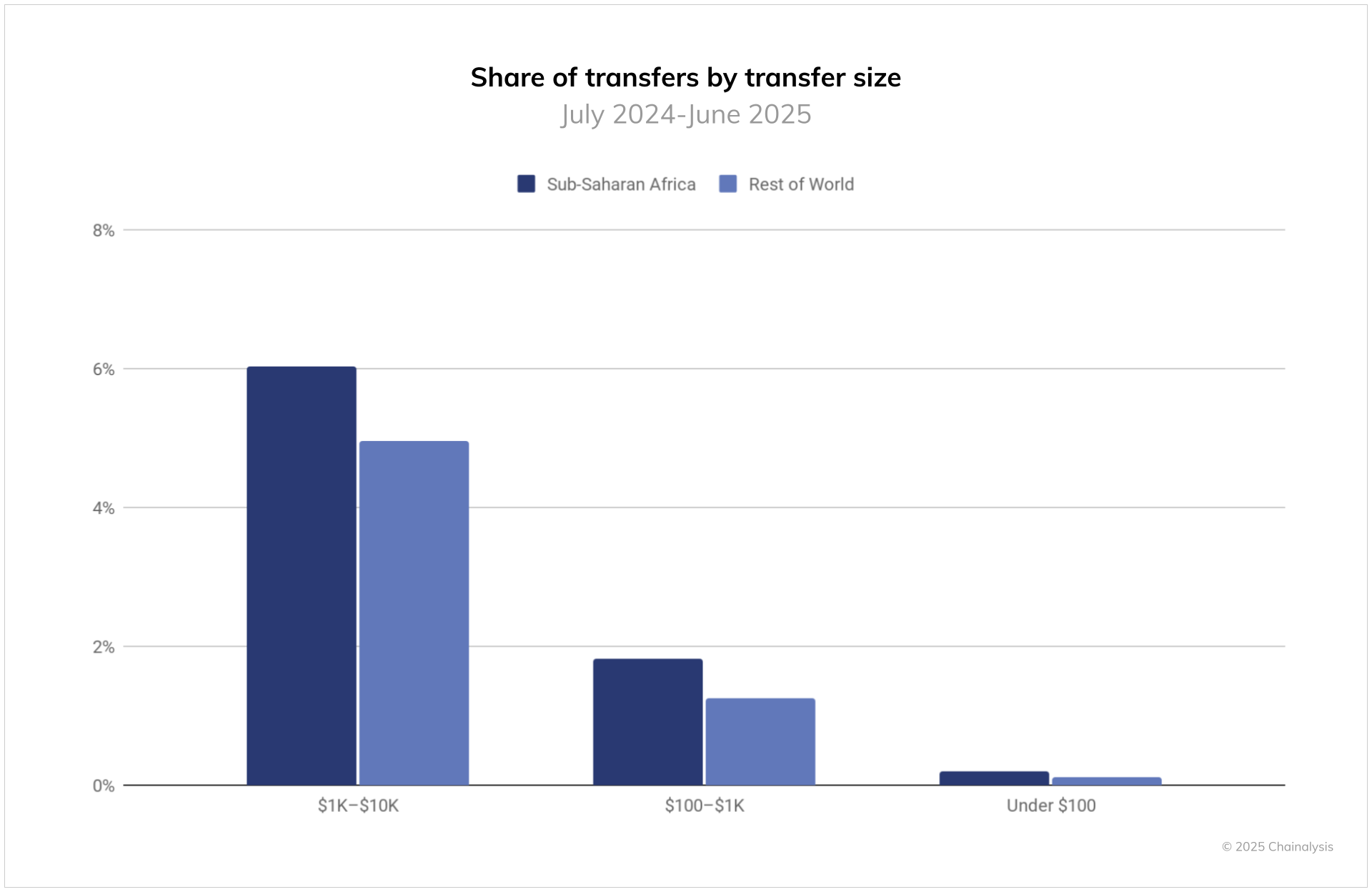
Comparison of crypto transaction volumes by region. Source: Chainalysis report
Focus on institutions
Another important observation is the growth of institutional interest in cryptocurrency in the region. Large businesspeople and investors use stablecoins to make transfers faster and cheaper.
The report’s authors believe that interest from Sub-Saharan Africa’s institutions is largely linked to the region’s active development of crypto regulation.
Fun fact! Some African countries are diving into the crypto industry faster than others. For example, in 2022 the authorities of the Central African Republic were the second in the world, after El Salvador, to make Bitcoin a national currency.
Africans’ favorite cryptocurrencies
In Sub-Saharan Africa, Bitcoin clearly dominates when buying cryptocurrency for fiat. In Nigeria, BTC accounts for 89% of all purchases; in South Africa—74%; whereas for purchases made in U.S. dollars its share is only 51%. This suggests that in the region Bitcoin is seen not only as a store of value, but also as the primary way to enter the crypto market.
USDT usage is also higher in Nigeria—7% versus 5% in countries where cryptocurrencies are purchased in U.S. dollars. This reflects the role of stablecoins as an alternative to the dollar, especially in conditions where the gap between the official and informal exchange rates can reach double digits.
South Africa shows a higher share of XRP and ETH. The statistics indicate there are more investors in the country and that they have access to centralized exchanges.
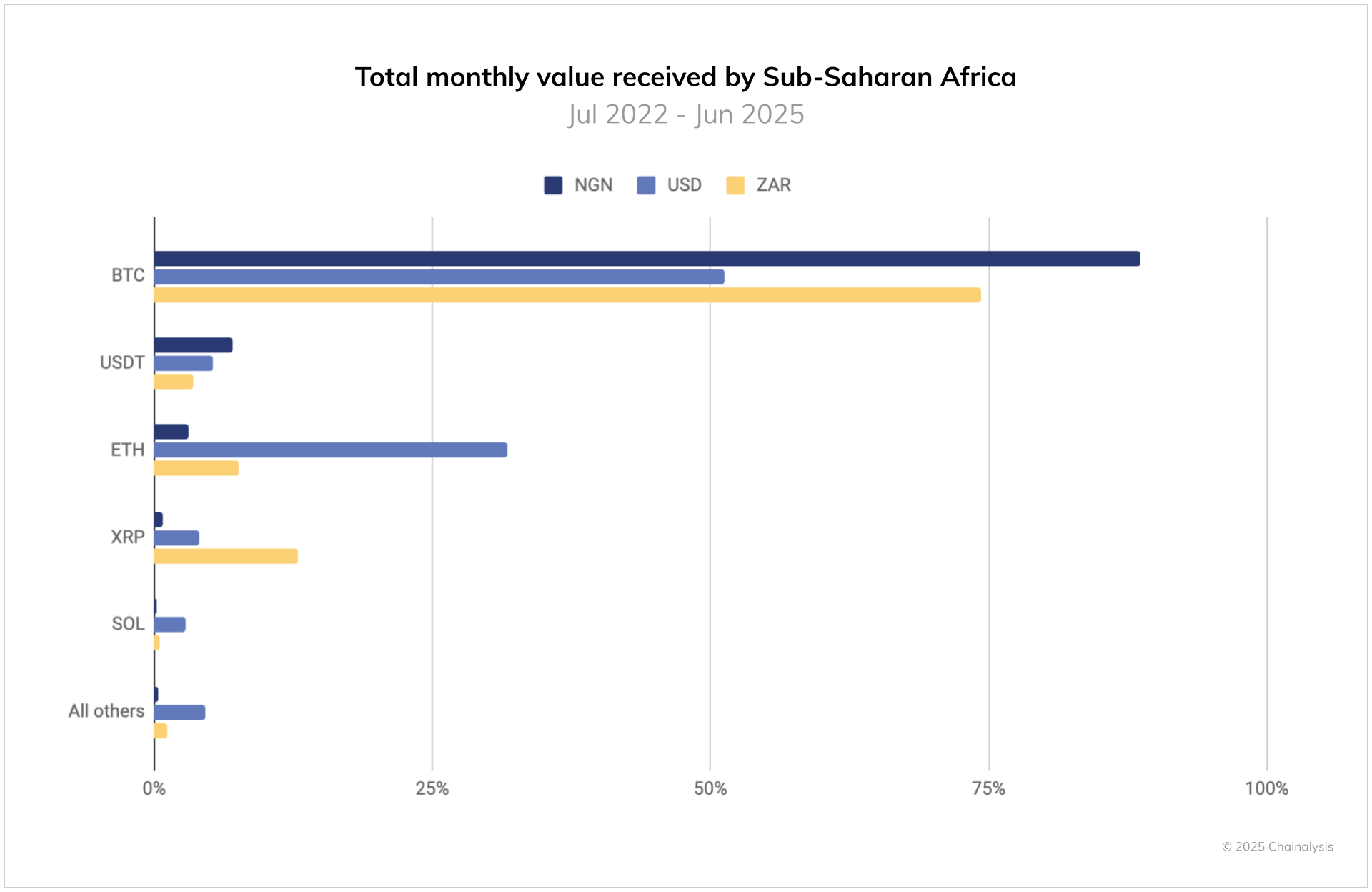
Breakdown of cryptocurrencies by country. Source: Chainalysis report
As Jack Dorsey predicted
Twitter (X) founder Jack Dorsey predicted back in 2019 that Africa would determine Bitcoin’s future. He foresaw active adoption of cryptocurrencies in the region because locals lack other accessible tools. The latest Chainalysis report shows that Dorsey was right.
By the way, the Twitter founder has helped drive crypto’s expansion in Africa not just with words but with action. For example, in 2023 he helped an African crypto exchange expand its services across the continent.
Favorable crypto exchange terms and a wide range of trading pairs—on Quickex.