
The September Consumer Price Index (CPI) came in softer than expected, showing that prices rose just 0.3% month-over-month and 3.0% year-over-year, according to Friday’s report from the Bureau of Labor Statistics. Economists had forecast 0.4% and 3.1%, respectively.
Excluding food and energy, core CPI rose 0.2% on the month and 3.0% annually, also below forecasts of 0.3% and 3.1%. That means inflation continues to cool, giving the Federal Reserve more room to ease policy.
Track the reaction of the Bitcoin price to the release of the report with Quickex.
Inflation Cools, Fuel And Food Lead The Gains
While inflation slowed overall, some categories still showed upward pressure. Gasoline prices jumped 4.1% in September, becoming the biggest single contributor to the monthly increase. Food rose 0.2%, led by higher prices for meat, poultry, fish, and eggs (up 5.2% year-over-year), and nonalcoholic beverages (up 5.3%).
Energy prices rose 2.8% over the year, while food increased 3.1%. Shelter costs — which make up about a third of the CPI weighting — rose only 0.2% in September and are up 3.6% year-over-year. Used cars and trucks fell 0.4%, while new vehicles climbed 0.8%.
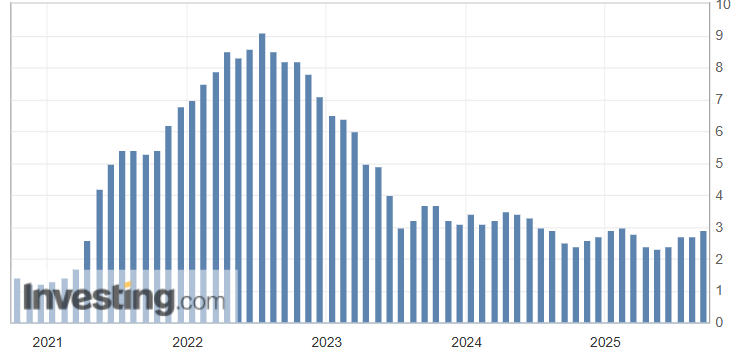
How inflation has changed in the U.S. Source: Investing
The Only Data Released During The Shutdown
The BLS published the CPI report despite the ongoing government shutdown — the only official economic data allowed to be released. Other federal data collections remain suspended. The exception was made because the Social Security Administration uses CPI figures to calculate annual cost-of-living adjustments (COLA) for benefit checks.
Originally scheduled for October 15, the report was delayed due to the budget impasse in Washington and came out on October 24 as a rare data release during the shutdown.
Tariffs Have Limited Impact — For Now
Analysts note that the effects of Donald Trump’s tariffs are still minimal. According to ING’s chief international economist James Knightley, data from the CPI and customs revenue show a “realized” tariff rate of about 10%, as many U.S. companies have already switched suppliers to lower-tariff countries.
Goldman Sachs estimates the new duties could eventually add around 0.07 percentage points to core inflation, but so far the impact remains muted.
Bank of America expects tariff effects to be a one-off rather than a persistent inflation driver.
Market Reaction: Optimism Returns
U.S. stock futures extended gains following the report, while Treasury yields turned slightly negative.
“Inflation might not be slowing, but it’s not surprising to the upside anymore,” said David Russell, global head of market strategy at TradeStation.
Investors interpreted the softer CPI as confirmation that the Fed remains on track to cut interest rates next week. The CME’s FedWatch Tool shows traders pricing in near-certainty of a 0.25 percentage point rate cut from the current 4.0–4.25% range, and another possible cut in December.
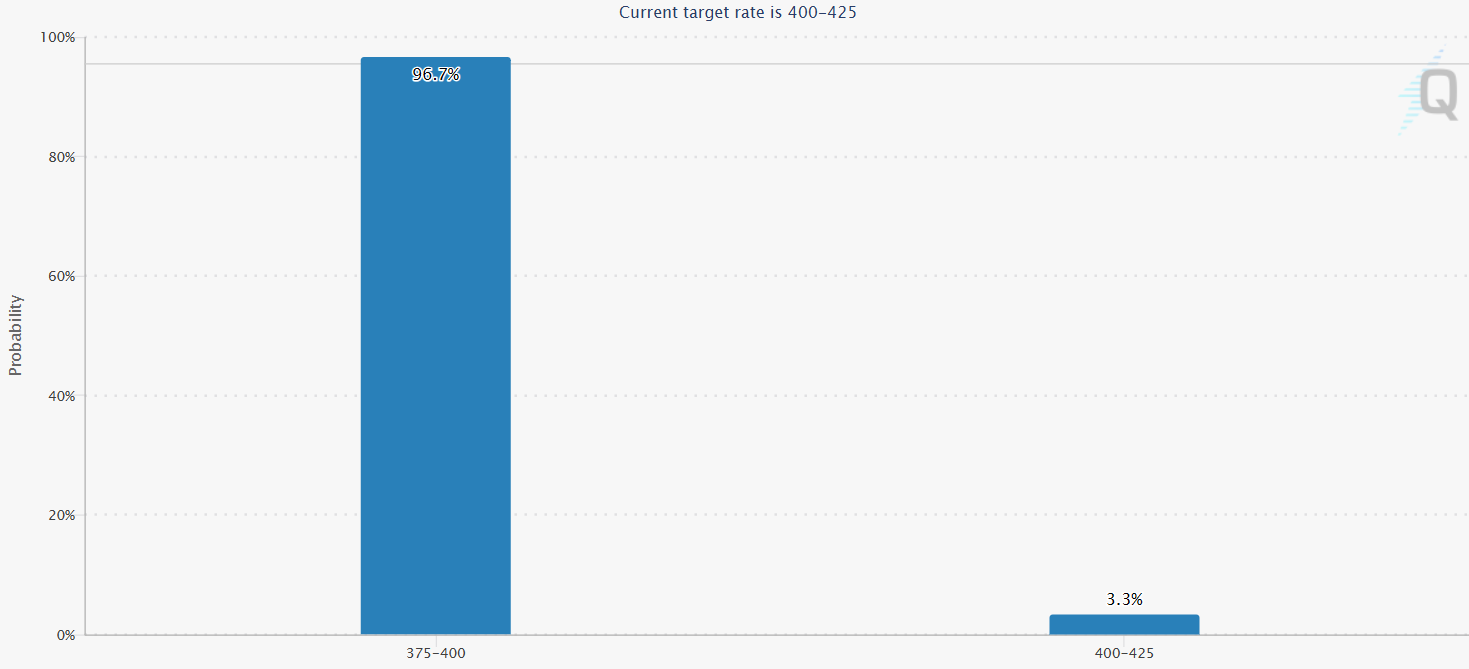
Forecast for the Fed’s rate decision on October 29, 2025. Source: CME
The Final Data Point Before The Fed Meeting
This CPI release is the last major piece of economic data the Fed will receive before its upcoming meeting. The headline figure remains above the Fed’s 2% target but marks clear progress since early 2024.
“This report will clearly keep the Fed on track to cut rates,” said Art Hogan, chief market strategist at B. Riley Wealth. “The Fed has been clear that it’s focused on softening labor data and will continue to defend its full employment mandate, even with core CPI above target.”
What It Means For The Economy And Crypto
The softer inflation print opens the door wider for monetary easing. Lower inflation reduces pressure on the Fed to maintain high rates — a signal that typically boosts appetite for risk assets.
For the crypto market, the reaction was swift: Bitcoin initially held steady, while traders assessed the implications for dollar strength and liquidity. Historically, easing monetary policy and expectations of rate cuts have supported crypto prices.
Many investors still view Bitcoin and Ethereum as hedges against the dollar’s erosion, meaning softer inflation and lower yields could pave the way for renewed momentum across digital assets.
In short: inflation cooled, the Fed has room to cut, and both Wall Street and the crypto market just got a green light for optimism.
The best cryptocurrency exchange rate is on Quickex.