
Members of the crypto community are awaiting the Federal Reserve’s decision on the key interest rate on September 17, 2025. In the run-up to that date, many economic events have come into focus for investors, since the regulator’s actions will depend on the results of these reports.
On September 5, the U.S. will release several important labor market reports at once. Here’s what crypto industry participants should prepare for.
Track the reaction of the cryptocurrency rate to the release of the U.S. labor market reports on Quickex
U.S. labor market: reports on September 5
On Friday, September 5, 2025, the U.S. will publish several labor market reports at once. The Fed will take the results into account when making its next rate decision. Here’s what will be published on Friday:
- Average Hourly Earnings (year over year) (August).
- Average Hourly Earnings (month over month) (August).
- Manufacturing Payrolls (August).
- Change in Nonfarm Payrolls (August).
- Labor Force Participation Rate (August).
- Change in Private Nonfarm Payrolls (August).
- Unemployment Rate U6 (August).
- Unemployment Rate (August).
To understand how exactly these reports may affect the Fed’s rate decision, let’s break each one down.
What the reports mean
- Average Hourly Earnings (y/y) (August). Shows how the average hourly wage has changed compared to the same month of the previous year.
- Increase: households have more money, which means higher demand—there is a risk of accelerating inflation.
- Decrease: incomes are falling, which means weaker demand—inflation slows.
How the Fed will interpret changes: An increase is seen as a threat of entrenched inflation; a decrease is a signal of easing price pressures.
- Average Hourly Earnings (m/m) (August). Shows short-term wage changes compared to the previous month.
- Increase: a quick signal of possible strengthening inflation.
- Decrease: a sign of a cooling labor market.
How the Fed will interpret changes: A sharp increase will be taken as a signal for a tighter policy. A decrease will be seen as confirmation that inflation is slowing.
- Manufacturing Payrolls (August). Reflects employment in the manufacturing sector.
- Increase: industry is on the rise; the economy is more resilient.
- Decrease: a downturn in manufacturing; potential economic headwinds.
How the Fed will interpret changes: This is an additional indicator. A sharp decline confirms economic weakening; an increase supports the idea of steady demand.
- Change in Nonfarm Payrolls (August). The main indicator of job creation (Non-Farm Payrolls).
- Increase: the economy is actively creating jobs; the labor market is strong.
- Decrease: signs of a slowdown or crisis.
How the Fed will interpret changes: A key metric. Strong growth pushes toward monetary tightening; weak growth toward easing.
- Labor Force Participation Rate (August). Shows what share of working-age people are either employed or looking for work.
- Increase: more people are entering the labor market, reducing labor shortages.
- Decrease: the supply of labor shrinks, and wages may rise faster.
How the Fed will interpret changes: An increase is viewed positively, as it helps reduce inflation without raising rates. A decrease heightens the risk of an overheated labor market.
- Change in Private Nonfarm Payrolls (August). Shows how many jobs the private sector created.
- Increase: companies are expanding confidently.
- Decrease: businesses are cautious or scaling back activity.
How the Fed will interpret changes: This is an additional signal about the private sector’s condition. An increase amplifies overheating concerns; a decrease does the opposite.
- Unemployment Rate U6 (August). A broad measure of unemployment, including underemployment and those who have stopped looking for work.
- Increase: more hidden issues in the labor market.
- Decrease: the labor market is more resilient than it seems.
How the Fed will interpret changes: An increase is seen as a sign of underlying labor-market weakness and a reason to be more cautious about tightening. A decrease is read as confirmation of labor-market strength.
- Unemployment Rate (August). The classic gauge: the percentage of people without a job who are actively seeking work.
- Increase: the labor market is cooling; a recession is possible.
- Decrease: the market is overheating; wage pressures intensify.
How the Fed will interpret changes: An increase argues for looser policy; a decrease is a signal for possible tightening.
Which report is the most important
The main indicator is the change in Nonfarm Payrolls (NFP), because it reflects the state of the labor market and sets the tone for the entire batch of statistics.
Second in importance is Average Hourly Earnings (m/m and y/y), which is directly tied to inflation.
Third is the Unemployment Rate, which shows whether the labor market is overheated.
What crypto investors are expecting
Crypto market participants are looking for report outcomes that would allow the Fed to firm up a decision to cut interest rates. At the time of writing, the odds of a rate cut are estimated at nearly 92%.
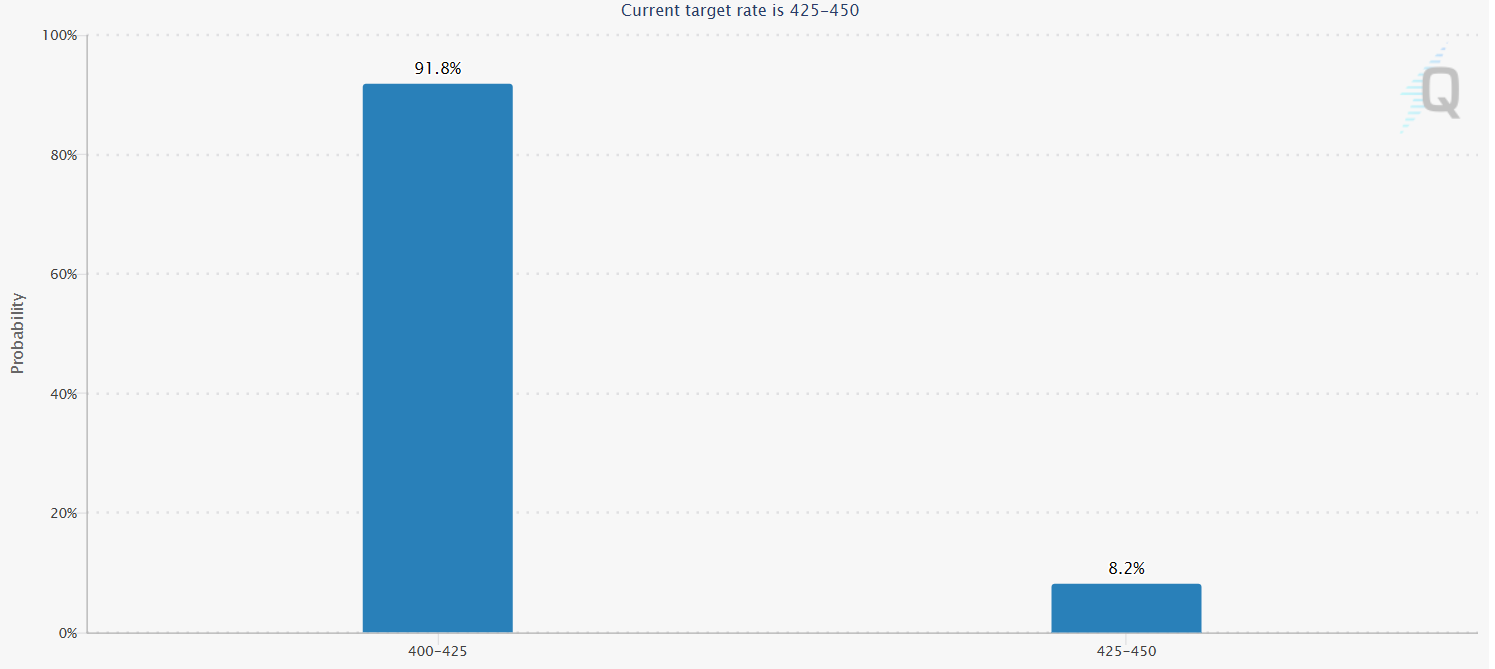
Fed rate forecast for September. Source: CME
Crypto investors are anticipating a Fed rate cut because markets often begin to rise during such periods. The reason is that the changes reduce the attractiveness of the dollar and traditional investment instruments. As a result, investors start looking for alternatives, and many find them in the crypto industry.
Conclusions
The publication of the U.S. labor market reports on September 5 will be a key event ahead of the Fed meeting on September 17. For the regulator, the main indicator remains the change in Nonfarm Payrolls (NFP), because it reflects the overall condition of the labor market. Second in importance will be the dynamics of Average Hourly Earnings, which directly affect inflation. Third is the Unemployment Rate, which shows whether the labor market is overheated.
For the crypto market, the most favorable scenario would be reports pointing to a labor-market slowdown. Such an outcome would increase the likelihood of a rate cut. A softer Fed stance could reduce the appeal of the dollar and traditional assets, thereby boosting interest in Bitcoin and other cryptocurrencies.
You can quickly top up your coins, sell, or exchange cryptocurrency at the best rate on Quickex.