
Aptos is one of those chains that keeps getting described in extremes. Supporters call it the “Move-powered enterprise blockchain.” Critics call it a “VC coin.” And the chart? The chart mostly looks like the market has been undecided for a long time.
That’s exactly why a credible Aptos price prediction for 2026–2030 can’t be built on vibes alone. It has to explain three things clearly:
- Why Move matters (and why it’s genuinely different from Solidity)
- Whether performance upgrades translate into demand (not just benchmarks)
- How tokenomics and unlocks affect price, especially in 2026–2027
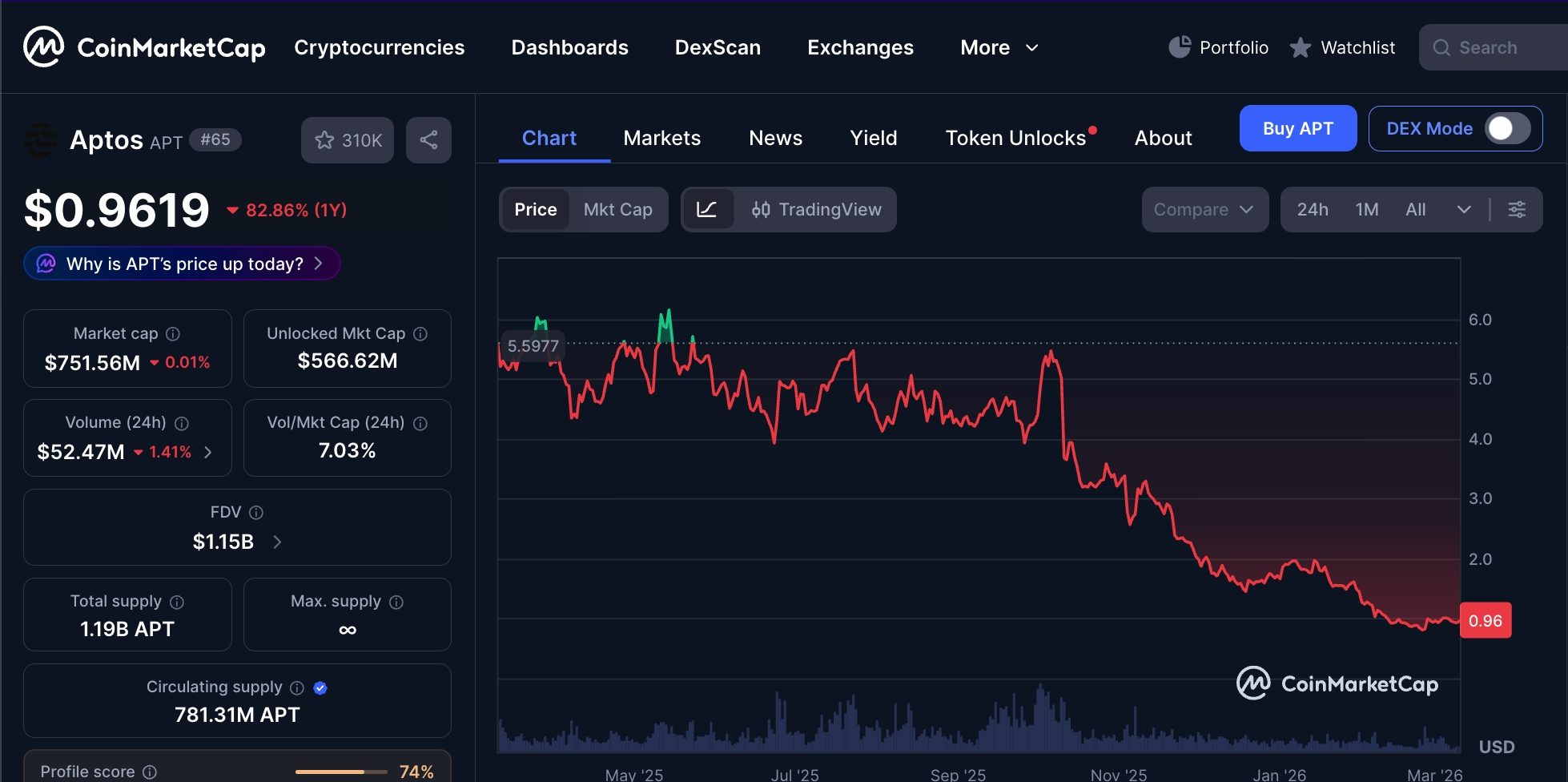
As of early March 2026, Aptos (APT) is trading around $0.95 with a market cap around $745M and ~781M APTcirculating. That’s a sobering starting point; and also the reason investors are asking whether APT is near a macro bottom or simply stuck in a long, slow bleed.
Aptos Market Status: March 2026 Performance Snapshot
Current APT Price & Market Cap: Stability in a Volatile Year
Source: Coinmarketcap
Right now, Aptos is priced like a network that might be important, but hasn’t proven it yet. CoinMarketCap lists APT around $0.95, with market cap near $744–745M and 24h volume around $54–55M. CoinGecko shows a similar market cap range (low- to mid-$700M).
The 2025 Retrospective: From Token Unlocks to Ecosystem Maturity
APT’s biggest 2025 headwind wasn’t a single scandal or exploit. It was supply: unlocks, emissions, and the ongoing “VC overhang” narrative.
Aptos’ original tokenomics overview explained how major allocations unlock over time, including monthly releases that continue for years after mainnet launch. In practice, that means recurring unlock events can weigh on rallies because traders front-run supply increases.
In March 2026, that story is still live. Tokenomist shows a meaningful portion of total supply remains locked, releasing gradually under vesting schedules. And scheduled unlock headlines continue to hit the market, e.g., reports of ~11.31M APT unlocking around mid-March 2026.
But here’s the shift: while the “unlock narrative” hasn’t disappeared, the ecosystem is increasingly defined by usage categories rather than just token distribution – particularly stablecoins and RWAs.
Key On-Chain Metrics: Transaction Throughput and Active Validator Sets
Source: Defillama
If you’re looking for signs of life that aren’t just price candles, Aptos’ on-chain dashboard is the place to start.
Aptos Explorer shows:
- Validators in the hundreds (Explorer lists 457 validators, and separate validator dashboards show different views/filters)
- Real-time TPS and peak TPS readings
- Large actively staked supply numbers
That said, you should treat TPS metrics the way you treat gym PRs: impressive, but not the whole story. The more important adoption metrics for 2026 are:
- stablecoin growth on-chain
- RWA value
- institutional-grade integrations and developer velocity
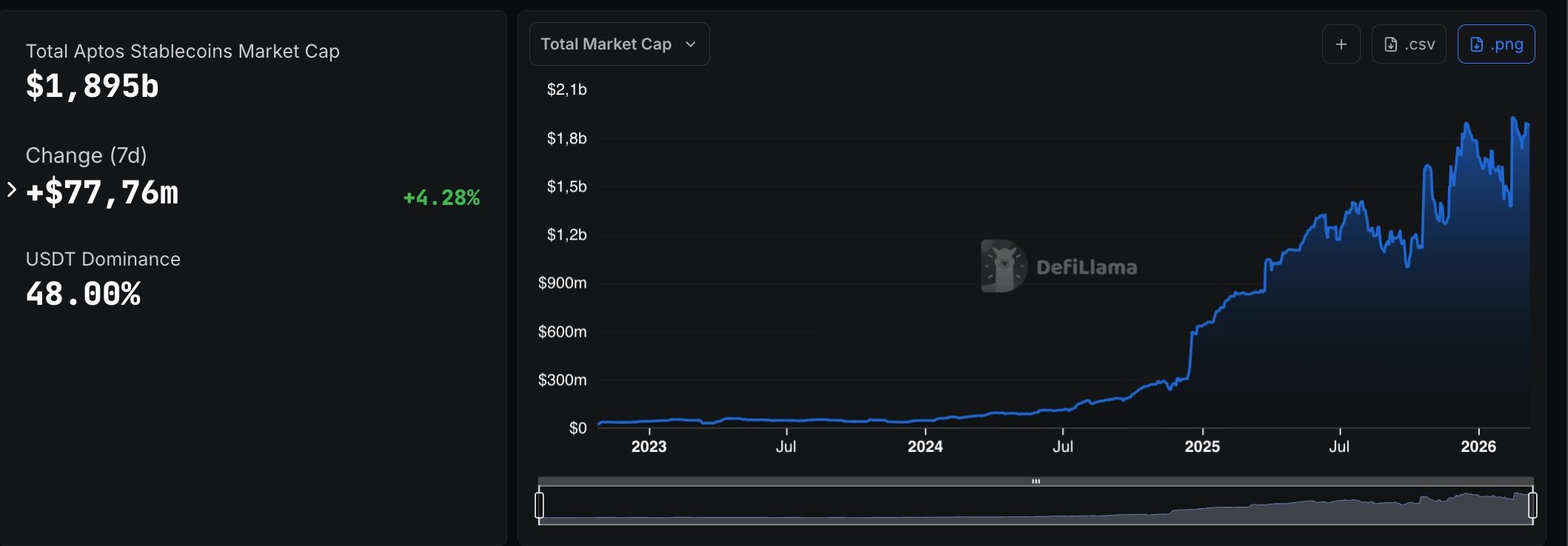
On stablecoins alone, DeFiLlama shows Aptos stablecoin market cap around $1.88B, which is not small.
Why Aptos is the “Enterprise Choice” in 2026
The Move Language Advantage: Security, Flexibility, and Dev Adoption
If you want the most “unfair advantage” explanation for Aptos, it’s not marketing. It’s Move.
Move was designed to make digital assets safer to manage at the language level. In Move, assets are typically represented as resources, values that cannot be copied and cannot be dropped unless explicitly allowed. Aptos’ official Move docs say scarcity is enforced by default because structs cannot be accidentally duplicated or discarded.
That sounds abstract until you compare it to Solidity.
In Solidity/EVM land, token safety is mostly “convention + code.” A smart contract must correctly implement balance rules. If it fails, you can get:
- accidental token creation
- broken accounting
- loss of funds via logic bugs
Move shifts a chunk of that risk into the compiler and bytecode rules. The Aptos book even frames “Move safety properties” like resource safety (resources can’t be duplicated or lost) and compile-time type checks.
Here’s the practical investor takeaway:
- Move reduces a class of asset-accounting mistakes.
- It makes auditing easier because “you cannot copy a resource” is a rule, not a hope.
- It encourages better patterns for ownership and access control.
Is Move “unhackable”? No. Bridges, DEXs, and app logic can still break. But Move’s resource model helps prevent some of the most embarrassing bugs, especially those involving asset duplication, accidental burning, or uncontrolled transfers.
Aptos 2.0: Achieving 160k+ TPS with Sub-Second Finality
The prompt mentions “Shoal & Rapidus.” In Aptos terminology, the relevant pieces are Shoal/Shoal++ and Raptr (Baby Raptr), Aptos’ newer consensus evolution.
- A Shoal++ announcement describes sub-second latencies at high throughput (e.g., 100K TPS in highlighted benchmarks).
- “Baby Raptr” explains that Raptr is a newer BFT consensus approach and cites experiments showing 250,000 TPS at ~750ms latency in global-scale tests.
- Performance dashboards and industry comparisons often cite 160,000 TPS as Aptos’ theoretical ceiling.
- Aptos’ own recent messaging emphasizes consistent sub-second end-to-end latency for transaction types.
And this is where Aptos becomes interesting for “enterprise” use cases: if you can combine predictable latency, high throughput, and a safer programming model, you can build systems that feel closer to real-world trading infrastructure than “toy DeFi.”
That said, as an investor, you should always ask one brutal question: Does performance create token demand?
Performance enables product-market fit, but it doesn’t guarantee it.
The Microsoft & Azure Partnership: Scaling Decentralized AI on Aptos
This is the mainstream narrative that most Aptos articles still undersell.
In August 2023, Aptos Labs announced a partnership with Microsoft focused on combining Aptos blockchain tech with Azure OpenAI Service to help “make Web3 more accessible.” The partnership was framed around building AI-assisted onboarding and tools, most notably an “Aptos Assistant” chatbot designed to answer developer and ecosystem questions.
Why does this matter in 2026?
Because AI is now the distribution layer for software. If developers build where the tooling is easiest and enterprises deploy where the compliance + cloud story is clearest, then being “Azure-adjacent” is not a vanity logo. It can reduce friction for:
- banks exploring tokenization pilots
- fintechs testing on-chain settlement
- enterprise teams that already run everything on Azure
Multiple reports also described Aptos running validator nodes on Azure, which is a subtle but meaningful step: it’s not just “we integrated an API,” it’s “we’re making infrastructure deployment feel familiar to corporate IT.”
The Block’s coverage of the partnership highlighted the plan to explore digital payments and tokenization with Microsoft’s AI support. Fortune’s reporting framed it as AI tools that help banks explore blockchain integrations on Azure.
Now connect this to 2026 market psychology: “enterprise adoption” narratives usually fail because they’re vague. But “AI tooling + cloud deployment + onboarding assistant + stablecoins + RWA rails” is a coherent stack. It reads like a real go-to-market motion, not a whitepaper dream.
So when people search aptos crypto prediction, this Microsoft/Azure angle is one of the most credible “why Aptos could surprise” storylines, especially in a cycle where AI is the dominant tech theme.
Aptos Price Prediction 2026: The Recovery Narrative
Q2–Q4 2026 Forecast: Price Targets Following the Recent Mainnet Upgrade
Aptos 2026 is a tug-of-war between:
- improving fundamentals (performance, RWAs, stablecoins)
- supply pressure (unlock schedule + emissions)
- market beta (what Bitcoin does next)
A practical Aptos price prediction for 2026 looks like this:
- Bear case (macro weak + unlock selling): $0.70 – $1.20
- Base case (range + gradual recovery): $1.20 – $3.50
- Bull case (alt rotation + strong narrative): $3.50 – $6.50
Those ranges assume Aptos continues building real economic activity on-chain (especially RWAs and stablecoins) while tokenomics reforms reduce future dilution.
Technical Analysis: Identifying the $7.50 Support and $18.50 Resistance
Let’s be transparent: with APT around $1, $7.50 isn’t current support; it’s a reclaim level from older structure.
So here’s the cleaner technical framing:
- Current structural floor zone: roughly $0.75–$1.00 (psychology + recent lows)
- First major recovery band: $2–$3.50 (where sellers often reappear)
- Macro reclaim level: ~$7.50 (if Aptos re-enters a full bull phase)
- Cycle resistance target: ~$18.50 (requires a true L1 rotation + narrative dominance)
In other words, $7.50 and $18.50 are “if the bull returns” levels, not the battlefield today.
Ecosystem Catalysts: The Rise of Aptos-Native RWA Protocols
Aptos has leaned hard into real-world assets, and there’s solid evidence behind it. Aptos’ own ecosystem writing claimed more than $540M in tokenized assets on Aptos as of mid-2025, describing it as a top chain for RWAs at that time.
This matters because RWAs do two things:
- attract institutional-grade users who care about compliance and transparency
- create sticky demand for stablecoins and settlement liquidity
On the stablecoin side, two major catalysts landed:
- Native USDC on Aptos (no bridge required), announced by Circle in January 2025
- Aptos also highlighted USDC + CCTP live, enabling cross-chain USDC movement with 1:1 capital efficiency
When you combine native stablecoins with RWA issuance, you get the beginnings of a “real finance” chain, not just a DeFi playground.
Aptos Price Prediction 2027–2029: The “Parallelization” Era
2027 Outlook: Aptos as the Backend for High-Frequency Trading
Aptos’ performance stack is aimed at workloads where latency is not a luxury, it’s the product. Raptr’s positioning explicitly name-checks real-time, high-throughput applications like trading engines.
2027 forecast ranges (scenario-based):
- Bear: $1.20 – $2.80
- Base: $2.80 – $6.50
- Bull: $6.50 – $12.00
The bull case depends on two things: (1) a crypto-wide risk-on phase, and (2) Aptos demonstrating that its speed isn’t just theoretical, it’s monetizable through real usage and fees.
2028 Prediction: Post-Bitcoin Halving Cycle and the L1 Rotation Play
Historically, the year following a Bitcoin halving often brings an “alt rotation” where capital hunts for high-beta networks with strong narratives.
Aptos’ 2028 narrative would likely be:
- Move security + parallel execution
- AI/cloud distribution
- RWA and stablecoin depth
2028 ranges:
- Bear: $2.00 – $4.50
- Base: $4.50 – $10.00
- Bull: $10.00 – $18.00
2029 Vision: Global Institutional Integration of “Move-as-a-Service”
This is where the long-game narrative clicks: Move isn’t just “Aptos’ language.” It’s increasingly a category: Sui and other chains use Move variants too. That means enterprises may start thinking about Move like they think about Java or Rust: not a chain, but a safety model for asset logic.
If Microsoft-style tooling, cloud deployment patterns, and developer education make Move a default choice for “serious on-chain finance,” Aptos could benefit as the chain that feels most enterprise-ready.
Our 2029 ranges:
- Bear: $3.00 – $6.00
- Base: $6.00 – $14.00
- Bull: $14.00 – $25.00
Aptos Price Prediction 2030–2035: The Long-Term Valuation
Can APT Hit $100?
This is the high-volume question behind aptos price prediction 2030 and apt price prediction searches.
Market cap math keeps the conversation honest:
- At $100 per APT, a 1B circulating supply implies $100B market cap
- If supply grows toward a higher cap over time, the required market cap grows too
In early 2026, circulating supply sits around the high hundreds of millions. So $100 is not “impossible,” but it’s a top-tier outcome that requires Aptos to become a core infrastructure network, not just one successful L1 among many.
Our long-range view:
- 2030 base case: $8 – $20
- 2030 bull case: $30+ (requires major market share + narrative dominance)
- 2035 stretch case: $40 – $70 (still not $100, but meaningfully higher)
The Burn Mechanism: Will Transaction Fees Offset Token Inflation?
APT’s long-term valuation hinges on tokenomics reform.
Aptos staking rewards are set through governance mechanics, and staking rewards are part of the inflation story. Staking dashboards show reward rates and inflation metrics fluctuating over time.
In early 2026, multiple outlets reported a tokenomics overhaul proposal (and later reports suggested it passed governance and awaited execution), including:
- a 2.1B hard supply cap
- lower staking rewards
- higher fees with burn mechanics
Even if you ignore the headlines, the direction is clear: Aptos is trying to shift from “subsidized security via emissions” toward “performance-driven tokenomics,” where usage and fees play a bigger role.
2035 Long-Term Forecast: Aptos as a Top 5 Blockchain Infrastructure
Aptos becomes top-5 infrastructure if it wins in at least one of these lanes:
- enterprise settlement and tokenization
- AI-agent commerce (lots of small transactions, real-time execution)
- regulated on-chain markets with high throughput
If it stays “just another fast L1,” it probably doesn’t get that multiple.
Here’s a practical Aptos price prediction table you can screenshot and revisit:
| Year | Min | Avg | Max |
| 2026 | $0.70 | $2.20 | $6.50 |
| 2027 | $1.20 | $4.50 | $12.00 |
| 2028 | $2.00 | $7.50 | $18.00 |
| 2029 | $3.00 | $10.50 | $25.00 |
| 2030 | $4.00 | $14.00 | $32.00 |
These targets assume varying macro conditions and that Aptos continues expanding RWAs/stablecoins while tokenomics reforms reduce long-term dilution.
Competitive Landscape: Aptos vs. The Industry Titans
Aptos vs. Solana: Comparing Latency, Reliability, and Network Uptime
Solana’s strength is real-world usage and liquidity gravity. It also has a documented history of major outages, including a February 2024 incident where block finalization halted and a restart was required.
On latency, Solana is known for optimistic confirmations around sub-second speed and full finality commonly cited around ~12.8 seconds in typical conditions (depending on definitions).
Aptos positions itself as sub-second end-to-end latency and high theoretical throughput, with architecture built around parallel execution (Block-STM).
Aptos vs. Sui: The Battle for Move Supremacy in 2026
Sui is Aptos’ closest “Move cousin.” It has published benchmark results showing very high TPS and ~480ms time-to-finality in testing environments.
But Sui has also had visible downtime events, including an official post about a mainnet halt in November 2024.
So the competition isn’t “who’s faster on a slide.” It’s who can deliver speed with operational reliability and economic adoption.
Aptos vs. Monad: How Aptos Compares to Parallel EVM Chains
Monad represents the “parallel EVM” category: keep Ethereum tooling, but scale execution hard. Aptos is the “new language, new runtime” category. In 2026, the question is whether developers prefer:
- EVM familiarity (Monad-like approaches)
- or Move safety + native parallelism (Aptos/Sui)
The market’s answer will depend on developer onboarding, enterprise tooling, and which ecosystems attract real users,especially through stablecoins and RWAs.
Comparison Table: Aptos vs Solana vs Sui (TPS, TTF, Incidents)
| Chain | TPS (reported) | Time-to-Finality (TTF) | Notable reliability/security incidents |
| Aptos | Theoretical ~160k TPS; high peak metrics on dashboards | Recent claims of consistent sub-second latency | Oct 18, 2023 incident: transaction delays (no fork, no lost tx) |
| Solana | Often cited ~65k TPS capability | Full finality ~12.8s; optimistic confirmation faster | Feb 6, 2024: block finalization halted; restart required |
| Sui | Benchmarked up to ~297k TPS in tests | ~480ms finality in tests | Nov 21, 2024 mainnet halt (validator crash loop) |
Tokenomics & Governance: Is the Supply Pressure Over?
Understanding the Vesting Schedule: Tracking the Remaining VC Unlocks
Supply pressure hasn’t vanished, it’s just more “scheduled” now.
Tokenomist indicates a significant amount of supply remains locked and continues unlocking under vesting schedules. Aptos’ own tokenomics overview also described the monthly unlock cadence for key allocations after initial cliffs.
Short version: unlocks can still create turbulence in 2026–2027, even if the long-term story improves.
Staking on Aptos: Yield Rates and Security Participation in 2026
Source: Aptos Docs
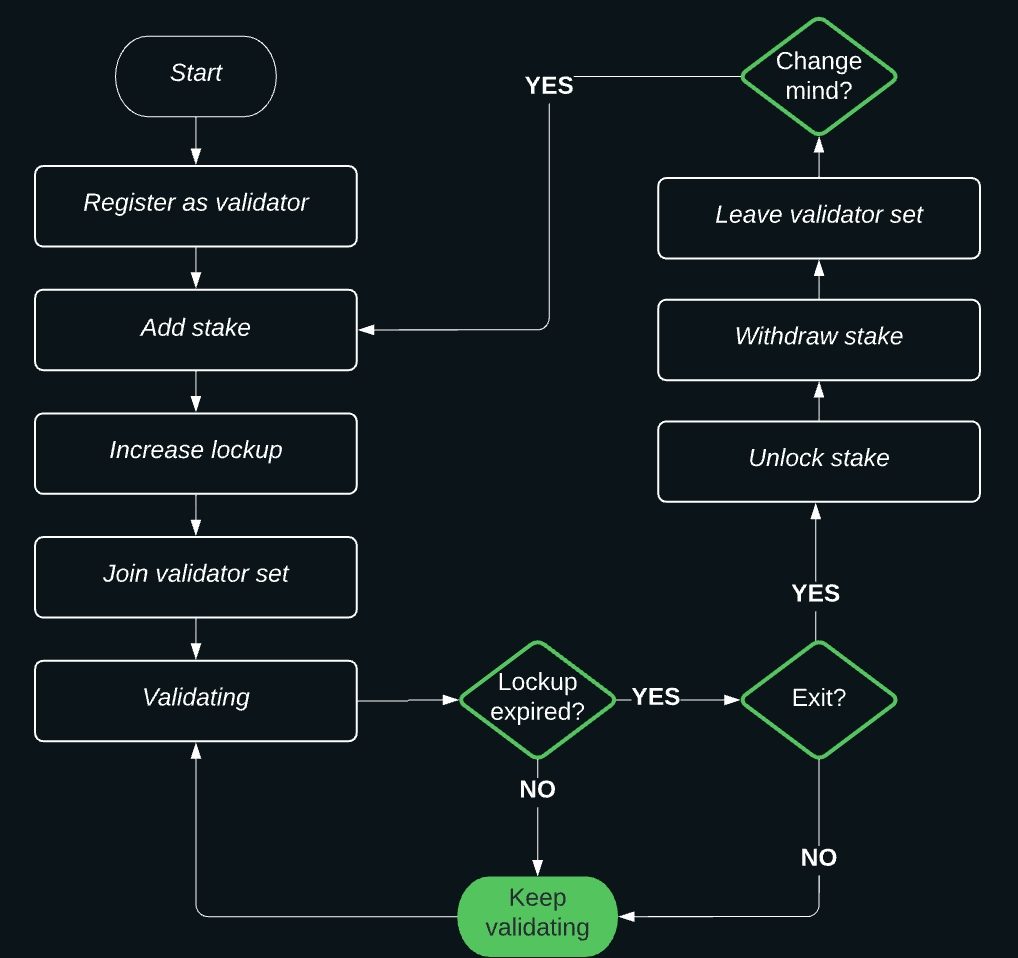
Staking matters because it reduces liquid supply and anchors network security. Coinbase lists an estimated APT staking reward rate around 7% (rates vary by validator and conditions). Aptos’ own developer docs explain rewards depend on governance-set reward rates and validator performance.
But note the trend: tokenomics discussions in 2026 include lowering staking rewards to reduce emissions, another sign Aptos is trying to shift toward sustainability and value capture.
The Community Fund: How the Aptos Foundation Fuels Innovation
Aptos Foundation planning threads for 2026 explicitly talk about accelerating DeFi and RWAs through grant focus. That’s worth watching because it signals where incentives will go and where the ecosystem might grow fastest.
Is Aptos (APT) a Good Investment in 2026?
The Bull Case: Technical Superiority and Massive Institutional Backing
The bull thesis for aptos crypto price prediction models is:
- Move gives stronger asset safety primitives
- Block-STM parallel execution is real, not marketing
- RWA + stablecoin footprint is meaningful
- Microsoft/Azure narrative supports enterprise distribution
If crypto returns to a risk-on regime, APT has a clean “modern infrastructure” pitch that fits 2026’s AI-heavy tech zeitgeist.
The Bear Case: Stiff Competition and “VC Coin” Market Sentiment
The bear thesis is simple too:
- unlocks and emissions keep pressuring price
- Solana remains the dominant high-performance liquidity hub
- Sui competes directly for the Move developer mindshare
- enterprise narratives don’t always translate into retail demand
Risk Management: How to Position Your APT Portfolio for the Long Term
If you’re allocating to APT, consider a strategy that respects the unlock calendar and volatility:
- scale in slowly rather than “all at once”
- track scheduled unlock dates
- avoid over-concentration in any single L1
- if staking, diversify validators and understand lock-up rules
Where to Buy and Exchange Aptos?
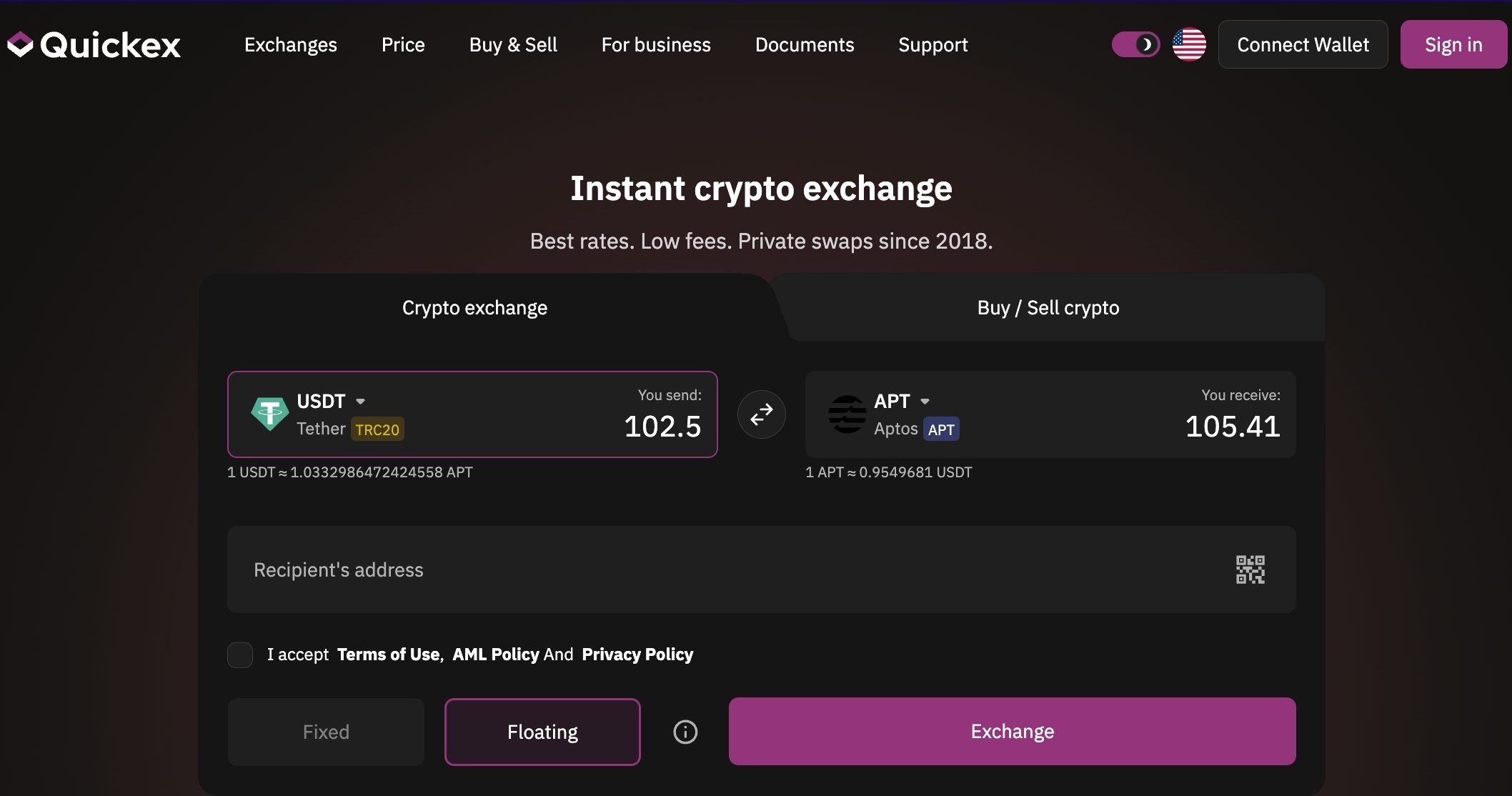
Quickex is an instant-swap style centralized exchange where users select an asset pair (like ETH to BTC), enter a receiving address, send the deposit, and receive the swapped asset after processing. (Always double-check the chain and address format before sending.)
You can treat it as one example of an on-ramp/off-ramp path, but compare rates and consider security best practices for any service.
FAQ: Critical Questions for Aptos Investors in 2026
Is Aptos faster than Solana?
In benchmarks and theoretical models, Aptos often claims extremely high throughput (e.g., 160k TPS theoretical) and sub-second latency. Solana has strong real-world throughput and fast confirmations, with full finality commonly cited around ~12.8 seconds today. “Faster” depends on what you measure: peak benchmarks, real-world load, or finality guarantees.
Does Aptos have a native stablecoin?
Yes. Circle announced native USDC on Aptos (no bridging required), and Aptos also highlighted USDC + CCTP live for cross-chain USDC transfers. USDT is also a major stablecoin on Aptos.
What is the utility of the APT token besides gas?
APT is used for gas fees, staking/security participation, and governance. Staking reward rates and validator performance are documented in Aptos’ staking docs. In 2026, governance is also central to tokenomics reforms (supply cap / staking reward changes / fee burn mechanisms).
Can Aptos handle enterprise-grade AI applications?
Aptos is explicitly positioning for that lane via its partnership with Microsoft and Azure OpenAI tooling, including AI onboarding assistants and infrastructure deployment patterns that feel familiar to enterprises. Whether it wins enterprise AI is still an execution question, but the integration narrative is real and unusually mainstream for an L1.
Disclaimer: The material in this article is not financial or investment advice. Everything stated here reflects the author's personal view and should not be treated as a recommendation to trade or invest. We make no warranties regarding the accuracy, reliability or completeness of the information presented. Cryptocurrency markets are highly volatile and can move unpredictably. Before committing any funds, every investor, trader or crypto user should study several independent sources and check the regulations that apply in their own jurisdiction.