
In early August, Bitcoin, which had recently been testing all-time highs, dropped to levels last seen in early July 2025. Many in the crypto community were alarmed by the flagship cryptocurrency’s weakness in August, since the last month of summer is traditionally one of the worst for crypto.
The Quickex editorial team looked into why Bitcoin fell and gathered the community’s forecasts in one review. We explain whether investors should fear August and whether BTC can find the strength to continue the bull run.
Why Bitcoin Fell
On the morning of August 3, Bitcoin briefly dipped to $111,984. The last time the cryptocurrency traded at this level was in early July 2025.
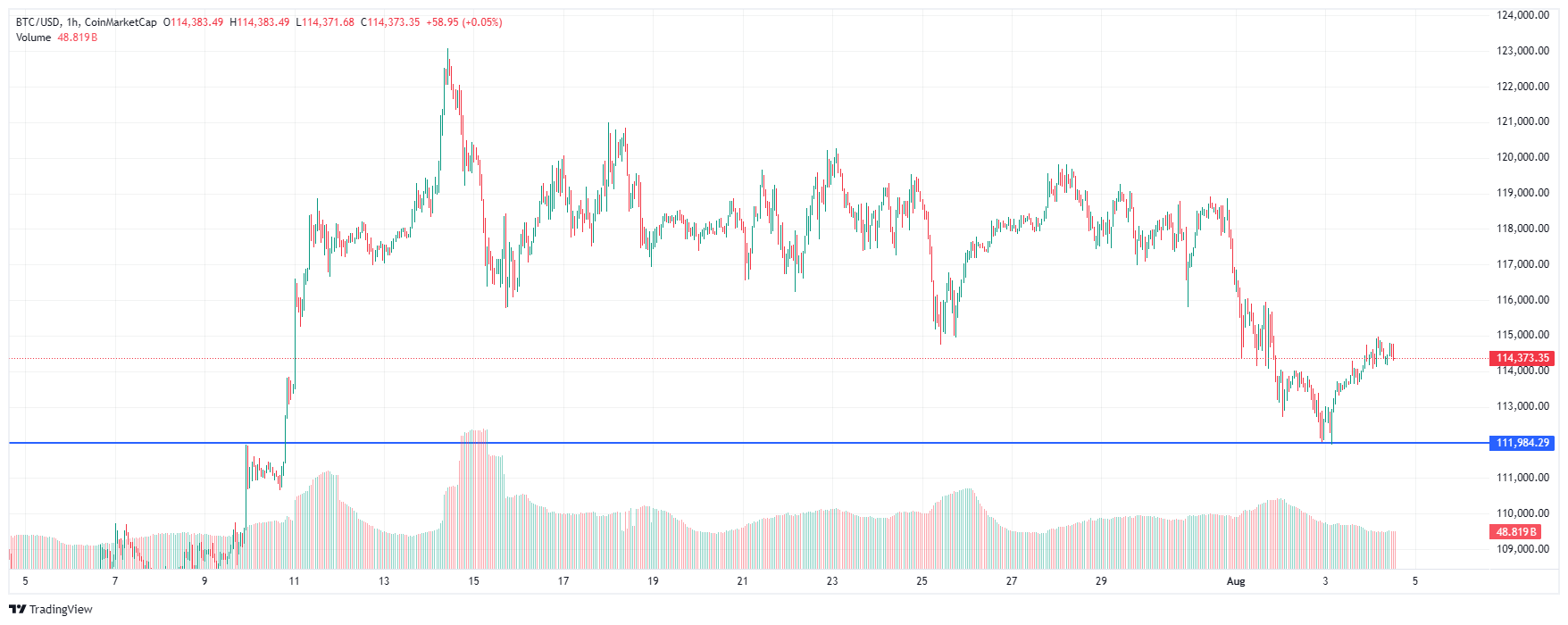
Local Bitcoin low. Chart: TradingView.
It’s most convenient to track the Bitcoin price on Quickex.
There are several reasons for the decline. Let’s go through them:
- Geopolitics. Trump isn’t stopping his tariff war. The confrontation unleashed by the U.S. president has already led to negative Fed forecasts on rates. Pushing back the timing of a key interest-rate cut hit the crypto market hard. Market participants are also worried about headlines hinting at a potential escalation between Russia and the U.S. In response to threats from former Russian President Dmitry Medvedev, Donald Trump ordered nuclear submarines to sail toward the country’s shores.
- Problems in the U.S. economy. At its most recent meeting on July 30, the Fed decided to leave interest rates unchanged. At the same time, Fed Chair Jerome Powell noted that he and his colleagues do not see steady signals that could lead to a rate cut in the near future. Nevertheless, he said the regulator will be guided by August economic data.
- Profit-taking. Many in the crypto community have already made enough profit to close their positions. Among other things, this is indicated by a rise in the supply of BTC on exchanges. Traders often move coins to trading platforms in order to sell them. Therefore, growing exchange reserves of Bitcoin are a sign of increased selling pressure.
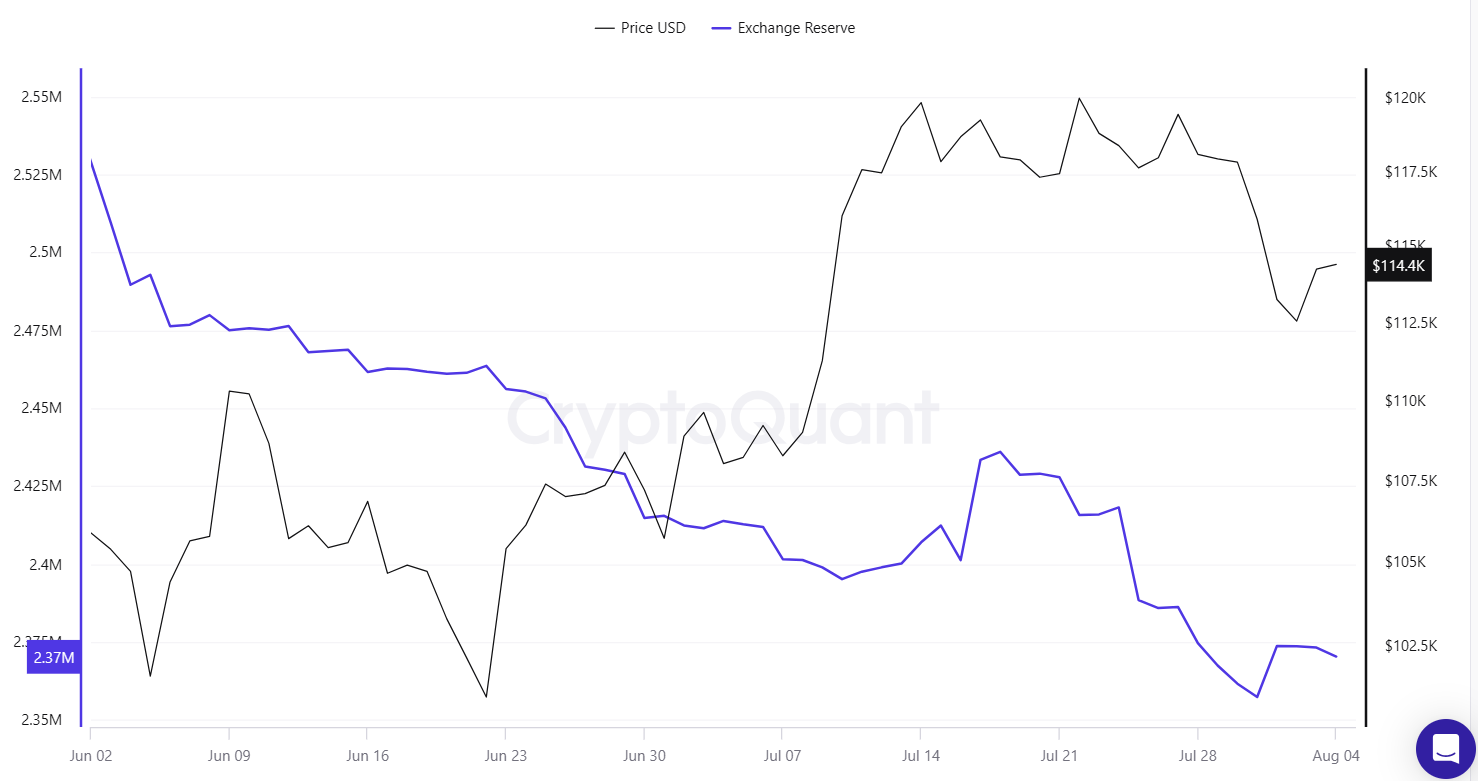
The blue curve shows changes in crypto-exchange Bitcoin reserves; the black curve is the Bitcoin price. Source: cryptoquant.
What to Expect from Bitcoin in August
Despite Powell’s negative remarks in July 2025, most of the crypto community believes that in September the Fed will opt for a rate cut. At the time of writing, more than 85% of voters support this forecast.
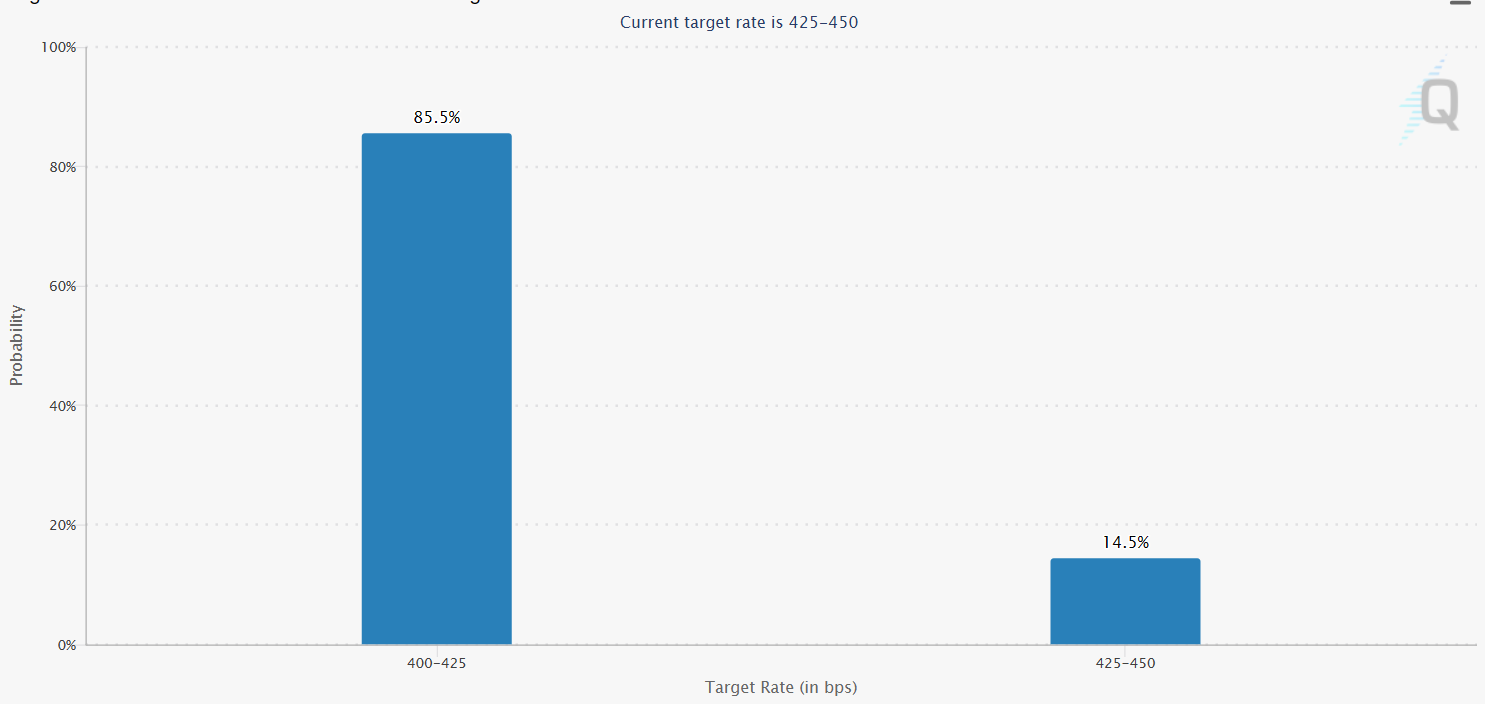
Forecast for the Fed’s September rate decision. Source: CME.
For the crypto industry, this outlook is positive. Historically, the crypto market tends to rise during periods when the U.S. key rate is declining. That’s because such changes increase the investment appeal of high-risk assets like crypto. Therefore, we can assume that if positive news on the U.S. economy is released, the Fed’s willingness to cut rates will strengthen. In that case, crypto would receive powerful support for the bull run.
Seasonality adds to the optimism. Bitcoin’s movements are cyclical. The main driver is the halvings — a term for cutting the BTC mining rate in half and, as a result, the pace at which new coins enter the market. In the chart below, the thick orange line shows Bitcoin’s path in the cycle after the 2024 halving. Here’s what to note:
- observations show that the post-halving BTC shortage typically fuels a bull run for about 1.5 years;
- if timing holds this time too, the cryptocurrency could set a cyclical peak in fall 2025.
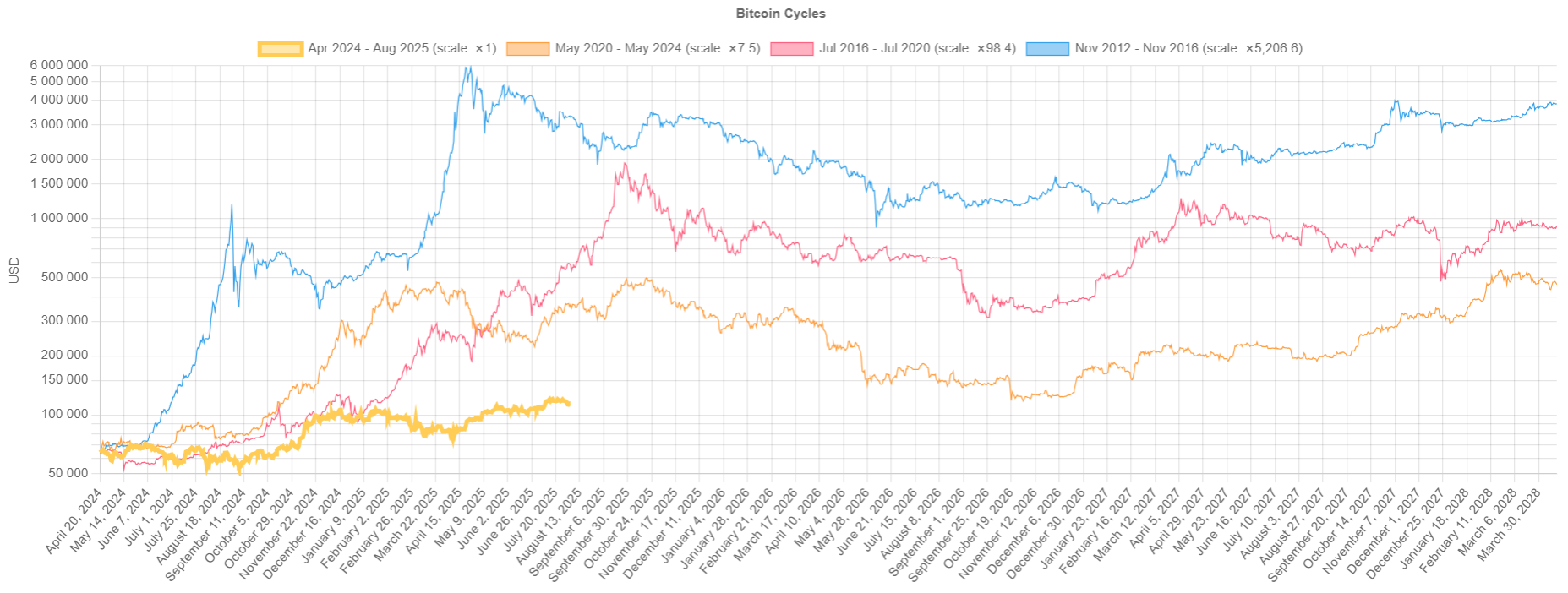
Cycle-to-cycle comparison of Bitcoin behavior. Source: bitcoincyclescomparison.
There’s a fly in the ointment, though. Unfortunately, August is traditionally one of the worst months for Bitcoin, due to seasonality. Vacations, profit-taking, and anticipation of the Fed’s annual Jackson Hole Symposium (August 21–23) often weigh on BTC.
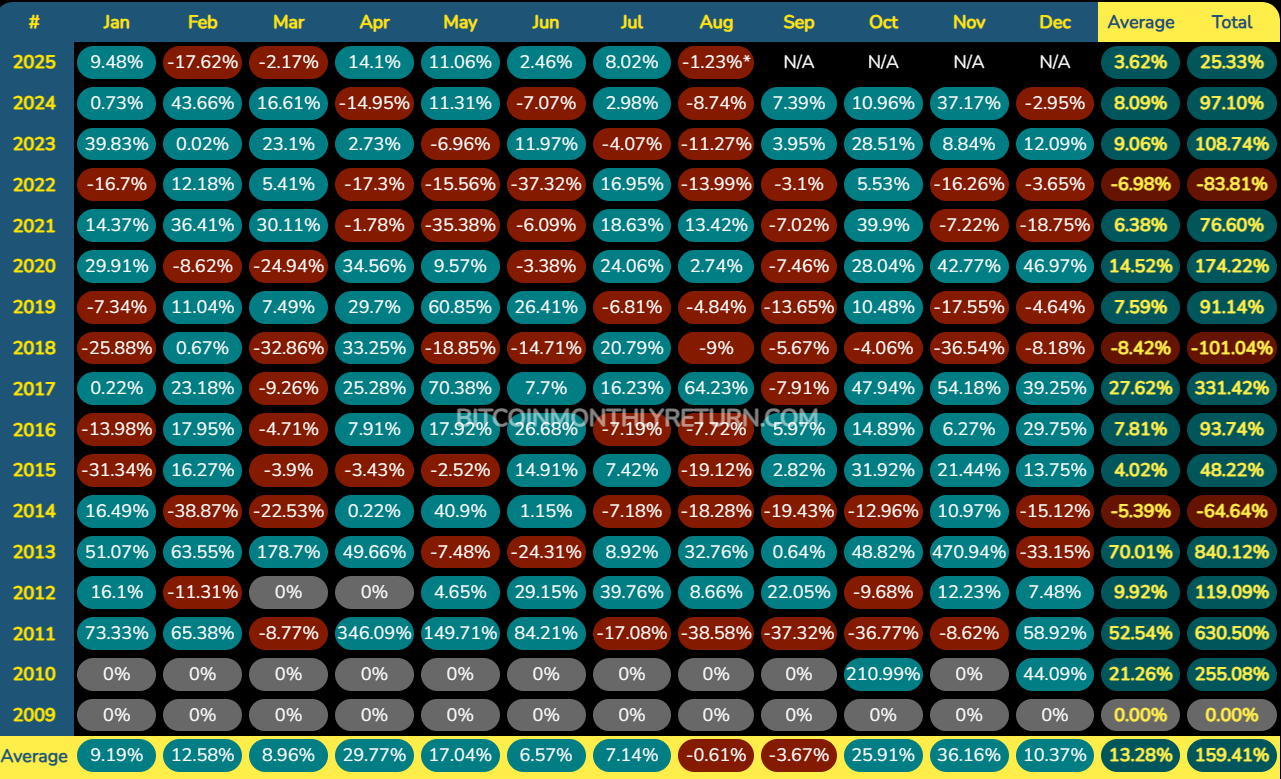
How Bitcoin’s price has changed by month. Source: bitcoinmonthlyreturn.
That said, some in the crypto community—for example, analyst Benjamin Cowen—believe August will be “green” this time. Supporters of this view point out that in previous post-halving years (2013, 2017, 2021) BTC rose in July and August, followed by a “red” September. This year, Cowen believes August will also be green, with a seasonal drop possible in September. In October, he expects a rebound and further growth.
Within the crypto community there is a theory that Bitcoin follows M2, i.e., global liquidity. Its supporters believe that as long as M2 is growing, BTC will continue to set new highs. It’s important to note that Bitcoin mirrors movements in global liquidity with a lag of 2–3 months. You should also keep in mind that M2 experiences pullbacks which, according to crypto enthusiasts, BTC also goes through. This could explain the early-August drop.
Since global liquidity continues to grow, there is a theory that Bitcoin still has every chance to continue the bull run.
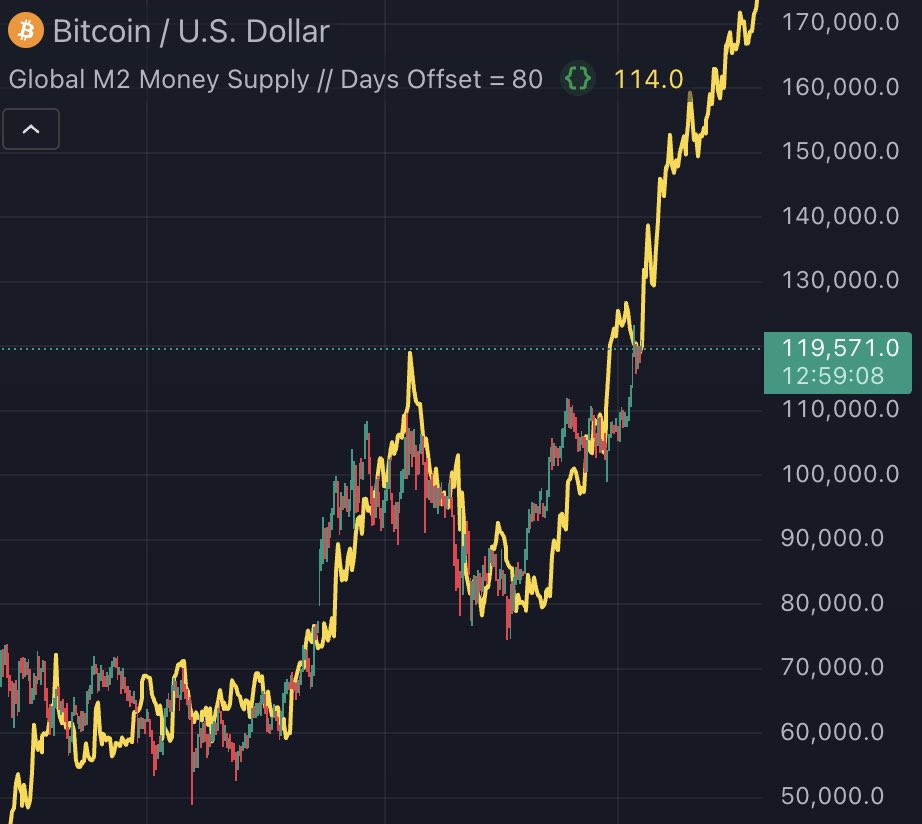
Comparison of M2 and Bitcoin behavior. Source: x.com/Vivek4real.
It follows that in August 2025 Bitcoin will face many challenges. It’s important to monitor U.S. economic data, because the Fed’s September rate decision largely depends on it. Negative statements from Powell could decrease the probability of a cut and hit the market hard.
Given heightened geopolitical tensions and economic uncertainty, we can assume that Bitcoin will spend August without setting a new all-time high. A drift in the $114–120K range looks likely.
Conclusions
August could prove a test for Bitcoin. The Fed’s cautious stance and the agonizing wait for signals from regulators—against the backdrop of overall geopolitical tensions—are undercutting investor appetite.
At the same time, despite all the challenges Bitcoin may face in August, the bull run is likely far from over.
The most favorable bitcoin purchase and exchange rate is on Quickex.