
Quick Summary:
An EVM wallet works with any blockchain that runs the Ethereum Virtual Machine, using one address across Ethereum, Polygon, Arbitrum, Base, and dozens of other chains. MetaMask remains the broadest default, Rabby leads on transaction safety and simulation, and Coinbase Wallet suits beginners with its passkey-based smart wallet option. Pair any software wallet with a Ledger or Trezor for larger balances.
What Is an EVM Wallet?
Source: Binance
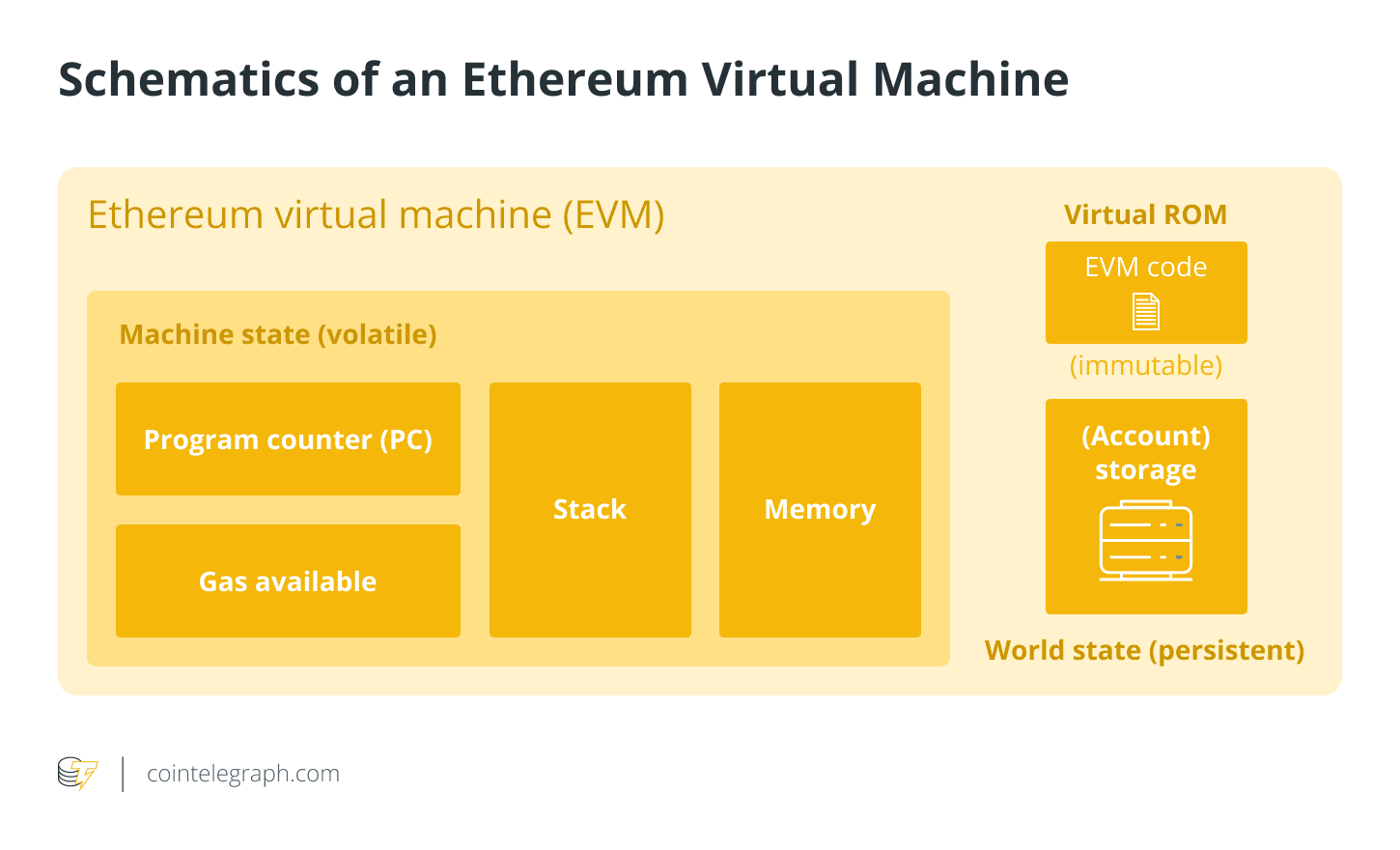
An EVM wallet is a crypto wallet built to work with any blockchain that runs the Ethereum Virtual Machine, the software environment that executes smart contracts on Ethereum and everything modeled after it. The EVM itself, first designed by Gavin Wood alongside Vitalik Buterin’s original Ethereum concept, acts like a global, deterministic computer: feed it the same smart contract code and the same input anywhere, and it produces the exact same output every time, which is what lets thousands of independent nodes agree on the state of the network.
What makes this practically useful is that dozens of other blockchains, Polygon, Arbitrum, Optimism, Base, BNB Chain, Avalanche’s C-Chain, and many more, chose to replicate that same execution environment rather than invent their own. A developer’s Solidity smart contract written for Ethereum can typically deploy on any of these chains with little or no modification, and a wallet address generated once works identically across every one of them. That’s genuinely different from how something like Solana works, since Solana uses its own custom virtual machine (the SVM) and a different programming model entirely, meaning an EVM wallet address won’t work there and a separate, non-EVM wallet or a multi-chain app is needed instead.
For everyday users, the practical upshot is simple: one seed phrase and one address can hold ETH on Ethereum mainnet, USDC on Base, and a DeFi position on Arbitrum, all managed from a single wallet interface, just by switching which network the wallet is currently pointed at. That convenience is the entire reason EVM compatibility became the dominant standard across crypto rather than every chain building something proprietary from scratch.
What’s the Difference Between Full and Partial EVM Compatibility?
Not every chain claiming EVM compatibility delivers the same experience, and the distinction matters more than most beginner guides let on. Full EVM compatibility means every standard Ethereum tool, MetaMask, Hardhat, standard block explorers, works exactly as expected with no surprises. Partial compatibility means some features work fine while others break in ways that aren’t always obvious until you hit them, subtle differences in gas calculation, opcode support, or transaction formatting that can trip up both developers and, occasionally, wallets themselves.
For most mainstream EVM chains, Polygon, Arbitrum, Optimism, Base, BNB Chain, this distinction rarely causes practical problems for ordinary wallet users; these are all well-tested, widely audited implementations. It becomes more relevant with newer or more experimental EVM-compatible chains, where it’s worth a quick check that a wallet you’re relying on has explicitly added and tested support for that specific network rather than assuming generic EVM support covers everything automatically.
How Do You Set Up an EVM Wallet and Add New Networks?
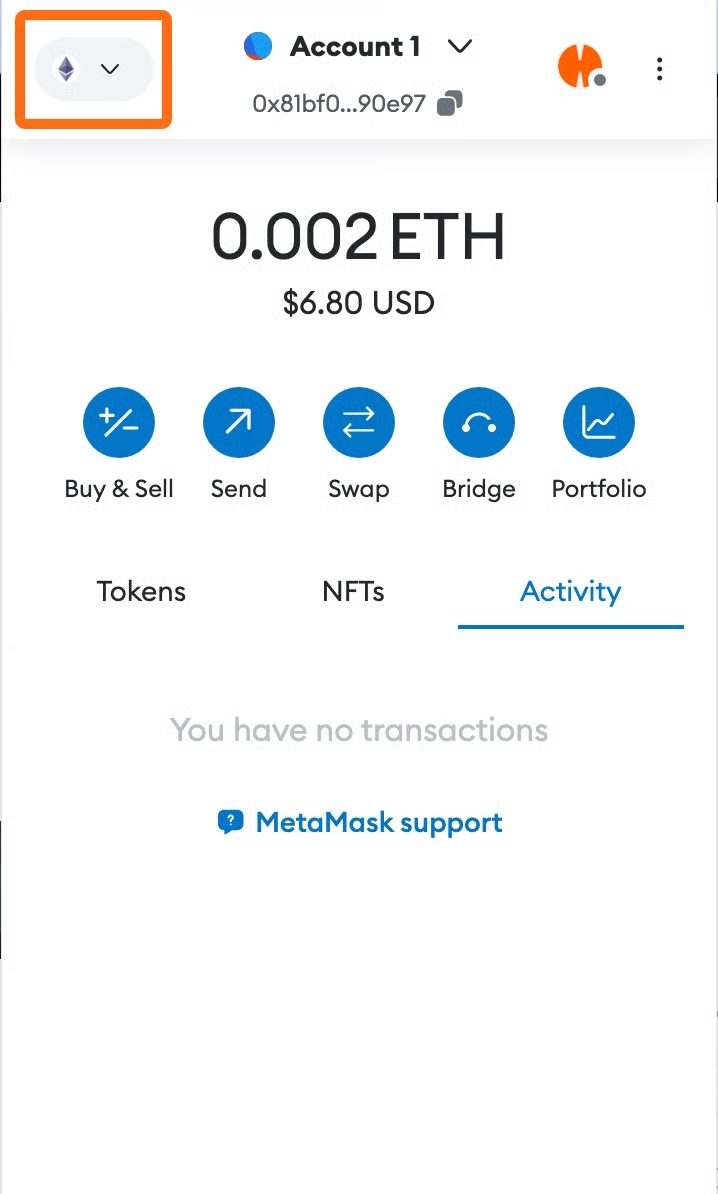
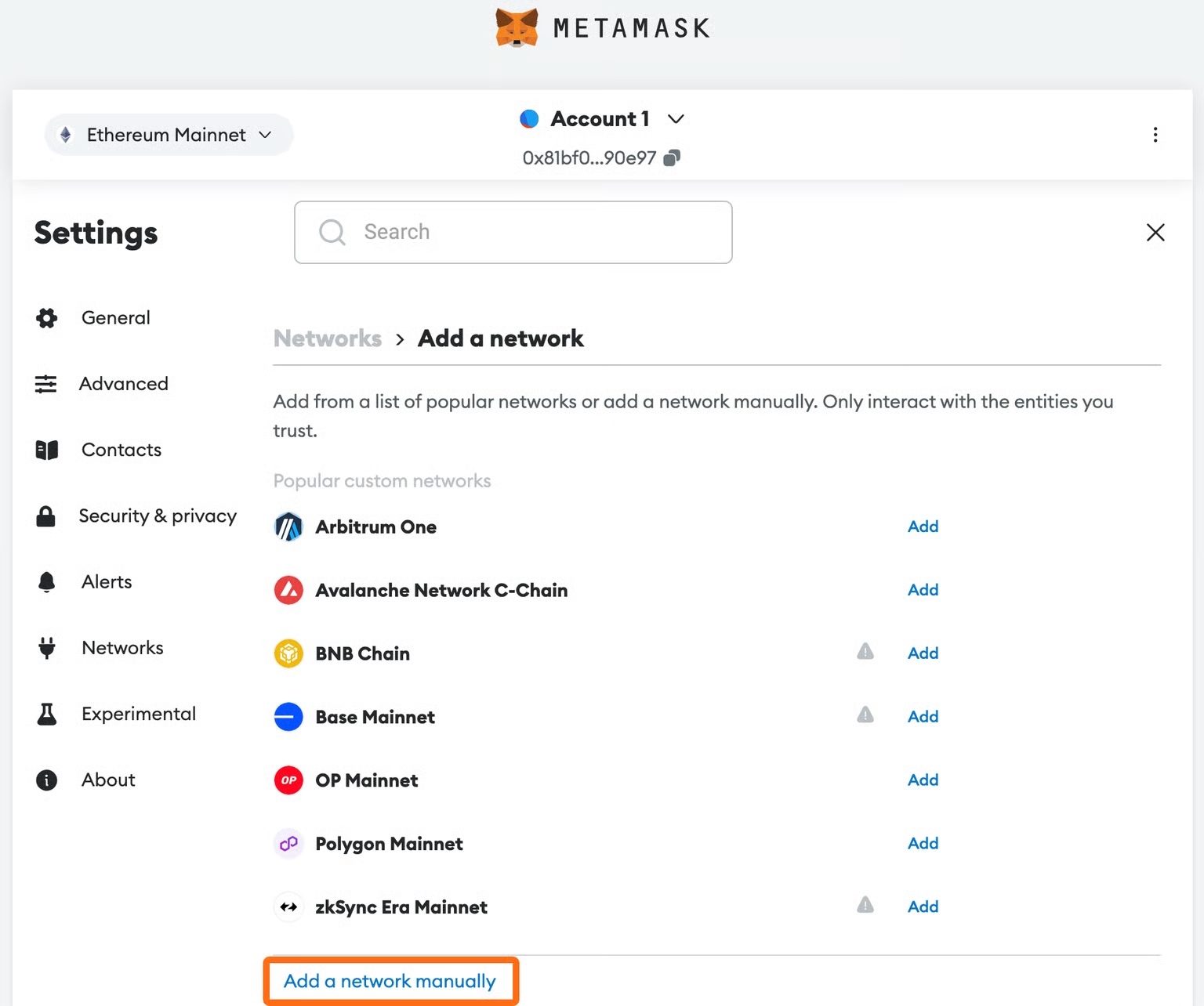
Setting up any EVM wallet follows roughly the same sequence regardless of which one you choose. Download the wallet only from its official website or official app store listing, since fake extensions and cloned apps impersonating popular wallets are a persistent and well-documented problem. Create a new wallet, and the app will generate a seed phrase, typically 12 or 24 words, shown once on screen.
Write that seed phrase down on paper, in the exact order shown, and store it somewhere offline and separate from the device itself. This single piece of information is the actual key to every asset the wallet will ever hold across every EVM chain, not a password that can be reset if forgotten or leaked. Most wallets will ask you to confirm the phrase by re-entering it in order before finishing setup, specifically to catch transcription errors while the stakes are still zero.
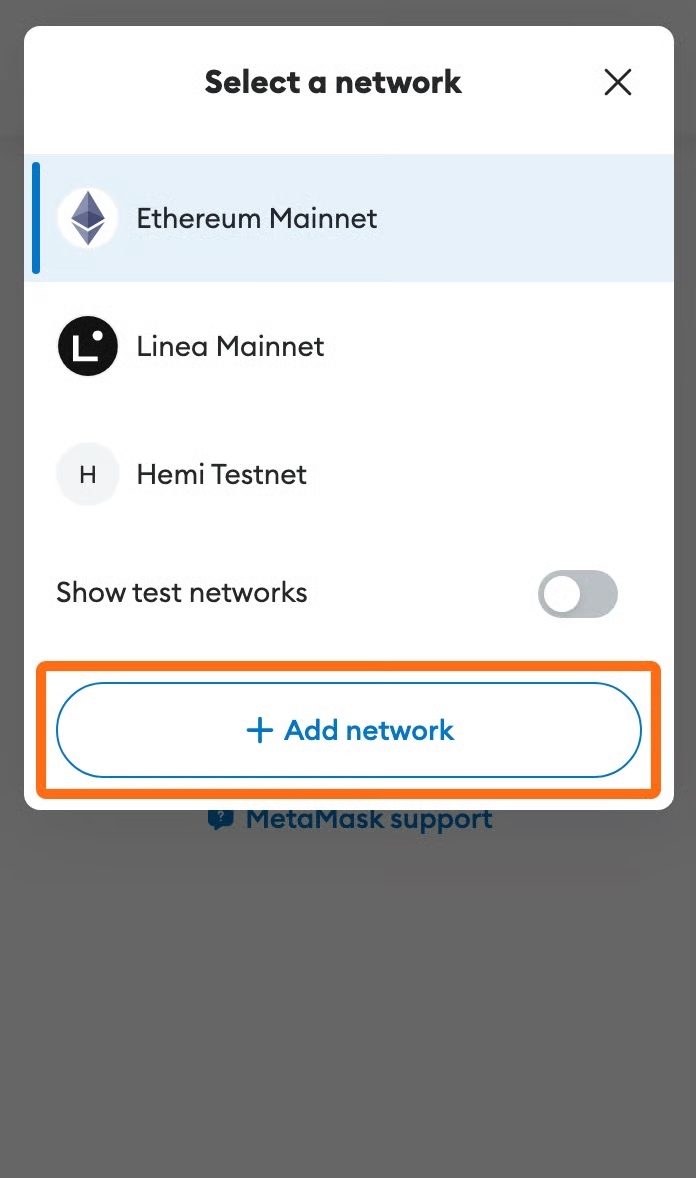
Adding a new EVM network is usually straightforward: most wallets, including MetaMask and Rabby, either detect and prompt you to add a network automatically when a dApp requests it, or let you add one manually through a settings menu by entering the network’s name, RPC URL, chain ID, and currency symbol. Reputable sources like Chainlist.org maintain verified network details for popular EVM chains, which is safer than copying connection details from an unverified source, since a malicious or incorrect RPC endpoint could theoretically feed a wallet false balance or transaction information.
Once a network is added, switching between them is typically a single dropdown selection within the wallet interface, and your address stays exactly the same. The main thing to double-check after switching is that any token balance you’re expecting to see is actually native to the network you’re currently viewing, since a wallet showing zero balance after a network switch usually just means you’re looking at the wrong chain, not that funds have gone missing.
What Is the Best Overall EVM Wallet?
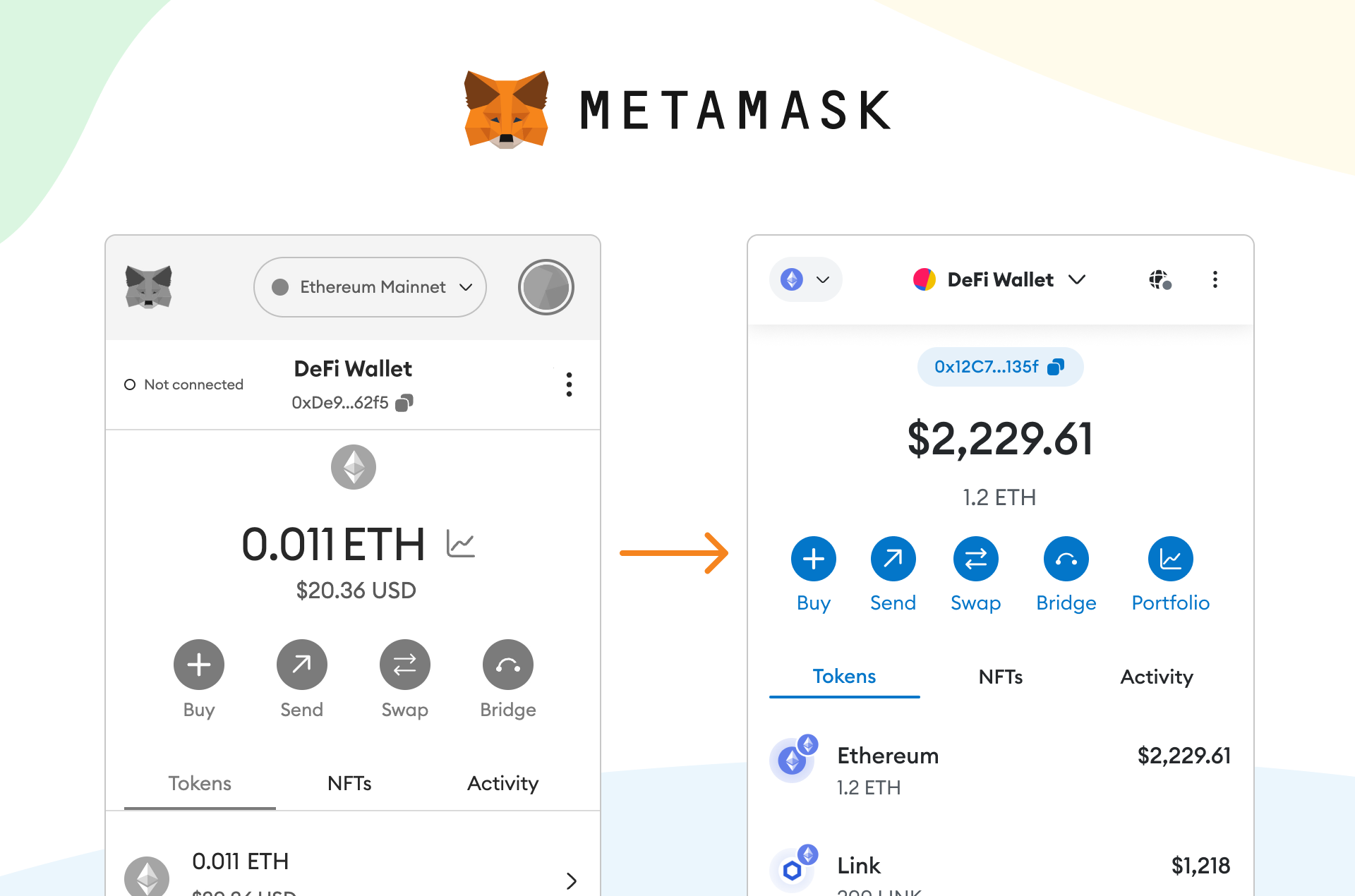
Source: Metamask
MetaMask remains the default starting point for a reason: virtually every dApp expects it, its Snaps system extends functionality toward non-EVM chains, and a May 2025 update let existing addresses upgrade to EIP-7702 batched transactions, part of the broader account abstraction shift covered later in this guide, with a single click. If you’re new to EVM chains and want maximum compatibility with the widest range of dApps, NFT marketplaces, and DeFi protocols, MetaMask is still the safest default pick.
The tradeoffs are real, though, and worth knowing upfront. MetaMask is by a wide margin the most-targeted phishing surface in crypto, precisely because it’s the most widely used, and its built-in swap feature routes through fees around 0.875%, noticeably above what dedicated aggregators charge directly. Its phishing protection and transaction simulation have also historically lagged behind what newer, security-focused wallets like Rabby now offer natively, though MetaMask has been closing that gap. None of this makes MetaMask a bad choice, it’s a genuinely reasonable default, but it’s worth knowing where the rough edges are rather than assuming the most popular option is automatically the safest one.
What Is the Best EVM Wallet for DeFi and Active Trading?
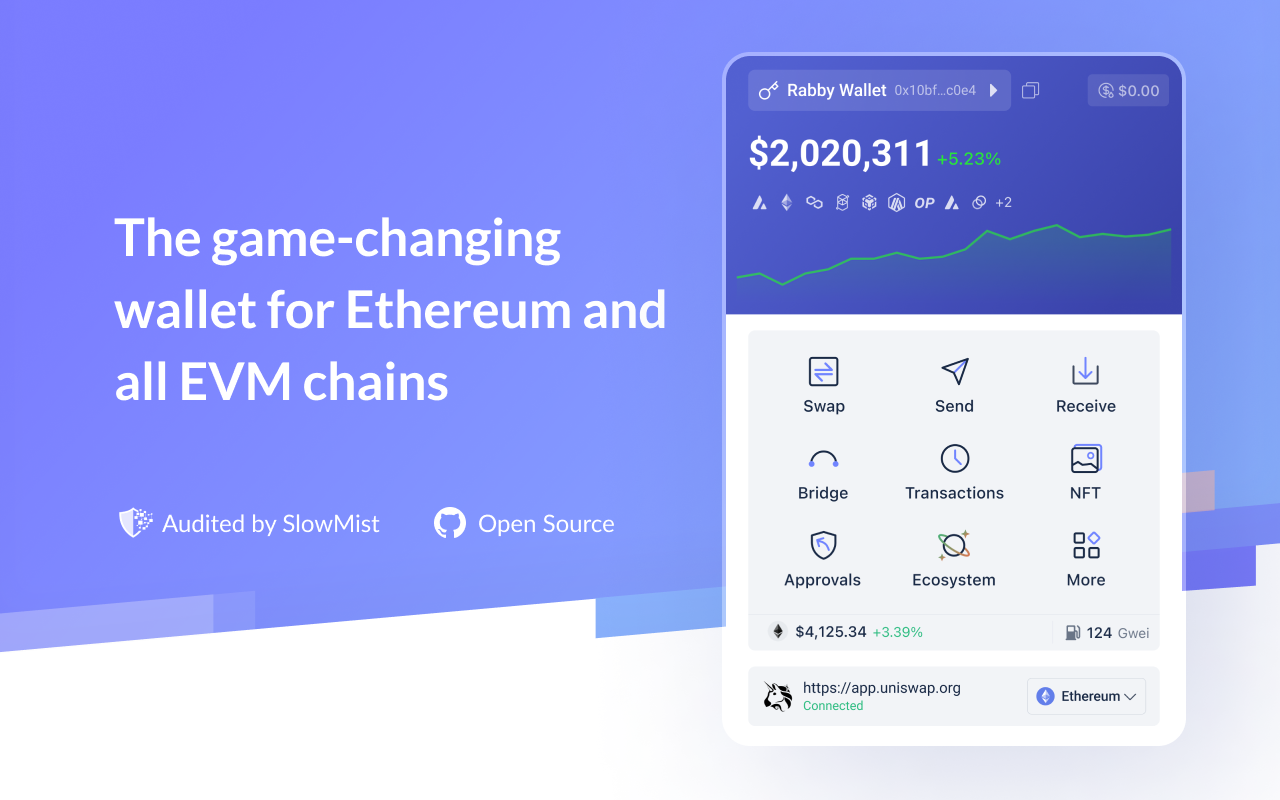
Source: Rabby
Rabby, built by the DeBank team, is the wallet most experienced DeFi users now reach for, specifically because it simulates every transaction before you sign it, showing you in plain terms what a contract interaction will actually do to your balances rather than asking you to trust an opaque approval request. It supports over 110 EVM chains, switches networks automatically based on what a dApp requests rather than requiring manual switching, and shows clearer approval visibility than most competitors.
The catch is availability: Rabby is a Chrome browser extension only, with no mobile app as of this writing, which rules it out as a standalone option for anyone who wants to manage positions primarily from a phone. For desktop-based DeFi activity, though, particularly anyone making more than a handful of transactions a week, the built-in simulation is a genuinely meaningful security upgrade over wallets that only show you raw, hard-to-interpret transaction data before you sign.
What Is the Best EVM Wallet for Beginners?
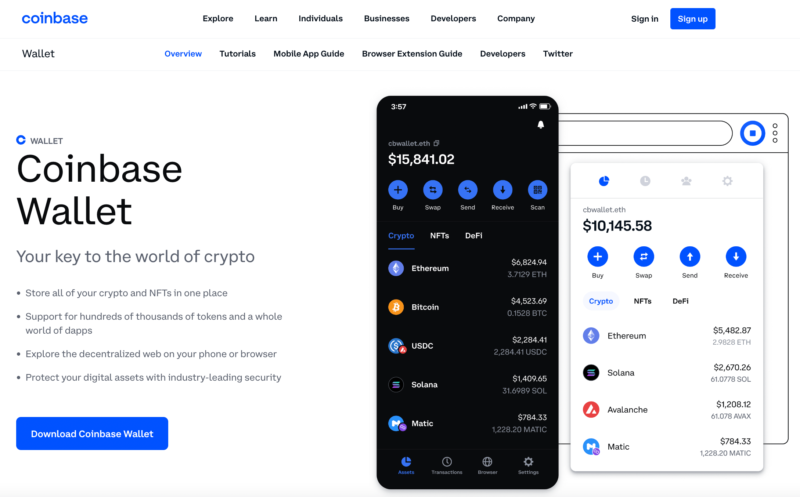
Source: Coinbase
Coinbase Wallet is the strongest starting point for anyone new to self-custody, particularly through its Smart Wallet option, which reached 1 million users by August 2025 by removing the seed phrase entirely in favor of a device passkey, the same technology behind Face ID or fingerprint unlock on modern phones and laptops. That single design choice matters more than it might sound: people lose folded paper seed phrases constantly, but they very rarely lose the biometric authentication already built into their own device.
Coinbase Wallet is a fully separate, self-custodial product from the Coinbase exchange itself, supporting Ethereum, Solana, and all major EVM-compatible networks through both a mobile app and browser extension, with the ability to add additional EVM networks manually beyond its default list. The honest tradeoff is a degree of philosophical tension for some users: it’s marketed as self-custody while remaining deeply integrated with a centralized exchange brand, occasional nudges toward Coinbase’s own buy and swap features, and routing that can favor Coinbase-listed tokens. For a true beginner who wants the gentlest possible on-ramp into self-custody, though, those tradeoffs are a reasonable price for a meaningfully lower chance of losing everything to a misplaced seed phrase. Read more: Is Coinbase Wallet Safe?
What Is the Best Wallet If You Need More Than Just EVM Chains?
Source: Trust Wallet
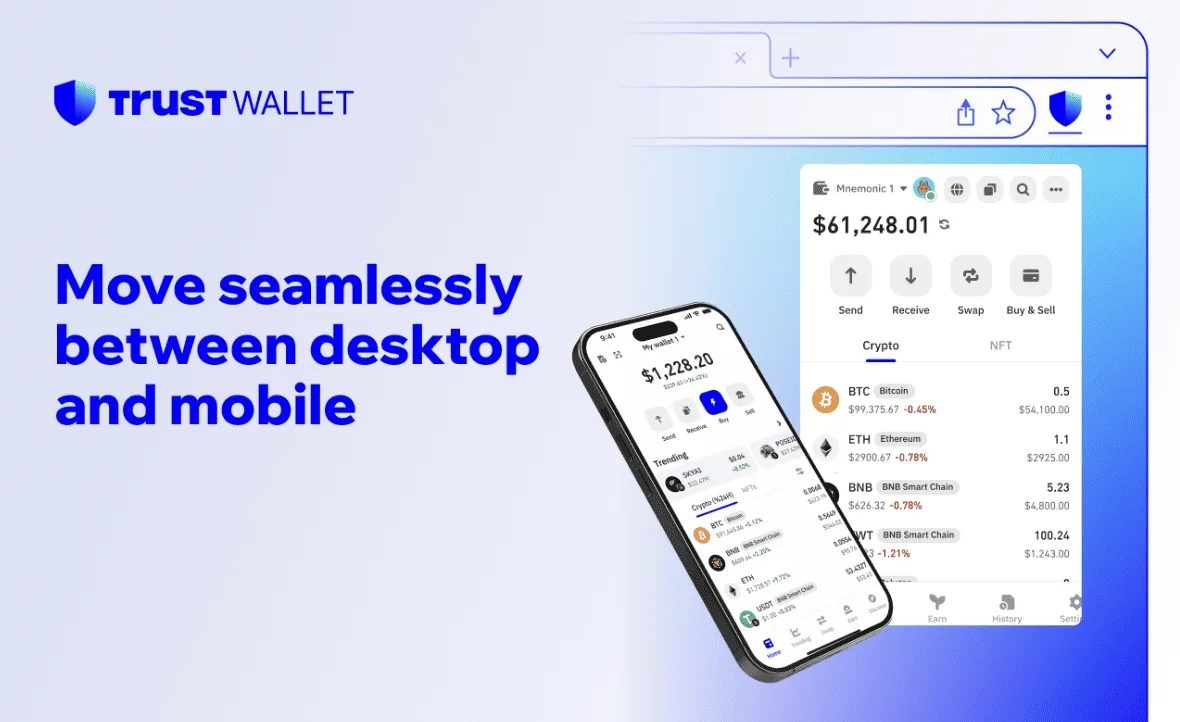
Trust Wallet and Backpack are the strongest picks if your portfolio spans beyond EVM chains entirely, into ecosystems like Solana, Bitcoin, or Sui that don’t share the EVM’s execution model at all. Trust Wallet, backed by Binance, supports over 100 blockchains natively, including every major EVM network plus non-EVM chains, through a single mobile app, browser extension, or desktop client, with built-in token swaps and a dApp browser for direct Web3 access.
Backpack takes a similar multi-ecosystem approach but was originally built Solana-first before expanding to cover Ethereum and all major EVM networks alongside Sui, Aptos, and Sei from one interface. The practical advantage for EVM users specifically who also hold non-EVM assets is scope: most EVM-focused wallets simply stop at the EVM boundary, forcing a second, separate wallet and a second recovery phrase for anything outside it. Backpack and Trust Wallet both remove that requirement, at some cost in how deep their EVM-specific tooling goes compared to an EVM-only specialist like Rabby.
What Is the Best Hardware Wallet for EVM Chains?
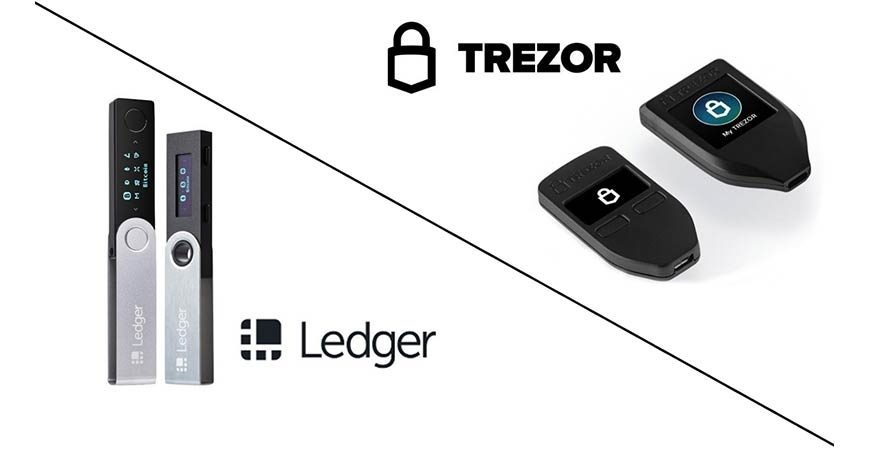
Ledger and Trezor are the two established choices for EVM cold storage, and both integrate directly with MetaMask, Rabby, and most other major software wallets, so the hardware device handles offline key storage and signing while the software wallet provides the actual interface, network switching, and dApp connections. Neither functions as a standalone EVM wallet on its own, they’re paired with a software wallet as an interface layer.
Ledger uses a certified secure element chip and its Ledger Live companion app for firmware updates and account management, with broad EVM chain support across its device lineup. Trezor takes a fully open-source approach to both firmware and hardware, which appeals specifically to users who want every component of their device to be independently auditable rather than relying on a closed, certified chip. For anyone holding meaningful value across EVM chains rather than actively trading it, pairing a software wallet with one of these two remains the standard security baseline, since it keeps daily usability in the software layer while the actual signing keys never touch an internet-connected device.
What Is Account Abstraction, and Why Does It Matter for EVM Wallets?
Source: Simpleswap
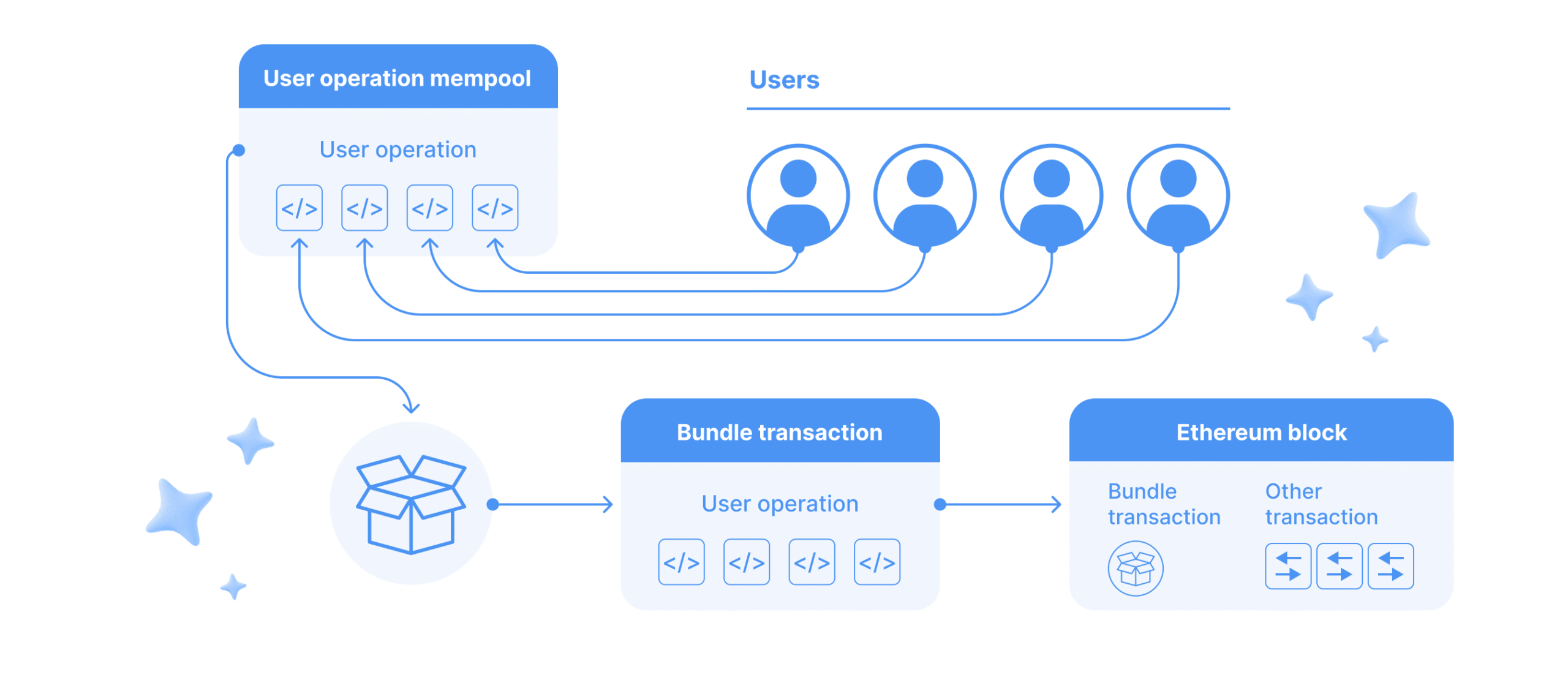
Account abstraction, formalized through a standard called ERC-4337, lets an EVM wallet behave like a programmable smart contract rather than a simple key pair, enabling features that traditional wallets structurally can’t offer: gas fees paid in tokens other than ETH, transaction batching (approving and executing multiple actions in one signature instead of several), social recovery instead of a single seed phrase being the only way back in, and passkey-based authentication like Coinbase Smart Wallet’s approach.
The adoption numbers by early 2026 are genuinely substantial: cumulative ERC-4337 smart accounts crossed 40 million, and Safe, the leading smart account and multisig platform, alone secured $35.25 billion in value across 61.11 million accounts in Q1 2026, roughly a third of all EVM DeFi total value locked. Safe in particular has become the standard choice for teams and treasuries specifically because it supports multisig configurations, requiring multiple approvals before a transaction executes, which single-key wallets can’t natively offer.
For an individual user picking a wallet today, account abstraction is less about choosing a specific product and more a trend worth watching: MetaMask’s Smart Account rollout and Coinbase’s passkey-based Smart Wallet are both already consumer-facing implementations of these same underlying ideas, and the seed-phrase-as-only-recovery-option model that’s defined crypto wallets since the beginning is gradually becoming one option among several rather than the sole standard.
Should You Use a Mobile App or a Browser Extension EVM Wallet?
This is a genuinely practical decision that gets less attention than it deserves, since the two formats suit different habits rather than one being strictly better. Browser extension wallets, MetaMask, Rabby, and most others in extension form, sit directly in your browser toolbar and connect to dApps with a single click, which makes them the natural choice for desktop-based DeFi activity, NFT trading, or anything involving frequent contract interactions where you want to see full transaction details on a larger screen.
Mobile wallets trade some of that desktop convenience for portability and, in many cases, a built-in dApp browser that lets you access Web3 applications directly from your phone without needing a companion browser extension at all. They’re the more natural fit for checking balances on the go, making occasional transfers, or using a wallet as your primary crypto tool if you don’t regularly sit at a desktop computer. Several wallets, MetaMask, Trust Wallet, Coinbase Wallet, and Backpack among them, offer both formats using the same seed phrase, so switching between a desktop session and a phone isn’t an either-or choice.
The wallets that only offer one format are worth noting specifically. Rabby remains browser-extension-only as of this writing, which rules it out as a standalone mobile option even though its transaction simulation is arguably the strongest security feature covered in this guide. If mobile access matters to you and Rabby’s simulation features are the main draw, a reasonable middle ground is running Rabby for desktop DeFi work and a separate mobile-capable wallet like MetaMask or Trust Wallet for on-the-go use, both pointed at the same underlying accounts where the seed phrase allows it.
EVM Wallet Comparison at a Glance
The table below lines up the main options covered in this guide by what each is actually best suited for, rather than trying to force a single universal ranking onto tools built for genuinely different priorities.
| Wallet | Best For | Platform | Standout Feature |
|---|---|---|---|
| MetaMask | Broadest dApp and NFT compatibility | Browser, mobile | Widest ecosystem support; Snaps extensibility |
| Rabby | Active DeFi users and frequent transactions | Browser only | Built-in transaction simulation before signing |
| Coinbase Wallet | Beginners and self-custody newcomers | Browser, mobile | Passkey-based Smart Wallet, no seed phrase required |
| Trust Wallet | Multi-chain holders beyond just EVM | Browser, mobile, desktop | 100+ blockchains natively in one app |
| Backpack | EVM plus Solana, Sui, and other non-EVM chains | Browser, mobile | Single interface across EVM and non-EVM ecosystems |
| Safe | Teams, treasuries, and shared custody | Browser (web app) | Multisig approvals; $35.25B+ secured in Q1 2026 |
| Ledger / Trezor | Long-term storage of larger balances | Hardware device | Private keys never touch an internet-connected device |
What Security Risks Are Specific to EVM Wallets?
Beyond the general seed-phrase and phishing risks that apply to any crypto wallet, EVM wallets face a couple of attack patterns worth knowing specifically, since the same reused address across dozens of chains creates a wider attack surface than a single-chain wallet has. Roughly $83 million was drained from EVM wallet users across documented 2025 incidents, much of it through patterns that a few specific habits meaningfully reduce.
Address poisoning is the one that catches out even experienced users. An attacker sends a zero-value transaction from a lookalike address sharing the first and last four characters of an address you’ve recently used, hoping you’ll copy the wrong one from your transaction history or a block-explorer screen rather than checking the full string. Coinbase and MetaMask both added in-wallet warnings for this pattern in late 2024, but the attack still works reliably against users who copy addresses from screenshots or explorer pages rather than verified, saved contacts.
Stale token approvals are the other big one. Every time you interact with a DeFi protocol, you typically grant it permission to move a specific token on your behalf, and that permission usually doesn’t expire on its own once you’re done using the protocol. Periodically reviewing and revoking old approvals through a tool like Revoke.cash or Etherscan’s token approval checker closes off an entire category of dormant risk, since a compromised or malicious protocol you approved months ago can still move funds if that approval was never revoked.
Three habits cover most of the practical risk. Always verify a contract address independently before approving anything, rather than trusting a link from a message or search ad. Use a wallet that simulates transactions before you sign, Rabby, MetaMask’s more recent updates, and most hardware wallet interfaces now do this. And keep any balance you’d be genuinely upset to lose on a hardware device that requires physical confirmation, treating software wallets as the spending layer rather than the vault.
Where Can You Buy or Exchange Crypto for Your EVM Wallet?
Once you’ve picked an EVM wallet, you’ll need a way to actually fund it. Broadly, there are two paths: centralized exchanges that require identity verification, and no-KYC swap services that convert one crypto directly into another without an account. Which one fits depends mostly on whether you’re buying with fiat for the first time or already hold crypto you want to move into your new wallet.
Quickex is a solid example of that second category. It supports swaps across more than 100 cryptocurrencies, including converting BTC to USDT, SOL, or other assets or other EVM-chain tokens, without creating an account, unless a transaction gets flagged by the risk-review process. You can choose a fixed rate, which locks in your exact amount before you send funds, or a floating rate that tracks the live market and carries a lower fee. Quickex charges 1% on fixed-rate swaps and 0.5% on floating-rate swaps, on top of the standard network fee, and most conversions complete within roughly 5 to 10 minutes once the incoming payment clears.
For a first-time fiat purchase, a fully KYC-verified exchange is still the more dependable starting point, since it directly handles the card or bank transfer conversion that swap services generally don’t. Once you’re holding crypto already, a no-KYC swap service becomes a genuinely fast way to move between assets and get exactly what you need into your EVM wallet without repeating identity verification on every trade.
Frequently Asked Questions
What does EVM wallet mean?
An EVM wallet is a crypto wallet compatible with any blockchain that runs the Ethereum Virtual Machine, using one address across all of them.
That includes Ethereum itself plus dozens of other chains that replicate its execution environment, such as Polygon, Arbitrum, Optimism, Base, and BNB Chain. A single seed phrase and wallet address work identically across every EVM-compatible chain, unlike non-EVM ecosystems like Solana or Bitcoin, which require entirely separate wallet infrastructure.
Is MetaMask an EVM wallet?
Yes, MetaMask is one of the most widely used EVM wallets, supporting Ethereum and virtually every EVM-compatible chain.
It’s available as a browser extension and mobile app, and remains the default wallet most dApps, NFT marketplaces, and DeFi protocols expect users to connect with. Its main limitations are being a frequent phishing target due to its popularity and swap fees running higher than dedicated aggregators charge directly.
Can I use the same wallet address on Ethereum and Polygon?
Yes, EVM-compatible chains share the same address format, so the exact same wallet address works on Ethereum, Polygon, Arbitrum, Base, and any other EVM chain.
You do need to make sure your wallet is switched to the correct network before sending or receiving on that specific chain, and that you’re sending the right asset to the right network, since a token sent to the correct address but the wrong network can be difficult to recover. The address itself, though, never changes across EVM chains.
What is the safest EVM wallet?
For software wallets, Rabby is widely considered the safest due to built-in transaction simulation, but pairing any software wallet with a Ledger or Trezor hardware device provides the strongest overall security for meaningful balances.
Hardware wallets keep private keys fully offline, removing remote hacking as a realistic attack vector, while a wallet like Rabby that simulates transactions before signing catches malicious contract interactions that a standard approval screen might not make obvious. Combining both, hardware for storage, a simulation-capable software wallet for the interface, covers the most risk.
Do I need a different wallet for every EVM chain?
No, a single EVM wallet works across every EVM-compatible chain, you just need to add or switch networks within the same wallet rather than installing a separate one per chain.
Most EVM wallets, including MetaMask, Rabby, and Coinbase Wallet, let you add new EVM networks manually or automatically detect and prompt you to add a network when a dApp requests it. The only time a separate wallet is genuinely required is for non-EVM chains like Solana or Bitcoin, which use fundamentally different address formats and signing methods.
What is account abstraction and do I need to worry about it?
Account abstraction, standardized as ERC-4337, lets wallets offer features like gas payment in non-ETH tokens, transaction batching, and social or passkey-based recovery, but most users don’t need to actively manage it.
It’s increasingly built into wallets you might already use, MetaMask’s Smart Account and Coinbase’s Smart Wallet are both consumer-facing implementations, rather than something requiring a separate technical setup. Over 40 million ERC-4337 accounts existed by early 2026, and the trend is toward these features becoming standard rather than optional add-ons.
Disclaimer: The material in this article is not financial or investment advice. Everything stated here reflects the author's personal view and should not be treated as a recommendation to trade or invest. We make no warranties regarding the accuracy, reliability or completeness of the information presented. Cryptocurrency markets are highly volatile and can move unpredictably. Before committing any funds, every investor, trader or crypto user should study several independent sources and check the regulations that apply in their own jurisdiction.