
The internet loves turning this into a tribal fight: “prediction markets are the future” versus “options are the grown-ups’ game.” In reality, Options vs Polymarket is less about which is “better” and more about what you’re trying to express—a view on an event or a view on a price path—and how much complexity you’re willing to manage.
The core contrasts binary outcomes (Polymarket) versus strategic flexibility (options), then positions its product as a bridge for traders who want more structure than a yes/no market. That framing is directionally right, but it skips a few practical questions people actually wrestle with in 2026: How do prices form on Polymarket? What’s the real risk profile of each? Where does regulation matter? And what does “safety” mean when one venue is broker-cleared and the other is crypto-collateralized?
The foundation: what are derivatives

Source: Investopedia
If you’re asking what are derivatives, here’s the plain answer: derivatives are financial contracts whose value depends on (“derives from”) an underlying asset, index, rate—or even another derivative. The CFTC’s glossary explicitly lists futures, options, and swaps as derivatives.
Event-based contracts fall under this umbrella too. The CFTC describes an event contract (also called a prediction/information contract) as a derivative whose payoff is based on a specified event—like macro indicators, corporate earnings, or weather outcomes.
That’s why comparing options and Polymarket is meaningful: both are ways of trading contingent outcomes, just with very different “shapes” of payoff and market structure.
Polymarket basics: what is Polymarket?
Source: Gate
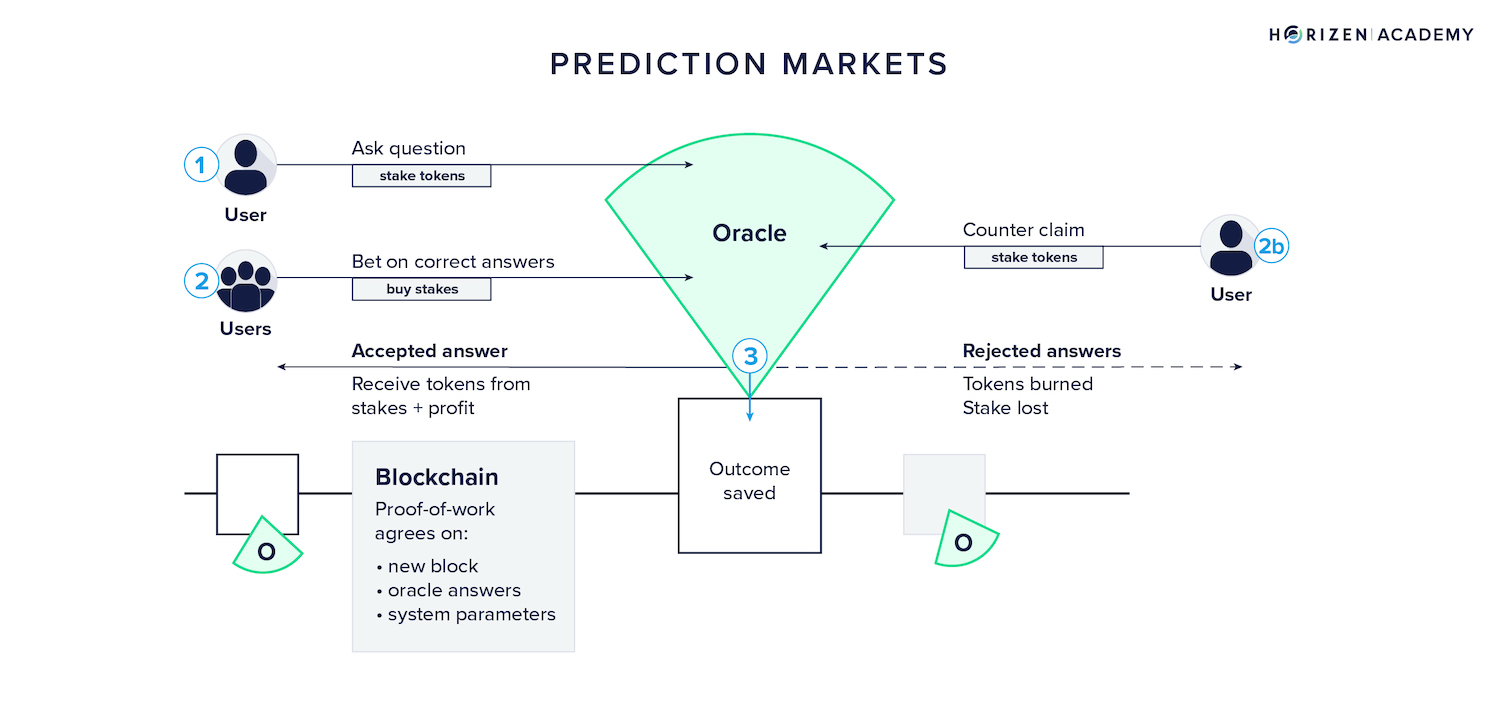
If you’re new and wondering what is polymarket, the simplest description is: it’s a crypto-based prediction market where you trade “shares” of outcomes. In Polymarket’s own documentation, winning shares pay $1.00 in USDC at resolution, and you can sell shares before the outcome is known.
Two practical details matter immediately:
- Collateral and deposits: Polymarket uses USDC.e on Polygon as collateral; deposits can be bridged from multiple chains (including Ethereum, Solana, Arbitrum, and others) and automatically converted into USDC.e on Polygon.
- Resolution mechanics: markets resolve through the UMA Optimistic Oracle, with a proposal/dispute process and a bond (Polymarket warns you can lose the bond if you propose incorrectly or too early).
Options basics: options trading explained
Here’s options trading explained without the textbook fog: an option is a contract tied to an underlying (often a stock or ETF, sometimes a futures contract) that gives the buyer a right (not an obligation) to buy or sell at a strike price before expiration.
Options bulletin lays out the core vocabulary—strike price, premium, and the idea of in-the-money/out-of-the-money—plus how option contracts are commonly quoted and priced. And FINRA emphasizes two realities that separate options from casual trading products: options involve leverage, can create significant losses, and often require brokerage approval to trade.
If you expand beyond equities, “future options trading” (options on futures) is also a major category. CME explains that options on futures provide the right, not the obligation, to buy or sell a futures contract at a set price before expiration.
Polymarket’s own docs spell out the $1 payout and the fact that you trade peer-to-peer (not “against the house”).
How does Polymarket work?
Here’s how does polymarket work at the level that affects your P&L:
Prices are probabilities (with a spread)
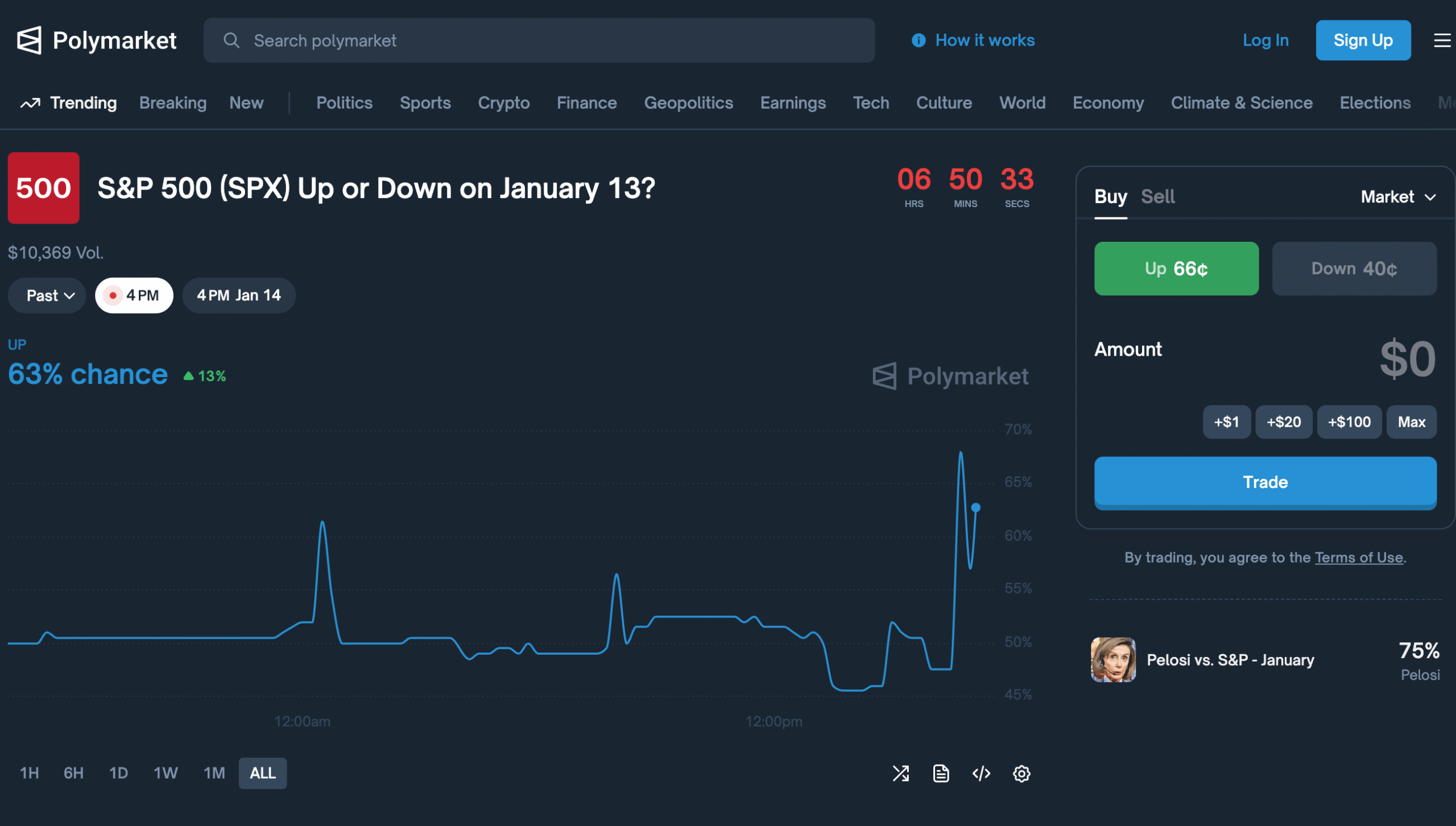
Polymarket says the displayed probability/price is typically the midpoint of the bid-ask spread in the order book (and switches to last traded price if the spread is wide). It also explicitly frames prices = probabilities in how the UI represents odds.
This is the first big difference from options: the “price” you see on Polymarket is trying to behave like a probability, while options prices are a messy bundle of time + volatility + underlying price dynamics.
Settlement and disputes are part of the product
Polymarket resolution uses UMA’s optimistic oracle, with a proposal process and a dispute window; markets settle to $1 for winners and $0 for losers.
This means your edge isn’t only “calling the outcome.” It’s also understanding the market’s resolution rules and how disputes can affect timing.
Fees can vary by market type
Polymarket notes that most markets have no trading fees, but some (like 15-minute crypto markets) can have taker fees to fund liquidity rebates.
A quick comparison table
| Dimension | Options (listed) | Polymarket (event shares) |
| What you’re trading | Exposure to price movement/volatility | Exposure to an outcome resolving YES/NO (or multi-outcome markets) |
| Payoff shape | Flexible (linear + convex, spreads, hedges, complex structures) | Capped: winning shares pay $1, losers go to $0 |
| Key driver of pricing | Volatility, time, underlying price, rates, dividends (varies by product) | Market supply/demand; displayed price is tied to the order book midpoint |
| Risk mechanics | Can be defined-risk or undefined-risk depending on strategy; may involve margin | Usually limited to stake per share, plus platform/oracle/bridge risks |
| Execution | Broker + exchange + clearing; standardized contracts | On-platform order book trading with crypto collateral |
| Best for | Hedging portfolios, structured views, volatility trading | Direct probability bets on events and narratives |
| Main “gotchas” | Complexity, Greeks, assignment, margin | Resolution disputes, smart contract/oracle risk, regulatory/geofence risk |
Payoffs: binary simplicity vs options flexibility
If you buy a Polymarket YES share at $0.62, your max loss is $0.62 and max payoff is $1.00, so the max profit is $0.38 per share (before any fees/spreads). That capped payoff is clean—and psychologically addictive.
Options are the opposite: they’re a payoff toolkit.
- A long call can behave like “leveraged upside with limited premium risk.”
- A spread can define risk tightly.
- A short option can introduce potentially large losses if unmanaged.
That flexibility is powerful, but it also explains why regulators and brokerages treat options as advanced products requiring approvals and suitability checks.
Regulation and access
Polymarket has already been in the crosshairs. In 2022, the CFTC ordered Polymarket to pay a $1.4 million civil monetary penalty, wind down non-compliant markets, and cease and desist from violating CFTC regulations.
More recently, reporting has described ongoing scrutiny and enforcement attention around who can access election-related markets, with U.S. restrictions and investigations discussed publicly. And Axios reported Polymarket’s move toward a legal U.S. return through acquiring a CFTC-licensed derivatives exchange (QCX), aimed at enabling regulated access.
Separately, the CFTC also highlights that certain event contracts can be prohibited under its rules (e.g., involving unlawful activity, gaming, or other restricted categories).
Options, by contrast, generally trade on regulated exchanges through brokerages, with standardized contracts and clearing infrastructure—still risky, but in a mature market structure.
Safety check: is Polymarket safe?
Source: The Block
People ask is polymarket safe like it’s a yes/no question. It isn’t. It’s a stack of risks:
1) Market risk (shared with options)
You can be wrong. Fast. And in thin markets, you may not exit at the displayed “probability” because spreads matter.
2) Platform + crypto plumbing risk (more specific to Polymarket)
Polymarket relies on crypto collateral (USDC.e on Polygon) and bridging from other chains. Bridging and smart contracts add an extra layer where operational failures or user mistakes can be costly.
3) Resolution/oracle risk (unique flavor)
Markets resolve through UMA’s optimistic oracle with a dispute process; resolution timing and disputes can impact when capital unlocks.
4) Regulatory/geofence risk
History matters: the CFTC penalty and compliance requirements are a reminder that access can change depending on jurisdiction and enforcement.
Polymarket also emphasizes it’s not “the house” and that trades are peer-to-peer, which reduces a sportsbook-style conflict of interest—but it doesn’t eliminate the risks above.
How to trade on Polymarket
If you’re looking for how to trade on polymarket, a sensible, non-degen flow looks like this:
- Fund your account: Use the official deposit flow or Quickex to exchange BTC to USDC first; Polymarket’s docs outline depositing USDC and funding methods.
- Understand the market rules first: Resolution depends on pre-defined rules and UMA oracle processes.
- Place orders like a trader, not a gambler: Prices come from the order book; consider using limit orders and respecting the bid-ask spread.
- Manage exits: Polymarket allows selling positions before resolution if there’s a willing buyer, so you’re not forced to hold to the end.
- Know your fee context: Most markets are fee-free, but certain fast crypto markets may charge fees.
When options beat Polymarket
Options usually win when you need…
- Hedging: protecting a portfolio from downside without selling the underlying.
- A view on volatility, not just direction.
- Structured payoffs: spreads, collars, butterflies—ways to define risk precisely.
Polymarket usually wins when you want…
- A clean probability trade on a discrete event (earnings beat/miss, election outcome, a policy decision).
- A market-implied forecast you can trade directly, where “62¢” can be interpreted as roughly “62%” (spread caveats apply).
Final words
- If your thesis sounds like “Will X happen?” Polymarket is often the most direct expression—simple payoff, probability-shaped pricing, and a clear resolution at $1 or $0.
- If your thesis sounds like “How will price and volatility behave over time—and how can I shape my risk?” options are the deeper toolkit, but they demand more education, discipline, and sometimes brokerage approvals.
FAQ
Can you sell a Polymarket position before the event resolves?
Yes. Polymarket positions are shares you can buy and sell, so you can exit early to lock gains or cut losses if there’s liquidity on the other side. (Winners still settle at $1.00 USDC per share at resolution.)
How are Polymarket prices set—are they really “probabilities”?
Polymarket displays prices as probabilities, and (most of the time) it shows the midpoint of the bid–ask spread in the order book. If the spread gets wider than $0.10, it switches to the last traded price instead.
What fees does Polymarket charge?
Polymarket says most markets have no trading fees, and there are no platform fees to deposit or withdraw USDC (though third parties like on-ramps may charge their own fees). It also says 15-minute crypto markets can have taker fees, which are redistributed to market makers via rebates to encourage liquidity.
How are Polymarket markets resolved, and what happens if there’s a dispute?
Polymarket resolutions go through a process that involves UMA: a resolution can be proposed, reviewed, and—if something looks wrong—pushed into a dispute process. If a proposal is accepted, the proposer gets their bond back plus a reward; if not, it can move into UMA’s dispute resolution flow.
Is Polymarket safe?
“Safe” depends on what you mean. You still face normal market risk (being wrong, spreads, liquidity), plus platform-specific risks like smart contract/oracle mechanics and regulatory changes. Importantly, Polymarket has previously been the subject of a U.S. CFTC enforcement order requiring a $1.4M civil penalty and wind-down/cease-and-desist commitments for non-compliant markets—so jurisdiction and compliance history are part of any safety assessment.
Are listed options safer than Polymarket?
They’re safer in some ways and riskier in others. Listed options typically trade through regulated broker/exchange infrastructure, but the product itself can be high-risk: FINRA notes options offer leverage (which can mean significant losses) and that options trading generally requires specific brokerage approval.
What’s the simplest way to explain the difference between event contracts and options?
The CFTC describes event contracts (prediction/information contracts) as derivatives whose payoff is based on a specified event (like an economic release or an outcome). Options, on the other hand, are derivatives whose value is tied to an underlying asset’s price behavior and time/volatility dynamics—letting you structure many payoff shapes beyond “yes/no.”
What do I actually need to start trading on Polymarket?
At a practical level, you need funds deposited to trade; Polymarket’s own getting-started guide walks through depositing (typically using USDC and supported methods). Treat deposits and withdrawals like you would any crypto transaction: double-check addresses, networks, and confirmations.