

If you are looking to buy Litecoin no KYC, you’ve likely had enough of this massive overreach. You realize that surrendering your most sensitive personal data to an offshore corporate database isn’t just annoying, it’s a massive security hazard waiting to happen.
The days of casually buying cryptocurrency with just an email address and a password feel like a distant memory. By 2026, the regulatory landscape has tightened its grip so fiercely that signing up for a standard centralized exchange feels more like applying for a high-security government clearance. You’re asked for your passport, a 3D facial scan, and sometimes even a bank statement just to buy a hundred bucks worth of digital coins.
Whether you want to protect your financial history from data brokers or you simply value your digital sovereignty, acquiring crypto off the radar is entirely possible. In this guide, we are going to break down the smartest, safest, and most efficient ways to acquire Litecoin without giving up your identity.
The State of Crypto Privacy
Before we look at the exact platforms, let’s look at why investors are flocking to non-KYC alternatives in record numbers.
The “Data Honeypot” Risk
When an exchange forces you to upload your government ID, they store that data on central servers. Hackers don’t even need to steal the crypto to make millions; they just steal the user database. Over the past few years, we’ve seen catastrophic data breaches where millions of crypto users had their home addresses, phone numbers, and net worth leaked onto the dark web. By choosing to buy LTC no KYC, you aren’t just hiding; you are actively defending yourself from identity theft, SIM-swap attacks, and real-world physical targeting.
Regulatory Evolution
The European Union’s Markets in Crypto-Assets (MiCA) regulation and the global FATF Travel Rule are now fully enforced in 2026. This means regulated platforms automatically report your transaction data to local authorities and share your name with the receiving exchange anytime you make a withdrawal. These invasive data-sharing agreements have essentially turned traditional exchanges into financial surveillance nodes. Utilizing alternative onboarding ramps allows you to sidestep this friction completely.
Litecoin (LTC) vs. Bitcoin
Source: WallStreetMojo
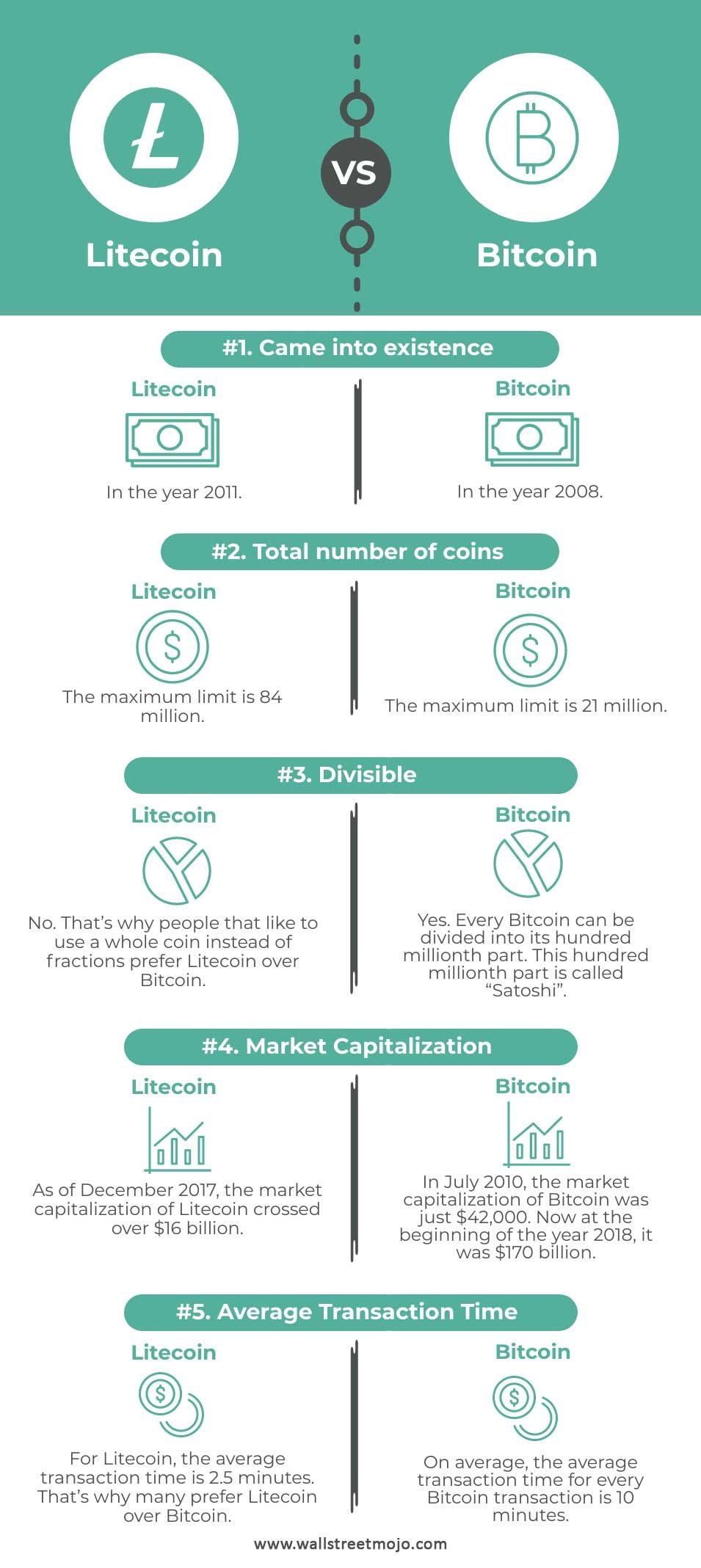
Why are privacy advocates specifically targeting Litecoin? Simple: speed, cost, and the MWEB upgrade. If you try to bounce Bitcoin between wallets to obfuscate its origin, you will pay hefty network fees and wait anywhere from 10 minutes to an hour for confirmations. Litecoin blocks are generated four times faster (every 2.5 minutes), and transactions cost fractions of a cent. Furthermore, Litecoin’s MimbleWimble Extension Block (MWEB) upgrade allows users to opt into confidential transactions, hiding the amount of LTC being sent. It’s the perfect fast, cheap vehicle for navigating the gray market.
Top Methods to Buy Litecoin Anonymously in 2026
So, where do you actually go when you want to avoid the compliance dragnet? Here are the three most reliable avenues.
Instant Non-Custodial Swaps
If you already hold another cryptocurrency or have access to prepaid virtual fiat cards, instant exchanges are the ultimate tool. These platforms act as a routing bridge rather than a bank. You don’t create an account, and you don’t undergo verification. You simply send an asset to a provided address, and the protocol automatically bounces Litecoin back to your private wallet.
Usually, trying to buy crypto directly with plastic triggers an immediate identity check from the banking provider. However, the ecosystem has adapted. By utilizing Quickex in combination with generalized, third-party prepaid virtual cards or unverified digital gateways, you can successfully buy Litecoin with debit card no verification. You effectively use the prepaid card as a buffer, allowing Quickex’s routing algorithm to execute the swap seamlessly.
The biggest selling point here is the architecture. Quickex.io is strictly non-custodial. You never lose custody of your funds during the swap. Unlike centralized exchanges that can suddenly lock your account and demand a passport to release your money, Quickex just executes the trade mathematically. If the trade fails, it bounces back to your original wallet. This trustless environment is exactly what privacy seekers need.
Step-by-Step Guide: Buying LTC Instantly
If you want to use Quickex to buy Litecoin with credit card no verification (via a virtual card workaround) or by swapping an existing coin, like BTC to USDT, follow these exact steps:
- Launch a Secure Browser: Open a privacy-focused browser, and ensure your VPN is active to mask your IP address.
- Access Quickex: Navigate to the official Quickex buy page. No account creation is necessary.
- Select Your Trading Pair: In the “You Send” box, select your starting asset (e.g., your prepaid fiat gateway). In the “You Get” box, select Litecoin (LTC).
- Enter Your Litecoin Address: Paste the receiving address of your personal, non-custodial Litecoin wallet. Double-check the characters to ensure accuracy.
- Send the Payment: Quickex will generate a specific deposit address or payment link. Transfer the exact amount of your starting asset to this destination.
- Wait for Execution: Once the network confirms your deposit, Quickex will instantly process the purchase and route the LTC directly to your private wallet. The entire process typically concludes in under 10 minutes.
Peer-to-Peer (P2P) Platforms
Source: Techcrook
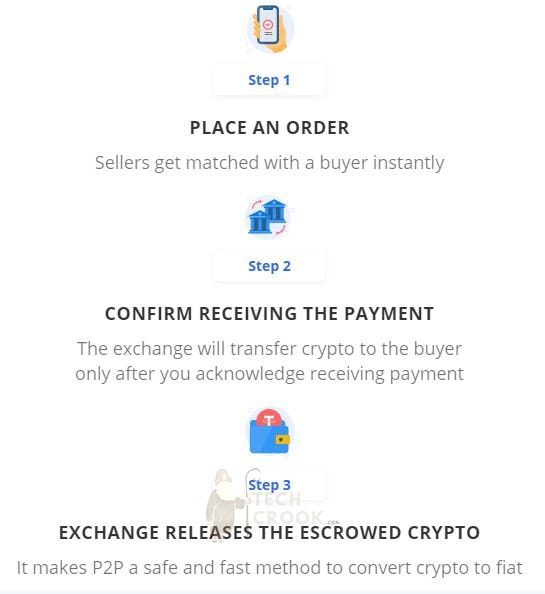
P2P marketplaces like Bisq or Hodl Hodl connect buyers directly with sellers. You negotiate a price with a real human, they lock their Litecoin into a smart contract escrow, and you send them fiat via a bank transfer, postal money order, or online payment app. Because the platform itself never touches the fiat money, they aren’t legally required to demand your ID.
Litecoin ATMs
Source: Cryptonews
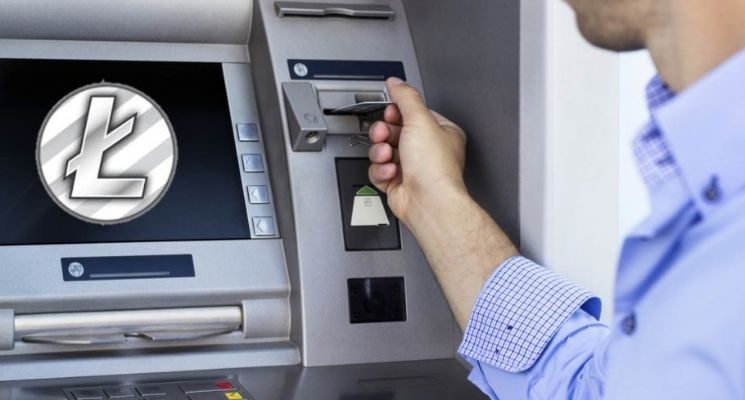
Crypto ATMs are still thriving in major metropolitan areas. While many large chains now require SMS verification or ID scans for large purchases, thousands of independent operators maintain a “grace tier.” This means you can typically walk up, insert a few hundred dollars in physical cash, scan your wallet’s QR code, and walk away with your privacy completely intact.
Protecting Your Identity Before the Purchase
A non-KYC purchase is useless if your digital setup leaks your identity before you even make the trade.
Choosing a Non-Custodial Wallet (Mobile vs. Hardware)
If you execute a no-KYC trade and have the Litecoin sent to your verified account, you have completely defeated the purpose of the exercise. You must take personal custody. For everyday spending, mobile wallets like Cake Wallet or Trust Wallet are fantastic, open-source options. If you are storing thousands of dollars, a hardware wallet like a Trezor Safe is absolutely mandatory.
Using VPNs and Tor to Mask Your Transaction IP
Your IP address is a digital fingerprint pointing straight to your living room. If you navigate to an instant exchange from your home Wi-Fi, your internet service provider (ISP) logs that connection. Before you even attempt to buy LTC without verification, you must fire up a strict, no-logs VPN like Mullvad, or route your traffic entirely through the Tor network.
Why You Should Never Reuse Litecoin Addresses
Unless you are actively using Litecoin’s MWEB features, standard LTC transactions are fully visible on the blockchain. If you buy Litecoin from an anonymous source today and send it to Wallet Address A, and then buy from a KYC exchange next week and send it to Wallet Address A, chain-analysis bots will instantly link both purchases to your real identity. Always generate a brand new receiving address for every single transaction.
Legal Landscape: Is No-KYC Trading Still Legal in 2026?
There is a massive amount of fear-mongering surrounding cryptocurrency regulations. Let’s separate the facts from the fiction.
Understanding “Low-KYC” Thresholds and Limits
In many jurisdictions, it is not illegal for platforms to operate without KYC, provided the transactions remain beneath a certain monetary threshold. This is why you can often buy smaller amounts (e.g., $300 to $500) via crypto ATMs or specific payment gateways without triggering mandatory ID checks.
Self-Custody Rights and Financial Sovereignty Laws
Buying, holding, and trading cryptocurrency privately is perfectly legal in almost every democratic nation on earth. The act of preserving your privacy is not a crime. However, it is crucial to note that while acquiring assets privately is legal, deliberately using these methods to hide capital gains and evade lawful taxation is highly illegal.
Global Perspectives: US, EU, and Asia Regulatory Gaps
The EU (via MiCA) and the US are actively trying to squeeze anonymous platforms out of existence by pressuring the banking layer. However, Asia and parts of Latin America remain incredibly robust environments for non-KYC innovation. Because decentralized P2P networks and aggregators operate globally without central headquarters, they successfully float in the gaps between these regional jurisdictions.
Common Pitfalls and How to Avoid Them
The unregulated gray market is a wild environment. If you don’t know what to look out for, you can easily get burned.
Spotting Scams and Phishing Sites
If you search for non-KYC exchanges on Google, the top sponsored results are often elaborate phishing sites. They mimic the look of popular platforms, take your deposit, and send nothing back. Never click sponsored search ads for crypto exchanges. Always bookmark official URLs and rely on established community aggregators to verify a platform’s legitimacy before sending funds.
The “Dusting Attack” Threat on the Litecoin Network
A “dusting attack” happens when a malicious firm or hacker sends a microscopic fraction of a Litecoin (dust) to thousands of private wallets. If you later consolidate that dust with your main funds and send it to a regulated exchange, the tracking firm can suddenly deanonymize your entire wallet network. If you notice a random, tiny deposit of LTC in your wallet, do not move it.
Managing Your Exit Strategy
Getting into crypto privately is only half the battle; getting out is the other half. If you need fiat, you can’t just send anonymous LTC to Coinbase and wire it to your bank. You will need to reverse the process: sell the LTC on a P2P board for a postal money order, sell it to a cash-in-person buyer, or use the Litecoin directly to buy gift cards on platforms like Bitrefill to fund your daily life.
Conclusion
In an era where every digital click, purchase, and transfer is analyzed, packaged, and sold, fighting for your financial privacy is one of the most important stands you can take. Taking the extra steps to acquire digital assets off the radar isn’t about hiding bad behavior; it is about preserving a basic human right.
By leveraging the speed of the Litecoin network, utilizing the professional non-custodial routing of platforms like Quickex.io, and keeping your operational security tight, you can successfully navigate the 2026 landscape. The tools to build a sovereign, private wealth stack are sitting right in front of you.
FAQ: How to Buy Litecoin (LTC)
What is the Litecoin price today?
The Litecoin price today sits in the $80–$95 USD range as of mid-2026. LTC is one of the oldest and most liquid cryptocurrencies, consistently ranked in the top 20 by market cap.
- Current LTC price: ~$80 – $95 USD
- Market cap: ~$6–$7 billion USD
- Circulating supply: ~75 million LTC out of a fixed cap of 84 million
- All-time high: $410.26 (May 2021)
- Block time: ~2.5 minutes — 4× faster than Bitcoin
- Average fee: ~$0.01–$0.03 per transaction
How can I buy Litecoin?
There are several ways to buy Litecoin in 2026, depending on whether you want to verify your identity or stay anonymous:
- No-KYC crypto swap (fastest): Use a non-custodial exchange like QuickEx — swap any crypto for LTC in minutes with no account or ID required.
- Centralised exchange (CEX): Platforms like Coinbase, Kraken, or Binance let you buy LTC with fiat, but require full KYC verification (passport, selfie, address proof).
- P2P marketplace: Paxful or LocalCoinSwap allow direct peer-to-peer trades with flexible payment methods; KYC requirements vary by counterparty.
- Crypto ATM: Available in 80+ countries; typically accepts cash with minimal or no ID for smaller amounts, but fees can reach 5–10%.
How to buy Litecoin in 2026: step-by-step
The easiest way to buy LTC in 2026 without KYC is via a non-custodial swap exchange. Here’s how it works on QuickEx:
- Go to QuickEx.io — no account or email needed.
- Select your exchange pair — e.g. BTC → LTC, ETH → LTC, or USDT → LTC.
- Enter the amount you want to send and review the live rate and estimated output.
- Enter your LTC wallet address — your personal non-custodial wallet (Ledger, Trust Wallet, Exodus, etc.).
- Send your crypto to the QuickEx deposit address shown on screen.
- Receive LTC directly in your wallet — typically within 5–30 minutes depending on network confirmation times.
Can I buy Litecoin with a credit card or debit card?
Yes — buying Litecoin with a credit card or debit card is one of the most popular methods in 2026. Here’s what to know:
Buy LTC with a credit card
- Available on CEXs like Coinbase, Kraken, and Crypto.com, or via fiat on-ramp widgets powered by MoonPay, Transak, or Simplex.
- Fees: Typically 2–5% for credit card transactions — higher than bank transfer or crypto-to-crypto swap.
- KYC required: Most card-based fiat on-ramps require identity verification before the first purchase.
- Instant delivery to exchange wallet; then withdraw LTC to your own wallet.
Buy LTC with a debit card
- Same platforms apply — Binance, Bybit, and KuCoin also accept Visa/Mastercard debit cards for LTC purchases.
- Lower fees than credit cards in most cases (typically 1.8–3.5%).
- No cash advance fee risk (unlike credit cards at some banks).
Alternative: use QuickEx (no card fees, no KYC)
If you already hold any crypto, swap it for LTC on QuickEx — zero card fees, no identity checks, faster than any CEX.
What are the best exchanges to buy Litecoin in 2026?
Here’s a quick comparison of the best ways to buy Litecoin in 2026, depending on your priorities:
| Platform | Type | KYC Required | Fees | Best For |
|---|---|---|---|---|
| QuickEx | Non-custodial swap | ❌ No | ~0.5–1% | Fast, private crypto-to-LTC swap |
| Coinbase | CEX | ✅ Yes | 1.5–3.99% | Beginners, fiat on-ramp |
| Kraken | CEX | ✅ Yes | 0.16–0.26% | Low-fee fiat trading |
| Binance | CEX | ✅ Yes | 0.1% | High-volume trading |
| Crypto ATM | Physical kiosk | ⚠️ Partial | 5–10% | Cash-to-LTC, small amounts |
- Best no-KYC option: QuickEx — swap 500+ coins for LTC instantly with no account, no ID, no limits on crypto-to-crypto.
- Best for fiat: Kraken or Coinbase if you need to on-ramp from a bank account or card.
- Lowest fees overall: QuickEx (crypto swap) or Binance (fiat, with KYC).
How can I purchase Litecoin without KYC?
Purchasing Litecoin without KYC is fully legal in most jurisdictions and straightforward if you already hold another cryptocurrency. The best options in 2026:
- Non-custodial swap (recommended): QuickEx lets you exchange BTC, ETH, USDT, SOL, or 500+ other coins for LTC with no registration, no email, and no ID — just your wallet address.
- Decentralised exchange (DEX): Platforms like Uniswap or THORChain support LTC swaps via cross-chain bridges; higher complexity and variable slippage.
- P2P trading: LocalCoinSwap and Bisq allow cash, bank transfer, or gift card trades for LTC with no central KYC — counterparty risk applies.
- Crypto ATM (cash): Many ATMs allow sub-$200 purchases with no ID; fees are high but it’s fully anonymous.
Disclaimer: The material in this article is not financial or investment advice. Everything stated here reflects the author's personal view and should not be treated as a recommendation to trade or invest. We make no warranties regarding the accuracy, reliability or completeness of the information presented. Cryptocurrency markets are highly volatile and can move unpredictably. Before committing any funds, every investor, trader or crypto user should study several independent sources and check the regulations that apply in their own jurisdiction.