
Most people step into crypto and assume price movement is pure chaos. The chart jumps, social media shouts, news breaks at the worst possible moment — and it feels like the only way to “predict” anything is to get lucky. But markets rarely move without hints. Momentum builds long before a breakout, sentiment cools before a drop and large holders often act in patterns that aren’t hard to spot if you know where to look. The best part is that you don’t need premium tools or advanced training to notice these things. Free resources already reveal more than enough for a beginner to understand what the market is leaning toward.
The point of this guide is simple: show the signals that matter, remove the noise that doesn’t and make the whole idea of “predicting crypto prices” far less intimidating.
Check out the best cryptocurrency prices on Quickex, the legendary crypto exchanger.
What Crypto Price Prediction Really Means
The forces that actually move price
Crypto doesn’t move because the universe rolls dice. Price usually reacts to the same handful of things: overall trend, liquidity, news, crowd psychology and on-chain activity. These aren’t secret tools — they’re just often overlooked. Once you start paying attention to them, the chart stops looking like random swings and starts looking like a story.
Why predictions are never perfect
No indicator can warn you before a flash crash on an exchange or a sudden regulatory headline. Markets shift when new information appears, and that’s normal. Predicting crypto isn’t about being right in advance — it’s about understanding the path the market is most likely to take based on the information available right now.
Free Tools That Help You Read the Market
Charting platforms
TradingView, CoinMarketCap, CoinGecko and even simple exchange charts give you more than enough to start. You can see where buyers keep stepping in, which levels sellers defend and where the market hesitates. Candlestick patterns and volume spikes often explain more than complicated analysis ever will.
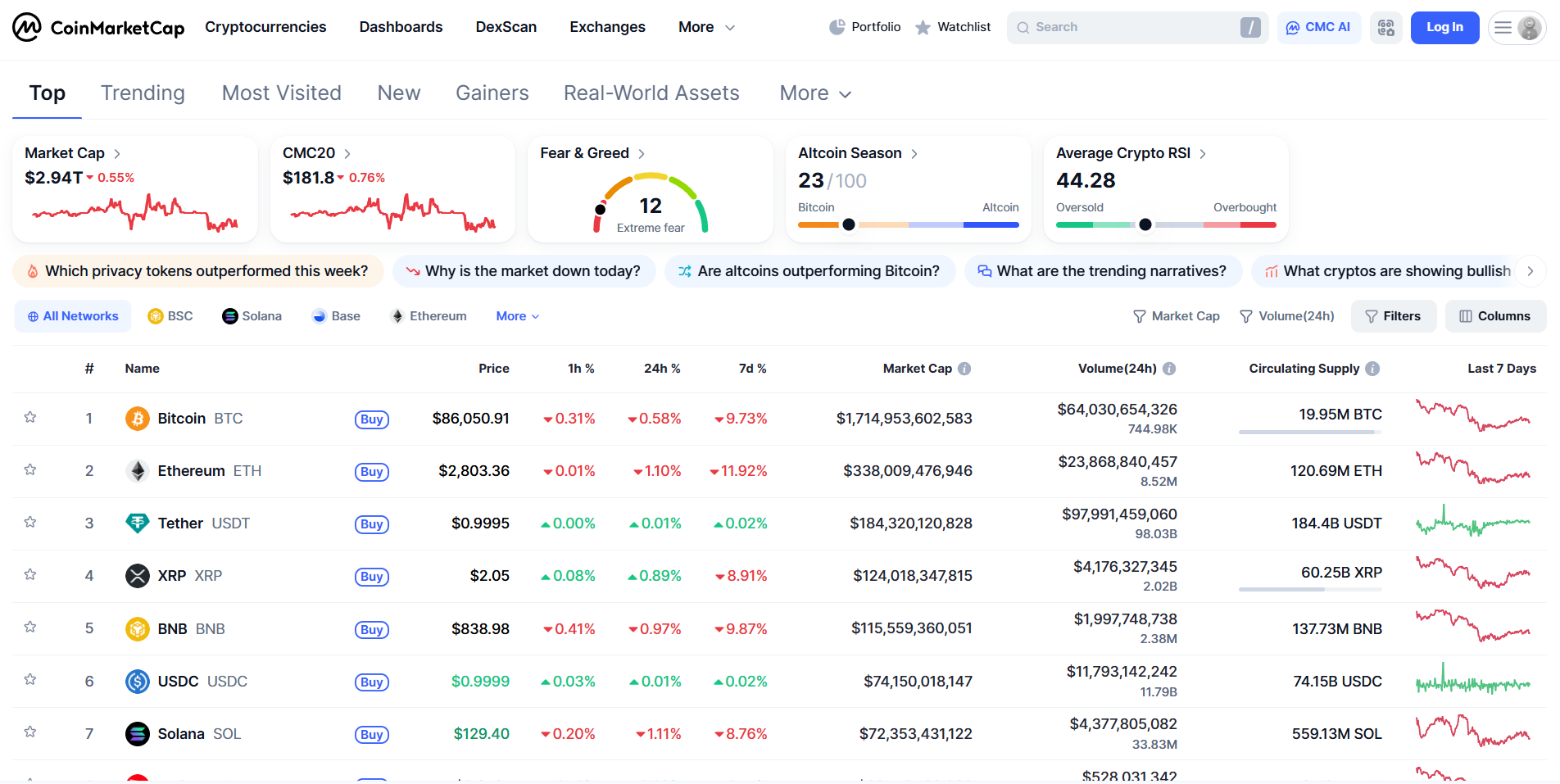
CoinMarketCap.
On-chain analytics
On-chain data shows the “behind-the-scenes” activity. Tools like IntoTheBlock Lite or public dashboards on Dune help you see whether big wallets are accumulating, whether coins are moving onto exchanges or whether network activity is quietly rising. These shifts often show up before strong price moves.
Sentiment tools
Sentiment plays a huge role in crypto — sometimes more than fundamentals. The Fear and Greed Index captures emotional extremes. Google Trends shows whether interest around an asset is growing or fading. Social sentiment dashboards highlight when the narrative around a project is turning. When sentiment becomes too one-sided, a reversal usually isn’t far behind.
Free AI helpers
AI tools are great for beginners because they reduce the overwhelm. They summarize market conditions, highlight unusual activity and help explain technical setups in simple terms. Just treat AI as a guide, not a crystal ball.
How Beginners Can Analyze the Market More Confidently
Start with the trend
Trends aren’t complicated. Higher highs and higher lows usually mean buyers are in control. Lower highs and lower lows point to a downtrend. Sideways markets require patience. Most beginner mistakes come from trading against the trend without noticing it.
Use just a few indicators
A clean chart is far easier to understand. RSI shows when the market is stretched. MACD helps spot momentum shifts. Moving averages give a sense of direction. Together they cover almost everything a beginner needs — without clutter.
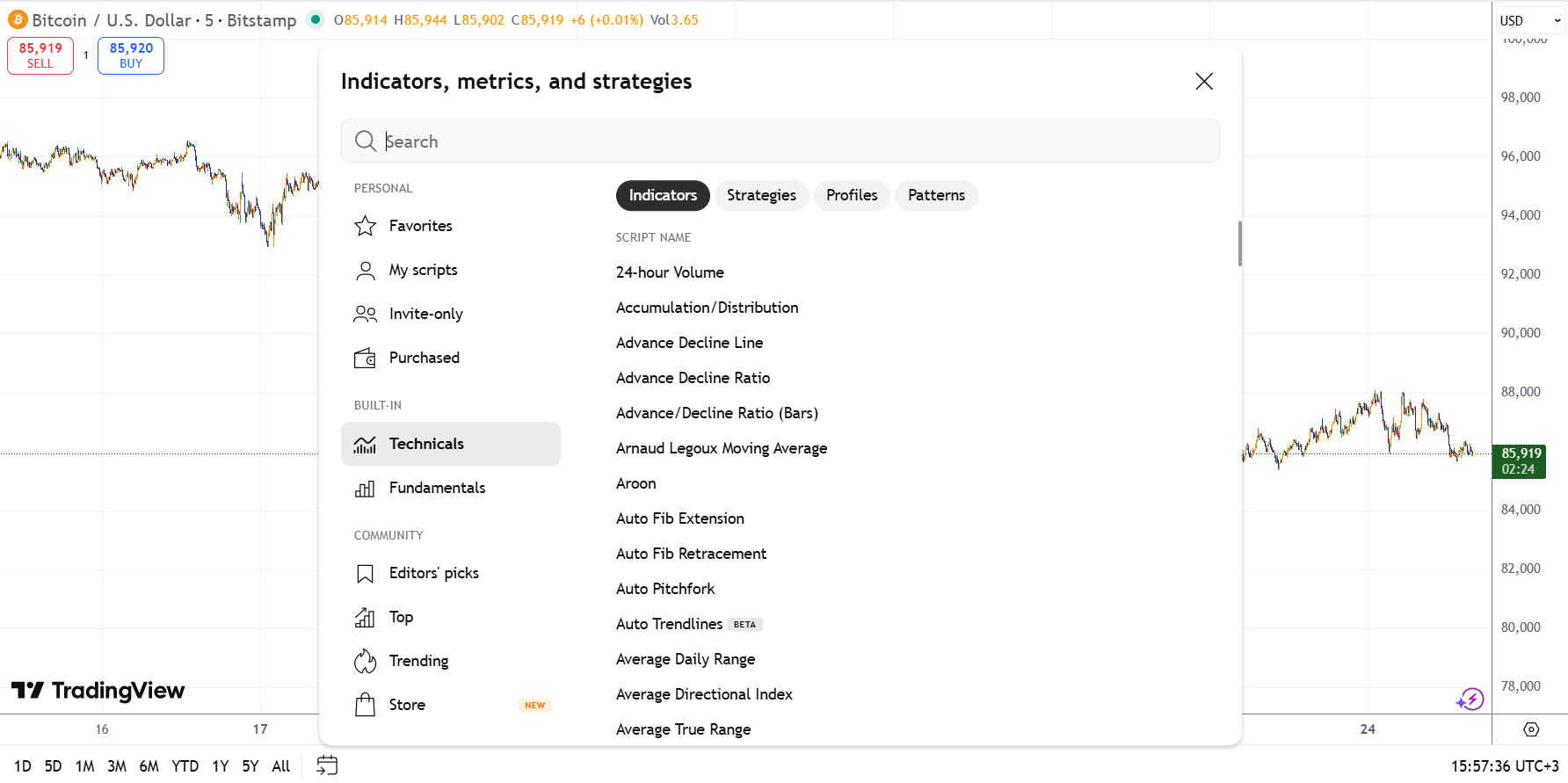
Indicators within TradingView.
Combine tools instead of stacking dozens of them
A simple combination works best: a moving average for the overall trend, RSI to judge whether price is overheated and MACD to confirm momentum. This setup filters out a lot of confusion and highlights moments when the market is lined up for a clearer move.
Stay aware of news
Crypto reacts quickly to headlines. Regulatory decisions, ETF approvals, exchange issues, protocol upgrades and big partnerships all influence price. Technical setups work far better when you know what the broader environment looks like.
Practical Tips Beginners Often Miss
Start small
Small positions keep emotions under control. Big ones lead to rushed decisions and unnecessary stress.
Track your trades
A simple log helps reveal your own patterns — both good and bad. Most traders underestimate how much this helps.
Avoid reacting emotionally
Crypto moves fast, but reacting fast doesn’t mean reacting well. Rules for entry and exit protect you from impulse trades.
Use risk management
Position sizing, stop-losses and a clear idea of how much you’re willing to lose on a trade make everything easier. Consistency comes from structure, not luck.
Common Mistakes When Trying to Predict Prices
Adding too many indicators
Cluttered charts don’t give better answers. They just make you doubt yourself.
Ignoring sentiment
Sentiment often turns before price does. Skipping it means missing half the picture.
Trusting predictions without checking
Always verify. A quick look at the chart or on-chain data saves a lot of trouble.
Trading without a plan
A plan keeps you grounded. Without one, emotions end up making the decisions.
Conclusion
Crypto will always have surprises, but it’s not the complete mystery it appears to be at first. Free tools already reveal trends, shifts in sentiment and early signs of movement on the blockchain. Predicting prices isn’t about being perfect — it’s about reading the signals that consistently matter and ignoring the noise that doesn’t. When you combine simple analysis with calm decision-making and solid risk management, the market becomes far more understandable and far less stressful.
Previously Quickex editorial team published Monero explainer.
Disclaimer: The material in this article is not financial or investment advice. Everything stated here reflects the author's personal view and should not be treated as a recommendation to trade or invest. We make no warranties regarding the accuracy, reliability or completeness of the information presented. Cryptocurrency markets are highly volatile and can move unpredictably. Before committing any funds, every investor, trader or crypto user should study several independent sources and check the regulations that apply in their own jurisdiction.