
If you are stepping into the world of Web3, decentralized finance (DeFi), or simply buying your first fraction of a digital asset, you are going to encounter a long, intimidating string of random letters and numbers.
Before you send a single penny across the blockchain, you need to understand the underlying mechanics of where that money is actually going. Let’s break down everything you need to know about navigating the public gateway to your digital assets.
The Digital “Bank Account Number” of the Future
If you want to receive money in the traditional banking system, you hand over an IBAN or an account number. In the world of blockchain, you hand over a crypto wallet address. It is the absolute foundation of peer-to-peer digital finance.
Defining the Wallet Address: Your Public Gateway to the Blockchain
Let’s clear up the core definition immediately. What is a wallet address? A crypto wallet address is a unique string of alphanumeric characters that serves as a virtual location for receiving digital assets. Similar to an IBAN or email address, it allows users to send and receive funds on a blockchain while maintaining security through public-key cryptography.
Crypto Address vs. Wallet: Clarifying a Common Misconception
When newcomers ask what is a wallet address in crypto, they often confuse the address with the wallet itself. Think of your crypto wallet (like MetaMask or Phantom) as the physical leather wallet in your pocket. It holds your debit cards and cash.
The wallet address, on the other hand, is the specific account number printed on one of those debit cards. Your wallet software manages your keys, but the cryptocurrency wallet address is the public-facing identifier you share with the world to get paid.
Unlike a traditional bank, where a teller can reverse a transaction if you type in the wrong account number, blockchains are immutable. If you send funds to the wrong crypto address, there is no customer service hotline to call. The transaction is final. This is exactly why understanding the structure and security of these addresses is not just technical jargon, it’s essential for protecting your wealth.
How Crypto Wallet Addresses Work
To truly grasp the wallet address meaning, we need to peek under the hood at the mathematics that make blockchain security possible.
Cryptography 101: Public Keys vs. Private Keys
Every wallet address crypto operates on an asymmetrical cryptography system involving two keys. Read more on Private and public crypto keys.
- The Private Key: This is your absolute secret password. It proves you own the funds and allows you to spend them.
- The Public Key: This is derived mathematically from your private key. It is safe to share with others, and it is the foundation of your receiving address.
Hashing: How a Public Key Becomes a Shorter, Secure Address
Public keys are incredibly long and cumbersome. To make them slightly more user-friendly, blockchain networks run the public key through a “hashing algorithm” (like SHA-256 for Bitcoin). This compresses the massive public key into a shorter, standardized format. When you ask, “what is a crypto address?”, you are technically asking about a hashed version of a public key.
The Checksum: How Wallets Prevent Typos from Losing Your Funds
If you accidentally delete one letter from an email address, the email bounces back. Blockchain networks use a similar safety net called a checksum. Built directly into the code of the address, a checksum verifies that the string of characters is valid before the network processes the transaction. If you make a typo, modern wallet software will throw an “Invalid Address” error, saving you from burning your funds.
Anatomy of an Address: Identifying Different Blockchains
Not all addresses look the same. Being able to visually identify whether you are looking at a Bitcoin wallet address or an Ethereum one can save you from costly cross-chain bridging mistakes.
Here is a quick visual checklist to help you identify a crypto wallet address example:
| Blockchain | Starting Characters | Format Example |
| Bitcoin (Native SegWit) | bc1 | bc1qar0srrr7xfkvy5l643lydnw9re59gtzzwf5mdq |
| Ethereum (EVM) | 0x | 0x71C7656EC7ab88b098defB751B7401B5f6d8976F |
| Solana | Random Letter/Number | 7Z3gXQ9D8zXp… (Base58 format) |
Bitcoin Addresses: Legacy, SegWit, and Native SegWit
If you are wondering what is a Bitcoin wallet address, it depends on the era of the network.
- Legacy addresses start with a 1.
- Nested SegWit addresses start with a 3.
- Modern Native SegWit addresses (which offer the cheapest transaction fees) always start with bc1.
If someone asks you for a BTC wallet address example, providing a bc1 address is the current industry standard.
Ethereum & EVM Chains: The Universal “0x” Standard
For Ethereum and compatible networks (like Polygon, Arbitrum, or Avalanche), the format is uniform. An example of crypto wallet address on an EVM chain will always start with 0x, followed by 40 hexadecimal characters (numbers from 0-9 and letters from a-f).
Solana & Non-EVM Addresses: Understanding Base58 Encoding
Solana addresses look completely different. They use Base58 encoding, which intentionally removes confusing characters like the uppercase “O” and the number “0” to prevent visual mistakes. An example of wallet address on Solana is a string of 43 to 44 characters that looks entirely randomized without a specific prefix.
Multi-Chain Wallets: One Interface, Multiple Unique Addresses
Modern wallets handle all of this in the background. While your Ethereum and Polygon networks might share the exact same 0x address, your Bitcoin and Solana will have completely different formats, even though they are all managed under the same master recovery phrase.
Human-Readable Addresses: The End of Long Strings?
Typing out 0x… is very annoying. Thankfully, the industry has evolved to make sharing your identity much easier.
ENS (.eth) and Unstoppable Domains (.crypto): Digital Identities
Instead of asking what is a wallet address? and copying a 42-character string, you can now use the Ethereum Name Service (ENS). Services like ENS allow you to link your long address to a simple human-readable name, like john.eth. When someone types john.eth into their send bar, the blockchain automatically routes the money to the underlying alphanumeric string.
DNS Integration: Using Your Traditional Domain as a Wallet Address
In 2026, the lines between traditional web domains and Web3 are blurring. Protocols now allow you to link standard .com or .io web domains directly to your crypto accounts, effectively turning your website’s URL into a functioning receiving address.
The Benefits of Names: Reducing Errors and Building On-Chain Reputation
Human-readable names aren’t just for convenience; they drastically reduce user error. Furthermore, having a recognized .eth or .sol domain helps build your on-chain reputation, allowing others to verify they are interacting with the correct person or brand.
Address Security: Protecting Your Assets in 2026
The number one question beginners ask is, “what is my wallet address and is it safe to share?” Yes, it is safe to share, but the way you interact with it must be highly secure.
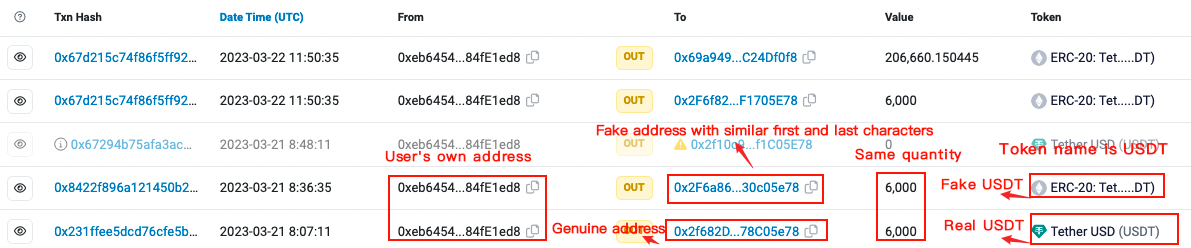
Poisoning Scams: How Fake Transactions Target Your History
Source: Token.im
This is the biggest threat in 2026. Scammers monitor the blockchain and find the crypto address example you interact with the most. They then use specialized software to generate a “vanity address” that has the exact same first 4 and last 4 characters as your friend’s address.
The scammer sends a transaction of $0.00 to your wallet from this lookalike address. Their goal? To “poison” your transaction history. The next time you go to send your friend money, you might accidentally copy the scammer’s lookalike address from your recent transaction list instead of the real one. Read more on Cryptocurrency wallet scams.
Clipboard Hijacking: Always Double-Check Every Character
Malware exists that can detect when you copy a wallet address. When you press “Paste,” the malware swaps out your intended destination for the hacker’s address. Always check the first few and last few characters after pasting.
The “Whitelisting” Feature: Adding an Extra Layer of Security
If you use centralized exchanges, you should enable “address whitelisting.” This ensures that your funds can only be withdrawn to a pre-approved, verified address. Even if a hacker gains access to your exchange account, they cannot send the funds to their own wallets.
Account Abstraction and the Death of the Seed Phrase
To understand what does wallet address mean in the context of 2026 Web3 tech, we have to talk about Account Abstraction (ERC-4337). The old way of managing addresses is fading out in favor of “Smart Wallets.”
Smart Contract Wallets: Addresses with Programmed Logic
Historically, an address was just a passive receptacle for funds (an Externally Owned Account, or EOA). Today, tools like Safe or Argent allow your address to actually be a smart contract. This means your address can have programmed logic, like daily spending limits, multi-signature requirements, or automatic investment rules.
Social Recovery: What Happens if You Lose Access to Your Address?
If you lose the seed phrase to a standard address, your money is gone forever. With Account Abstraction, your smart wallet address can utilize “Social Recovery.” You can designate three trusted friends, or hardware devices, to act as guardians. If you lose access, a majority of these guardians can vote to recover the address and grant you access again, completely bypassing the need for a seed phrase.
Gasless Transactions: How Apps Pay the Fees for Your Address
Another massive leap in how addresses function is “sponsored gas.” With smart contract addresses, decentralized applications can actually pay the network transaction fees on your behalf. This allows users to interact with a blockchain address without ever needing to hold native tokens like ETH or SOL to pay for gas.
Privacy and Traceability: How Public are Addresses?
Many people assume crypto is entirely anonymous. It is actually highly transparent.
The Transparency of the Ledger
Every single transaction made to and from your address is publicly visible on block explorers like Etherscan or Mempool.space. Anyone who knows your public address can see your entire transaction history, your exact balance, and the other addresses you interact with.
Stealth Addresses
To combat this absolute transparency, developers have created stealth addresses. When someone sends you funds using a stealth address protocol, a unique, one-time address is generated specifically for that single transaction. The funds end up in your control, but outside observers looking at the public ledger cannot link the payment back to your main public identity.
Why You Should Avoid Reusing the Same Bitcoin Address
When asking what is wallet address in Bitcoin networks, you should know that modern Bitcoin wallets automatically generate a brand new receiving address for every single transaction. While you can reuse an old address, doing so damages your financial privacy by linking all your incoming payments to a single, easily traceable point.
How to Find and Share Your Wallet Address Safely
So, how to find my crypto wallet address? It is incredibly simple once you know where to look.
Locating Your “Receive” Address in MetaMask, Phantom, or Trust Wallet
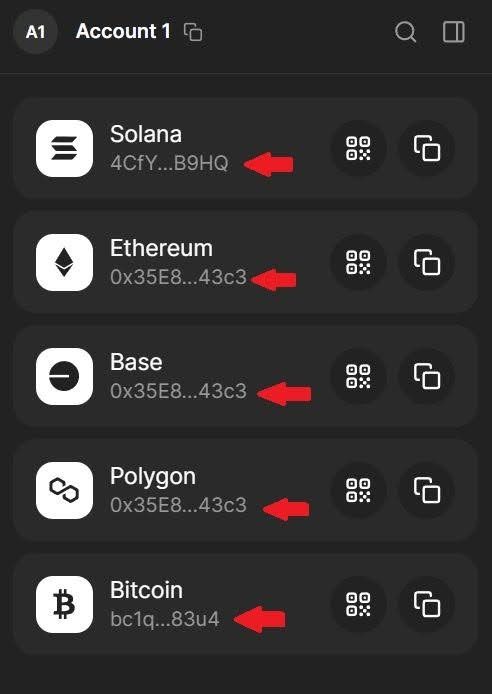
In almost every modern non-custodial wallet application, you simply open the app, select the specific coin you want to receive, and click the bold “Receive” button. The app will immediately display your long alphanumeric string.
Using QR Codes for Instant, Error-Free Sharing
To avoid the risk of clipboard malware or manual typos, the safest way to share your address in person is via the QR code. Every wallet generates a scannable QR code alongside the text string.
Generating a Test Transaction: The “Penny Test” Strategy
Before sending $10,000 to a newly generated wallet adress, always send a test transaction of $1. Wait for the transaction to fully clear and confirm the recipient actually has access to the funds before sending the remaining balance.
Conclusion: Mastering the Gateway to Web3
Understanding the what is a Bitcoin wallet adress question, spotting the difference in an EVM network, and defending yourself against address poisoning are the foundational skills of digital finance.
When someone asks you whats a wallet address or whats a Bitcoin wallet address, you now know it is far more than just a random string of text. It is a highly secure, mathematically derived digital bank account that puts the power of self-custody entirely in your hands. Whether you are typing out a traditional alphanumeric string or using a sleek ENS domain, treating your public address with care and caution is the first step toward mastering the future of money.
FAQ
What is a cold wallet / hardware wallet?
A cold wallet is any crypto wallet that stores your private keys entirely offline — disconnected from the internet — making it virtually immune to remote hacking, malware, and phishing attacks. A hardware wallet is the most common type of cold wallet: a small physical device (resembling a USB stick or card) with a dedicated secure-element chip that generates and stores your private keys inside the device. Keys never leave the chip — when you sign a transaction, the signing happens on-device and only the signed result is sent to the blockchain.
The two leading hardware wallet brands in 2026 are Ledger (Nano S Plus, Nano X, Stax, Flex) and Trezor (Model One, Model T, Safe 3, Safe 5). Both support thousands of coins and integrate with popular software wallets (MetaMask, Phantom, Yoroi, etc.) as a signing device — combining cold-storage security with hot-wallet convenience.
What are the disadvantages of a Ledger wallet?
Ledger is widely regarded as the gold standard for hardware wallets, but it has real drawbacks worth considering:
- Not fully open-source: Ledger’s firmware and secure-element chip are proprietary (closed-source). Unlike Trezor, whose firmware is fully open-source and community-auditable, Ledger requires users to trust the company’s internal security claims. This is the most debated trade-off in the hardware wallet space.
- Ledger Recover controversy: In 2023, Ledger introduced “Ledger Recover” — an optional service that splits your seed phrase into encrypted fragments and stores them with third-party custodians (Coincover, Ledger, EscrowTech). While opt-in and encrypted, the feature provoked backlash from the crypto community because it proved the firmware can extract seed phrases from the device — something Ledger had previously implied was impossible.
- 2020 customer database leak: In 2020, Ledger’s e-commerce database was breached, exposing names, email addresses, phone numbers, and physical addresses of ~270,000 customers. No private keys or crypto were compromised, but the leak led to targeted phishing campaigns and, in some reported cases, physical threats against customers.
- Price: Ledger devices range from ~$79 (Nano S Plus) to ~$399 (Stax/Flex) — a meaningful upfront cost, especially for beginners with small portfolios.
- Ledger Live limitations: the companion app (Ledger Live) has a smaller dApp ecosystem than competitors like MetaMask. Some chains require third-party software to interact with the device.
- Physical fragility: the Nano S/X models have small screens and USB-C connectors that can wear over time. Backup devices or seed-phrase metal plates are recommended.
Despite these drawbacks, Ledger devices have never been breached at the hardware/firmware level — the 2020 incident was a website database leak, not a device exploit. For most users holding significant crypto long-term, a Ledger remains one of the safest storage options available.
What wallet is best for Cardano?
Cardano has a mature wallet ecosystem. The best choice depends on your profile:
| Wallet | Type | Best For | Key Feature |
|---|---|---|---|
| Lace | Browser extension + mobile | Beginners; official IOG-backed wallet | Clean UI, built-in staking, NFT gallery, multi-account, Ledger integration, governance voting (Voltaire-ready) |
| Yoroi | Browser extension + mobile | Simple staking and transactions | Lightweight (no full-node sync), developed by EMURGO (Cardano founding entity), Ledger/Trezor support |
| Eternl (formerly CCVault) | Browser extension + mobile | Power users; DeFi/dApp interaction | Multi-account, sub-addresses, advanced UTXO management, dApp connector, Ledger/Trezor support, most feature-rich community wallet |
| Daedalus | Desktop full-node | Maximum security / sovereignty | Downloads the entire Cardano blockchain (~30GB+); independently validates every transaction — no trust required. Slow initial sync; resource-heavy |
| Nami | Browser extension | Quick dApp interactions | Ultra-minimal; single-address; fast dApp connector. Note: now maintained by IOG and being gradually merged into Lace |
Recommendation: for most users in 2026, Lace is the best starting point — it is officially developed by IOG (Input Output Global, Cardano’s core development company), supports Voltaire governance, and pairs with Ledger for hardware-level security. Power users who need multi-account UTXO control and advanced DeFi features should look at Eternl.
What is the best wallet for Bitcoin?
For Bitcoin specifically, the best wallet depends on your use case:
- Cold storage (long-term): Ledger Nano X / Flex or Trezor Safe 3 / Safe 5 — keys never touch the internet; the safest option for any amount.
- Mobile (daily use): BlueWallet — open-source, Bitcoin-only, supports Lightning Network for instant payments, watch-only wallets, and multi-sig.
- Desktop (privacy): Sparrow Wallet — advanced UTXO management, coin control, Tor integration, full-node connection; ideal for privacy-focused Bitcoiners.
- Multi-chain (if you hold more than BTC): Trust Wallet or Exodus — support BTC alongside hundreds of other assets with a clean UI.
Best practice: use a mobile/desktop wallet for spending amounts and a hardware wallet for savings. Never keep large BTC holdings on an exchange.
What is the best wallet for crypto overall?
There is no single “best” wallet — the right choice depends on your chains, assets, and security needs. A practical 2026 setup for most users:
- Hardware wallet (cold storage): Ledger Nano X or Trezor Safe 3 — for long-term holdings and high-value assets.
- Hot wallet (daily DeFi): MetaMask (EVM chains), Phantom (Solana), or Trust Wallet (100+ chains) — for active trading, staking, and dApp interaction.
- Chain-specific wallet: Lace/Eternl (Cardano), Xaman (XRP), BlueWallet (Bitcoin-only) — for maximum feature depth on a single network.
Whichever wallet you choose, you can fund it instantly by swapping any crypto on Quickex — no KYC, no registration, live rate, and coins go directly to your wallet address.
What is the best way to track a wallet?
You can track any public wallet address using blockchain explorers and portfolio tools — no access to the wallet’s private keys is needed, since all transactions are recorded on public blockchains:
- Blockchain explorers (free): Etherscan (Ethereum), Solscan (Solana), Cardanoscan (Cardano), Blockchair (Bitcoin, multi-chain), XRPScan (XRP). Paste any wallet address to see full transaction history, token balances, and staking status.
- Portfolio trackers: CoinGecko Portfolio, CoinMarketCap Portfolio, DeBank (DeFi-focused, EVM chains), Zerion (multi-chain DeFi dashboard) — connect wallets (read-only) or enter addresses manually to monitor balances, PnL, and asset allocation in one view.
- Whale / alert tools: Arkham Intelligence, Nansen, Whale Alert — track large wallets, institutional flows, and receive real-time notifications when specific addresses move funds.
Disclaimer: The material in this article is not financial or investment advice. Everything stated here reflects the author's personal view and should not be treated as a recommendation to trade or invest. We make no warranties regarding the accuracy, reliability or completeness of the information presented. Cryptocurrency markets are highly volatile and can move unpredictably. Before committing any funds, every investor, trader or crypto user should study several independent sources and check the regulations that apply in their own jurisdiction.