
The decentralized finance (DeFi) landscape moves at a blistering pace. By the time a token trends on mainstream social media, the early profits have already been secured by those watching the blockchain itself. To survive and thrive in this hyper-fast environment, you need a radar. You need what is DEX screener—the ultimate on-chain analytics platform that has completely revolutionized how traders discover, analyze, and execute trades on decentralized exchanges.
Whether you are a seasoned whale or a curious newcomer trying to understand what is DEX screener crypto, this guide will break down every feature, strategy, and hidden danger of the platform. We will explore the mathematical frameworks for safe trading, uncover the realities of scam tokens, and reveal how to seamlessly transition from on-chain analysis to actual execution without falling victim to malicious smart contracts.
What is a DEX Screener?
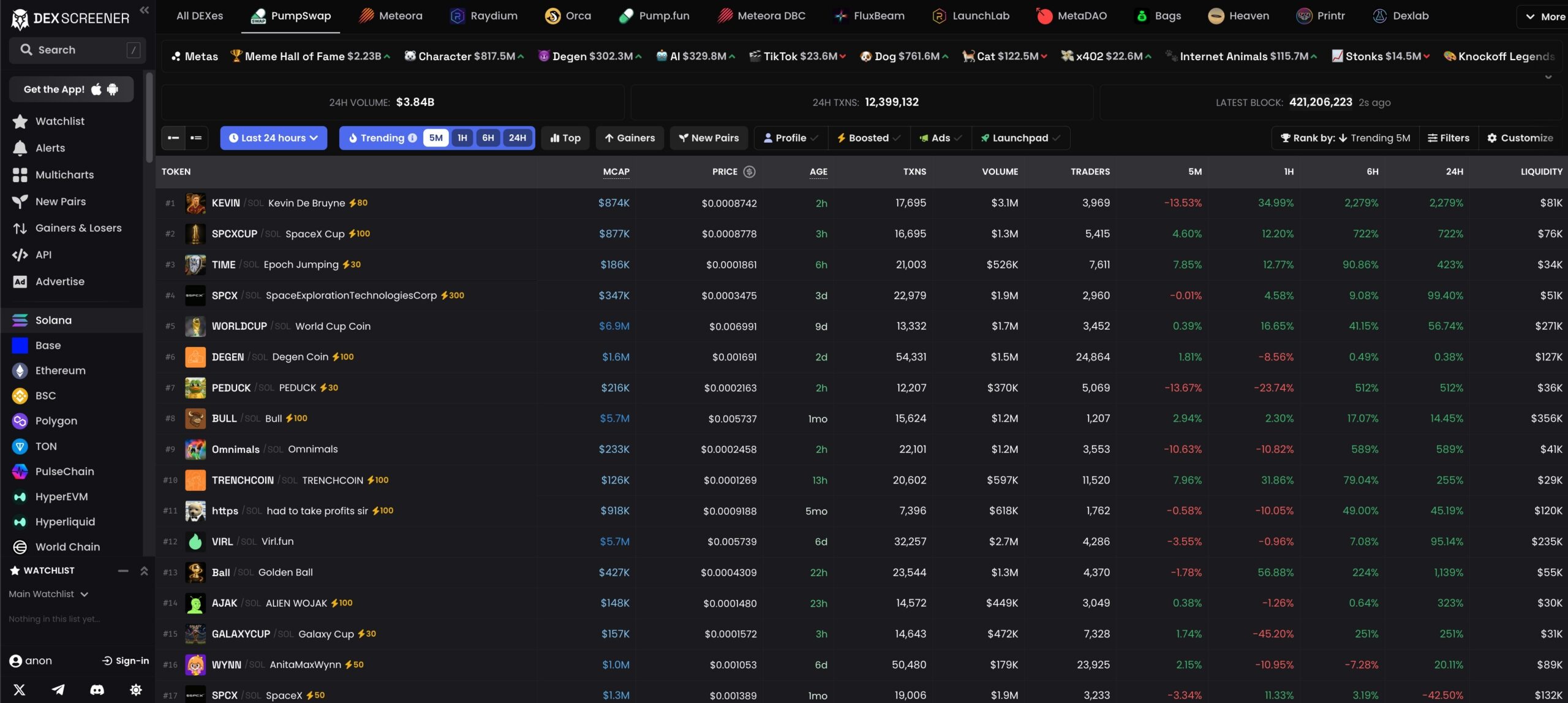
Source: DexScreener
Imagine navigating a dark ocean where new islands appear and disappear in seconds. That is the DeFi ecosystem without a tracking tool. DEXscreener acts as your high-resolution radar, illuminating the dark waters of the decentralized web by aggregating real-time data from across the blockchain space.
Breaking Down the Basics
At its core, what is DEX screener? It is a decentralized exchange analytics platform that tracks real-time trading data, price charts, liquidity pools, and transaction histories across dozens of blockchains. Unlike traditional financial dashboards that rely on delayed reporting, a DEX screener crypto tool pulls data directly from the blockchain ledger. It organizes this raw, unfiltered on-chain data into a digestible, user-friendly interface. When a new liquidity pool is created on Uniswap, Raydium, or PancakeSwap, DEXscreener captures it within seconds, allowing traders to monitor price action, volume, and liquidity the moment a token goes live.
CEX Dashboards vs. On-Chain Analytics
Centralized exchanges (CEXs) like Binance or Coinbase offer polished dashboards, but they operate as walled gardens. A token only appears on a CEX after rigorous vetting, team negotiations, and listing fees. By the time a coin hits Binance, the 100x move has already happened on the DEX.
This is why what is DEX screener crypto matters so profoundly: it provides unfiltered access to the permissionless economy. On-chain analytics platforms offer real-time data that CEX dashboards cannot match. When you use a DEX crypto screener, you are seeing the raw, uncensored mechanics of the market. You can spot accumulation by smart money, identify sudden liquidity drains, and track the birth of entirely new market narratives days or weeks before they reach centralized platforms.
The 2026 Milestones
The evolution of this DEX screener crypto tool has been staggering. Fast forward to 2026, and the platform has achieved unprecedented scale. It now covers well over 240 blockchains and layer-2 networks, tracking millions of active trading pairs simultaneously. One of the most significant 2026 milestones is the deep integration with the “Moonshot” ecosystem—a feature that filters out the noise and highlights tokens experiencing parabolic velocity. With millions of pairs tracked, finding the most popular DEX screener crypto assets requires sophisticated filtering, which the platform now provides out of the box, cementing its position as the industry standard.
Core Features of DEX Screener
To navigate the DeFi markets effectively, you must understand the arsenal at your disposal. The crypto DEX screener is packed with professional-grade features that rival institutional trading terminals.
Professional-Grade Charting
Gone are the days of squinting at basic line graphs on clunky DEX interfaces. DEXscreener features full TradingView integration, providing professional-grade candlestick charts, drawing tools, and technical indicators across all supported chains. Whether you are plotting Fibonacci retracements on a brand-new Solana meme coin or analyzing the moving averages of an Ethereum DeFi blue-chip, the charting experience is seamless and deeply customizable.
MultiCharts Layout
Market correlation is a vital concept in DeFi. Sometimes, a surge on a Base network meme coin precedes a similar move on Arbitrum. The MultiCharts layout allows you to view up to 16 token pairs simultaneously on a single screen. This feature is essential for cross-chain plays, enabling you to monitor the pulse of the entire market in real-time. You can track Bitcoin‘s price action alongside micro-cap altcoins, ensuring you never miss a macro shift that could impact your micro-positions.
Dynamic Trending Scores
How do you find the next viral token before it floods Crypto Twitter? The platform employs dynamic trending scores that analyze velocity, volume spikes, and liquidity inflows. These algorithmic scores surface tokens experiencing abnormal market activity. By the time a token trends on social media, the early momentum has already been captured by those watching the dynamic scores on the DEX crypto screener.
The New Pairs Feed
For the true degens and early adopters, the New Pairs Feed is the lifeblood of the platform. This scrolling feed updates in real-time, displaying tokens the very second liquidity is added to a decentralized exchange. You can filter by chain, base currency (like WETH or SOL), and initial liquidity size. This allows you to be among the very first to analyze a brand-new contract, offering a window of opportunity that simply does not exist in traditional finance.
How to Use DEXScreener Like a Pro
Having the tools is one thing; knowing how to use them is another. Here is how professional traders analyze data using the DEX screener crypto tool.
Evaluating the Volume-to-Liquidity Ratio
This is the technical edge that separates amateurs from veterans. When analyzing a token, you must look beyond the green candles and evaluate the health of the pool using the Volume-to-Liquidity (V/L) Ratio.
- V (24-Hour Trading Volume): The total dollar value of all buys and sells in the past 24 hours.
- L (Total Liquidity): The total dollar value of assets locked in the automated market maker (AMM) pool.
The mathematical formula is simply V / L.
Why does this matter? If the V/L ratio is excessively high (for example, $2 million in volume against only $30,000 in liquidity), it indicates a high-slippage trap. While high volume on tiny liquidity can mean massive price volatility, it mathematically guarantees that large orders will suffer catastrophic slippage. A healthy, sustainable token typically has a balanced V/L ratio, where the liquidity pool is deep enough to absorb the trading volume without extreme price impact. If you see a tiny liquidity pool being churned for massive volume, proceed with extreme caution—it is often a setup for a rug pull or a high-slippage trap.
Interpreting the Live Transaction Feed
Beneath the chart, the live transaction feed displays every single swap in real-time. Green represents buys; red represents sells. But the real value lies in clicking on the wallet addresses. Pro traders track “whale” wallets—addresses with a history of highly profitable early entries. If a token is trending but the live feed shows a few large wallets consistently dumping on smaller buyers, it is a clear signal to stay away.
Setting Up Custom Watchlists and Mobile Price Alerts
With thousands of tokens launching daily, you cannot monitor them all manually. You can create custom watchlists tailored to your specific narratives or risk tolerance. Furthermore, by setting up instant mobile price alerts, you can step away from the screen. If a token on your watchlist breaks out of a consolidation pattern or hits a specific dollar value, you receive an immediate push notification.
Automating Your Strategies: Interacting with API
For developers and algorithmic traders, the platform offers a robust, free API. By interacting with the API, you can automate your strategies, pulling real-time data on pairs, volumes, and OHLCV (Open, High, Low, Close, Volume) data directly into your Python scripts or trading bots. This allows for high-frequency decision-making without the need for manual chart monitoring.
Navigating the Dark Side of DeFi
The permissionless nature of DeFi is a double-edged sword. While anyone can launch the next revolutionary protocol, anyone can also launch a malicious scam.
Why DEXScreener Displays Everything (Including Scams)
A critical concept to understand is that a DEX screener is entirely neutral. It is a data aggregator, not a gatekeeper. Why does DEXscreener display everything? Because it reads the blockchain, and the blockchain is uncensored. If a scammer creates a malicious token pool on Ethereum, the blockchain records it, and the DEX crypto screener displays it. Just because a token has a beautiful chart and high volume does not mean it is legitimate. The platform provides the data; the burden of due diligence falls entirely on you.
How to Verify the Safety of a Token Pool
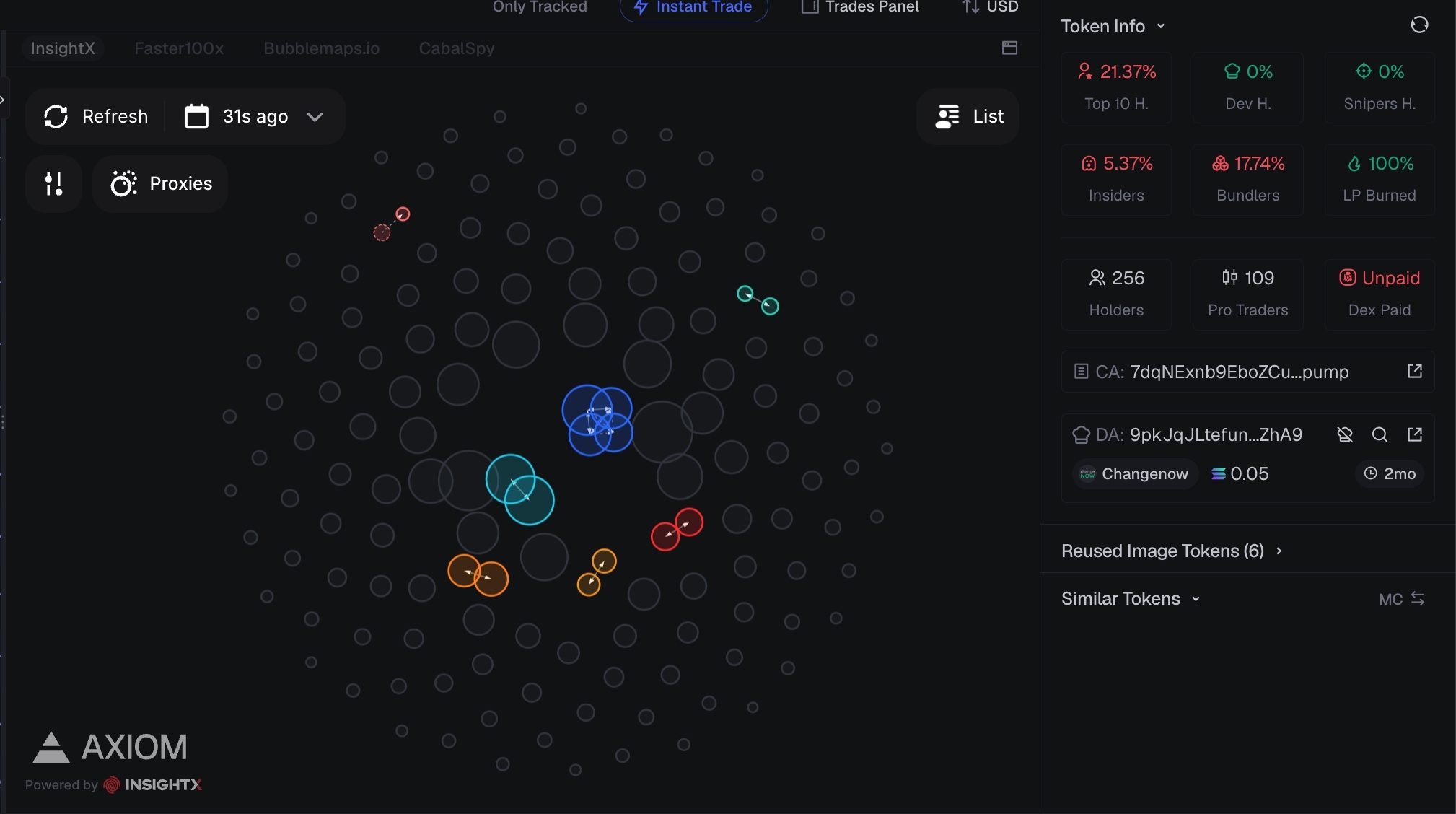
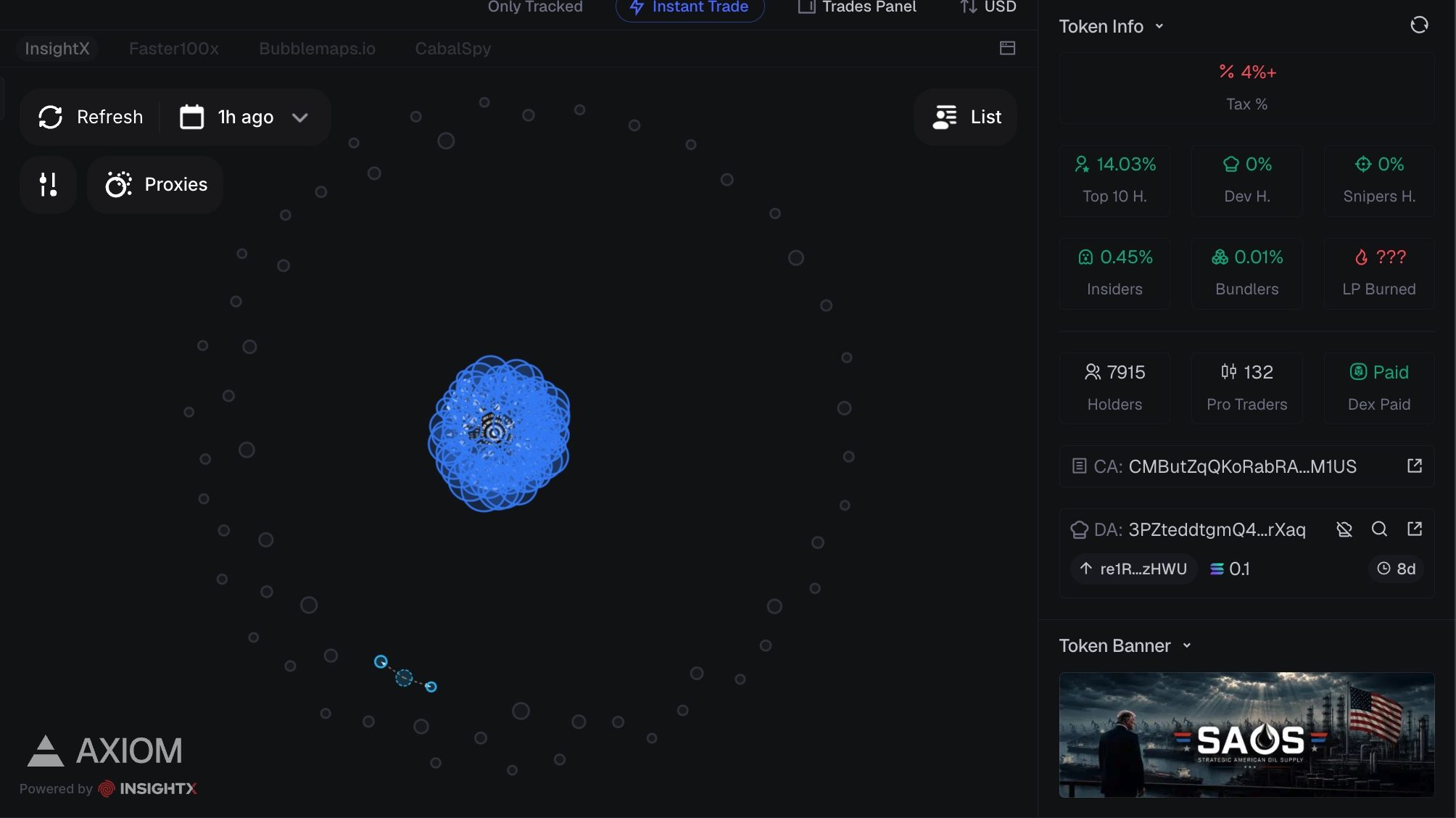
Before buying, look for the security badges on the token page. The platform integrates with third-party auditors to highlight potential risks. The most crucial metric is the Liquidity Lock/Liquidity Burned. If the creator holds 100% of the liquidity in a standard wallet, they can execute a “rug pull”—selling all the tokens or draining the pool, rendering the asset worthless. A secure token will have its liquidity locked in a time-locked smart contract or burned.
Spotting Honeypots and High-Tax Slippage Traps
Another common scam is the “honeypot”—a malicious smart contract coded to allow buys but block sells. Alternatively, scammers use dynamic tax codes that charge a 99% fee on sales. The platform’s audit tab attempts to flag these, but always use external tools like Token Sniffer or Honeypot.is to verify. Connecting your Web3 wallet and signing a transaction on a malicious token can expose you to dangerous “permit” signature scams, granting the attacker access to your entire wallet balance.
Moving from On-Chain Analysis to Seamless Execution
Finding the perfect trade is only half the battle. Executing it safely is where many traders stumble.
The Complexities and Gas Barriers of Direct Web3 Swapping
Many users ask, can you buy crypto on DEX screener? The platform does offer a native swap feature that aggregates routes across DEXs. However, executing swaps directly through Web3 wallet connections on the platform comes with inherent risks and complexities.
First, you must hold native gas tokens (ETH, SOL, BNB) in your wallet to pay for network fees. If you do not have gas, you cannot trade. Second, direct wallet connections expose users to malicious “permit” smart contracts. Scammers create fake tokens that prompt you to sign a “gasless” permit signature when you attempt to sell, which secretly grants the scammer approval to drain your wallet. Furthermore, during periods of high network congestion, direct Web3 swaps suffer from failed transactions and exorbitant gas fees.
Quickex.io: The Ideal No-KYC Instant Bridge
To bypass the risks of direct Web3 swapping, savvy traders utilize Quickex. When you need to fund your wallet to execute a trade you found on the DEX screener, Quickex.io provides a safe, instant, no-registration solution.
Instead of connecting a vulnerable Web3 wallet to a suspicious liquidity pool, you can use Quickex.io to buy USDT or core assets, like BTC, ETH, or native gas tokens directly with a credit card, or make a simple swap from BTC to XMR. Quickex.io is a non-custodial platform, meaning you never surrender control of your funds to a centralized entity. There is no tedious KYC process, eliminating the risk of identity theft. By using Quickex, you can securely acquire the exact gas token or stablecoin you need, send it directly to your private wallet, and then interact with the blockchain on your own terms.
When to Use DEXScreener for Micro-Cap Research
The optimal strategy uses both platforms in tandem. Use the crypto DEX screener for what it does best: researching micro-cap tokens, analyzing the V/L ratio, tracking whale wallets, and discovering new pairs.
Once you have identified a promising asset, use Quickex.io for safe execution. If you are low on gas, use Quickex to instantly buy ETH with your credit card. If you want to swap large amounts of USDT across chains without the high slippage and gas fees of a native DEX router, Quickex.io provides reliable, instant swaps. This combination separates the analytical phase from the execution phase, ensuring your Web3 wallet remains insulated from malicious smart contracts.
DEX Screener Alternatives
Source: Axiom
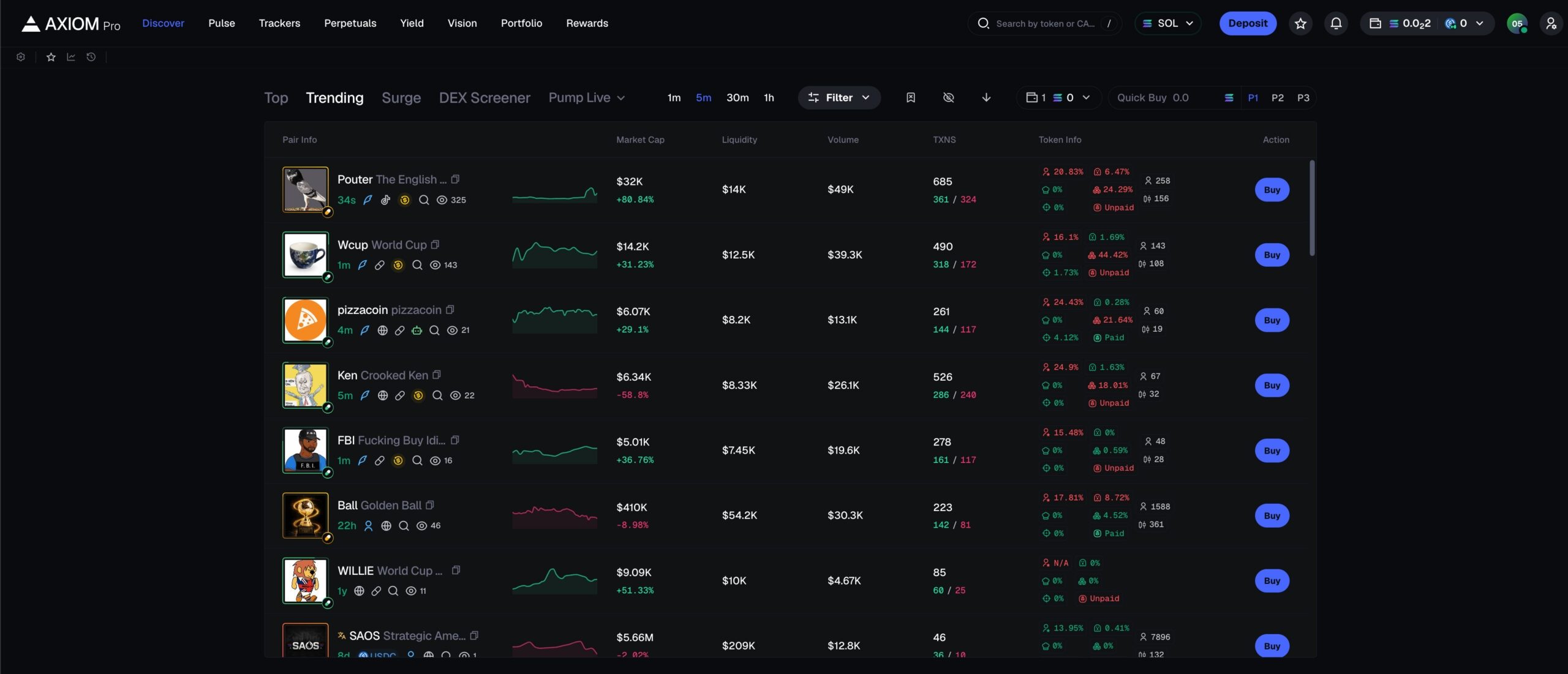
While it holds the crown, it is not the only player in the arena. Understanding the competitive landscape helps you choose the right tool for your specific trading style.
DEX Screener vs. DEXTools
The oldest and fiercest rivalry in on-chain analytics is DEXscreener vs. DEXTools. DEXTools was the early pioneer, offering robust Ethereum and BSC tracking. However, DEXTools heavily gates its best features behind a premium token (DEXT), requiring users to buy and hold the token to access real-time data and advanced pair explorers. In contrast, the DEX screener model offers its core charting, multi-chain data, and new pair feeds completely free, without forcing users to buy a native utility token. This freemium, community-first approach is what drove the latter to massive market dominance.
DEX Screener vs. Defined.fi & Birdeye
Source: Defined.fi
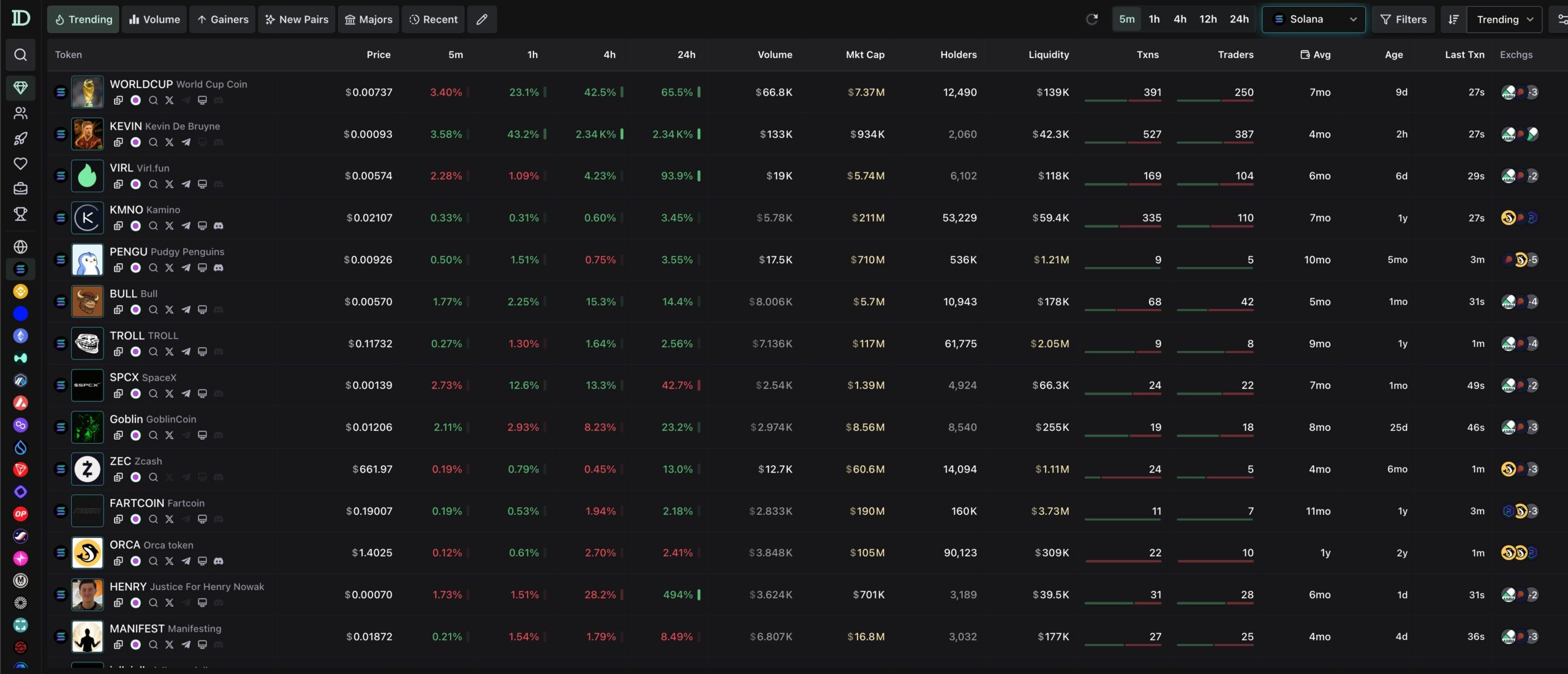
Birdeye is another formidable competitor, particularly dominant within the Solana ecosystem. Birdeye offers excellent social sentiment tracking and a highly integrated swap aggregator. Defined.fi focuses on deep, granular historical data and custom API endpoints. While Birdeye and Defined.fi excel in their specific niches, they often lack the sheer speed and multi-chain breadth of the most popular DEX screener crypto platform. If you are a Solana degen, Birdeye is a great companion; but if you are hunting across 240+ chains, the choice is clear.
Why DEXScreener Remains the Uncontested King of the Meme Coins
Ultimately, the platform wins because of its velocity and user experience. In the meme coin meta, where prices move 100% in minutes, a delayed chart is a useless chart. Its zero-gate approach to core features ensures that every trader, regardless of their portfolio size, has access to the same institutional-grade data. It is built by degens, for degens, reflecting the raw speed of the on-chain world.
Conclusion
Understanding what is DEX screener is fundamental for anyone looking to navigate the decentralized web in 2026. It is the ultimate radar for discovering tokens, analyzing volume-to-liquidity ratios, and tracking the real-time flow of capital across hundreds of blockchains. However, raw data is not enough. The DeFi space is littered with scams, honeypots, and malicious permit contracts designed to exploit those who blindly connect their wallets.
To trade safely, you must separate your research from your execution. Use the DEX screener crypto tool to find the alpha, but rely on secure, non-custodial platforms like Quickex.io to fund your wallet and swap core assets without the friction of direct Web3 vulnerabilities. By combining institutional-grade analytics with secure, no-KYC execution, you can confidently navigate the dark waters of DeFi and capture the opportunities of tomorrow.
FAQ: Questions About DEX Screener
Is DEXScreener completely free to use in 2026?
Yes, the core features of DEXscreener are completely free. You can access professional-grade TradingView charts, real-time transaction feeds, multi-chart layouts, and the new pairs feed without paying a subscription or holding a native token. The platform generates revenue through optional premium features and swap routing fees, ensuring the core analytics remain accessible to everyone.
Can I trade directly on DEXScreener by connecting my wallet?
While many ask, can you buy crypto on DEX screener, the answer is nuanced. The platform does feature a native swap integration that allows you to route trades through decentralized exchanges by connecting your Web3 wallet. However, direct Web3 swapping exposes you to malicious smart contract permits and high gas fees.
Why does my transaction on a DEX lag compared to the DEXScreener chart?
The charts update in real-time by reading the blockchain ledger the millisecond a transaction is validated. However, when you execute a swap on a DEX, your transaction must be submitted to the network, compete for block space, and be processed by validators. During periods of network congestion, or if you set a low gas fee, your transaction will sit in the mempool while the chart continues to update in real-time, resulting in lag and potential slippage.
How do I check if a token has locked liquidity?
To check if a token has locked liquidity on a DEX crypto screener, look for the security badges on the token’s pair page. The platform integrates with third-party scanners to display if the liquidity is locked, burned, or unlocked. A green “Locked” badge means the creators cannot drain the pool.
Disclaimer: The material in this article is not financial or investment advice. Everything stated here reflects the author's personal view and should not be treated as a recommendation to trade or invest. We make no warranties regarding the accuracy, reliability or completeness of the information presented. Cryptocurrency markets are highly volatile and can move unpredictably. Before committing any funds, every investor, trader or crypto user should study several independent sources and check the regulations that apply in their own jurisdiction.