
Bitcoin’s reach as a pay tool keeps spreading, letting users grab goods from tech gadgets to trips without traditional bank ties. Midway through 2025, as digital assets steady after market events like halvings and chain updates, more spots open to BTC for hassle-free deals. Buy with BTC unlocks global access, dodging exchange rates and borders that slow fiat. This overview digs into legal sides, perks, spend spots, real cases, pay steps, safety pointers, and backups when direct isn’t an option. From web shops to street eats, BTC’s spend power climbs, backed by numbers showing over $100 billion in merchant flows this year. Whether building stacks or cashing some, knowing these spots amps its everyday use.
Is It Legal to Pay with BTC?
Using BTC for pays stays okay in most places, but local rules set the tone. Around the world, setups like the US see it as property, so gains get taxed but spends roll fine. Europe’s MiCA framework green-lights stables and BTC for deals through licensed paths, keeping things clear. You can find out the current Bitcoin exchange rate in just a couple of clicks.
Global Regulatory Landscape
On the world stage, regs lean toward okaying BTC pays with checks for laundering. US IRS tags spends as taxable, like selling shares, but no bans on use. Asia mixes—Japan says yes with licenses, China no. Africa’s growing with remittances, spots like Nigeria letting shops take it. In 2025, CBDCs blend in, making hybrid pays smoother without full swaps.
Countries Where It’s Accepted
Top accepters cover US (wide merchant nets), Germany (tax perks on holds), Portugal (light dues), and El Salvador (full legal tender). Japan and Switzerland lead with clear rules, UAE pushes luxury buys. Over 100 nations allow, but check for limits—some cap on big deals.
Why Use BTC for Purchases?
Spending with BTC skips old snags, bringing fresh upsides. Advantages over fiat include no middlemen, cutting costs on international sends.
Advantages Over Fiat
BTC trims borders, letting pays flow without wires or waits. It’s scarce, potentially holding value better than inflating cash. For no-bank folks, it’s entry without accounts. In 2025, BTC’s post-halving rarity amps its hedge role against price creeps.
Speed, Fees, and Anonymity
Deals confirm in 10-60 minutes on main net, seconds on Lightning. Fees average $1-5, cheap for hefty amounts. Anonymity via codes, though chains track—mixers add shields but flag risks.
Where Can You Pay with BTC?
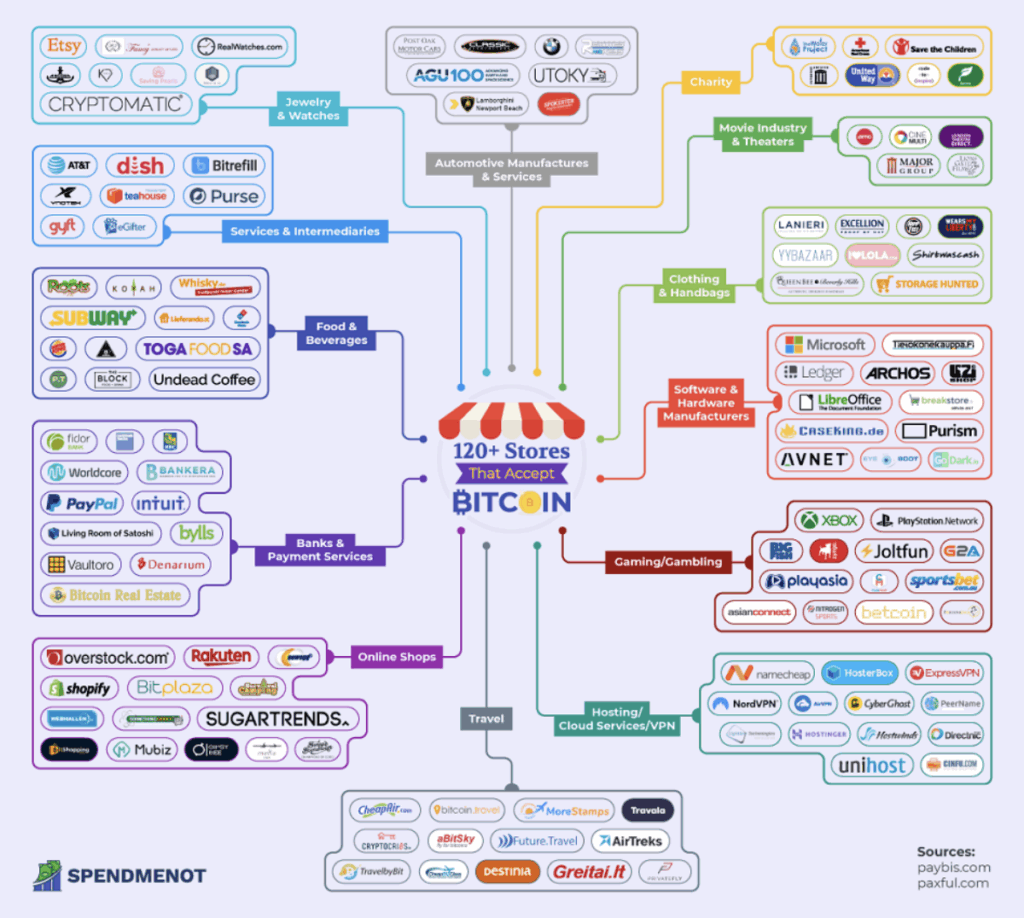
Spend crypto 2025 covers online to in-person. Who accepts BTC? Thousands, from tech leaders to corner stores.
- Online Stores
Microsoft takes for games and apps. Overstock dishes home stuff, Newegg electronics. Shopify add-ons let small sites join.
- Travel and Hotels
CheapAir books flights, Travala hotels—Expedia via partners. Pay using crypto for trips minus forex tabs.
- Gift Cards
Bitrefill sells for Amazon, Uber—spend BTC roundabout.
- Food Delivery and Restaurants
Uber Eats through cards, some like Burger King in spots take direct. Delivery apps add BTC more.
- Services (VPN, Hosting, Freelance)
NordVPN, ExpressVPN accept for hides. Namecheap hosts, Upwork freelances via cards.

Real-World Examples
Use BTC to buy at Tesla (cars), AT&T (bills). Where to spend BTC? Twitch subs, Wikipedia gifts.
1.Companies Accepting BTC
Microsoft, Home Depot, GameStop—chains grow lists. Luxury like Baltica or LVMH for high-end.
2. Local Businesses
Cafes in Berlin, shops in Tokyo—Coinmap lists thousands. El Salvador’s push boosts street use.
How to Make a Payment in BTC
By late 2025, paying with Bitcoin no longer feels like an experiment. In places like Berlin, Dubai, or even some cafés in New York, you can open your wallet app, scan a QR code at the counter, and see the confirmation pop up almost instantly. The big change compared to just a few years ago is the wider use of the Lightning Network: it cuts fees to a fraction of a cent and confirms small payments in seconds rather than minutes.
To make this work, you’ll need a wallet that supports both on-chain Bitcoin and Lightning. Many users stick with simple non-custodial options such as Electrum, Muun, or Trust Wallet. Large exchanges like Coinbase and Binance have also rolled out mobile wallets with Lightning turned on by default, so you don’t need to be an expert to send a quick payment.
Merchants rarely handle the technical side themselves. Instead, they use gateways like BitPay, CoinGate, or NOWPayments. When you choose to pay in BTC, the service generates a QR code or Lightning invoice, you scan it, and the payment is routed. On the merchant’s end, they can decide whether to keep the crypto or settle instantly in their local currency, whether that’s euros, dollars, or dirhams.
Security is still critical. Before you hit “send,” always check the address or invoice details — phishing sites that imitate well-known exchanges have become more common this year. Most reliable merchants show the QR code alongside the full alphanumeric address to prevent mistakes. If you want to double-check that the transaction is live, explorers like mempool.space or Blockstream.info will show the broadcast almost immediately.
Scams unfortunately remain part of the landscape. Fraudsters often try to create urgency — promising a “limited time discount” or pretending to be customer support staff asking you to send BTC directly. The safest practice is simple: only pay through official merchant sites or platforms you’ve already verified. Communities such as r/Bitcoin or Trustpilot reviews are good places to see if a vendor is legitimate before you spend.
On the positive side, more mainstream businesses are testing Bitcoin payments. Overstock and Newegg remain long-time supporters, while travel companies like Travala and CheapAir let you book flights and hotels directly with BTC. In the UAE, Carrefour has piloted Bitcoin payments at checkout counters, and in parts of Europe, electronics retailers have begun similar trials. These pilots suggest adoption is no longer just talk — it’s showing up in everyday retail.
If direct payment isn’t available, there are workarounds. Crypto debit cards issued by Binance, Wirex, or Crypto.com let you preload BTC and spend it anywhere Visa or Mastercard is accepted. At the checkout, your BTC is converted to local currency on the spot. The experience is seamless, though it may include conversion fees.
Another route is gift cards. Services such as Bitrefill and Coinsbee allow you to buy vouchers for brands like Amazon, Uber, or Spotify using Bitcoin. It’s not direct crypto adoption, but it provides an easy way to use BTC for daily expenses without waiting for every retailer to integrate payments.
Quick tips for smooth BTC spending:
- Use a wallet with Lightning support for faster, cheaper transfers.
- Verify the merchant’s URL and QR code before sending funds.
- Stick with established gateways and merchants; avoid “too good to be true” deals.
- Consider debit cards or gift cards if direct crypto checkout isn’t an option.
Conclusion
Spending BTC in 2025 flips it from hold to handy tool, covering online grabs to local bites as uptake grows. Legal frames mostly back it, with ups like low fees and speed outpacing fiat in lots of cases. Spend spots range from Microsoft to cafes, with real examples showing the push. Making pays needs right wallets and care, while tips guard from slips. If direct skips, cards or gift sites bridge. As crypto mixes into daily routines, using BTC for shopping not only saves but speeds adoption. Merchants grabbing it gain global pull, payers enjoy hidden and swift. In this year’s flow, embracing BTC spend turns digital stash into real spend power, rewarding holders with ways to use without losing hold.