
Bitcoin continues to get cheaper despite expectations of an imminent cut to the Fed’s key interest rate. At one point, the price of the most capitalized cryptocurrency fell to $108,762, which triggered panic in the crypto community, since $110,000 is a psychologically important level — losing it can indicate extreme weakness of BTC at the moment.
Earlier, the Quickex editorial team found that large crypto exchanges may be behind the crypto market collapse. Our task today is to figure out to which levels Bitcoin’s decline may continue.
The easiest way to track the Bitcoin price is on Quickex.
What’s Happening With Bitcoin and the Crypto Industry
On the morning of August 26, 2025, Bitcoin briefly dipped below the psychologically important $110,000 level. The 24-hour low for BTC was $108,762, which is equivalent to early-July quotes.
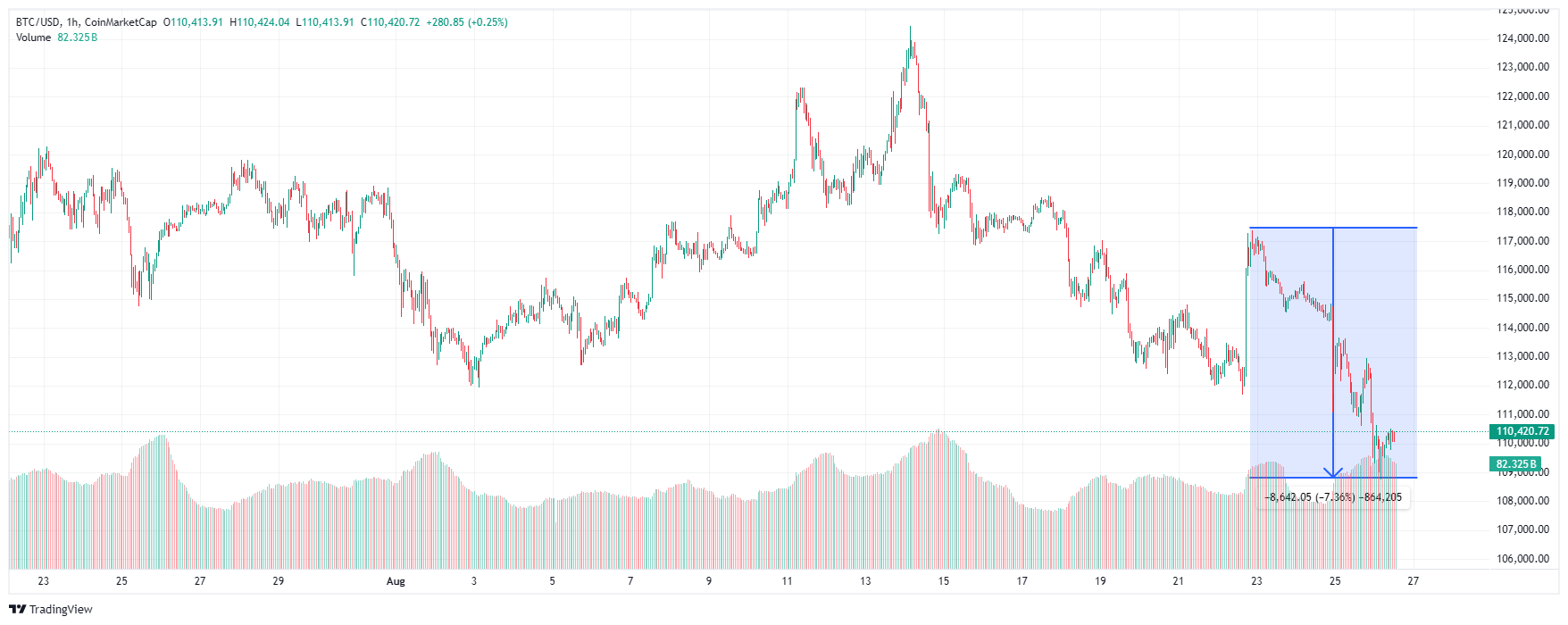
Bitcoin chart and the depth of the decline in recent days. Source: TradingView.
Recall that on August 22, Bitcoin rose sharply thanks to positive signals from the Fed. During his speech at the Jackson Hole Symposium, Fed Chair Jerome Powell hinted at a possible cut to the key interest rate in September 2025. The crypto market perceived the news as a positive factor that could support the growth of digital assets.
The fact is, phases of Fed rate cuts are often accompanied by positive dynamics in Bitcoin and altcoins. This happens because such changes push investors to look for alternative instruments. Many set their sights on highly volatile crypto.
Unfortunately for market participants, it took the cryptocurrency only a couple of days to wipe out the gains and set off to conquer new local lows. According to crypto folks, crypto exchanges are to blame for BTC’s crash. Large trading platforms benefit from stoking fear among the community, thereby provoking them to sell off assets. This way exchanges can profit both from short positions on crypto and from buying coins at bargain prices. It’s enough to launch a wave of sell-offs through a market maker.
Crypto exchanges, apparently, achieved their goal. Bitcoin’s Fear and Greed Index moved into the neutral zone. The metric settled at 48 points, although signs of greed were observed just last week.
Recall that the index shows investors’ willingness to take risks to buy Bitcoin. The green zone signals the start of euphoria. A shift into neutral indicates declining interest in crypto. The red zone shows that fear dominates the market and investors are very reluctant to buy BTC.
As of late August 2025, the index’s move from green to neutral indicates cooling interest in Bitcoin.
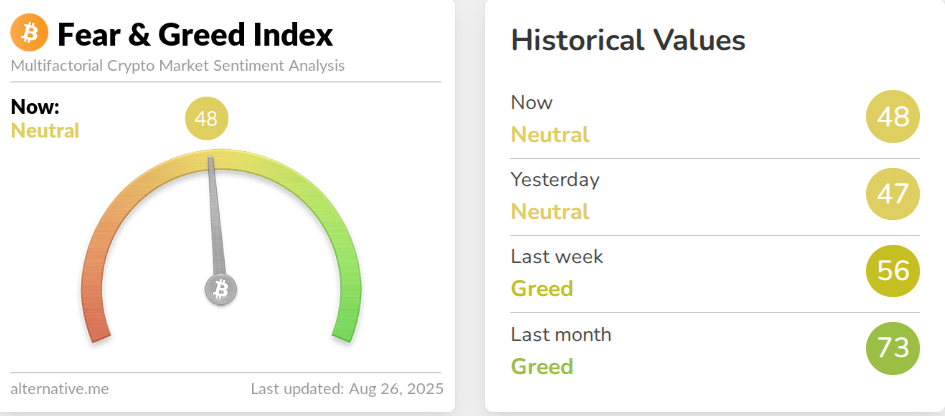
Bitcoin Fear and Greed Index. Source: alternative.me.
This assumption is supported by the growth of Bitcoin balances on crypto exchanges. The changes indicate that investors have started more often transferring cryptocurrency to trading platforms. Most such transactions are carried out with one goal — to put the coin up for sale.
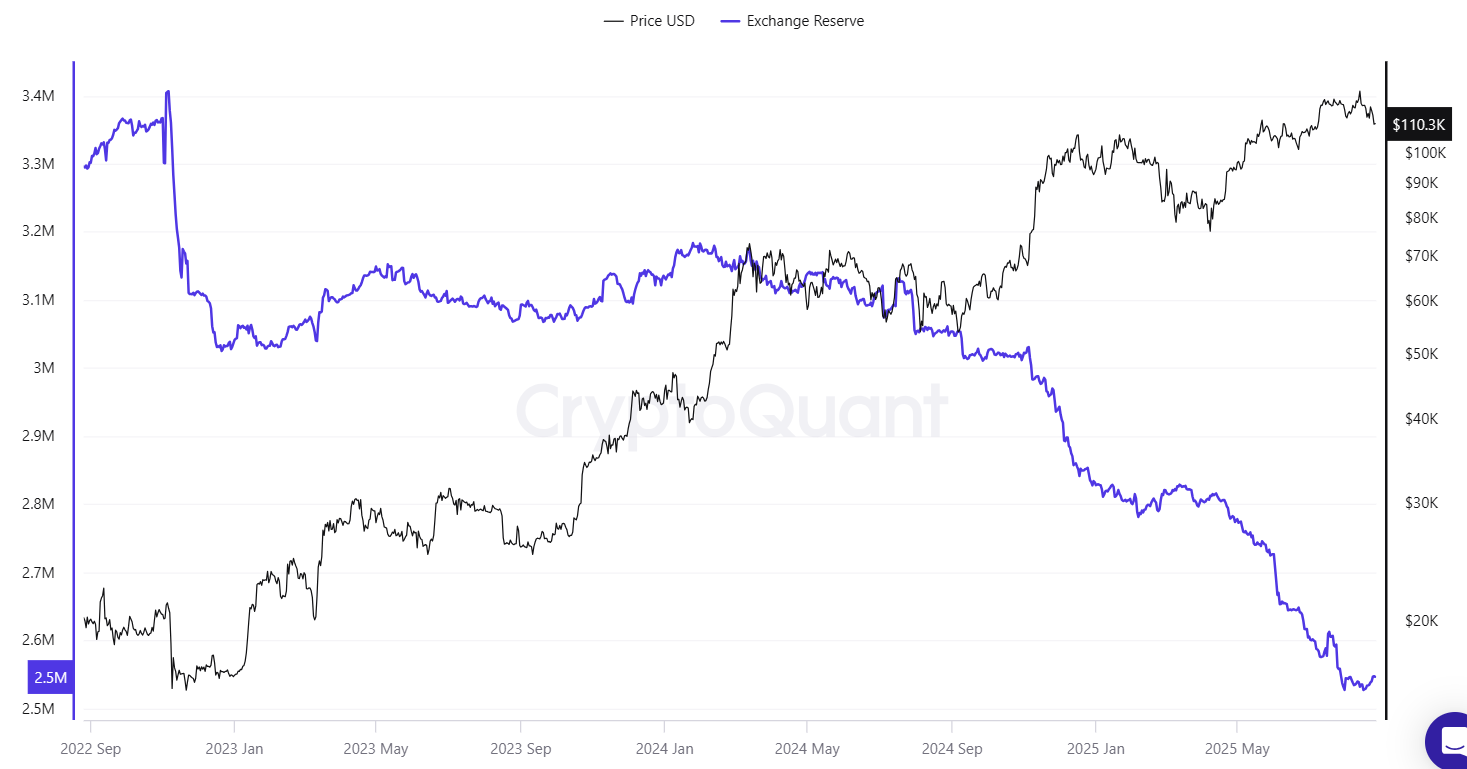
Bitcoin balance on crypto exchanges. Source: CryptoQuant.
Analyst MartyParty drew attention to the fact that in late August it’s newcomers who are selling cryptocurrency most actively. Often, such behavior suggests that the sell-off is a temporary phenomenon.
To What Levels Bitcoin May Fall
Now let’s move on to forecasts. Analyst Ted Pillous is confident that by late August the crypto market has turned bearish, which means there’s a risk of a move down to lower levels. He believes BTC will find a bottom near $94,000. Pillous explained his Bitcoin forecast by pointing to a visible gap at that level — a price gap on the CME Bitcoin futures chart. The cryptocurrency often seeks to close such gaps before resuming growth.
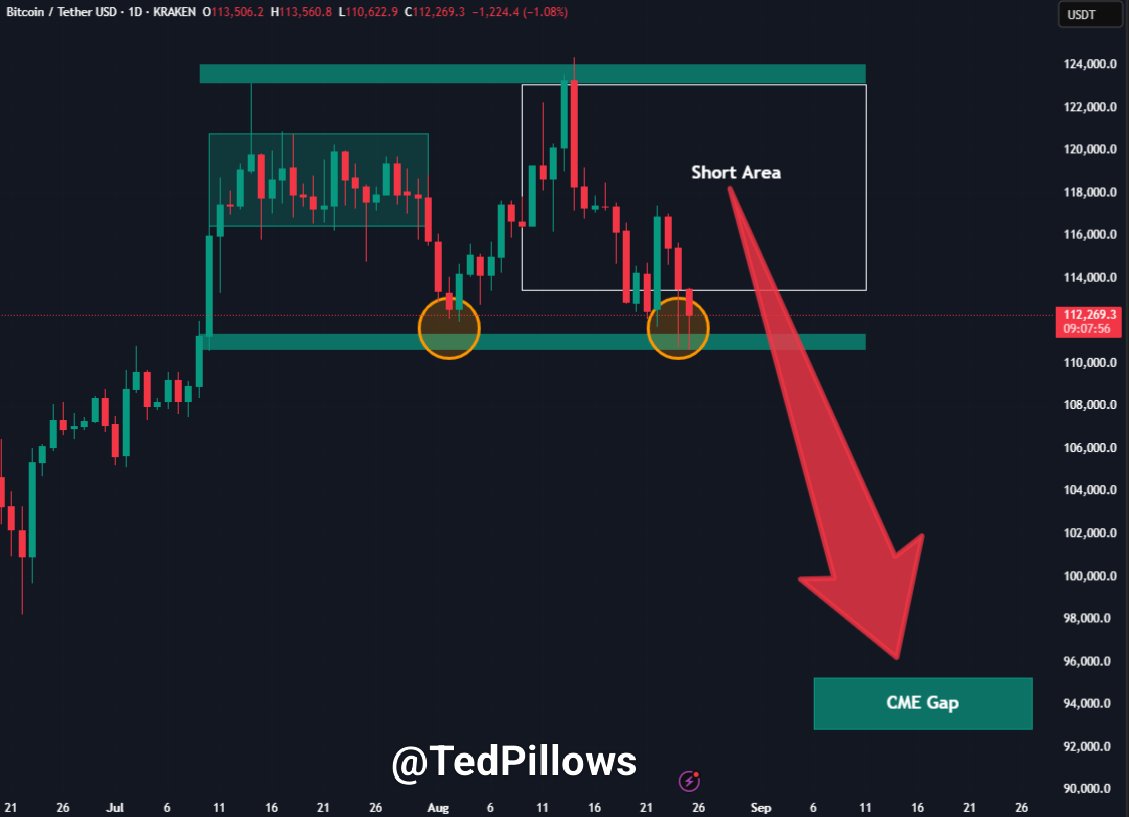
Bitcoin forecast by Ted Pillous.
After the gap closes, according to the analyst, BTC will resume growth. He believes the fourth quarter of 2025 will be bullish.
A similar forecast was shared by trader CryptoBoss. He believes that Bitcoin may drop to $93,000.
Financier and CEO of Euro Pacific Asset Management Peter Schiff is convinced that Bitcoin is heading straight for $75,000. He advises members of the crypto community to get rid of BTC, and then buy it back at a more attractive price.
Still, there are optimists in the market. Many believe that BTC has fallen into a “bear trap” — a period of unjustified decline often followed by recovery. For example, trader @Crypto_N_B sees a bullish “megaphone” pattern on the cryptocurrency chart. If his assumptions are correct, Bitcoin has already found a bottom and is preparing for a rebound followed by a breakout from the figure and a move toward updating the high.
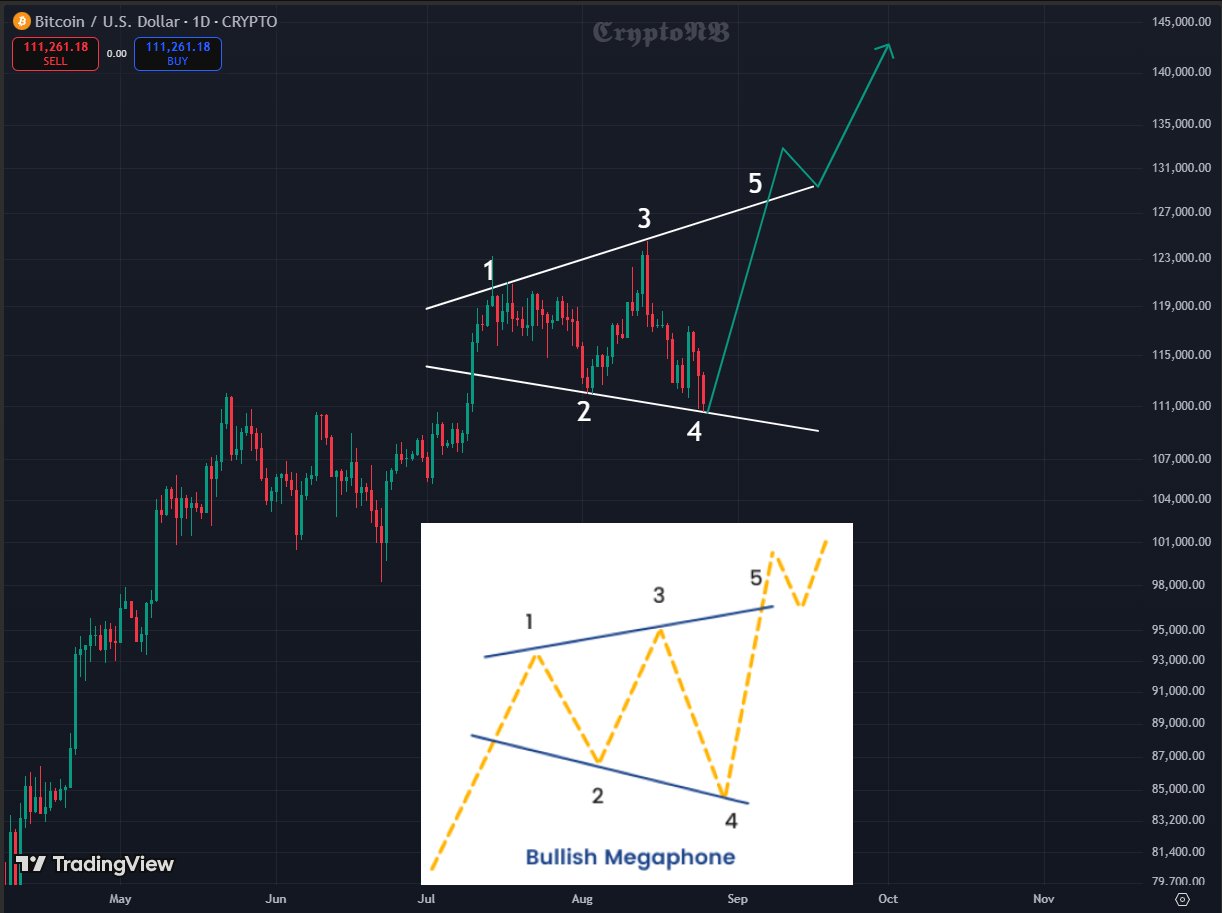
Bitcoin forecast by @Crypto_N_B.
Analyst Quentin Francos is confident that the BTC correction looks healthy for the market. Therefore, in his view, it’s too early to say the bull run is over.
Optimists are confident that Bitcoin continues to follow the M2 trajectory of global liquidity. BTC often repeats the metric’s movements with a lag of two to three months. Unfortunately for supporters of this theory, as critics note, in the summer of 2025 Bitcoin showed weak correlation with M2, which casts doubt on forecasts based on movements in global liquidity.
Conclusions
The drop of Bitcoin below $110,000 became a landmark event. It highlighted the asset’s weakness and increased pressure on market participants.
BTC’s dynamics showed that expectations of a Fed rate cut are no longer able to keep the price afloat. The key factor remains the actions of major players and the rise of panic among newcomers. The increase in exchange balances clearly indicates many investors are preparing to sell, which increases the risk of further decline.
At the same time, analysts’ opinions diverge: some forecast movement toward $75–94K, others see the current crash as a “bear trap” and a chance for a quick rebound.
The market is mired in uncertainty. Its “health” will largely depend on the actions of crypto exchanges and further signals from the Fed.
You can exchange Bitcoin quickly and at the best rate on Quickex.
Disclaimer: The material in this article is not financial or investment advice. Everything stated here reflects the author's personal view and should not be treated as a recommendation to trade or invest. We make no warranties regarding the accuracy, reliability or completeness of the information presented. Cryptocurrency markets are highly volatile and can move unpredictably. Before committing any funds, every investor, trader or crypto user should study several independent sources and check the regulations that apply in their own jurisdiction.