
Finding the best solana DEX is no longer just about finding a place to swap tokens; it is about selecting the right tactical instrument for your specific trading style in a hyper-fast market.
The decentralized finance landscape has shifted dramatically, and as we navigate 2026, Solana stands tall as the undisputed retail capital of Web3 trading. The network has matured past its early growing pains, establishing an ecosystem where high throughput and sub-cent transaction costs create a frictionless environment for traders.
Why Solana Has Become the Retail Capital of Web3 Trading
Ethereum laid the groundwork for DeFi, but its premium gas fees priced out the average retail trader. Solana captured this demographic by offering an experience that mirrors traditional web applications: instant confirmations and negligible fees. This accessibility sparked a Cambrian explosion of meme coins, NFTs, and real-world asset protocols.
When retail traders search for a solana decentralized exchange, they are looking for speed and affordability. Solana delivers both, making it the ultimate playground for high-frequency, small-cap trading that simply isn’t viable on slower, more expensive blockchains.
What Makes a Great Solana DEX
Not all decentralized exchanges are created equal. To qualify as the best DEX for solana, a platform must excel across three critical dimensions. Speed is paramount; on a network where blocks are produced every 400 milliseconds, a lagging interface can mean missing a 50% price move.
Liquidity depth is equally vital: deep order books and concentrated liquidity pools ensure that your $5,000 market buy doesn’t suffer from 15% slippage.
Finally, gas efficiency matters. While Solana’s fees are cheap, poorly optimized smart contracts can drain your SOL through unnecessary compute usage and failed transaction fees.
The 2026 Trading Reality
Gone are the days when you could just click “swap” and expect a seamless execution. The 2026 reality of using a solana DEX exchange involves navigating network congestion.
When a viral token launches, the network experiences localized congestion. To get your transaction included in a block, you must understand and manage Priority Fees, small tips paid to validators to prioritize your trade.
Furthermore, the rise of Maximum Extractable Value (MEV) means searchers are constantly looking to front-run your trades. Mastering tools like Jito MEV protection and precise priority fee calculation is now a prerequisite for survival.
The Best Solana DEX Aggregators
Aggregators don’t hold their own liquidity; instead, they scan multiple venues to find you the best possible price. For most traders, an aggregator is the default choice for daily swapping.
Jupiter (JUP)
When discussing the top solana DEX, Jupiter inevitably dominates the conversation. Jupiter is an aggregator that routes your trades across virtually every liquidity source on the network.
Whether you are swapping a major pair like SOL/USDC or a obscure meme coin, Jupiter’s algorithm combs through Raydium, Orca, Meteora, and smaller pools to find the absolute best price. Its dominance is so absolute that many other prominent Solana interfaces simply use Jupiter’s API under the hood.
How Jupiter’s Algorithm Minimizes Slippage
Source: Cryptowisser
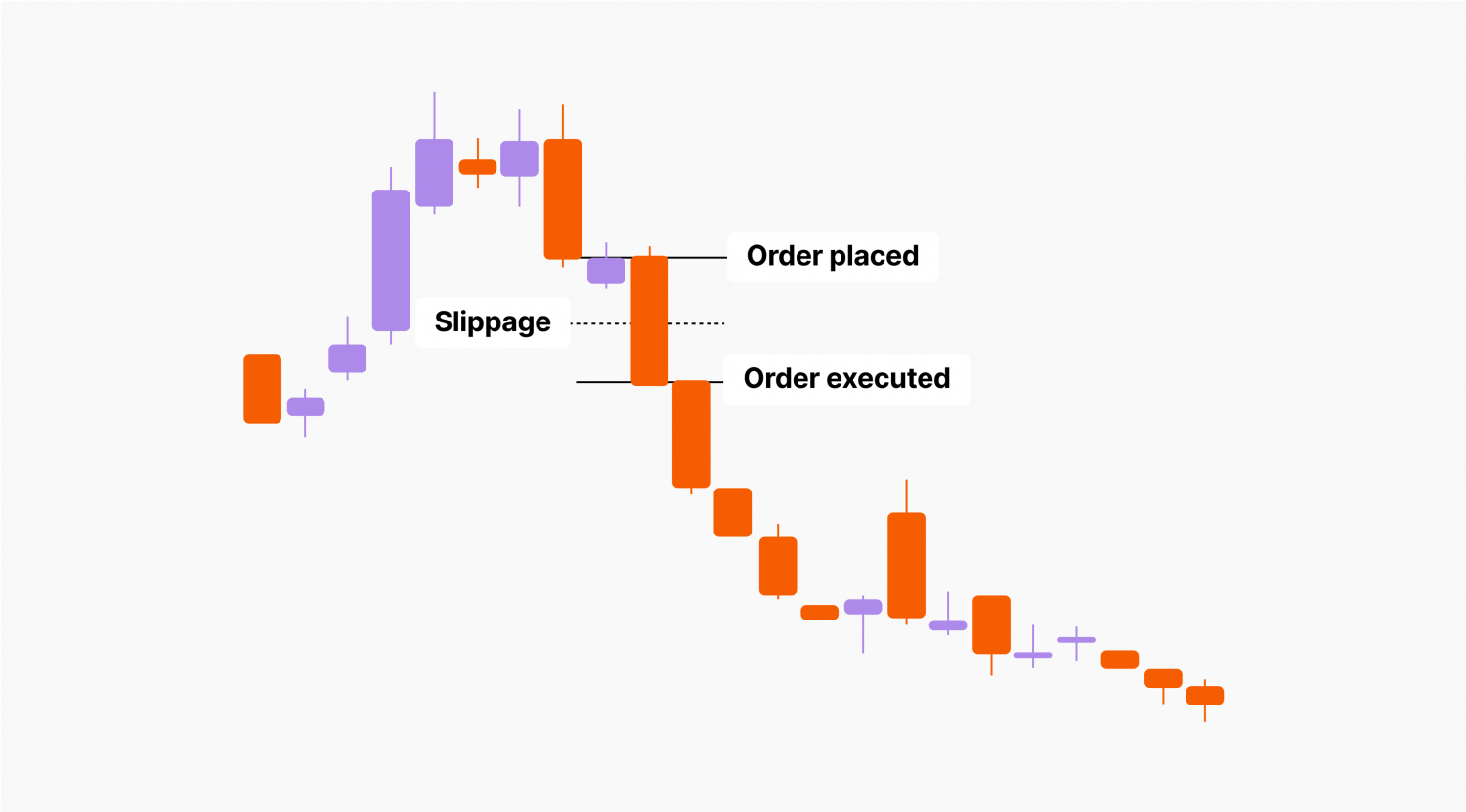
What makes Jupiter the best DEX on solana for swap execution is its split-routing capability. If you are making a large swap, a single pool might not have the depth to handle it without massive slippage.
Jupiter’s smart routing algorithm breaks your order into smaller pieces and routes them through multiple pools simultaneously. For example, a $50,000 USDC to SOL swap might be split 60% through Orca, 30% through Raydium, and 10% through a Meteora DLMM pool, ensuring the aggregate price impact is kept to an absolute minimum.
Advanced Utility
Jupiter has evolved far beyond a simple swap interface. It now features a Dynamic DCA tool, allowing you to schedule recurring buys that automatically route at the best price over time. Its limit order functionality lets you set target prices for tokens, resting on-chain until filled.
Additionally, Jupiter’s native bridge aggregator connects Solana to Ethereum, Arbitrum, and Base, making cross-chain capital movement seamless.
Top Automated Market Makers (AMMs) & Liquidity Hubs
While aggregators handle the routing, the actual liquidity lives in Automated Market Makers. These protocols are the foundational layer of Solana’s DeFi ecosystem.
Raydium
If you are sniping brand-new tokens, Raydium is the best solana exchange for the job. Raydium is unique because it is deeply integrated with OpenBook (Solana’s central limit order book). This means liquidity providers on Raydium aren’t just providing assets to an isolated pool; their liquidity is also deployed as limit orders on the order book.
For the meme coin meta, Raydium is usually the first place creators add initial liquidity, making it the premier destination for early-stage token discovery and high-volume trading.
Orca
Orca has carved out its niche as the most elegant and user-friendly AMM on Solana. Its signature feature is “Whirlpools”—Orca’s implementation of concentrated liquidity. By allowing liquidity providers to set specific price ranges for their capital, Orca enables incredibly capital-efficient pools.
For traders, this translates to deep liquidity around the current market price, resulting in minimal slippage for major pairs. If you want a clean, intuitive interface with deep stablecoin and major asset pools, Orca is a top contender.
Meteora (DLMM)
While Raydium and Orca dominate general trading, Meteora represents the cutting edge of liquidity mechanics with its DLMM (Dynamic Liquidity Market Maker). In traditional concentrated liquidity, LPs must manually adjust their ranges as the price moves. Meteora’s DLMM dynamically shifts the liquidity bins as the price changes, automatically keeping liquidity concentrated at the market price.
This provides a massive advantage for yield farmers capturing fees, and creates highly efficient, low-slippage pools for volatile assets. Understanding Meteora’s DLMM is crucial for advanced DeFi users in 2026.
Pro-Grade Order Books & Perpetual Futures Protocols
Spot swapping is just the beginning. For advanced traders, the best solana DEX offers fully on-chain order books and decentralized perpetual futures.
Phoenix
Phoenix is a marvel of Solana engineering. It is a fully on-chain Central Limit Order Book (CLOB) that matches the speed and feel of a centralized exchange. Because it leverages Solana’s parallel execution capabilities, order placement, cancellation, and matching happen in milliseconds.
For traders who rely on limit orders, scalping, and precise entries, Phoenix offers an unmatched, institutional-grade experience.
Drift Protocol
Drift Protocol is the heavyweight champion of Solana perps. It allows traders to take leveraged long or short positions on a vast array of assets. What sets Drift apart is its vAMM (virtual Automated Market Maker) combined with a just-in-time (JIT) auction mechanism, which ensures fair pricing and minimizes oracle manipulation.
Furthermore, Drift features a decentralized lending protocol, allowing users to deposit assets as collateral to earn yield, which can then be used to margin trades.
Jupiter Perpetuals
Building on its aggregator dominance, Jupiter launched its own perpetuals platform. Jupiter Perpets operate differently than Drift, utilizing an LP-backed pool model where users provide stablecoins as liquidity for traders to trade against.
This architecture frequently results in highly competitive, low funding rates, making it an attractive platform for holding leveraged positions over longer time horizons.
The Mathematics of Solana Swaps
Clicking “swap” is easy. Understanding the math behind the swap is what separates profitable traders from the crowd.
Calculating the True Cost of Your Swap
The advertised fee on a solana decentralized exchange is usually just the protocol fee (often 0.25% or 0.3%). The true cost of your swap involves three elements: the protocol fee, the network fee (fractional cents), and the hidden cost of slippage. Slippage is the difference between the expected price and the executed price.
You must calculate Price Impact (shown on the swap UI) before confirming a trade. If you are buying a low-liquidity token and the price impact is 10%, you are instantly down 10% the moment the trade executes.
Protecting Your Trades
Source: Binance
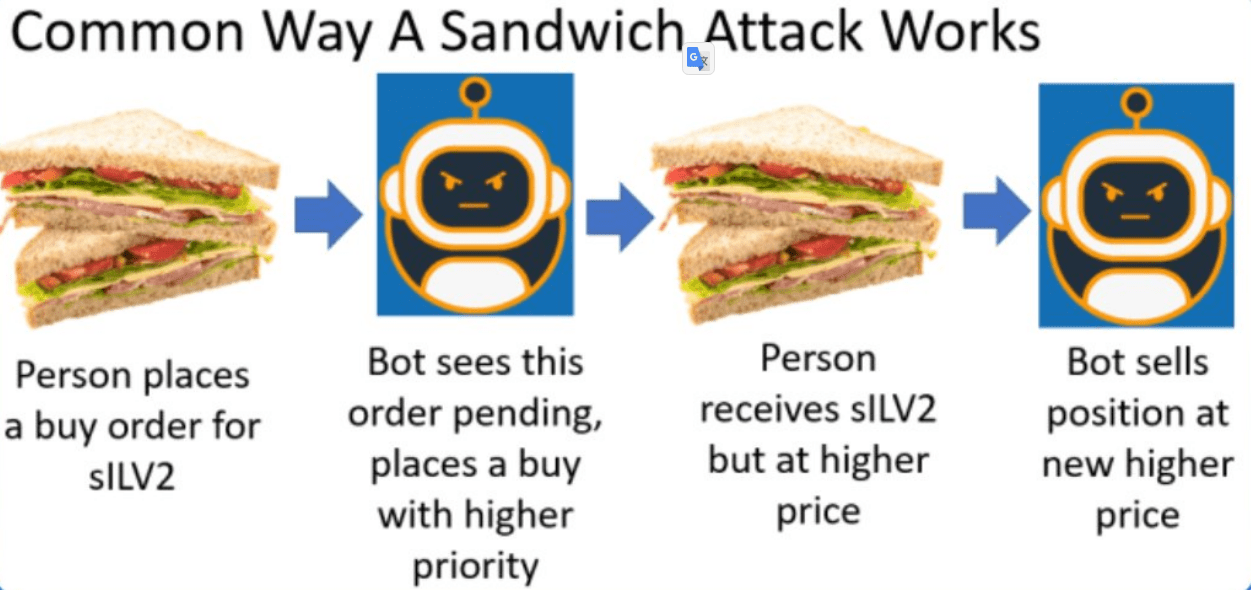
MEV (Maximum Extractable Value) bots are a massive threat on Solana. These bots monitor the mempool (pending transactions) and will “sandwich” your trade by buying right before you and selling right after, profiting from the price movement they induced.
To protect yourself, use Jito MEV protection. Jito allows you to bundle your transaction and send it directly to validators with a small tip. This bypasses the public mempool, ensuring your trade executes exactly as intended without bots front-running it.
Managing Your Compute Budget
This is the biggest pain point for new Solana users: the dreaded “Failed Transaction” error during congested launches. Every transaction requires a certain amount of Compute Units (CU).
If the network is congested, validators prioritize transactions that offer higher Priority Fees. If your swap on the best DEX for solana fails, it’s usually because your compute budget and priority fee were set too low to compete with aggressive traders.
Advanced users manually increase their Priority Fee (measured in microLamports per compute unit) and set a higher Compute Limit in their wallet settings to ensure execution during chaotic market conditions.
The On-Chaining Gap: How to Fund Your Solana Wallet
Finding the perfect trade is useless if you don’t have the capital to execute it.
Managing SOL for Transaction Fees
Imagine this: You use an aggregator to find a micro-cap token, the chart looks incredible, and you are ready to pull the trigger. But you look at your Phantom wallet and realize you have 0 SOL to pay for gas. You have USDC, but you can’t swap USDC for SOL without SOL to pay the gas.
This is the ultimate “On-Chaining Gap.” Native Web3 on-ramps often require extensive KYC, have slow processing times, or charge exorbitant fees to move fiat onto the blockchain.
Quickex.io: The Ideal No-KYC Bridge for Solana Funding
This is exactly where Quickex steps in as an actionable solution. Quickex.io is a non-custodial, no-KYC instant exchange that bridges the gap between traditional finance and on-chain DeFi. Instead of waiting days for a centralized exchange transfer, you can use Quickex.io to instantly buy SOL using a credit card or swap assets from other blockchains directly into your Solana wallet.
Because it is non-custodial, Quickex never holds your funds; they are sent straight to your private wallet address. It is the perfect tool for traders who need gas tokens instantly without compromising their privacy.
Step-by-Step Guide on How to Buy Native SOL
- Navigate to Quickex.io main page: Select SOL as the receiving asset.
- Choose Your Method: Select either a credit card purchase or a cross-chain swap (e.g., ETH to SOL).
- Enter Your Wallet Address: Provide your Phantom or Solflare SOL address.
- Execute the Transaction: Complete the payment or send the originating asset. Quickex’s automated engine processes the swap instantly.
- Start Trading: Within moments, native SOL hits your wallet, ready to be used as gas to execute the trade you discovered on your favorite DEX.
Safety, Security, and Risk Management on Solana
The permissionless nature of DeFi means you are your own bank and your own security team.
Spotting the Red Flags
The best DEX on solana will show you every token, including the scams. A honeypot is a malicious contract coded to allow buys but block sells.
Fake liquidity locks are another trick; scammers will lock a tiny portion of liquidity or use a fake locking platform to create the illusion of safety, only to drain the unlocked majority later.
Always use on-chain scanners to verify the contract code and check for mint authorities before buying micro-cap tokens.
Managing Smart Contract Permissions
Every time you interact with a liquidity pool or a staking contract, you must grant the smart contract permission to spend your tokens. Scammers exploit this by creating fake contracts that request unlimited spending allowances. To protect your Phantom or Solflare wallet, always revoke token approvals after using a new protocol.
Use tools like Step Finance or Solana FM to audit your active permissions and revoke any unnecessary or suspicious allowances.
The Reality of Impermanent Loss
If you are providing liquidity to earn yield, you must understand Impermanent Loss (IL). IL occurs when the price of your deposited assets changes compared to when you deposited them. In Solana’s CLMMs (like Orca Whirlpools and Meteora DLMM), IL is amplified.
Because your liquidity is concentrated in a tight range, a price move outside that range means 100% of your position is converted into the less valuable asset. While the fee yield can be astronomical, the math of IL can easily wipe out your principal if you aren’t actively managing your ranges.
Which Solana DEX Fits Your Profile?
Choosing the right platform depends entirely on your trading style. Here is how the options stack up.
The Micro-Cap Meme Coin Sniper vs. The Passive Yield Farmer
- The Meme Coin Sniper: Needs to be first. For this trader, Raydium is the primary battlefield for new launches, while Jupiter is used for optimal routing on established meme coins. They must utilize Jito MEV protection and high Priority Fees to beat the bots.
- The Passive Yield Farmer: Cares about sustainable APYs and capital efficiency. This trader should look to Orca for simple concentrated liquidity, or Meteora (DLMM) for advanced, dynamic yield generation on volatile pairs.
Spot Swap Execution vs. Leverage Derivatives
If your strategy involves simple spot accumulation (DCAing into SOL or major altcoins), Jupiter’s aggregator provides the best execution. If you want to trade price action both ways or use leverage, the choice is between Drift Protocol and Jupiter Perpetuals.
Drift offers a more robust multi-asset collateral system and lending integration, while Jupiter Perps often feature lower funding rates for long-term holds.
Conclusion
The quest for the best solana DEX is not about finding a single platform that does everything. It is about assembling a toolkit. Jupiter remains the gold standard for spot swaps and routing, Raydium is the engine of the meme coin meta, Orca and Meteora provide the yield farming infrastructure, and Phoenix and Drift handle advanced trading mechanics.
However, having the best tools is meaningless if you can’t fund your wallet quickly or if you fall victim to MEV bots and malicious contracts. By mastering the mathematics of compute budgets, protecting your trades with Jito, utilizing Quickex.io for seamless on-chain funding, and rigorously managing your smart contract permissions, you can maintain a competitive edge in the fast-paced Solana ecosystem of 2026.
FAQ: Crypto DEX Platforms & Solana Decentralised Exchanges
What is a DEX in crypto?
A DEX (decentralised exchange) is a crypto trading platform that operates entirely on-chain — allowing users to swap tokens directly from their own wallets without depositing funds into a central company’s custody. Unlike centralised exchanges (Binance, Coinbase), a DEX has no order book server, no corporate custodian, and typically no KYC requirement.
- How it works: A DEX uses smart contracts to facilitate trades. The two primary models are:
- AMM (Automated Market Maker): Liquidity pools replace order books — users trade against pooled reserves. Price is determined algorithmically. Examples: Uniswap, Raydium, Orca.
- CLOB (Central Limit Order Book): On-chain order books match buy and sell orders directly. Examples: Phoenix, OpenBook (Solana).
- Key advantages:
- Self-custody — your keys, your coins at all times.
- No KYC — trade anonymously from any wallet.
- Permissionless — anyone can list a token or provide liquidity.
- Censorship-resistant — no central authority can freeze your account.
- Key risks:
- Smart contract risk — bugs or exploits can drain liquidity pools.
- Slippage — large trades on low-liquidity pools suffer worse pricing.
- Impermanent loss — liquidity providers can lose value versus simply holding.
- Scam tokens — permissionless listing means fake or malicious tokens exist.
- DEX vs. swap service: A DEX operates fully on one blockchain (e.g., Jupiter on Solana). A cross-chain swap service like QuickEx exchanges tokens across different blockchains (e.g., BTC → SOL) — solving a problem DEXs can’t handle natively.
Need to swap across chains? Exchange any crypto on QuickEx →
What are the best Solana DEX platforms in 2026?
Solana hosts the most active DEX ecosystem outside of Ethereum — driven by sub-second finality, ~$0.001 fees, and massive memecoin and DeFi activity. Here are the top Solana DEX platforms in 2026:
| DEX | Type | Key Feature | Avg. Fee | Best For |
|---|---|---|---|---|
| Jupiter | DEX aggregator | Routes across all Solana DEXs for best price | 0% platform fee (+ LP fee ~0.1–0.3%) | Best price execution, all-in-one |
| Raydium | AMM + CLOB hybrid | Deepest liquidity, integrated with OpenBook | 0.25% | High-liquidity swaps, LP farming |
| Orca | Concentrated liquidity AMM | Whirlpools — concentrated liquidity positions | 0.01–0.30% | Capital-efficient LP, beginner UX |
| Meteora | Dynamic AMM | DLMM (Dynamic Liquidity Market Maker) | Variable | Advanced LP strategies, new token launches |
| Phoenix | On-chain CLOB | Full limit order book, zero slippage | ~0.05% | Limit orders, professional trading |
| Lifinity | Proactive market maker | Oracle-based pricing reduces impermanent loss | ~0.1–0.3% | LPs seeking lower impermanent loss |
- Most users should start with Jupiter — it aggregates liquidity from all Solana DEXs (Raydium, Orca, Meteora, Lifinity, Phoenix, and more) and automatically routes your trade for the best output. Think of it as “Google for Solana swaps.”
- For LP (liquidity providing): Orca Whirlpools or Meteora DLMM — concentrated liquidity positions offer higher yield but require active management.
- For limit orders: Phoenix or Jupiter Limit — place buy/sell orders at a specific price without slippage.
DEX vs. CEX: which should I use?
Choosing between a crypto DEX and a centralised exchange (CEX) depends on your priorities — privacy, fees, token selection, and ease of use all play a role.
| Factor | DEX | CEX |
|---|---|---|
| Custody | Self-custody — you hold keys | Custodial — exchange holds keys |
| KYC | ❌ None | ✅ Full ID verification |
| Fees | ~0.05–0.30% swap + gas | 0.10–0.60% trading fee |
| Fiat on-ramp | ❌ No (crypto-only) | ✅ Yes (bank, card) |
| Token selection | Permissionless — any token, including new launches | Curated — only listed tokens |
| Cross-chain | ❌ Single chain only | ✅ Multi-chain deposits/withdrawals |
| Counterparty risk | Smart contract risk | Exchange insolvency risk (FTX) |
| Speed | Instant (block time) | Instant (order matching) |
- Use a DEX when: You want full self-custody, privacy, access to newly launched tokens, or are trading within a single blockchain ecosystem (e.g. Solana DeFi).
- Use a CEX when: You need fiat on/off-ramps, high-volume trading with deep order books, or margin/futures trading.
- Use QuickEx when: You need to swap across different blockchains (BTC → SOL, ETH → ALGO) without KYC, without connecting a wallet to a dApp, and with output going directly to your self-custody wallet.
How to use a Solana DEX: step-by-step
Using a Solana DEX platform is straightforward once you have SOL in a compatible wallet. Here’s a universal guide that works for Jupiter, Raydium, Orca, and others:
- Set up a Solana wallet — download Phantom (most popular, iOS/Android/Chrome), Solflare, or Backpack. Save your seed phrase securely offline.
- Fund your wallet with SOL — you need SOL to pay for transaction fees (~$0.001 per swap) and as a trading asset. If you don’t have SOL yet, swap any crypto for SOL on QuickEx — output goes directly to your Phantom wallet address.
- Go to the DEX website — e.g. jup.ag (Jupiter), raydium.io, or orca.so.
- Connect your wallet — click “Connect Wallet” and approve the connection in your Phantom/Solflare popup. This grants the DEX read-only access to your wallet address (it cannot move funds without your approval per transaction).
- Select the token pair — e.g. SOL → USDC, SOL → JUP, SOL → BONK. On Jupiter, the aggregator automatically finds the best route across all Solana DEXs.
- Set slippage tolerance — default is usually 0.5–1%. For volatile tokens (memecoins), you may need 2–5%. Higher slippage = more likely to fill but worse price.
- Review and confirm — check the output amount, price impact, and fee. Approve the transaction in your wallet.
- Transaction completes — on Solana, swaps confirm in ~400ms. Your new tokens appear in your wallet immediately.
How do I get SOL to use on a Solana DEX?
To use any Solana DEX platform, you first need SOL in a Solana wallet. Here are the best ways to get SOL in 2026:
| Method | KYC | Speed | Fees | Best For |
|---|---|---|---|---|
| QuickEx (swap) | ❌ No | 5–15 min | ~0.5–1% | Fastest no-KYC way to get SOL from any crypto |
| Coinbase / Kraken | ✅ Yes | Instant (after KYC) | 0.16–0.60% | Buy SOL with fiat (USD/EUR) |
| Binance | ✅ Yes | Instant | 0.10% | Lowest spot fee, high liquidity |
| Phantom in-app swap | ⚠️ For fiat: yes | Instant (on-chain) | 0.85% swap fee | Convenience — swap inside wallet |
| On-ramp (MoonPay/Transak) | ✅ Yes | 5–15 min | 2–5% | Card-to-SOL direct purchase |
Fastest no-KYC workflow: any crypto → SOL → Solana DEX
- Go to QuickEx.io — no account needed.
- Select your pair: BTC → SOL, ETH → SOL, USDT → SOL, or any of 500+ supported coins.
- Paste your Solana wallet address (Phantom, Solflare, Backpack).
- Send your crypto — receive SOL directly in your wallet within 5–15 minutes.
- Open Jupiter (jup.ag) or any Solana DEX — connect your wallet and start trading. The SOL you received via QuickEx covers both trading and gas fees.
Disclaimer: The material in this article is not financial or investment advice. Everything stated here reflects the author's personal view and should not be treated as a recommendation to trade or invest. We make no warranties regarding the accuracy, reliability or completeness of the information presented. Cryptocurrency markets are highly volatile and can move unpredictably. Before committing any funds, every investor, trader or crypto user should study several independent sources and check the regulations that apply in their own jurisdiction.