
If you are looking to buy Ethereum no KYC, you aren’t just trying to bypass annoying red tape. You are making a conscious decision to protect yourself from identity theft, aggressive corporate surveillance, and unauthorized data harvesting.
Whether you want to buy ETH no KYC to interact with decentralized finance (DeFi) privately, or you simply believe that financial privacy is a fundamental human right, this guide will walk you through the absolute best methods available today.
We’ve all seen the headlines. Another major cryptocurrency exchange gets hacked, and suddenly, the passports, home addresses, and financial histories of millions of users are for sale on the dark web. The traditional narrative pushes us toward heavily regulated, centralized platforms under the guise of “safety.” But in 2026, handing over your most sensitive personal data to a corporate entity is arguably the biggest security risk of all.
The State of Ethereum Privacy in 2026
Before you make a purchase, it helps to understand exactly what you are up against. The blockchain isn’t anonymous; it’s a permanent public ledger.
How Exchange Data is Linked to Your Identity
KYC (Know Your Customer) laws were designed to stop money laundering. However, they have morphed into a massive data-collection apparatus. With recent updates to the EU’s MiCA framework and global FATF rules, centralized exchanges act essentially as surveillance nodes. When you hand over your ID, your Ethereum wallet address becomes permanently linked to your real name. If a centralized database is breached, which happens constantly, as seen in reputable security forums: hackers know exactly how much crypto you hold and where you sleep at night.
Ethereum 2.0 & Post-Merge Tracking
Since Ethereum transitioned to Proof-of-Stake, the network’s architecture has shifted. In 2026, major block builders and validators are increasingly compliant with government blacklists. They actively monitor IP addresses and transaction metadata. If you don’t take deliberate steps to buy ETH without kyc, your on-chain footprint is incredibly easy for chain-analysis firms to track, trace, and categorize.
Financial Sovereignty
Choosing to buy ETH no id is about reclaiming your digital sovereignty. You shouldn’t have to ask a bank for permission to spend your own money, nor should a marketing firm know your exact net worth. Privacy is normal.
Top Methods for Buying ETH Without ID Verification
The compliance net is tight, but sophisticated tools exist to keep your identity off the blockchain.
1. Instant No-KYC Exchanges
In 2026, the absolute best tool for retail investors is a Privacy-First crypto exchange service like Quickex.io. Because Quickex never actually holds your funds in a traditional account, and aren’t subjected to the same KYC hoarding rules as custodial banks. You can even buy ETH with credit card no verification by using a third-party prepaid virtual card to fund a swap on these types of platforms, effectively creating a firewall between your personal bank and your Ethereum wallet.
Step-by-Step: How to Use Quickex.io for Instant Card-to-ETH Conversions
Here is the exact technical execution for a secure swap:
- Navigate to Quickex.io using a privacy browser or widget.
- Select your trading pair: Choose the asset you are sending (e.g., Monero or a prepaid fiat gateway) and set Ethereum (ETH) as the receiving asset, it should look like this: XMR to ETH.
- Input your destination: Provide a completely fresh, newly generated Ethereum address.
- Send the funds: Transfer your starting asset to the unique address Quickex provides on the screen.
- Wait for execution: The smart routing protocol finds the best liquidity pool, swaps the asset, and sends the ETH directly to your private wallet. No accounts, no selfies, no waiting days for approval.
2. P2P Marketplaces
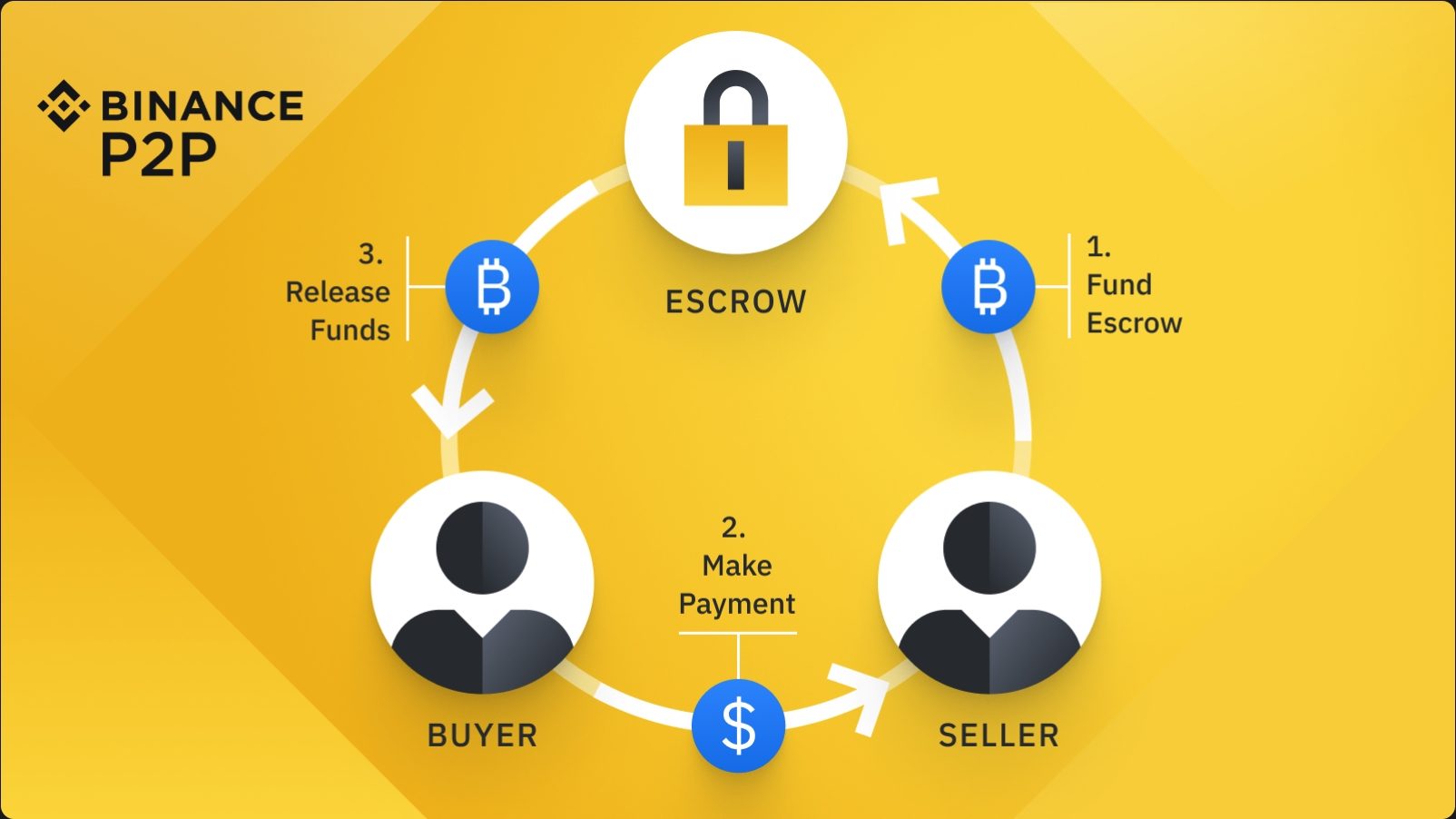
Source: Binance P2P
If you want to buy Ethereum anonymously from another human being, peer-to-peer (P2P) marketplaces are incredible tools. Platforms like Bisq operate entirely over the Tor network. You negotiate a price with a seller, lock the ETH in a multisig escrow smart contract, and send them fiat via a postal money order, national bank transfer, or cash-in-person. Since no central company processes the fiat, no ID is required.
3. Privacy-Centric Aggregators
If you are wondering how to buy Ethereum without fees eating up your entire budget, privacy aggregators are the answer. Sites like Trocador don’t act as the exchange themselves; they scan dozens of non-KYC exchanges across the dark and clear web to find the absolute lowest spread. While network gas fees are unavoidable, aggregators ensure you aren’t paying hidden 5% markups.
4. Decentralized Exchanges and Atomic Swaps
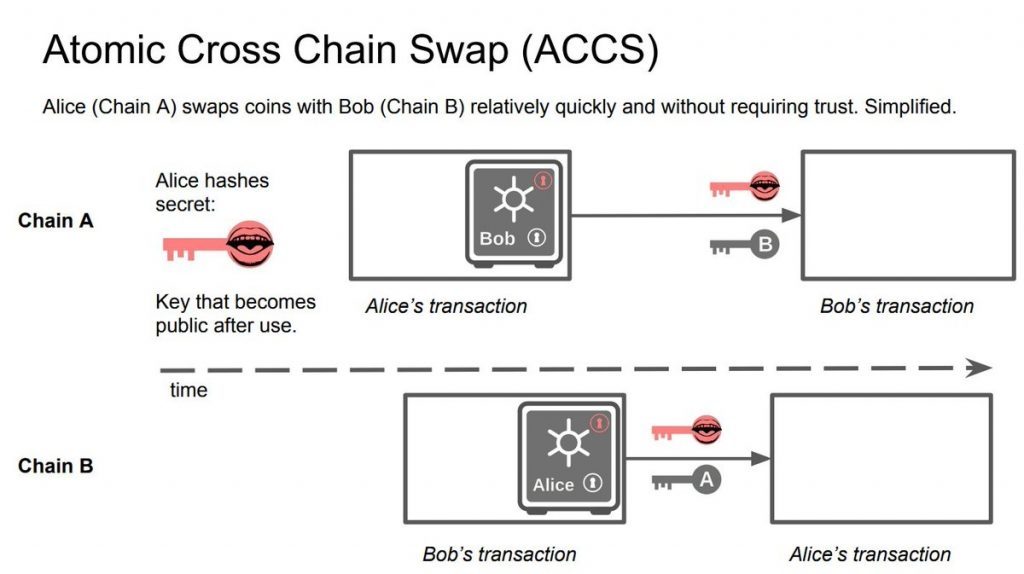
How Atomic Swaps work. Source: Forklog
If you already own a privacy coin like Monero (XMR) or Bitcoin, you can use Atomic Swaps to trade directly across blockchains. This uses cryptographic hash time-locked contracts (HTLCs). If the trade fails, the funds automatically return to both users. You securely buy ETH no verification without ever trusting a third party.
5. Physical Crypto ATMs
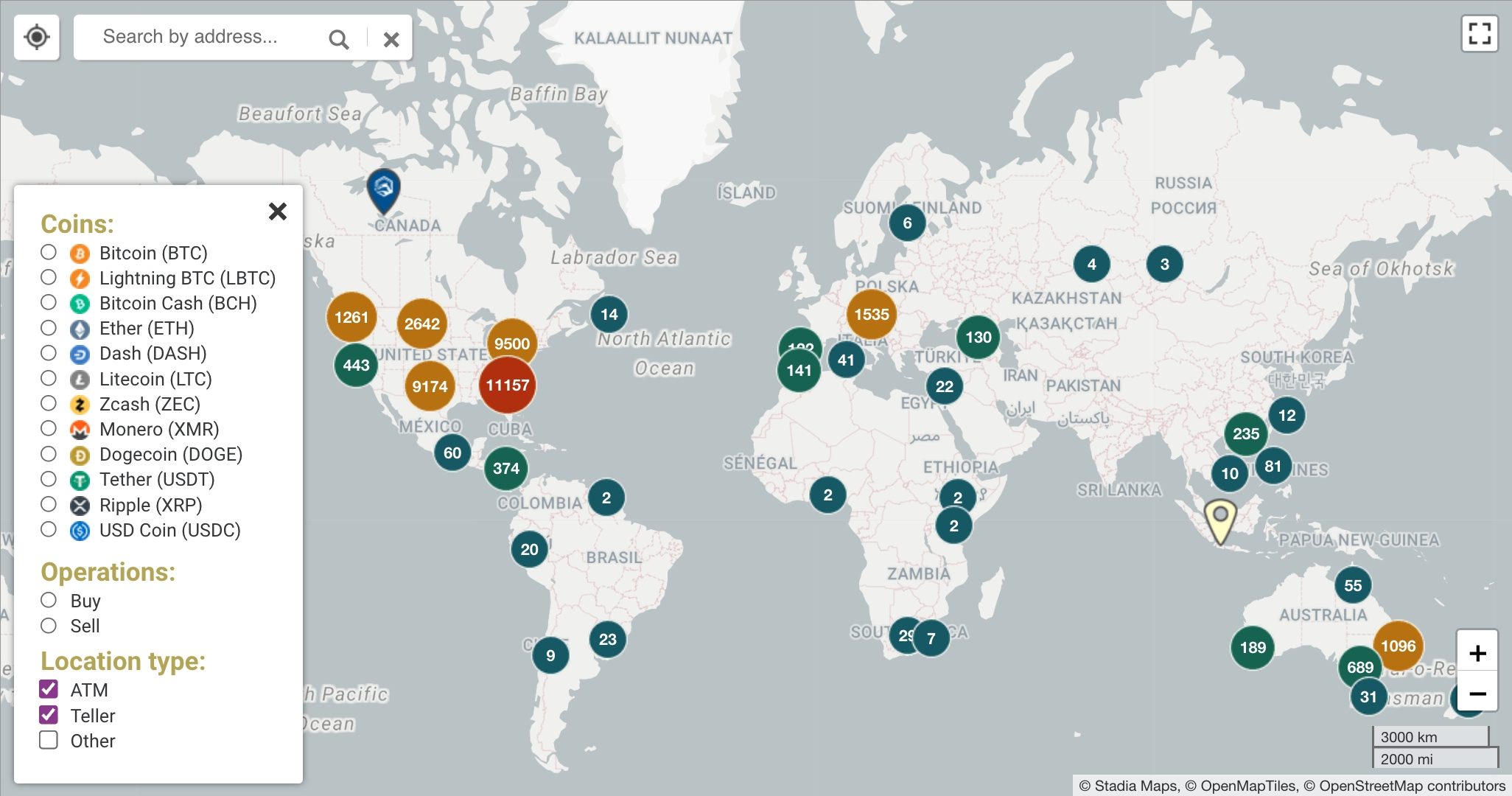
Source: Coin ATM Radar
You can still find Ethereum ATMs in major cities. They allow you to walk up, insert paper bills, and scan your wallet’s QR code to buy Ethereum without id.
- The Pros: It completely unlinks your bank account from the purchase.
- The Cons: You will pay a massive premium (sometimes up to 10% above spot price), and most machines in 2026 have cameras pointed directly at your face.
Staying Anonymous During the Purchase
Buying from a private platform is useless if your local computer is leaking your identity.
VPNs vs. Tor: Masking Your IP Address
Never initiate a crypto transaction from your home Wi-Fi address. If you do, your Internet Service Provider knows exactly what you are doing. At a minimum, run a strict no-logs VPN (like Mullvad). For maximum security when trying to buy ETH without kyc, route your traffic entirely through the Tor browser.
Burner Emails and Encrypted Messaging
If a P2P platform asks for an email address for receipt notifications, never use your personal Gmail or Outlook. Use a disposable email service or an encrypted provider like ProtonMail. If you are meeting a P2P seller locally, communicate exclusively through encrypted apps like Signal or Session.
Wallet Hygiene
Ethereum doesn’t have native sub-addresses like Monero. If you reuse the same ETH address twice, chain-analysis bots will link those transactions together. For proper buy ETH custody, you must generate a brand new Ethereum address for every single non-KYC purchase you make.
The “Clean Entry” Strategy
Once you have the ETH, you have to know how to handle it so it remains untainted.
Mixing Your ETH
Even if you purchased your Ethereum privately, the coins themselves might have a messy past. To guarantee a clean slate, many advanced users run their newly acquired non-KYC ETH through zero-knowledge privacy protocols (the 2026 alternatives to Tornado Cash) to mathematically break the link between the sender’s history and their new wallet.
Never Send Non-KYC ETH Directly to a Centralized Exchange
This is the number one mistake beginners make. You spend time figuring out how to buy Ethereum no KYC, and then two months later, you send that exact same ETH to your verified Coinbase account to cash out. You just ruined your privacy. You have mathematically linked your anonymous wallet to your government ID. Never mix your private stash with your regulated KYC stash.
Managing Your Metadata
Chain-analysis firms are incredibly smart. They look at “heuristics.” If you buy $1,000 of ETH anonymously on Tuesday at 2:00 PM, and a brand new wallet suddenly becomes active with exactly $990 of ETH at 2:05 PM, algorithms can assume you own both. Randomize the timing and amounts of your transactions to defeat these tracking algorithms.
Risks and Red Flags
The gray market is filled with traps. You need to know how to navigate the hazards.
Understanding “Risk-Based Analysis”
Some sketchy exchanges advertise that they require no ID. You send your Bitcoin to swap for Ethereum, and suddenly, the screen goes red. The exchange claims an “automated risk-based algorithm” flagged your deposit, and they freeze your money until you upload a passport and a selfie. This is known in the industry as “Shadow KYC.”
How to Handle a Frozen Transaction Not Disclosing Your Identity
If an exchange holds your funds hostage, push back. Politely but firmly demand a refund to your original sending address. State clearly that you are uncomfortable sharing sensitive data due to the massive rise in global identity theft. Top-tier providers like Quickex.io respect this and will simply refund your unswapped tokens. Predatory exchanges will not.
The Importance of Small Test Transactions
Never send $5,000 to an exchange you have never used before. Always send a $20 test transaction first. Ensure the swap goes through smoothly, the fees are accurate, and the funds arrive safely in your wallet before moving serious capital.
Comparing the Best No-KYC Options for Ethereum
Let’s break down how the top contenders stack up in the current market.
Quick Comparison Table: Top 2026 No-KYC Methods
| Platform / Method | Best For | Verification Required | Privacy Level |
| Quickex.io | Speed & Instant Swaps | None | High (Non-custodial) |
| P2P platforms | Decentralization | None | Very High (Tor Network) |
| Crypto ATMs | Physical Cash Purchases | SMS only (Low limits) | Moderate (Cameras present) |
Local P2P vs. Instant Swaps
If you are moving more than $10,000, P2P networks can sometimes lack the necessary liquidity, or you run the risk of dealing with shady counterparties. For large volume, breaking the transaction into smaller chunks and feeding them through an instant, non-custodial swap service over the course of a few days is generally the safer route.
Best Wallets for Storing Non-KYC Ethereum
To ensure the absolute best buy ETH custody, pull your funds offline immediately. Hardware wallets like a Trezor Safe or a Ledger Nano (configured without recovery services) are mandatory for large holdings. For smaller, everyday spending amounts, open-source mobile wallets like Cake Wallet or Trust Wallet offer fantastic self-custody without requiring any personal data to download.
Conclusion
Acquiring digital assets privately isn’t an illegal loophole; it is a vital practice for personal security in the modern surveillance era. By utilizing non-custodial privacy-first services like Quickex.io, leveraging decentralized P2P networks, and maintaining rigorous operational security, you can take total control of your financial footprint.
The window to operate freely is certainly narrowing, but the tools built by the cypherpunk community are stronger than ever. Read the official Ethereum documentation to understand how wallets function, protect your private keys with your life, and never compromise your identity for convenience.
FAQ
How to buy Ethereum directly? (Beginner guide)
Buying Ethereum (ETH) in 2026 is straightforward — here are the main methods:
1. Centralized Exchange (most common)
- Create an account on a regulated exchange — Coinbase, Kraken, Binance, Gemini, or OKX.
- Complete KYC (identity verification — typically 5–15 minutes).
- Deposit fiat: bank transfer / ACH (cheapest, 0–0.5% fee), SEPA in Europe (free–€1), or credit/debit card (fastest but 2–4% fee).
- Buy ETH: navigate to the ETH/USD (or ETH/EUR) pair, enter your amount, and place a market or limit order.
- Withdraw to a self-custody wallet (MetaMask, Phantom, Ledger, Trezor) for long-term holding.
2. Credit / Debit Card Purchase
Many exchanges and third-party on-ramps (MoonPay, Transak, Ramp) let you buy ETH directly with a Visa or Mastercard. The process takes minutes, but fees are higher (typically 2–4.5% including card processing and spread). This is the fastest method for small, first-time purchases.
3. Buy ETH on Binance
Binance is the world’s largest exchange by volume. Steps: register → KYC → deposit via bank transfer, P2P, or card → buy on ETH/USDT or ETH/FIAT pair. Binance trading fees start at 0.10% and drop further with BNB fee discounts. U.S. users must use Binance.US (separate, smaller entity).
4. No-KYC Swap (if you already hold crypto)
If you own BTC, USDT, SOL, XRP, or any other cryptocurrency and want ETH without registration or identity verification, swap it on Quickex:
- Visit quickex.io — no account needed.
- Select your source coin → ETH as destination.
- Enter your Ethereum wallet address.
- Send your source crypto to the provided address.
- ETH arrives in your wallet within minutes — no KYC, no registration, non-custodial.
What is the best way to buy Ethereum? (Exchange comparison)
| Platform | Fees (buy ETH) | Fiat Methods | KYC | Best For |
|---|---|---|---|---|
| Coinbase | 0.00–0.60% (Advanced); ~1.5% (Simple) | ACH, wire, debit card, PayPal | ✅ Yes | Beginners; U.S. institutional trust (S&P 500) |
| Kraken | 0.00–0.40% | ACH, SEPA, wire, card | ✅ Yes | Lower fees; advanced traders; spotless security record |
| Binance | 0.10% (spot); 0.075% with BNB | SEPA, Faster Payments, P2P, card | ✅ Yes | Deepest liquidity globally; cheapest fees |
| Credit card (via MoonPay / Transak) | 2–4.5% all-in | Visa, Mastercard, Apple Pay | ✅ Yes (light KYC) | Fastest purchase; small first-time buys |
| Quickex | Spread-based (competitive) | Crypto-to-ETH only (no fiat) | ❌ No | No-KYC crypto swap; instant; non-custodial |
Summary: for fiat → ETH with lowest fees, use Kraken (0.00–0.40%) or Binance (0.10%). For maximum ease, use Coinbase. For instant no-KYC crypto-to-ETH, use Quickex.
Is Ethereum a good buy right now?
As of mid-June 2026, ETH is trading at approximately $1,785 USD — down ~64% from its all-time high of ~$4,951 (August 2025). Whether it’s a good buy depends on your time horizon:
Bull case:
- ETH is at its deepest discount from ATH since 2022 — historically, buying ETH 60%+ below ATH has rewarded long-term holders.
- Spot Ethereum ETFs attracted ~$12.9 billion in net inflows during 2025; BlackRock’s ETHA holds $11B+ AUM.
- Staking-enabled ETF products launched in early 2026, passing 2.8–3.5% annual yield to investors.
- Two major upgrades ahead: Glamsterdam (mid-2026) and Hegotá (H2 2026) targeting ~10,000 TPS and lower fees.
- Over 30% of ETH supply is staked; exchange reserves at all-time lows — tightening liquid supply.
Bear case:
- ETH has underperformed BTC, SOL, and BNB on a drawdown basis in 2026.
- Macro headwinds remain (recession fears, geopolitical risk).
- Competition from Solana and other L1s continues to capture developer and retail mindshare.
- Vitalik Buterin’s multi-million-dollar ETH sales in late 2025/early 2026 added selling pressure and negative sentiment.
Analyst 2026 targets: pessimistic $1,400–$1,700; base $2,000–$3,500; optimistic $4,500–$6,200.
This is not financial advice. Cryptocurrency markets are highly volatile. Always DYOR and never invest more than you can afford to lose.
How to buy Ethereum in Ireland?
Buying ETH in Ireland is legal and straightforward. Ireland follows EU regulations, and crypto platforms operating in Ireland must comply with the EU’s Markets in Crypto-Assets Regulation (MiCA), which took full effect across the EU in 2025. The Central Bank of Ireland oversees Virtual Asset Service Provider (VASP) registration.
Best platforms for Irish users:
- Coinbase: fully available in Ireland; supports EUR deposits via SEPA (free or €1); ETH/EUR pair with Advanced Trade fees 0.00–0.60%. Coinbase holds an EU e-money licence and is MiCA-compliant.
- Kraken: available in Ireland; SEPA deposits (free); trading fees 0.00–0.40%. Regulated in the EU.
- Binance: available in Ireland; SEPA deposit, card, and P2P options. Binance holds MiCA authorisation for continued EU operation. Trading fees from 0.10%.
- Revolut: popular among Irish users — buy ETH directly from the Revolut app. Easy for beginners but higher spread-based fees (~1.5–2.5%) and limited withdrawal to external wallets.
🇮🇪 Ireland crypto tax:
- Capital Gains Tax (CGT): 33% on crypto gains — one of the highest in Europe. Applies to every disposal (selling, swapping one crypto for another, or spending crypto).
- Annual exemption: €1,270 per year — gains below this threshold are tax-free.
- Filing: self-assessment via Revenue Online Service (ROS); deadline is October 31 (or mid-November for online filers). Two payment dates: preliminary CGT due December 15 (for gains Jan–Nov) and January 31 (for December gains).
- Record-keeping: Revenue requires records of every transaction — date, amount, EUR value at time of trade, and wallet addresses. Use a crypto tax tool (Koinly, CoinTracker) to automate this.
No-KYC option for Irish users: if you already hold any cryptocurrency, you can swap it for ETH on Quickex — no registration, no KYC, live rate, and ETH goes directly to your wallet. Tax obligations still apply regardless of which platform you use.
Disclaimer: The material in this article is not financial or investment advice. Everything stated here reflects the author's personal view and should not be treated as a recommendation to trade or invest. We make no warranties regarding the accuracy, reliability or completeness of the information presented. Cryptocurrency markets are highly volatile and can move unpredictably. Before committing any funds, every investor, trader or crypto user should study several independent sources and check the regulations that apply in their own jurisdiction.